
Quick answer: the best way to clean shower glass
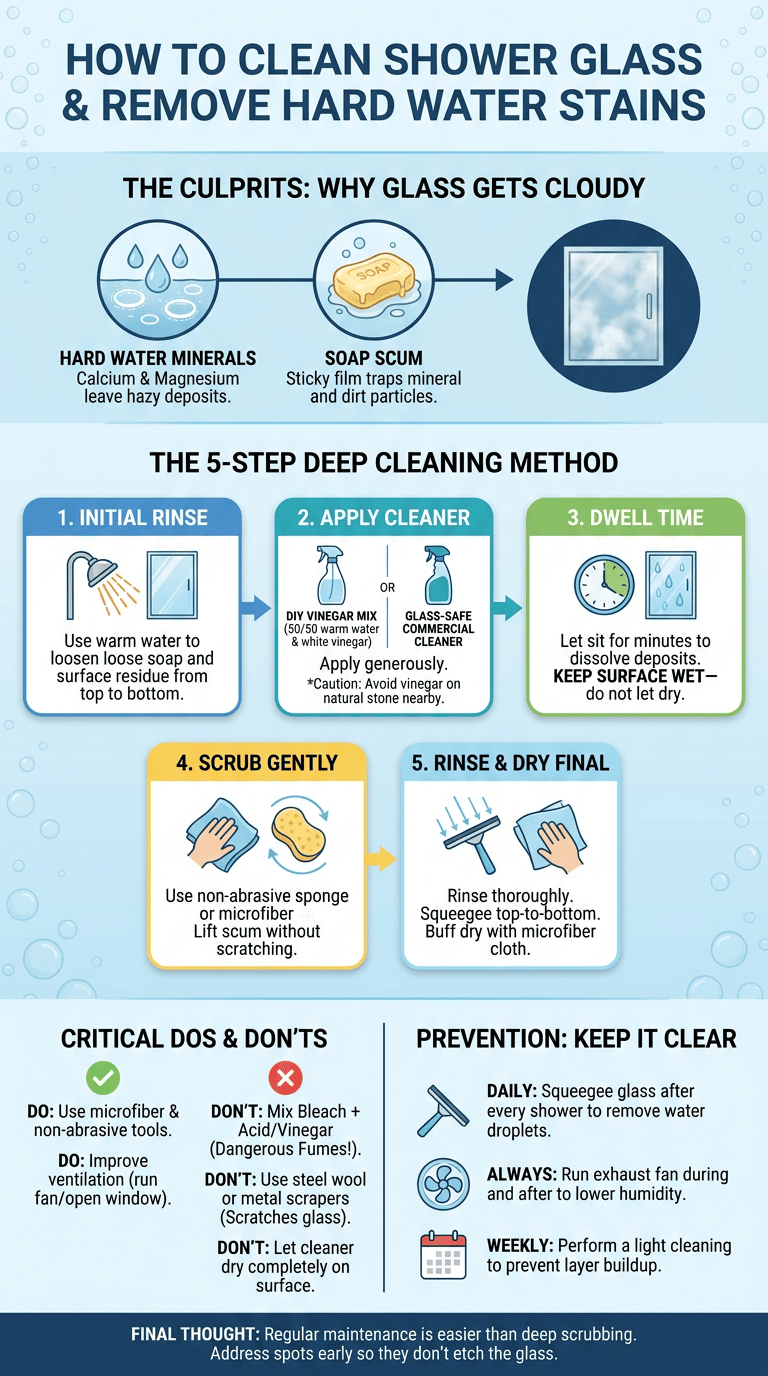
The most effective method for clearing cloudy shower glass caused by hard water and soap scum is a three-part approach: rinse, apply a glass-safe cleaner, and scrub gently with the right tools, followed by thorough rinsing and drying. For routine prevention, make a habit of squeegeeing and improving bathroom ventilation to slow new buildup.

Getting started
What to do first
Start by rinsing the glass with warm water to remove loose soap and mineral crystals. Work from top to bottom so residue flows downward. If you suspect strong mineral buildup, open a window or run your exhaust fan before you apply any cleaners to reduce fumes and humidity.
What to avoid
Avoid abrasive scrubbers, steel wool, or metal scrapers that can scratch glass. Do not mix cleaning products that contain bleach with acidic cleaners such as vinegar, and avoid letting cleaning solutions dry on the glass surface because dried residues are harder to remove and can leave streaks.
Why shower glass gets cloudy
Hard water minerals dry on glass
Hard water contains dissolved minerals such as calcium and magnesium. When water droplets evaporate on glass, those minerals remain and form a white, cloudy residue. Over time, repeated deposits make the glass look etched or frosted even after rinsing.
Soap scum sticks to the surface
Soap scum forms when soap mixes with minerals in water and with body oils. It creates a filmy, sticky layer that traps more minerals and dirt. Soap scum often appears as matte or filmy patches that reduce clarity even if the glass is otherwise clean.
For a related walkthrough, see our guide to how to clean dryer vent.
For a related walkthrough, see our guide to how to clean washing machine.
For a related walkthrough, see our guide to how to clean shower drain.
Poor ventilation makes buildup worse
High humidity keeps surfaces wet longer, which gives minerals and soap scum more chance to bond to glass. Improving airflow and reducing humidity after showers helps surfaces dry faster and reduces residue buildup. For general guidance on ventilation and indoor air quality, see EPA indoor air quality guidance.
EPA indoor air quality guidance
Signs your shower glass needs cleaning
White cloudy film
A diffuse, white film that dulls transparency is a classic sign of mineral deposits. It often becomes more noticeable where water commonly hits the glass, like near the faucet or showerhead.
Water spots
Look for round or ringed spots where droplets dried and left mineral rings. These tend to be harder to remove than fresh soap scum and often require a cleaning solution to soften the deposits before scrubbing.
Soap scum buildup
Soap scum appears as filmy, greasy patches that may feel slightly tacky to the touch. It can trap grime and become discolored if not removed regularly.
Streaks after wiping
If wiping the glass leaves streaks or a hazy ribbon rather than a clear surface, residue is still present. Proper rinsing and drying with a squeegee or microfiber cloth will usually eliminate this.
Step 1: rinse the shower glass
Use warm water
Begin with a thorough rinse using comfortable warm water. Warm water helps loosen soap scum and partially dissolves mineral residues, making the following cleaning steps more effective.
Loosen surface residue
Rinse for several minutes, directing the flow so that loose particles wash away. Use a spray setting if your shower head has one, or use a handheld sprayer if available. For sliding doors, open them slightly and rinse the tracks and overlapping edges too.
Focus on corners and edges
Buildup often collects in corners, along sealant lines, and in the bottom tracks of doors. Rinse these areas carefully to remove collected residue before applying stronger cleaners.
Step 2: apply a glass-safe cleaner
Vinegar solution option
A simple home remedy for mineral deposits is a mixture of white vinegar and warm water. Apply it to the glass with a spray bottle or soak a cloth in the solution and press it to stained areas. Vinegar is acidic enough to help dissolve mineral deposits while remaining safe for most glass surfaces when used properly.
Store-bought cleaner option
If you prefer a commercial product, choose cleaners labeled safe for glass and nonabrasive. Consider products with the Safer Choice label or similar safety-focused certifications when available. Read and follow the manufacturer instructions for application and dwell time.
Safer Choice cleaning product guidance
When to avoid vinegar
Do not use vinegar on stone surfaces such as marble, travertine, or certain tiles near your glass because acids can damage natural stone. If your shower glass is framed in or near natural stone, use a stone-safe cleaner instead and test any cleaner on a small inconspicuous area first.
Step 3: let the cleaner sit
How long to wait
Allow the cleaner to dwell long enough to soften and dissolve deposits. For mild soap scum, a few minutes may be enough. For heavier mineral stains, allow the solution to sit longer to help loosen deposits. Never allow acidic or strong cleaners to dry on the glass.
Why dwell time matters
Dwell time lets the active ingredients break down mineral bonds and soap residues so they lift rather than being smeared. Short dwell time often results in more scrubbing and possibly streaking.
Do not let it dry completely
Keep the surface visibly wet during the cleaning period. If the cleaner starts to dry, rewet the area or rinse and repeat. Dried residues are harder to remove and may leave streaks or smears.
Step 4: scrub gently
Best sponge or cloth to use
Use a nonabrasive sponge, a soft nylon scrub pad, or a microfiber cloth for general cleaning. Microfiber lifts grime without scratching and is excellent for final buffing. For sliding-track areas, an old soft toothbrush can help clean crevices without damage.
How to remove soap scum
After dwell time, scrub gently in a circular motion to lift soap scum. Work in small sections and rinse frequently to avoid spreading loosened residue. For large flat areas, a soft plastic scraper made for glass can help remove thicker layers of scum without scratching.
How to handle stubborn spots
For persistent mineral spots, try reapplying the vinegar solution and covering the spot with a vinegar-soaked cloth to concentrate the effect. If mineral deposits are extremely heavy or the surface appears altered, consider professional glass restoration because surface changes may not respond to household cleaners.
Step 5: rinse and dry the glass
Rinse away residue
Thoroughly rinse all cleaning solution and lifted residue with warm water. Incomplete rinsing leaves films that dry streaked. Rinse from top to bottom and flush tracks and seal areas well to avoid trapped residue.
Use a squeegee
After rinsing, use a good-quality rubber squeegee to remove water in long vertical strokes. Start at the top and overlap each pass slightly. A squeegee prevents water spots and reduces the need for vigorous drying. Keep the squeegee blade clean for best results.
Buff with a microfiber cloth
Finish with a soft microfiber cloth to remove any remaining water droplets or streaks and to polish the glass to clarity. Microfiber absorbs water and leaves a lint-free finish when used after a squeegee.
How to prevent shower glass from getting cloudy again
Use a squeegee after showers
Make squeegeeing a regular habit. Removing water before it dries lowers the chance that minerals and soap will adhere. A quick pass with a squeegee after each shower reduces buildup.
Improve bathroom ventilation
Reduce humidity by running an exhaust fan during and for several minutes after showers, or open a window where practical. Proper ventilation helps surfaces dry faster and lowers the chance of persistent residue. For general guidance on ventilation and indoor air quality, see EPA indoor air quality guidance.
EPA indoor air quality guidance
Clean lightly once a week
Weekly light cleaning prevents layers of soap scum and minerals from building up. Use a mild cleaner and a microfiber cloth or a soft sponge. Frequent light cleaning is more effective and less work than infrequent deep scrubbing.
Shower glass cleaning mistakes to avoid
Using abrasive pads
Abrasive pads, scouring powders, and steel wool can scratch glass and damage coatings. Scratches collect dirt and make the glass look worse over time.
Letting cleaner dry on glass
Allowing cleaners to evaporate on the glass can leave concentrated residues and streaks. Keep the surface wet for the recommended dwell time and rinse thoroughly before it dries.
Ignoring hard water buildup
Small mineral deposits can compound over time. Addressing deposits early prevents deep, hard-to-remove buildup or potential surface damage that may look like permanent cloudiness.
Mixing cleaning products
Never mix household cleaners, especially those containing bleach and acidic products such as vinegar. Mixing certain cleaners can produce dangerous gases or increase the risk of irritation. For safety guidance on household cleaner exposure and proper handling, see household cleaner safety guidance from Poison Control.
Household cleaner safety guidance from Poison Control
Shower glass maintenance checklist
After each shower
- Squeegee glass to remove water droplets.
- Wipe any soap or shampoo spills from the glass and hardware.
- Leave the door or curtain slightly open if possible to help airflow.
Weekly tasks
- Rinse glass and apply a light glass-safe cleaner if you notice film.
- Wipe tracks and hardware with a damp cloth to prevent grime build-up.
- Check grout and seals for dampness and address any persistent wet spots.
Monthly deep cleaning
- Use a stronger vinegar soak or a recommended commercial glass cleaner on mineral stains.
- Clean door tracks and hinges thoroughly; lubricate moving parts if needed.
- Inspect caulk and seals for mold or breakdown and replace as needed.
Frequently asked questions
What is the best way to clean shower glass?
The best way is to rinse, apply a glass-safe cleaner, let it dwell, scrub gently, and rinse and squeegee dry. Regular light cleaning and daily squeegeeing reduce the need for heavy scrubbing.
How do you remove hard water stains from shower glass?
For mineral stains, use an acidic cleaner such as a vinegar and water solution or a commercial hard water remover labeled safe for glass. Apply, allow a short dwell time, then scrub gently and rinse thoroughly. If deposits are very heavy or the surface appears altered, consider professional restoration.
Can vinegar damage shower glass?
Vinegar is generally safe on plain glass, but avoid using it on nearby natural stone surfaces or on glass that has specialty coatings unless the coating manufacturer approves acidic cleaners. Always test on a small area and rinse well after cleaning.
How do I keep shower glass clear?
Use a squeegee after each shower, improve ventilation, and perform a light cleaning once a week. These habits reduce mineral and soap buildup and keep glass looking clear longer.
Why does my shower glass still look cloudy?
If glass remains cloudy after cleaning, the cause may be etched mineral deposits or a degraded protective coating. If regular cleaning does not restore clarity, consult a professional glass restoration service.
Final thoughts
Cloudy shower glass is usually a manageable problem when you use the right approach: rinse, treat with a glass-safe cleaner, allow adequate dwell time, scrub gently, then rinse and dry. Prevention is as important as removal. Regular squeegeeing, improved ventilation, and light weekly cleaning reduce the amount of work needed and prolong the life and clarity of your shower glass.
When using any cleaner, follow safety instructions, avoid mixing products, and keep cleaning supplies out of reach of children and pets. For household cleaning and disinfecting guidance, see CDC cleaning and disinfecting guidance. For concerns about exposure or product safety, consult Poison Control.
CDC cleaning and disinfecting guidance
Household cleaner safety guidance from Poison Control

Ethan Carter is the Founder & Editor of HomeCleanSecrets. Based in the United States, he has 5 years of experience creating practical home cleaning, laundry care, stain removal, decluttering, and home organization content. His goal is to help everyday households clean smarter and build simple routines that are easier to maintain.
Read more about Ethan Carter on his author page: https://homecleansecrets.com/ethan-carter/