
Cleaning mistakes to avoid are usually small habits that make a home feel dirty again too soon. A streaky counter, a sour bathroom, a sticky floor, a dusty bedroom, or a stain that spreads can happen even when you are trying hard. The problem is often the order of work, the amount of product, the wrong tool, or a surface that needed a gentler method.
This guide focuses on what to stop doing and what to do instead. It is not a full cleaning schedule or a shopping list. Use it when your home still has residue, odors, dust, dampness, streaks, or surface damage after a regular clean. The safest fix is usually simple: slow down, remove loose soil first, match the product to the material, use less liquid, and stop when the surface reacts badly.

Quick Answer: The Biggest Cleaning Mistakes
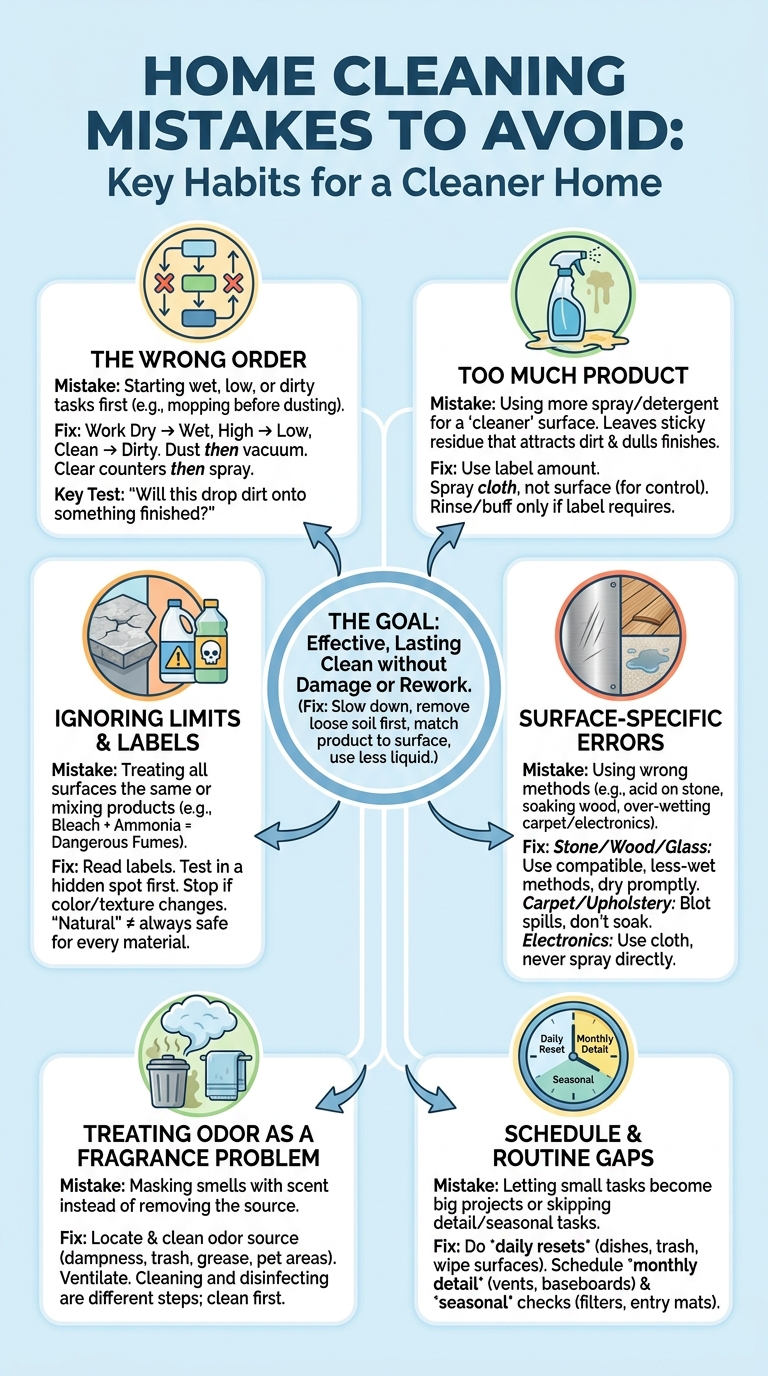
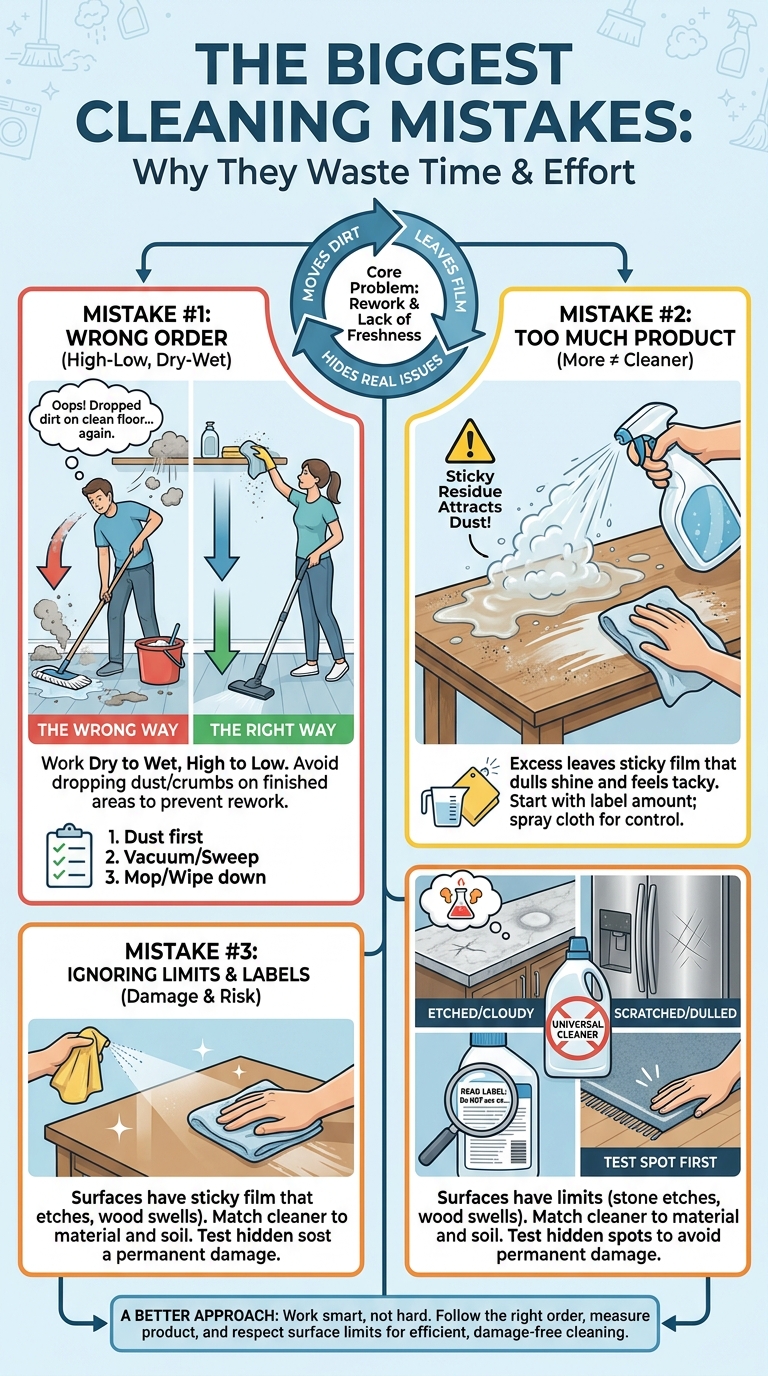
The biggest house cleaning mistakes are cleaning in the wrong order, using too much cleaner, mixing products without reading labels, scrubbing delicate materials, soaking surfaces that should stay only lightly damp, and treating odor as a fragrance problem instead of a cleaning clue. These errors waste time because they move dirt around, leave film behind, or hide the real reason a room does not feel fresh.
Cleaning in the wrong order
Work from dry to wet, high to low, and clean to dirty whenever the room allows it. Dust shelves before vacuuming floors. Clear counters before spraying them. Clean the shower walls before washing the floor. In a kitchen, remove crumbs and grease before disinfecting a high-touch area. If you mop first and then wipe dusty baseboards, the floor will need another pass.
A good test is to ask, “Will this task drop dust, crumbs, hair, water, or cleaner onto something I already finished?†If the answer is yes, move that task earlier. This one change prevents many common cleaning mistakes because it reduces rework before you even choose a product.
Using too much product
More cleaner does not always mean a cleaner surface. Too much spray can leave sticky residue that attracts dust, dulls shine, and makes floors feel tacky. Too much detergent can stay in fabric, carpet, or mop pads. Too much polish can smear wood or stainless steel. If you need repeated passes to remove the cleaner itself, you probably used more than the surface needed.
Start with the label amount, then reduce only when the product instructions allow it. Spray the cloth instead of the surface when you need control around electronics, wood trim, glass, or small appliance panels. Rinse or buff only when the label or material requires it. A focused cleaning supplies list can reduce duplicate tools, incompatible products, and surface guesswork.
Ignoring surface and label limits
Every surface has limits. Stone can etch, wood can swell, stainless steel can scratch, glass can streak, carpet can overwet, and painted surfaces can lose finish. Labels matter because cleaners are made for different soils and materials. The American Cleaning Institute’s efficient home cleaning guidance is a useful reminder to match tasks, tools, and products rather than treating every surface the same way.
When you are unsure, test in a hidden spot and wait long enough to see whether the surface changes. Stop if color lifts, finish dulls, fibers fuzz, metal darkens, stone looks cloudy, or a smell becomes sharp and irritating.
Routine Mistakes That Waste Time
A routine can fail even when you clean often. The problem is usually not effort. It is starting without priorities, cleaning around clutter, or handling floors at the wrong point in the room. A better routine removes obstacles first and saves the most dirt-collecting surfaces for the right moment.
Starting without a priority list
Walking into a messy room without a short priority list makes it easy to bounce between tasks. You might wipe a mirror, move laundry, spray a counter, answer a message, and forget the sink. The room looks busy but not finished. Before you begin, choose the three things that would make the biggest visible or practical difference.
For a kitchen, that may be dishes, counters, and floor crumbs. For a bathroom, it may be toilet, sink, and shower moisture. For a living room, it may be trash, clutter, and dust on visible surfaces. Finish those first, then add detail work if you still have time.
Cleaning around clutter
Cleaning around clutter means dust and crumbs stay under objects, not because you missed them, but because you never reached them. Move small items into a basket, clean the surface, dry it, and put back only what belongs there. This works for bathroom counters, nightstands, kitchen counters, coffee tables, and entry benches.
Do not turn every cleaning session into a full decluttering project. That can stall the work. Use a temporary basket for items that belong elsewhere, then return them after the cleaning pass. If the same basket fills every time, the room needs a storage decision, not a stronger cleaner.
Saving floors for the wrong moment
Floors should usually come near the end of a room cleaning session, but not after you create wet footprints or drag dusty items back through the space. Vacuum or sweep after dusting, wiping, and trash removal. Mop only after loose debris is gone. If you mop over grit, the mop becomes sandpaper on delicate finishes.
Use the least wet method that works for the floor type. Wood, laminate, and many luxury vinyl floors can be damaged by standing water. Tile can handle more moisture, but grout lines can hold dirty water if the mop is overloaded. A floor should dry evenly, not stay wet in edges and corners.
Product Mistakes That Can Create Residue or Risk
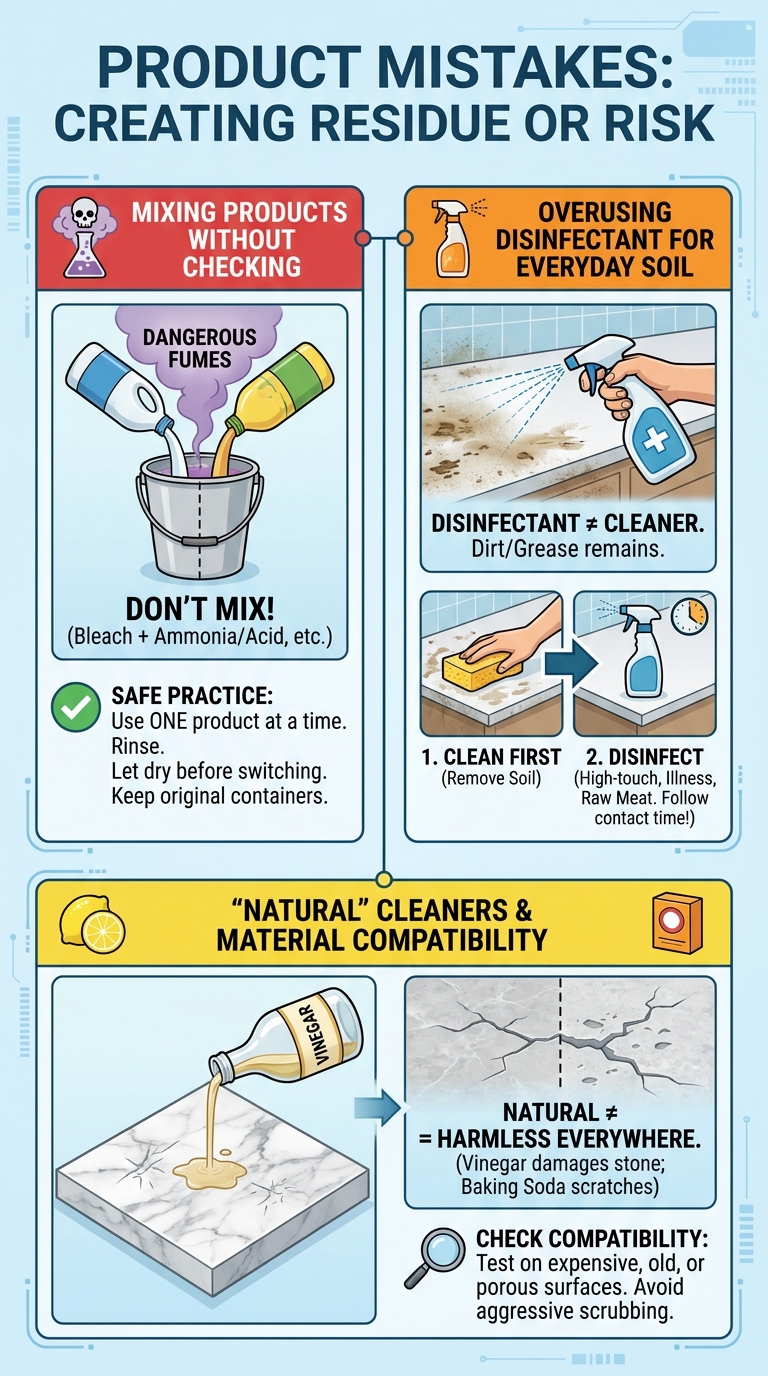
Product errors are some of the most important cleaning mistakes that make your home dirtier or less safe. The wrong combination, too much disinfectant, or a “natural†cleaner used on the wrong material can turn an easy job into a surface problem. Read labels before you pour, mix, spray, or scrub. The safety guide to cleaning products you should not mix covers the combinations that should never be improvised.
Mixing products without checking labels
Do not mix household cleaners unless the product label specifically tells you to do so. Mixing bleach with ammonia, acids, some toilet cleaners, or other products can create dangerous fumes. Even products that seem mild can react badly when combined in a bucket, bottle, drain, toilet bowl, or sink. Poison Control’s household cleaner safety advice is worth reviewing before handling products you do not fully understand.
Use one product at a time, rinse if the label requires it, and let the area dry before switching methods. Keep original containers when possible so instructions and warnings stay with the product. If a label is missing, damaged, or unreadable, do not guess.
Overusing disinfectant for everyday soil
Disinfectant is not a substitute for cleaning. Dirt, grease, food residue, soap film, and dust need to be removed first. If you spray disinfectant onto a dirty counter and wipe it away immediately, you may leave soil behind and fail to use the product as directed. CDC guidance on cleaning and disinfecting at home explains that cleaning and disinfecting are different steps.
Use disinfectant when the situation calls for it, such as certain high-touch surfaces, illness cleanup, bathroom fixtures, or areas that contact raw meat juices. Follow contact time, ventilation, and rinsing instructions. For everyday dust or crumbs, a general cleaner or soap-and-water method may be enough.
Choosing natural cleaners without checking material compatibility
Natural does not automatically mean gentle on every surface. Vinegar can damage natural stone and some finishes. Baking soda can scratch when used dry or with pressure. Lemon juice is acidic. Essential oils can leave residue or affect some plastics and finishes. The mistake is not using simple ingredients. The mistake is assuming they are harmless everywhere.
Before using any cleaner, check the material first. Stone counters, marble tile, sealed wood, waxed furniture, stainless steel, glass cooktops, grout, and painted cabinets may need specific care. If a surface is expensive, old, porous, or already damaged, test first and avoid aggressive scrubbing.
Surface and Material Mistakes
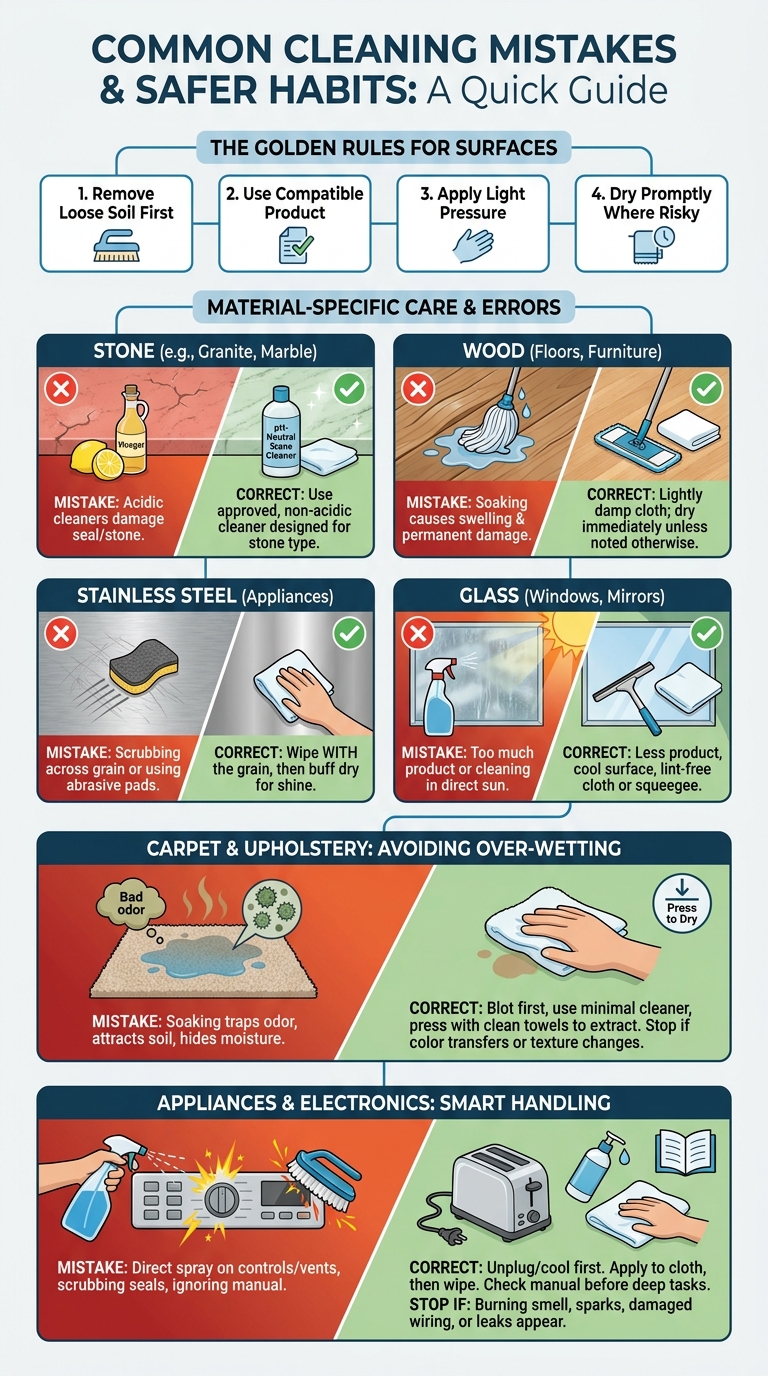
Surface cleaning mistakes often show up as dullness, streaks, scratches, swelling, discoloration, or texture changes. The safest habit is to remove loose soil first, use a compatible product, apply light pressure, and dry the surface when moisture could cause trouble.
Stone, wood, stainless steel, and glass issues
Stone can react to acidic cleaners. Wood can swell when soaked. Stainless steel can scratch if scrubbed across the grain or cleaned with abrasive pads. Glass can streak when too much product is used or when direct sun dries cleaner too fast. Each material needs a different touch.
For stone, use a cleaner approved for the seal and type of stone. For wood, use a lightly damp cloth and dry promptly unless the care instructions say otherwise. For stainless steel, wipe with the grain and buff dry. For glass, use less product, clean when the surface is cool, and use a lint-free cloth or squeegee.
Carpet and upholstery over-wetting
Over-wetting carpet and upholstery is a common cleaning error because damp fabric can hold odor, attract soil, or encourage hidden moisture problems. A spot may look cleaner for one day, then smell worse because liquid pushed soil deeper into padding or cushions.
Blot first, use small amounts of cleaner, and avoid soaking the area. Press with clean towels to pull moisture back out. If a stain is large, old, oily, dye-based, or tied to pet urine, repeated DIY soaking can make the problem harder to fix. Stop if color transfers, fabric texture changes, or the area will not dry.
Appliance and electronics mistakes
Appliances and electronics should not be treated like plain counters. Control panels, screens, vents, coils, gaskets, filters, burners, and seals all have limits. Spraying liquid directly onto a control panel can push moisture into seams. Scrubbing a gasket can damage the seal. Running a cleaning cycle without checking the manual can create smoke, odors, or damage in some situations.
Unplug small appliances when appropriate, let hot surfaces cool, and use a cloth instead of direct spray near openings. For large appliances, check the manual before removing parts or using cleaning tablets, degreasers, oven cycles, or descalers. Stop if you smell burning, see sparks, find damaged wiring, or notice leaking.
Room-Specific Cleaning Mistakes

Rooms get dirty in different ways. A kitchen collects grease and food residue. A bathroom holds moisture and soap film. Bedrooms and living rooms collect dust, fabric fibers, pet hair, and clutter. The mistake is using one routine for every room and expecting the same result.
Kitchen mistakes that leave grease and odors
In kitchens, grease often hides above the stove, on cabinet fronts, around range hood filters, on backsplash edges, and on the floor near cooking zones. Wiping only the counter can leave the room smelling stale. Remove crumbs first, then degrease the surfaces that actually hold the film.
Do not ignore trash cans, sink strainers, refrigerator spills, dishwasher filter areas, and cutting board care. If a kitchen smells after cleaning, check food residue before adding fragrance. Also avoid using the same sponge or cloth on multiple zones without rinsing or replacing it. A greasy cloth can spread film onto clean counters.
Bathroom mistakes that leave moisture behind
Bathrooms often look clean while staying too damp. The mistake is scrubbing fixtures but leaving wet towels, closed shower doors, blocked fans, damp bath mats, and puddled corners. Moisture lets odor, soap film, and mildew-like growth return quickly. EPA resources on mold and moisture explain why controlling moisture is part of keeping indoor spaces clean.
After cleaning, dry high-moisture surfaces where practical, hang towels fully open, wash bath mats regularly, and run the fan during and after showers if you have one. If dark spots, peeling paint, soft drywall, or musty smells keep returning, stop treating it as only a scrubbing problem.
Bedroom and living room dust mistakes
Dust mistakes often come from moving dust instead of removing it. A dry feather duster can scatter dust into the air. Spraying polish onto a dusty surface can make paste. Vacuuming too fast can leave dust and pet hair in carpet, rugs, and upholstery. Dust high surfaces first, then vacuum slowly.
Pay attention to fabric-heavy zones: curtains, throw pillows, blankets, upholstered headboards, lampshades, under-bed storage, and pet resting spots. Wash what care tags allow, vacuum what cannot be washed, and leave space around vents so dust is not blown straight into fabrics.
Stain and Odor Mistakes
Stains and odors get worse when they are rushed. Scrubbing too soon, adding fragrance, or soaking the area can spread the problem. The better habit is to identify what happened, remove excess material, use the right method for the surface, and know when to stop.
Scrubbing stains before blotting
Scrubbing a fresh spill can push it wider and deeper. Blot liquid spills with clean, absorbent material before applying cleaner. Lift solids with a spoon or dull edge. Work from the outside of the spot toward the center so you do not expand the stain.
Use cool or lukewarm methods unless the care instructions say otherwise. Heat can set some protein-based stains and make them harder to remove. If color transfers to your towel, the fabric may not be colorfast. Stop before you create a larger damaged area.
Masking odors instead of removing the cause
Air freshener can make a room smell better for a short time, but it does not remove residue. Odors usually cling to trash cans, drains, damp fabrics, pet areas, grease film, upholstery, carpets, bathroom textiles, or hidden spills. Clean those areas first, then decide whether the room still needs scent.
A good check is to ventilate the room, remove obvious odor holders, clean the likely area, and return later without fragrance. If the smell comes back in the same spot, keep looking for moisture, food residue, pet residue, smoke film, or a plumbing issue.
Ignoring pet accidents and damp fabrics
Pet accidents need quick action because residue can sink into carpet backing, cushions, grout, wood seams, and subfloor edges. Blot, clean with a product appropriate for the material and the type of mess, and dry thoroughly. Do not use strong odors to cover the smell, because pets may still detect residue.
Damp fabrics create similar problems. Wet towels, laundry forgotten in the washer, damp pet bedding, and soaked rugs can smell even after the room is wiped down. Launder what can be washed, dry items fully, and avoid storing damp textiles in closed hampers or closets.
Schedule Mistakes That Make Cleaning Harder
Bad timing turns small tasks into heavy work. A home does not need constant deep cleaning, but it does need small resets before grime hardens, dust builds, moisture lingers, and clutter blocks access. The best schedule is simple enough that you can repeat it.
Letting small tasks become deep-clean projects
Grease on a stovetop is easier to remove the day it happens. Toothpaste in a sink is easier before it dries. Entry dirt is easier before it spreads through the home. Small frequent tasks keep deep cleaning from becoming the only way to feel caught up.
Choose a few non-negotiable resets: wipe food prep surfaces, wash dishes or load the dishwasher, remove trash, dry bathroom splash areas, and clear main walkways. These habits protect the bigger cleaning days from becoming rescue missions.
Skipping monthly detail tasks
Some problems are not daily messes. Range hood filters, baseboards, cabinet fronts, vacuum filters, ceiling fan blades, door tracks, under-sink areas, and appliance edges often need monthly or occasional attention. Skipping them can make a freshly cleaned room still feel dusty or stale.
Pick one detail zone each week instead of saving everything for a full weekend. Ten focused minutes on one neglected area usually works better than a long list you keep postponing.
Forgetting seasonal resets
Seasonal changes affect cleaning needs. Rainy months bring entry mud and humidity. Hot months can increase odors in trash areas. Cold months can reduce ventilation. Holiday cooking can leave grease. Pet shedding may change by season. A seasonal reset helps you catch patterns before they become normal.
Look at entry mats, vents, windowsills, storage closets, bathroom moisture, pantry spills, garage dust, and laundry habits at the start of each season. You are not trying to clean the whole home at once. You are adjusting the routine to what the home is doing now.
Decision Tree: What Went Wrong?
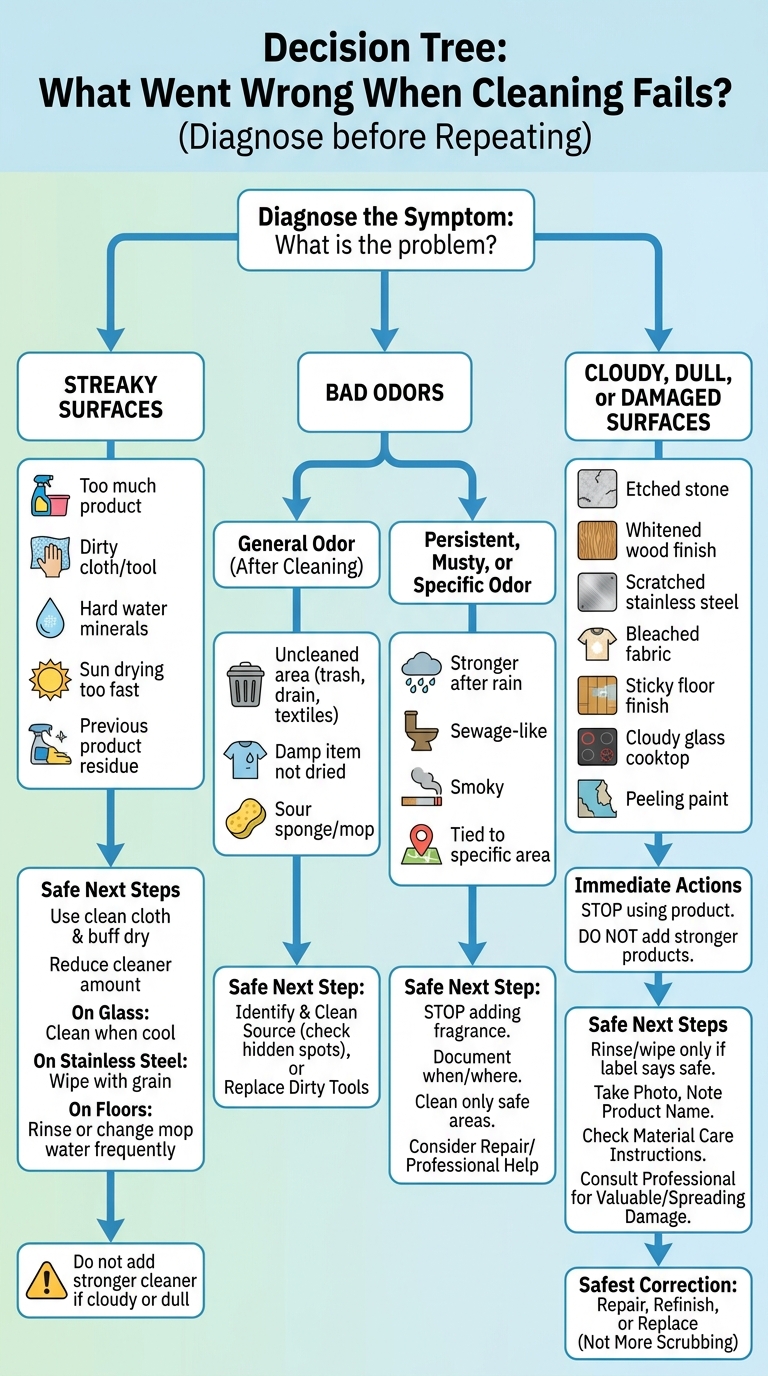
When cleaning fails, diagnose the symptom before repeating the same method. Streaks, odors, and surface changes usually point to different mistakes. Use the clues below to choose the next safe step.
If surfaces look streaky
Streaks usually mean too much product, dirty cloths, hard water minerals, direct sun drying the cleaner too fast, or residue from a previous product. Use a clean cloth, reduce the amount of cleaner, and buff dry. On glass, work when the surface is cool. On stainless steel, wipe with the grain. On floors, rinse or change mop water more often if the product instructions allow it.
If the surface turns cloudy or dull, stop before adding a stronger cleaner. Cloudiness on stone, wood finish, stainless steel, or sealed surfaces may be damage, not ordinary streaking.
If a room smells bad after cleaning
Look for something that was not cleaned, not dried, or not removed. Check trash cans, drains, damp cloths, mop heads, pet bedding, rugs, grease areas, laundry, under-sink cabinets, and bathroom textiles. Also check whether the cleaning tool is the odor problem. A sour sponge or mop can spread smell across a room.
If the odor is musty, stronger after rain, sewage-like, smoky, or tied to a specific wall, cabinet, or floor area, do not keep adding fragrance. Document where and when it happens, clean only what is safe to clean, and consider repair or professional help.
If a product damaged or discolored something
Stop using the product immediately. Do not try multiple stronger products on top of the damaged area. Rinse or wipe only if the label and surface care instructions say it is safe. Take a photo, note the product name, and check the material care instructions. If the item is valuable or the damage is spreading, ask a qualified professional before continuing.
Common signs of product damage include etched stone, whitened wood finish, scratched stainless steel, bleached fabric, sticky floor finish, cloudy glass cooktops, and peeling paint. The safest correction may be repair, refinishing, or replacement, not more scrubbing.
FAQ
These quick answers cover the cleaning errors people usually notice after a room looks clean but still feels wrong.
What is the most common cleaning mistake?
The most common mistake is cleaning without removing loose dirt, dust, crumbs, hair, or clutter first. That leads to smearing, streaks, sticky residue, and rework. Clear the area, remove dry debris, then use the right cleaner for the surface.
Can using too much cleaner make things dirtier?
Yes. Too much cleaner can leave residue that attracts dust, lint, hair, and footprints. It can also make floors feel tacky and counters look dull. Follow the label amount, use clean cloths, and dry or rinse only when the product or material calls for it. The comparison of natural cleaning versus commercial cleaners can help you choose by task and surface rather than by marketing category.
Why does my house still smell after cleaning?
Your house may still smell because the real odor holder was not cleaned or dried. Check trash cans, drains, damp laundry, pet bedding, upholstery, bathroom textiles, grease film, and hidden moisture. Fragrance can cover odor briefly, but it will not fix residue or dampness.
How do I know if a cleaner is safe for a surface?
Read the product label and the surface care instructions. Check whether the cleaner is approved for that material, test in a hidden spot when unsure, and stop if color, shine, texture, or smell changes. For stone, wood, electronics, appliance panels, and specialty floors, the manual or care guide matters more than a general tip.
Final Thoughts
Most home cleaning mistakes come from rushing the order, using too much product, skipping labels, overwetting materials, or trying to cover odors instead of removing what caused them. The fix is not to clean harder. It is to clean in a better order, use less product more accurately, respect each surface, and stop when a task crosses into damage, moisture, chemical, electrical, or repair risk.
When a room does not improve after normal cleaning, treat the symptom as information. Streaks point to residue or technique. Odors point to trapped soil, dampness, or hidden material. Recurring grime points to a routine gap. Once you know what went wrong, the next cleaning session becomes shorter, safer, and more effective.

Ethan Carter is the Founder & Editor of HomeCleanSecrets. Based in the United States, he has 5 years of experience creating practical home cleaning, laundry care, stain removal, decluttering, and home organization content. His goal is to help everyday households clean smarter and build simple routines that are easier to maintain.
Read more about Ethan Carter on his author page: https://homecleansecrets.com/ethan-carter/