
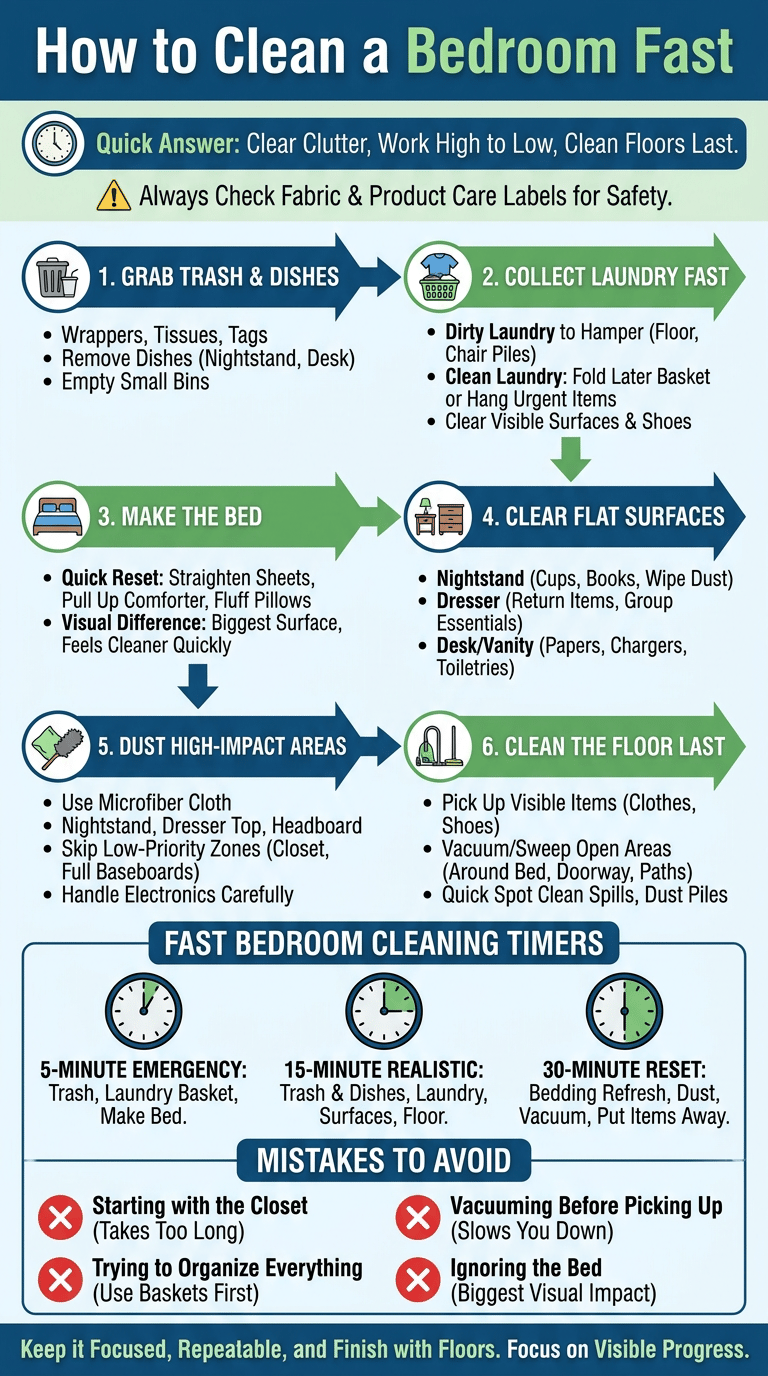
When you need to clean a bedroom fast, aim for a functional reset instead of a perfect room. Clear the things that make the room look messy from the doorway: trash, dishes, laundry, the bed, the most visible surfaces, and the floor path.
Use the timer to protect the scope. A fast bedroom clean should not become closet organizing, mattress care, curtain washing, or a full under-bed project. If a task needs special products, heavy furniture movement, long drying time, or detailed sorting, save it for another session.
For dust, floor debris, and basic indoor particles, broad references such as trusted home cleaning guidance can provide background, but the fastest safe choice still comes from the surface, the product label, and what is visibly in the room.

Quick Answer: The Fastest Way to Clean a Bedroom
The Priority Order
The fastest order is trash and dishes first, laundry second, bed third, visible surfaces fourth, and the floor path last. That sequence gives the room an immediate visual reset and keeps you from vacuuming around items that should have been picked up first.
Do not stop to perfect each category. Touch each area once, make the obvious decision, and move on. A speed clean works because it removes the mess that interrupts use of the room, not because every surface becomes detailed.
Biggest Visual Changes
The biggest visual changes are a made bed, a clear walking path, one clear horizontal surface, and fewer loose items on the floor. Those changes are visible from the doorway and make the room easier to use even when you do not have time for detailed cleaning.
What to Skip
Skip closet organizing, drawer sorting, under-bed storage, detailed baseboards, decor dusting, pillow washing, throw blanket washing, and mattress care. If textiles need separate care, keep resources such as how to clean throw blankets and how to clean pillows for later instead of opening those projects during a speed clean.
Choose Your Timer
5-Minute Emergency Reset
In 5 minutes, grab a trash bag, remove obvious trash and dishes, put dirty clothes into one hamper, straighten the bed, and clear the main floor path. Do not wipe every surface. Do not sort. The goal is a room that is safer to walk through and calmer to look at.
15-Minute Practical Reset
In 15 minutes, complete the 5-minute reset, then clear the nightstand or dresser, wipe one or two high-visibility surfaces if the material allows it, and vacuum or sweep open floor paths. This is the most useful version for a bedroom that is messy but not deeply dirty. For a visitor-focused final check, use the guest room cleaning checklist rather than expanding a general speed clean.
If the room is shared, divide the timer by zones instead of categories. One person can handle trash and dishes while another collects laundry and clears the floor path. Keep the same order so the room does not split into multiple unfinished piles.
30-Minute Clean
In 30 minutes, add light dusting, a fuller floor pass, and a bedding change only if clean linens are ready and the laundry plan makes sense. This is still a speed clean, not a deep clean. Leave heavy furniture, full under-bed cleaning, and textile washing for dedicated time. Hidden buildup and access-heavy work belong in a planned guide to deep clean a bedroom, not inside a speed reset.

Step 1: Remove Trash and Dishes
Work From the Door Around the Room
Start at the door and move around the room once with a trash bag. Pick up wrappers, tissues, packaging, receipts, tags, empty bottles, and anything that clearly belongs in the trash. Then remove dishes, cups, and food items so they do not sit on bedroom surfaces while you work.
Empty Small Bins Only When Time Allows
If the bedroom bin is full or smells, empty it now. If time is extremely short and the bin is not causing a problem, tie off visible trash first and return to the small bin later. Fast cleaning is about the most visible and functional mess.
Food trash, wet tissues, and anything with odor should move ahead of dry paper or packaging. If the room has a desk or vanity, check those spots quickly because small trash often collects there before it reaches the bin.
Step 2: Collect Laundry
Dirty Clothes Into One Hamper
Put dirty clothes, towels, and worn soft items into one hamper or laundry basket. Do not sort by color, load, fabric, or owner unless that is already part of your normal laundry setup. One container is faster and keeps the floor open.
Do Not Sort Drawers or Closets
Avoid opening drawers, closet shelves, storage bins, or bags of old clothing. Those areas create decisions, not a fast reset. If clean clothes are scattered, put them in one clean basket and return them after the visible room is under control.
If you find clothing that needs repair, donation, or a seasonal decision, place it outside the speed-clean path. The timer should solve laundry on the floor, not the entire clothing system.
Step 3: Reset the Bed
Straighten Existing Bedding
Pull up the sheet or comforter, straighten pillows, remove loose items, and smooth the biggest wrinkles. A made bed changes the room quickly because it is usually the largest visible surface. Keep this step simple unless the bedding is actually being changed.
Change Linens Only in the 30-Minute Version When Ready
Change linens during the 30-minute version only when clean bedding is ready and dirty linens have a place to go. Do not start a wash cycle that leaves the bed unfinished if you need the room usable soon. Keep clean bedding away from dust and spray.
If linens are not ready, straighten what is already on the bed and schedule the change separately. A half-stripped bed can make a fast clean feel unfinished, especially when the room needs to be used right away.

Step 4: Clear the Most Visible Surfaces
Nightstand
Clear cups, tissues, chargers, books, loose medicine containers, and anything that does not belong on the nightstand. If you wipe it, use a method that fits the finish and avoid spraying near lamps, cords, books, or fabric.
Dresser or Desk
Choose the dresser or desk, not both, if the timer is tight. Remove trash, group daily essentials, stack papers neatly, and clear enough open space to make the surface look intentional. Save paperwork and drawer decisions for another time.
A clear surface does not have to be empty. It only needs to look deliberate. Group the items that truly belong there, remove obvious extras, and leave small detailed arranging for a slower reset.
One Temporary Return Basket
Use one basket for items that belong elsewhere. Do not make separate piles for every room. The basket is a holding zone with a deadline, not a new storage system.
Step 5: Remove Visible Dust
High-Impact Surfaces Only
Dust surfaces that are obvious from the doorway or next to the bed: nightstand, dresser top, desk edge, headboard ledge, or a main shelf. Use a clean cloth and stop before detailed decor work takes over the timer.
Work from higher visible surfaces to lower ones so loose dust does not fall onto a finished floor path. If the cloth becomes dirty quickly, fold to a clean side instead of wiping the whole room with the same dusty surface.
Electronics and Lamps Without Direct Spraying
For lamps, remotes, screens, chargers, and cords, avoid direct spraying. Check the manual when needed, power items down when appropriate, and use minimal moisture on a cloth only when the item allows it.
Leave Decor/Baseboards for Later
Decor, full baseboards, closet shelves, vents, and picture frame detail work can wait. They matter during a deeper clean, but they are not the fastest route to a bedroom that looks usable today.
Step 6: Clean the Floor Path
Pick Up Before Vacuuming
Pick up clothes, shoes, bags, cords, and small objects before the vacuum or broom comes out. This prevents stopping every few seconds and keeps fragile or useful items from being damaged.
Open Areas Only
Vacuum or sweep open areas: the doorway, the walking path, beside the bed, and the area in front of the dresser or desk. If the room connects to another space, a broader guide such as bedroom and living room cleaning can wait until you are cleaning beyond this quick bedroom reset.
For carpet, focus on visible traffic lanes and crumb or hair clusters. For hard floors, sweep or vacuum loose debris before any damp spot cleaning, and keep moisture away from materials that are not meant to get wet.
Skip Heavy Furniture and Full Under-Bed Cleaning
Do not move heavy furniture or pull everything from under the bed during a speed clean. Reach only what is easy and safe. A full under-bed cleanup is a separate task because it often creates more mess before it gets better.

How to Make the Room Look Cleaner Fast
A Made Bed
The bed sets the visual tone. Straighten bedding, align pillows, and remove items that do not belong there. Even if nothing else is perfect, a neat bed makes the room feel more controlled.
A Clear Floor Path
A clear floor path makes the room safer and easier to enter. Focus on the route from the door to the bed, closet, and desk. Shoes, bags, laundry, and cords are the usual blockers.
One Clear Horizontal Surface
Choose one surface that can be made visibly clear: the nightstand, dresser, desk, or vanity. One clean surface gives the eye somewhere to rest and keeps the reset realistic.
Better Light and Fresh Air Without Fragrance Claims
Open curtains, turn on a light, or open a window briefly when weather, safety, and outdoor conditions allow. Fresh air and light can make the room feel less stale, but do not rely on fragrance, sprays, or oils to cover cleaning problems.
If outdoor air is smoky, dusty, extremely humid, or full of pollen, skip the window and use light instead. The point is to make the room easier to see and use, not to force a ventilation step when conditions are poor.
What to Skip When Time Is Short
Closet Organizing
Closets create choices. If the closet is not blocking the floor path, close the door and keep cleaning the visible room.
Drawer Sorting
Drawers can turn a 15-minute reset into a long organizing project. Put loose items into the return basket and decide later.
Deep Mattress or Textile Care
Mattress work, pillow washing, curtain cleaning, and full blanket care need labels, drying time, and more space. They do not belong in a fast room reset.
Moving Heavy Furniture
Moving beds, dressers, and desks can scratch floors, strain your back, or uncover a larger project. Leave heavy movement for planned cleaning.
Detailed Baseboards and Decor
Baseboards, small decor, framed art, and shelf styling are detail tasks. They can wait until the room is already functional.
Fast-Cleaning Mistakes
Starting With Hidden Storage
Hidden storage feels productive but usually slows the reset. Start where the mess is visible and where the room needs to function.
Creating Multiple Sorting Piles
Multiple piles spread the mess across the room. Use one hamper, one trash bag, and one return basket.
Vacuuming Before Picking Up
Vacuuming first means stopping for cords, clothes, shoes, and small items. Pick up first so the floor pass is quick.
Wet Products on Too Many Surfaces
A fast clean does not need wet products everywhere. Too much moisture can harm wood, electronics, paper, and fabric. Use labels and surface instructions when a cleaner is needed.
Letting the Timer Become a Deep Clean
When the timer ends, stop the speed clean and note larger tasks for later. The room can be improved without being perfect.
A useful stopping point is when trash is out, laundry is contained, the bed is reset, the floor path is clear, and at least one visible surface is controlled. Anything beyond that is optional if time remains.
Keep the Next Reset Shorter
One Hamper and One Trash Bin
A visible hamper and a small trash bin reduce the number of decisions during the next reset. Put them where mess usually starts, not where they look best in a photo. When you have time for the full routine rather than a timer reset, follow how to clean a bedroom step by step.
Daily Two-Minute Floor Check
Once a day or as needed, scan the floor for laundry, dishes, trash, and trip hazards. A quick floor check keeps the next 5-minute reset from becoming a 30-minute clean.
Return Basket With a Deadline
A return basket helps only if it gets emptied. Set a deadline, such as before bed or after dinner, so it does not become permanent clutter.
Frequently Asked Questions
How Do I Clean My Bedroom in 5 Minutes?
Remove obvious trash and dishes, put laundry into one hamper, straighten the bed, and clear the main floor path. Stop there if the timer is truly limited.
What Should I Clean First?
Start with trash and dishes because they are easy to identify and make the room feel better quickly. Then move to laundry, the bed, surfaces, and the floor path.
Should I Make the Bed First or Last?
Make the bed early if the bedding is staying in place. If you will dust nearby surfaces or change linens, protect the bed or make it after dusty work is finished.
What Should I Skip?
Skip closets, drawers, under-bed storage, heavy furniture, full textile care, and detailed decor. Those tasks need more time than a speed clean is meant to hold.
How Do I Clean When Overwhelmed?
Use one visible action at a time: trash bag, hamper, bed, surface, floor path. Do not diagnose the feeling or force a full plan. Reduce the number of choices and stop when the room is safer and more usable.
Is a 30-Minute Clean a Deep Clean?
No. A 30-minute clean is a fuller reset. It can include light dusting, open-floor vacuuming, and a bedding change if ready, but it should not include heavy furniture, deep mattress work, or full storage projects. Follow current cleaning and disinfecting directions such as trusted cleaning guidance only when the situation calls for more than routine cleaning.
Final Thoughts
A fast bedroom clean works when the scope stays small. Choose 5, 15, or 30 minutes, clear the visible obstacles, reset the bed, handle one or two surfaces, and finish the floor path.
Save deep cleaning, textiles, mattresses, curtains, closets, and furniture movement for separate sessions. The win is a bedroom that looks better, functions better, and can be reset again without starting over from zero.

Ethan Carter is the Founder & Editor of HomeCleanSecrets. Based in the United States, he has 5 years of experience creating practical home cleaning, laundry care, stain removal, decluttering, and home organization content. His goal is to help everyday households clean smarter and build simple routines that are easier to maintain.
Read more about Ethan Carter on his author page: https://homecleansecrets.com/ethan-carter/