
Quick Answer: The Best Way to Clean a Washing Machine
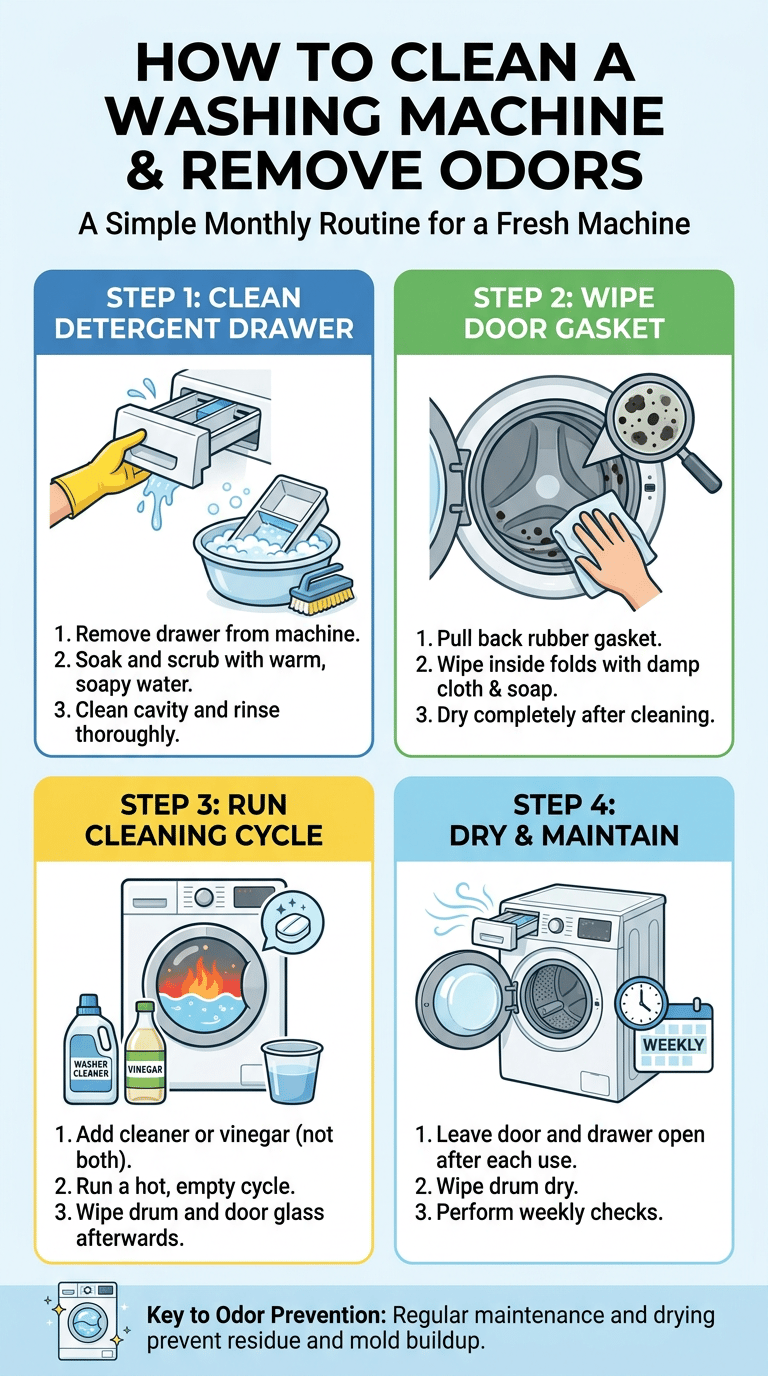
The most reliable way to remove musty smells is a simple monthly routine that cleans four trouble areas: the detergent drawer, the door gasket, the drum, and the habit of leaving the machine damp between uses. Start by emptying the washer and removing any visible debris. Take the detergent drawer out and soak and scrub it. Wipe the rubber gasket folds thoroughly. Then run a hot cleaning cycle using either a commercial washer cleaner or a suitable household alternative. Finish by wiping the drum and door and leaving the door open to dry. Following these steps prevents residue and odor from returning.

What to clean first
Begin with the visible, removable parts that collect the most grime: the detergent drawer and any lint traps, then clean the gasket folds and drum. Cleaning removable parts first removes the bulk of residue and makes the cleaning cycle more effective.
For a related walkthrough, see our guide to how to clean humidifier.
For a related walkthrough, see our guide to how to clean dryer vent.
For a related walkthrough, see our guide to how to clean shower glass.
What to avoid
- Do not mix cleaning chemicals such as bleach and ammonia; mixing cleaners can create dangerous fumes. Poison Control guidance on household cleaner safety
- Avoid using too much force when cleaning rubber parts to prevent tearing the gasket.
- Do not ignore manufacturer instructions for your specific model. If the manual advises against a product or method, follow the manual.
- Avoid keeping the washer door shut while the machine is damp. Poor ventilation encourages mold and odors.
Why Washing Machines Start to Smell
Detergent residue builds up
Liquid and powdered detergent, fabric softener, and boosters can leave a film inside the drawer, dispenser cavity, and along the drum. Over time this residue traps dirt and creates a surface where bacteria and mold can grow if the area stays damp.
Moisture gets trapped inside
Washing machines are wet environments. If water and steam cannot dry out between cycles, moisture remains in the drum, gasket folds, and detergent compartment. Trapped moisture encourages microbial growth, which is a common source of musty odors. Improving airflow into the washer and drying parts after use helps break this cycle. For general guidance on indoor moisture and mold prevention, consult the Environmental Protection Agency’s guidance on mold prevention and cleanup. EPA guidance on mold prevention and cleanup
Front-load gaskets collect grime
Front-load washers have a rubber gasket that seals the door. The gasket has folds that collect water, lint, hair, and detergent. Those trapped materials are a frequent source of stains, dark spots, and musty odors when not cleaned and dried.
Signs Your Washing Machine Needs Cleaning
Musty smell
A persistent scent of damp or mildew coming from the drum or when you open the door indicates microbial growth or trapped residue. If airing the washer temporarily removes the smell but it returns quickly, deep cleaning is needed.
Clothes come out smelling bad
If you notice clothes with a sour or stale scent after washing, especially when they felt fine going in, odors are likely building inside the machine. Rewash the load after cleaning the washer to prevent transferring odors back to clothing.
Visible mold or residue
Dark spots on the gasket, slimy residue in the detergent drawer, or rings of grime in the drum are clear signs the washer needs attention. Small, isolated areas of mold or mildew on rubber and plastic can be cleaned safely, but extensive growth may require professional help.
Detergent drawer feels slimy
A slimy detergent drawer or cavity shows soap and softener buildup. That slimy film can drip back into the wash and carry odors. Regular removal and cleaning of the drawer prevents persistent problems.
Step 1: Empty the Washer Completely
Remove laundry
Take all clothing and items out of the drum. Check pockets for tissues and debris before starting any cleaning cycle so you do not transfer lint or paper back into the machine during the clean cycle.
Check the drum
Spin the drum by hand to feel for small objects such as coins, buttons, or hair ties. Remove any foreign objects to avoid clogging the drain or damaging the drum during the cleaning cycle.
Remove loose debris
Use a towel or paper towel to wipe up visible lint, pet hair, or pooled water. If your model has a removable lint filter or trap, take it out and clean following manufacturer instructions.
Step 2: Clean the Detergent Drawer
How to remove the drawer
Most drawers slide out fully when pulled, often with a release tab or slight upward lift. Consult your washer manual if unsure. If the drawer does not come out, clean it while in place using a spray bottle and brush designed for tight spaces.
How to soak and scrub it
Soak the drawer in warm water with a mild detergent or a small amount of liquid dish soap to loosen residue. Use an old toothbrush to scrub corners, compartments, and any small vents. Rinse thoroughly and allow the drawer to dry before reinserting.
How to clean the drawer cavity
With the drawer removed, use a cloth or brush to clean the cavity. Wipe away residue and trapped water. If the cavity is slimy, use a diluted cleaning solution and follow up with a clean water rinse. Be careful not to push grime deeper into the dispenser channels. Dry the cavity with a towel before sliding the drawer back in.
Step 3: Clean the Door Gasket
Why the gasket gets moldy
The gasket is warm and stays moist. Its folds trap water, lint, hair, and detergent. Those conditions are favorable for mildew and mold to grow, which causes dark spots and a musty smell.
How to wipe inside the folds
Pull back the rubber gasket and inspect the folds. Wipe inside the folds with a cloth dampened with warm water and a little liquid dish soap. For spot cleaning, use a soft brush to remove stubborn grime. If you use a disinfecting product, follow label instructions and ventilate the area.
How to dry it properly
After cleaning, use a microfiber cloth to dry the gasket folds completely. Keep the door open for a few hours after cleaning so residual moisture evaporates. For ongoing prevention, wipe the gasket dry after each wash in humid climates or if you notice water collecting there.
Step 4: Run a Cleaning Cycle
Washer cleaner option
Use a commercial washer cleaner designed for your machine type. Follow the product directions for dosage and cycle settings. Commercial cleaners are formulated to remove soap scum, mineral buildup, and residues when used as directed.
Vinegar option if suitable
Some people use white vinegar as a household option because it helps dissolve soap residue. Use one cup of white vinegar in an empty drum and run a hot cycle. Do not mix vinegar with bleach or other cleaners, and check your washer manual before using vinegar regularly because some manufacturers advise against it on certain models or finishes.
Hot water cycle
Run the hottest, longest cycle available on your washer with no laundry. Hot water helps loosen oils and residues and aids cleaner performance. If your machine has a cleaning or tub clean cycle, use that program for best results.
Step 5: Wipe the Drum, Door, and Exterior
Clean the inside drum
After the cleaning cycle, wipe the drum interior with a soft cloth to remove loosened residue. Inspect for remaining stains or growth and spot clean as needed. For stainless steel drums, use a soft cloth and avoid abrasive pads that could scratch the surface.
Wipe the door glass
Clean the door glass with a nonabrasive cleaner or a diluted vinegar solution to remove spots and streaks. Wipe dry with a lint-free cloth to avoid leaving moisture that could foster odors.
Clean controls and outside surfaces
Wipe the control panel, knobs, and exterior with a cloth dampened in mild soap and water. Avoid spraying liquids directly onto controls. Dry surfaces thoroughly. Keep detergent bottles and softener containers clean so drips do not end up on the machine exterior.
Step 6: Keep the Washer Dry Between Uses
Leave the door open
After each wash, leave the door and detergent drawer open for at least an hour to let moisture escape and air circulate. This simple habit reduces the damp environment that allows odors and microbes to grow.
Remove wet laundry quickly
Take laundry out as soon as the cycle finishes. Wet clothing left in the drum creates a damp environment and transfers odors back into the machine. If you cannot remove loads immediately, use a short spin to reduce moisture and then remove items as soon as possible.
Use the right amount of detergent
Follow the detergent maker and washer manufacturer recommendations for dosing. Too much detergent causes buildup and creates excess suds that trap soil and moisture. High-efficiency washers require low-sudsing detergents and smaller amounts. Measuring detergent correctly helps prevent residue and odors.
Washing Machine Cleaning Mistakes to Avoid
Using too much detergent
Excess detergent leaves a film that traps dirt and scent molecules. Overuse also reduces rinse effectiveness, leaving residue on both clothes and the machine. Measure detergent carefully and use high-efficiency formulas when required by your washer model.
Keeping the door closed all the time
Resist the temptation to keep the door closed to save space. A closed, damp drum encourages mustiness. Leaving the door slightly ajar after cycles improves air flow and helps the machine dry out.
Ignoring the gasket
It is easy to forget the rubber gasket because it is out of sight. Neglecting it lets grime build inside the folds. Regular inspection and quick wipes prevent small problems from becoming deep-seated growths or stains.
Forgetting the detergent drawer
Detergent drawers are often overlooked because they are removable and out of sight. Failing to clean the drawer and cavity allows slimy deposits to accumulate and drip into washes. Make cleaning the drawer a monthly habit.
Washing Machine Maintenance Checklist
After each wash
- Remove laundry promptly.
- Leave the door and detergent drawer open to air out the drum and dispenser.
- Wipe the gasket and door glass if there is visible water or debris.
Weekly tasks
- Wipe the gasket folds and drum with a clean cloth.
- Check and clean any lint traps or filters as recommended by the manufacturer.
- Wipe the exterior controls and surfaces to remove spills or residue.
Monthly deep cleaning
- Remove and soak the detergent drawer; scrub and dry it before replacing.
- Clean the gasket thoroughly, reaching inside the folds.
- Run a hot cleaning cycle with a washer cleaner or a household alternative that is safe for your machine.
- Wipe the drum, door, and exterior; dry all surfaces.
Frequently Asked Questions
How often should I clean my washing machine?
A simple monthly cleaning routine is enough for most households to prevent odors and buildup. More frequent attention is useful if you have hard water, use lots of detergent, or regularly wash heavily soiled items.
Why does my washing machine smell bad?
Bad smells usually come from trapped moisture, detergent residue, or growth on the gasket and detergent drawer. Improving drying, cleaning deposits, and running periodic cleaning cycles remove the sources of odors.
Can I clean a washing machine with vinegar?
White vinegar can help remove soap residue and is a common household option. Use it cautiously: do not mix vinegar with bleach or ammonia, and check your washer manual for manufacturer recommendations. If you are unsure whether vinegar is appropriate for your model, use a commercial washer cleaner recommended for your machine.
How do I clean a front-load washer gasket?
Pull back the rubber gasket and wipe inside the folds with warm soapy water and a cloth. Use a soft brush for stubborn areas, rinse, and dry thoroughly. Make this part of your monthly routine to prevent buildup and odors.
Why do my clothes smell after washing?
Clothes can smell when the washer is not rinsing or drying properly, or when the machine has residue or microbial growth. Rewash affected loads after cleaning the machine and use the correct detergent amounts and cycle settings. Ensure the drum is aired out after cycles to prevent recontamination.
Final Thoughts
Addressing washer odors is largely a matter of habit plus targeted cleaning. Focus on the detergent drawer, the gasket, the drum, and drying the machine between uses. Use hot cleaning cycles and appropriate cleaning products, and follow manufacturer guidance for your model. If you discover extensive mold growth, persistent odors after cleaning, or health symptoms related to mold exposure, consult authoritative resources and consider professional remediation.
For general household cleaning and disinfecting recommendations, see the Centers for Disease Control and Prevention. For mold prevention and cleanup guidance, see the Environmental Protection Agency.
Quick monthly checklist: remove and clean the detergent drawer, wipe and dry the gasket, run a hot cleaning cycle, wipe the drum and door, and leave the door open to dry.

Ethan Carter is the Founder & Editor of HomeCleanSecrets. Based in the United States, he has 5 years of experience creating practical home cleaning, laundry care, stain removal, decluttering, and home organization content. His goal is to help everyday households clean smarter and build simple routines that are easier to maintain.
Read more about Ethan Carter on his author page: https://homecleansecrets.com/ethan-carter/