

A good closet system is not only about matching bins or a prettier hanger set. It is about knowing where each item belongs, how often you need it, how much air and visibility it needs, and what kind of reset will keep the system from collapsing after laundry day. This closet organization and clothing storage guide gives you a whole-home framework before you start buying organizers or emptying every shelf at once.
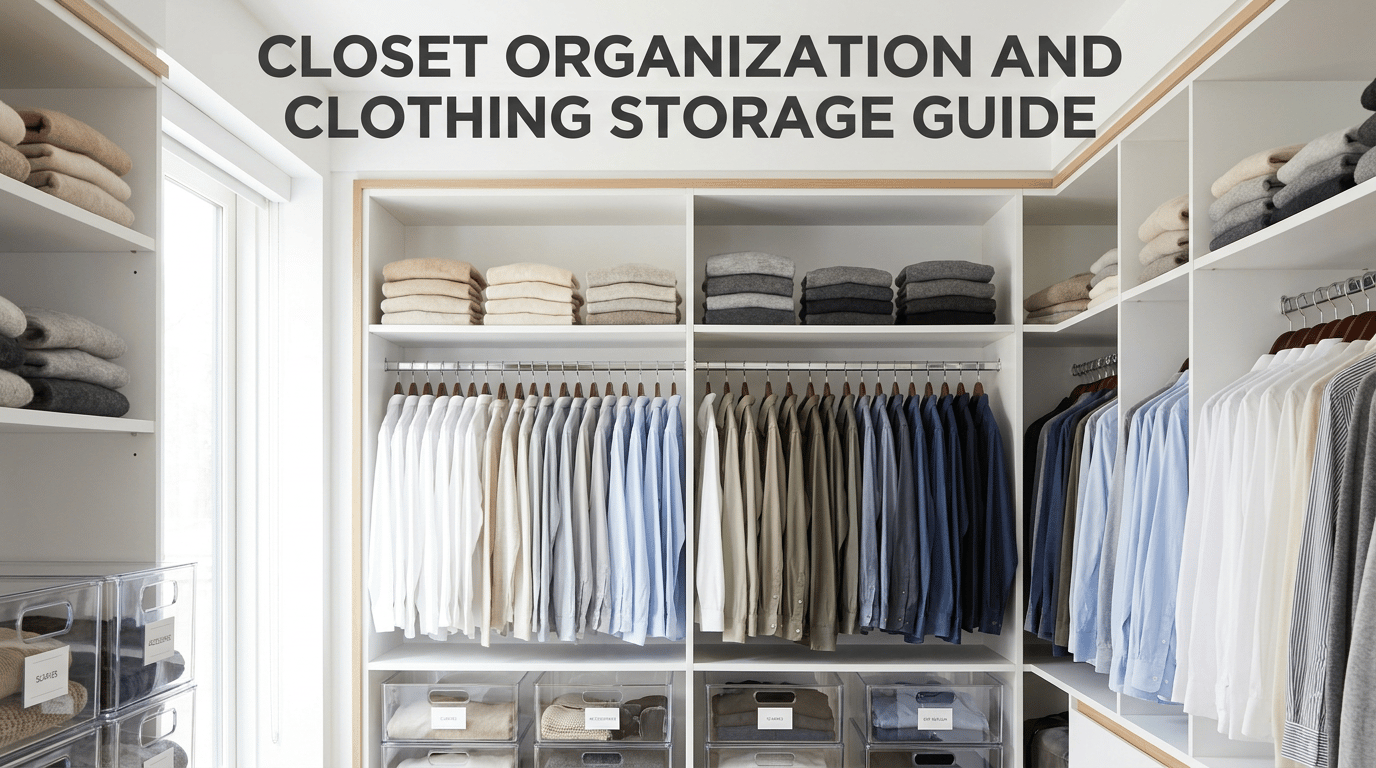
The goal is simple: make your daily clothes easier to reach, keep occasional items from crowding the front of the closet, protect off-season pieces from moisture and damage, and give shoes, linens, bedding, and blankets a place that makes sense. A good test is whether you can put away a clean laundry load in ten minutes without moving five unrelated items first. If you cannot, the problem is usually not laziness. The system is asking you to do too many tiny decisions every time you open the door.
Quick Overview: The Whole-Home Clothing Storage System
Before you touch a shelf, picture clothing storage as a set of connected zones. A bedroom closet handles current clothing and some accessories. Dresser drawers handle foldable daily pieces. A linen closet handles towels and household fabric supplies. Under-bed bins or high shelves may hold off-season clothing, extra blankets, or guest bedding. Shoes need a system that keeps pairs visible, dry, and separate from clean fabrics. When those roles are clear, the whole home feels easier to maintain.
What this guide covers
This guide covers the big decisions that affect every closet and storage zone: what to keep, what to group together, where items should live, how to choose between hanging, folding, shelving, bins, and drawers, and how to maintain the setup after the first organizing session. It also covers safety limits for heavy bins, moisture, scent products, and storage furniture.
You will find a framework for sorting, a decision tree for item placement, a category breakdown for the rest of the closet topics, and a maintenance schedule. The advice is meant for normal homes, rentals, apartments, shared bedrooms, and busy households where perfect custom closets are not realistic.
What this guide deliberately does not cover
This is the hub article, so it does not go deep into every specialty problem. It will not fully map a tiny reach-in closet, teach every linen fold, compare every shoe rack, or give a full seasonal packing method. Those topics need their own space because the best solution depends on the size of the closet, the type of fabric, the climate, the number of people using the storage, and how often the items come back into use.
If your main issue is limited space, start with a focused plan to organize a small closet before buying extra bins or hanging organizers.
Shoes can quickly take over the closet floor, so it helps to organize shoes in a closet with a system that matches how often you wear each pair.
The fastest way to choose your first storage project
Start with the area that creates the most daily friction. Open your main closet, your dresser, and your linen storage on the same day. Notice where you hesitate, where items fall, where clean laundry waits because there is no easy place to put it, and where you keep duplicates because you cannot see what you already own.
Why Closets and Clothing Storage Break Down
Most closets fail slowly. One extra sweater is placed on a shelf. A pair of shoes lands on the floor because the rack is full. Guest bedding gets pushed in front of winter coats. After a few weeks, the closet still holds the same items, but the logic is gone. Fixing the problem means identifying the pressure points, not blaming the person using the closet.
Too many categories in one zone
A closet becomes difficult when it stores every category with the same priority. Daily work clothes, formal outfits, workout gear, spare sheets, luggage, cleaning supplies, and off-season coats cannot all sit in the easiest-access spots. The closet may technically fit them, but it will not function well.
Poor visibility and hard-to-reach items
Visibility matters more than perfect folding. If you have to unstack five sweaters to find one shirt, the stack is too deep. If you cannot see the back of a shelf, it will collect forgotten items. If shoes sit in a pile, you will reach for the same two pairs and assume the rest are missing.
Seasonal overflow and laundry bottlenecks
Seasonal overflow happens when summer and winter wardrobes compete for the same rod, drawer, and shelf space all year. Laundry bottlenecks happen when clean clothes have no obvious landing place. The two problems often feed each other. A drawer packed with off-season shirts makes it harder to put away the shirts you actually wear this week.
The Core Framework: Sort, Zone, Store, Maintain
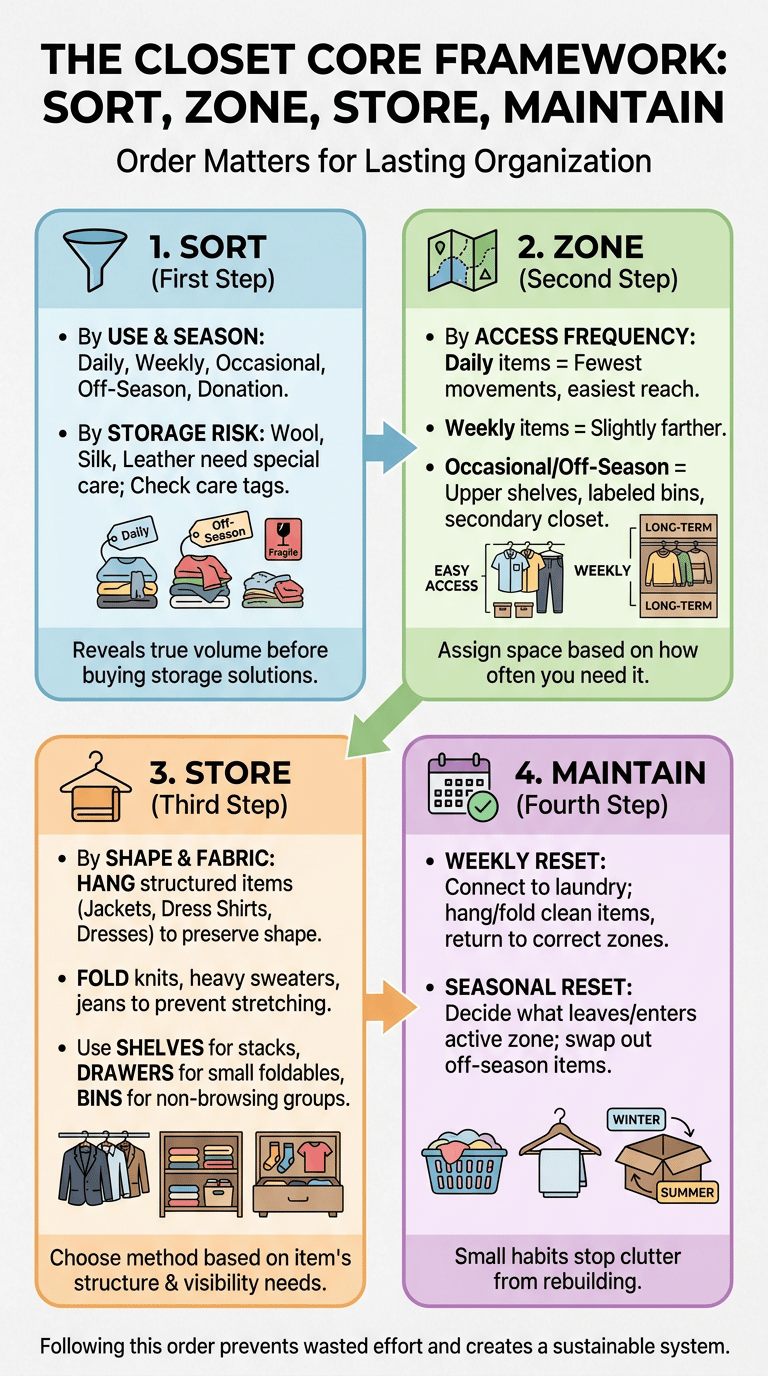
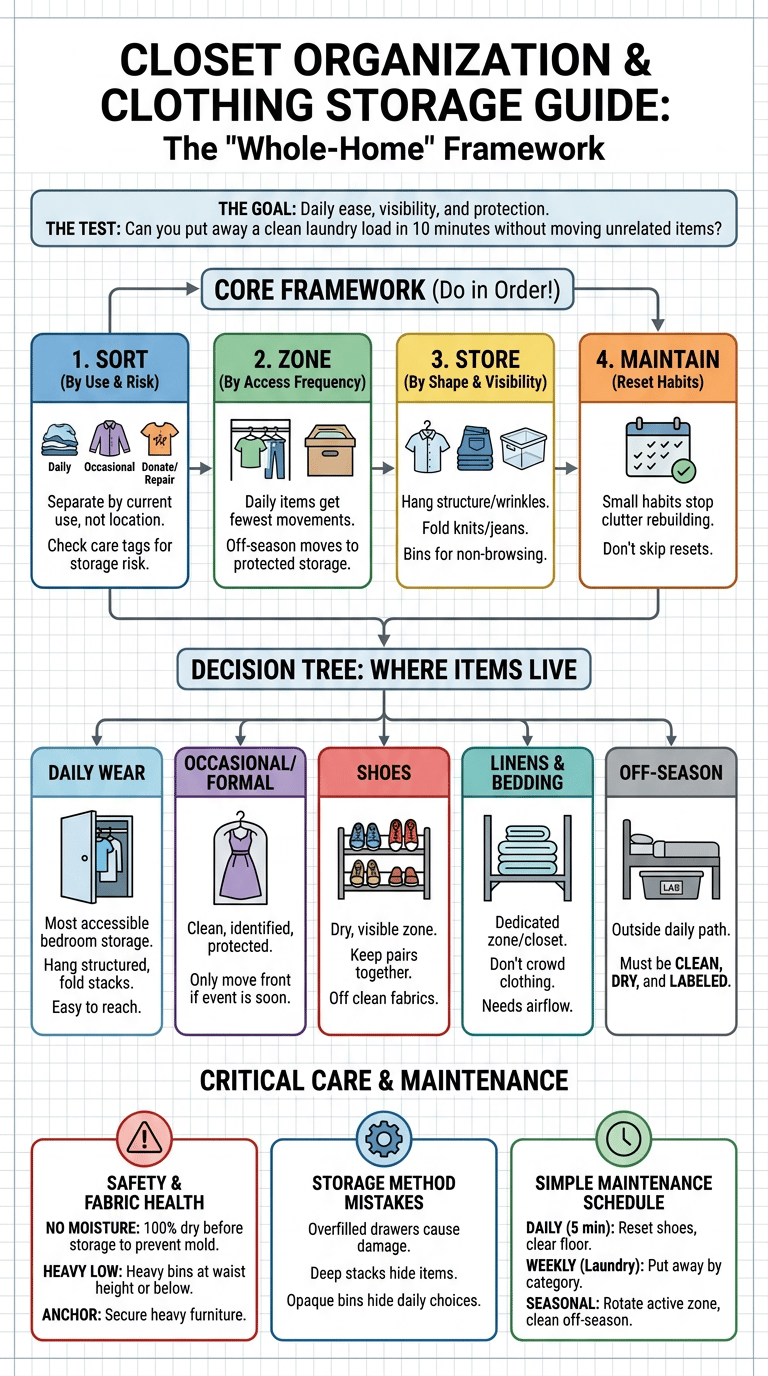
The strongest closet systems follow the same order: sort first, zone second, store third, maintain fourth. Changing the order creates extra work. Buying bins before sorting hides the real volume problem. Folding everything before choosing zones wastes energy. A maintenance schedule without a sensible layout becomes another chore to ignore.
Sort by use, season, and storage risk
Sort clothing and household fabrics by how you use them now, not by where they happened to land. Make separate piles for daily wear, weekly wear, occasional wear, formal or specialty items, off-season clothing, repair or tailoring, donation, and items that need laundering before storage. Household fabrics can be grouped as daily towels, guest towels, sheet sets, blankets, seasonal bedding, and fabric items that need a care decision.
Bulky household items need a different system, especially if you need to store bedding and blankets without letting them take over closet space.
Storage risk means the item can be damaged by the wrong method. Wool, silk, leather, embellished clothing, quilts, memory foam, down, and delicate knits deserve more care than basic cotton T-shirts. Read care tags before washing, drying, steaming, folding, or packing items for a long time. The fabric care guidance from the American Cleaning Institute is a helpful reference when you need to understand labels and fabric-specific limits.
Zone by access frequency
Once items are sorted, assign space by access frequency. Daily items should require the fewest movements. Weekly items can be slightly farther away. Occasional items can live in labeled bins, upper shelves, or a secondary closet. Off-season items can move to protected long-term storage if the spot stays dry, clean, and stable.
Store by shape, fabric, and visibility
The way an item holds its shape should guide the storage method. Hang structured jackets, dress shirts, dresses that wrinkle easily, and pants that crease in a way you want to preserve. Fold knits, heavy sweaters, basic T-shirts, jeans, and items that stretch on hangers. Use shelves for stable stacks, drawers for smaller foldable categories, and bins for groups that do not need daily browsing.
Maintain with weekly and seasonal resets
A closet is not finished after the first reset. It needs small habits that stop clutter from rebuilding. The weekly reset should connect to laundry: hang clean items, return folded clothes to the correct drawer, remove empty hangers from odd places, and put shoes back in pairs. The seasonal reset should decide what leaves the active zone and what comes back in.
After the closet is reset, the real goal is to keep clothes organized with simple habits that prevent piles from coming back.
Decision Tree: Where Should Each Item Live?
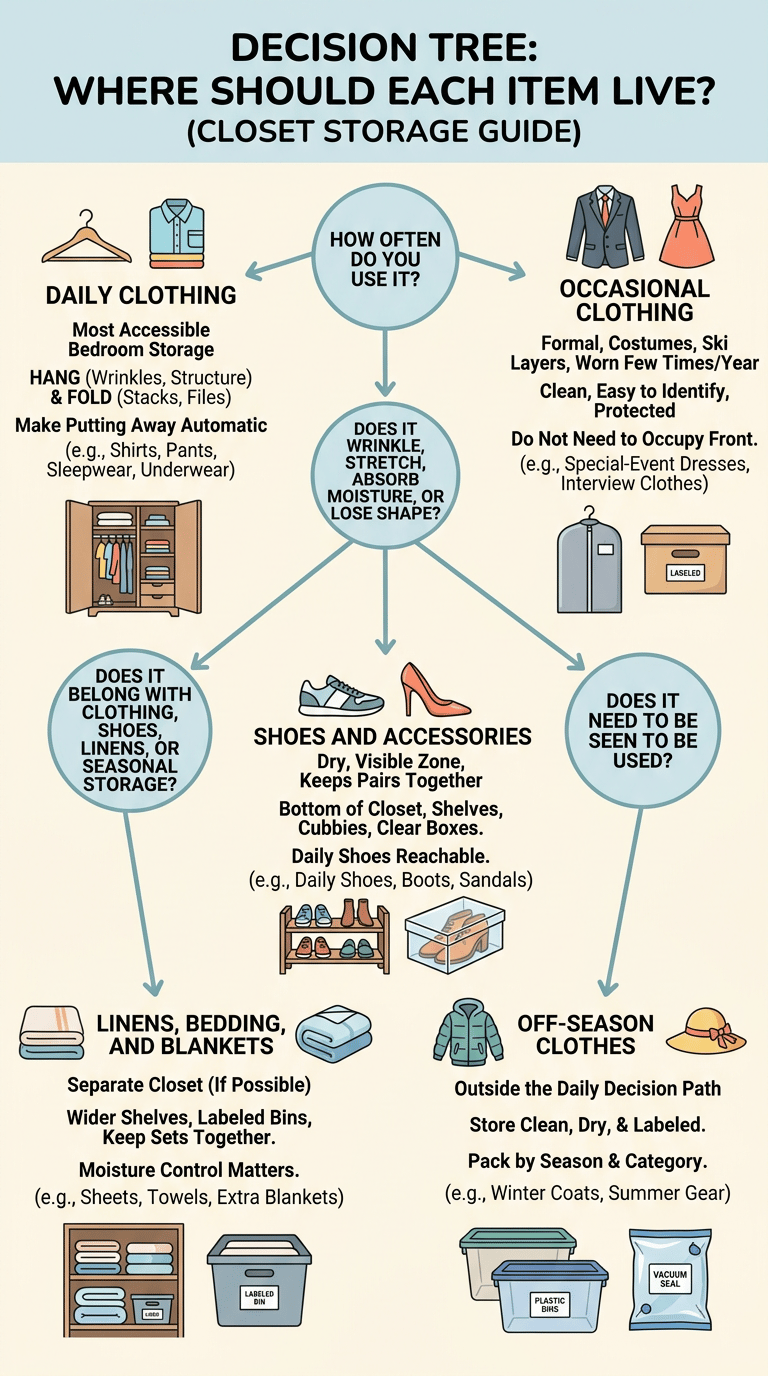
The easiest way to prevent closet crowding is to decide where items live before you buy containers. Use the questions below as a practical decision tree. How often do you use the item? Does it wrinkle, stretch, absorb moisture, or lose shape? Does it belong with clothing, shoes, linens, or seasonal storage? Does it need to be seen to be used?
Daily clothing
Daily clothing belongs in the most accessible bedroom storage. Hang what wrinkles or needs structure. Fold what stacks or files easily. Keep the number of categories small enough that putting clothes away feels automatic. Shirts, pants, workwear, sleepwear, underwear, and socks should not require a scavenger hunt.
Items that do not need hangers are usually easier to manage when you organize dresser drawers by category and frequency of use.
Occasional clothing
Occasional clothing includes formal outfits, interview clothes, special-event dresses, ski layers, costumes, and pieces worn only a few times a year. These items should be clean, easy to identify, and protected from crushing. They do not need to occupy the front of the rod unless an event is coming soon.
Shoes and accessories
Shoes need a dry, visible zone that keeps pairs together. The bottom of the closet can work if shoes are not piled. Shelves, cubbies, angled racks, and clear boxes can all work depending on the number of pairs and the height of the closet. The main rule is that daily shoes should be reachable without disturbing clean clothing.
Linens, bedding, and blankets
Linens and bedding should not crowd daily clothing unless the home has no separate closet. Sheet sets, towels, guest bedding, and extra blankets need wider shelves, labeled bins, or a dedicated linen zone. Keep sets together so you are not searching for pillowcases in three places.
Bulky bedding needs room to breathe and should be fully dry before storage. If a closet has a history of dampness, condensation, or musty smells, do not pack bedding tightly into that space. Moisture control matters more than a neat stack. EPA guidance on mold, moisture, and your home emphasizes controlling moisture rather than simply covering up symptoms.
Off-season clothes
Off-season clothes belong outside the daily decision path. Store them clean, dry, and labeled. Choose breathable storage for natural fibers when airflow matters, and avoid trapping moisture in plastic after a humid laundry day. Pack by season and category, not by random leftover space.
Category Breakdown
The following breakdown keeps the full topic map clear. Each category has its own detailed project, but the pillar view helps you understand how they connect. Your home may need only one of these fixes now, or it may need a staged reset across several weeks.
Small closet organization at a glance
A small closet needs sharper boundaries than a large one. The most important decision is what earns active closet space. Daily clothes, a limited shoe zone, and a small number of accessories usually deserve priority. Off-season bins, extra bedding, and rarely used pieces often need another location.
Linen closet organization at a glance
A linen closet should support bathrooms, bedrooms, and guests. Towels, sheet sets, washcloths, cleaning cloths, and spare bedding should have clear shelf roles. Group by use rather than by perfect color display. The person looking for a towel should not need to move guest sheets first.
Seasonal clothes storage at a glance
Seasonal clothing storage is about rotation. The active closet should match the current weather, daily routine, and expected events. Off-season items should be cleaned, repaired, labeled, and moved to a stable place. Packing dirty or damp clothing creates problems that a neat bin cannot fix.
One of the easiest ways to reduce closet crowding is to store seasonal clothes separately instead of keeping every item in daily rotation.
Dresser drawer organization at a glance
Dresser drawers work best for small and medium foldable categories: underwear, socks, T-shirts, leggings, pajamas, workout clothes, and some casual pants. The drawer should open without catching and close without compression. If you have to press clothes down to shut it, the drawer is over capacity.
Shoe organization in a closet at a glance
Shoe storage needs pairing, visibility, and dirt control. Daily shoes should not sit on top of clean fabric or block the closet door. Occasional shoes can live higher, lower, or in labeled boxes. Wet shoes need to dry before they return to enclosed storage.
Bedding and blanket storage at a glance
Bedding and blankets take more space than most people expect. Comforters, quilts, duvet inserts, throws, and guest blankets need wide shelves, under-bed storage, or breathable bags depending on the material. Avoid crushing delicate fills unless the care label and product design allow compression.
Keeping clothes organized after the reset
The reset only lasts when daily actions are easy. Keep empty hangers in one place. Return shoes as pairs. Put laundry away by category, not by random open space. Keep a small donation bag or basket nearby for clothing that fails a fit, comfort, or condition test.
Storage Choices by Space Type
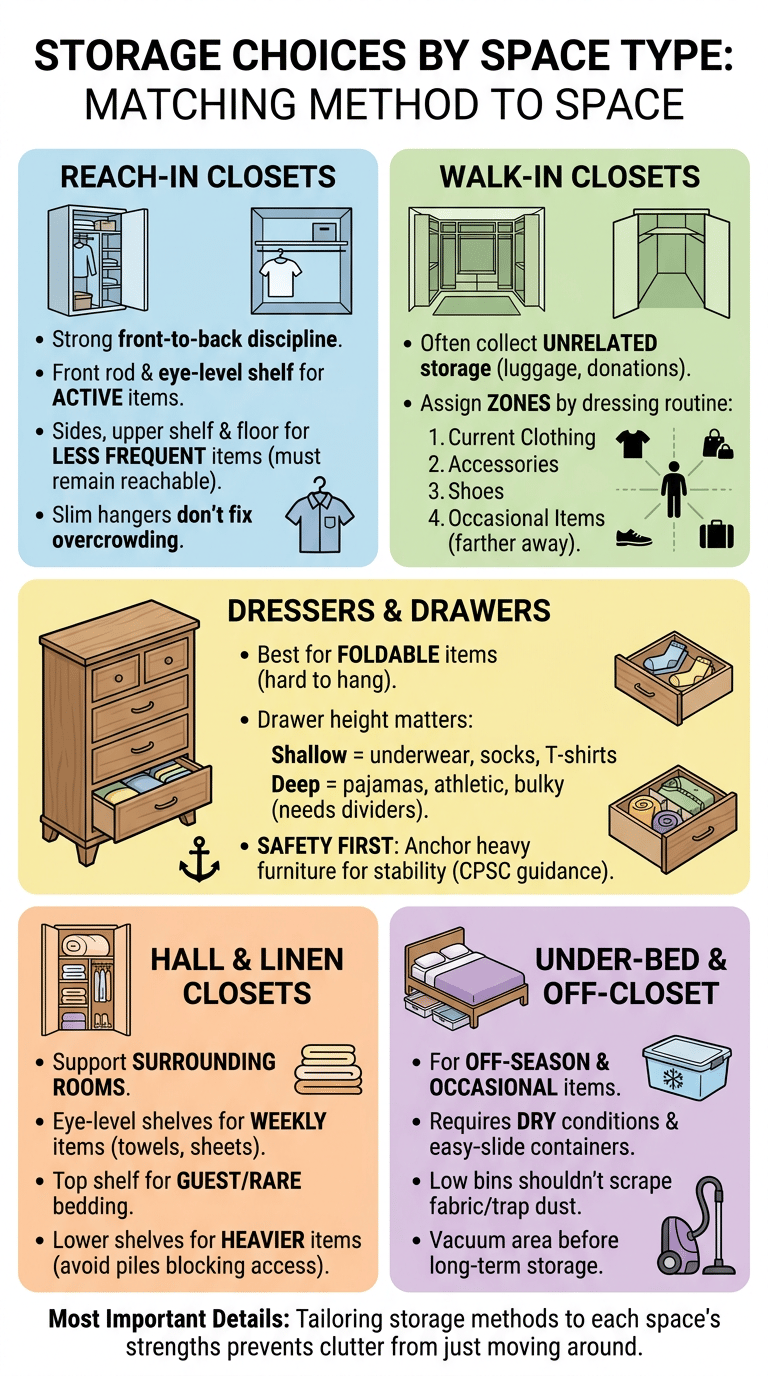
Closet organization becomes easier when the storage method matches the space. A reach-in closet, walk-in closet, dresser, hallway linen closet, and under-bed bin each have different strengths. Trying to make every space do the same job usually causes clutter to move around instead of leaving the system.
Reach-in closets
Reach-in closets need strong front-to-back discipline. The front rod and eye-level shelf should hold active items. The sides, upper shelf, and floor can hold less frequent items if they remain reachable. Slim hangers may create room, but they do not fix a closet that is holding too many categories.
Walk-in closets
Walk-in closets feel generous, so they often collect unrelated storage. Luggage, gifts, paperwork, extra bedding, old electronics, and donation piles can slowly take over. Assign zones around the way you get dressed: current clothing first, accessories next, shoes nearby, occasional items farther away.
Dressers and drawers
Dressers should carry the categories that are easiest to fold and hardest to manage on hangers. Drawer height matters. Shallow drawers are useful for underwear, socks, and T-shirts. Deeper drawers can hold pajamas, athletic wear, or bulkier casual pieces, but they need dividers or fewer categories.
Heavy dressers and clothing storage furniture deserve a safety check, especially in homes with children. Follow the manufacturer instructions for anchoring and loading. CPSC guidance for clothing storage units addresses stability requirements and tip-over concerns for furniture that stores clothing.
Hall and linen closets
Hall and linen closets should support the rooms around them. The top shelf can hold guest bedding or rarely used linens. Eye-level shelves should hold towels and sheets used weekly. Lower shelves can hold heavier items, but avoid creating a pile that blocks the door or hides small items.
For towels, sheets, and backup household linens, a separate plan to organize a linen closet can keep everyday items easier to grab.
Under-bed and off-closet storage
Under-bed storage works for off-season clothing, spare blankets, and occasional items when the bedroom is dry and the containers slide out easily. Low bins should not scrape fabric or trap dust around soft items. Vacuum the area before long-term storage and check it during seasonal resets.
Safety, Fabric Care, and Product Limits
Organization should make the home easier to use without creating new risks. The main limits are moisture, weight, unstable furniture, harsh scent products, and fabric care mistakes. A neat closet is not successful if it damages clothes or makes heavy items unsafe to reach.
Read care tags before long-term storage
Care tags are not only for laundry day. They tell you whether an item tolerates washing, drying, ironing, steaming, dry cleaning, or special handling. Check tags before packing seasonal clothes, storing delicate bedding, or changing the way you fold and hang garments.
Avoid damp storage and sealed-in moisture
Clothes, towels, sheets, and blankets should be completely dry before storage. A sealed bin or compression bag can trap moisture with the fabric. Stop if you notice condensation inside a container, a damp shelf, or a recurring musty smell. Empty the area, dry the materials, and address the moisture source before repacking.
Keep heavy bins stable and accessible
Heavy bins belong low enough to lift safely. Large containers on high shelves are hard to control and can fall when pulled forward. Store light bedding, spare pillows, or empty luggage higher if the shelf can support them. Store heavy folded clothing, dense blankets, and full bins closer to waist height or below.
Use scent and pest products cautiously
Scented sachets, cedar blocks, pest deterrents, and moisture absorbers can be useful in the right conditions, but they are not a substitute for clean, dry storage. Keep them away from direct contact with delicate fabric unless the product label allows it. Strong fragrances can linger in clothing and may bother sensitive household members.
Common Mistakes That Make Closets Hard to Maintain
Closet mistakes usually come from good intentions. People buy bins because they want control, keep off-season clothing nearby because they worry about needing it, or stack items deep because the shelf looks spacious. The better fix is to remove the friction that makes the closet hard to use.
Buying organizers before reducing volume
Organizers cannot solve a category that is too large for the space. Before buying anything, remove obvious donations, damaged items you will not repair, duplicates you do not use, and pieces that no longer fit your current life. Then measure the remaining categories.
Mixing daily and seasonal clothes
Daily and seasonal clothing should not compete equally. When winter sweaters fill the same drawer as summer T-shirts, both categories become harder to use. When heavy coats take the front rod in warm months, the closet feels full even if you wear only a few pieces.
Hiding items behind opaque stacks
Opaque stacks are fine for categories you rarely need and can label clearly. They fail when they hold items you choose from often. If you cannot see sweaters, jeans, or shoes, you will repeat the same outfits and forget what is stored behind the front row.
Overfilling drawers and shelves
An overfilled drawer trains you not to use it. If opening the drawer disturbs everything inside, clean laundry will stay in a basket. If a shelf is packed tight, removing one blanket pulls down three more. Storage needs breathing room, even when the items are clean and well folded.
Simple Maintenance Schedule
Maintenance keeps the system honest. It shows when a category is growing, when the season has changed, or when a storage choice is too difficult for real life. The schedule below is intentionally simple because a closet routine should support your day, not become a second job.
Five-minute daily reset
The daily reset is small. Return shoes to pairs, hang clothes that are still clean, place worn laundry in the hamper, and clear the closet floor. Do not start a full declutter at night when you only have energy for basic order.
Weekly laundry-to-closet reset
The weekly reset happens when clean laundry returns. Put away the easiest categories first to create momentum. Then handle the items that need decisions: pieces that need repair, items you avoided wearing, clothes that no longer fit comfortably, and mismatched socks or accessories.
Seasonal clothing review
A seasonal review should happen before the weather fully changes if possible. Pull forward the items you expect to wear, check condition and fit, and decide what should leave the active zone. Clean items before long-term storage and label containers with the season and category.
Annual storage audit
An annual audit looks at the whole system: closets, dressers, linen shelves, under-bed bins, and off-closet storage. Look for duplicate categories, forgotten bins, damaged containers, bent shelves, and items that no longer fit your household.
This is also the time to review furniture stability, product limits, and moisture-prone zones. Check that bins still close without compression, labels still match the contents, and heavy items are still stored safely. University extension textile resources, such as the University of Kentucky listings on clothing and textile care, can be useful when you need more detail on storing special fabrics or household textiles.
FAQ
These answers handle the planning questions that come up before a detailed closet project. They keep the focus on storage decisions, space limits, and realistic maintenance.
What is the best first step in closet organization?
The best first step is to remove everything that obviously does not belong in the active zone. Pull out trash, empty packaging, donations, out-of-season items, and anything waiting for repair or laundry. This gives you a clearer view of the real storage problem before you buy organizers or rearrange shelves.
Should clothes be stored by type, color, or season?
Most homes work best when clothing is stored by type first, then season, then color if color helps you choose outfits. Type tells you where the item belongs. Season tells you whether it deserves active space. Color is useful inside a category, but it should not override access or fabric care.
How much empty space should a closet have?
There is no perfect number for every closet, but each active section should have enough room to remove and return items without force. Hanging clothes should slide a little on the rod. Drawers should close without pressing. Shelves should allow one item to come out without pulling the whole stack with it.
What should not be stored in a closet?
Avoid storing damp fabric, leaking products, heavy unstable bins on high shelves, strong chemicals near linens, and items that block ventilation or access. Do not store delicate fabrics in hot, damp, or pest-prone areas. Items unrelated to dressing or household textiles should earn closet space only if the home has no better location.
How often should clothing storage be reset?
Do a small reset weekly when laundry returns, a seasonal review when the weather changes, and a full storage audit once a year. The weekly reset keeps daily clothing usable. The seasonal review keeps overflow under control. The annual audit catches slow problems such as forgotten bins, unstable shelves, and categories that have grown too large.
Final Thoughts
A strong closet system starts with decisions, not containers. Decide what you use daily, what belongs in another season, what needs special fabric care, and which storage zones should support each routine. Then choose shelves, drawers, bins, and hangers that make those decisions easy to repeat.

Ethan Carter is the Founder & Editor of HomeCleanSecrets. Based in the United States, he has 5 years of experience creating practical home cleaning, laundry care, stain removal, decluttering, and home organization content. His goal is to help everyday households clean smarter and build simple routines that are easier to maintain.
Read more about Ethan Carter on his author page: https://homecleansecrets.com/ethan-carter/