

Extra bedding can make a home feel prepared, but it can also swallow closet space faster than almost anything else. A single comforter may take more room than a stack of towels. A winter blanket that is clean but poorly folded can block an entire shelf. Guest bedding can get separated so the fitted sheet is in one bin, the pillowcases are in another, and the blanket is somewhere behind coats.
The goal is not to hide every bulky item in the closest empty corner. The goal is to store bedding and blankets by use, material, and access frequency so they stay clean, easy to find, and realistic to maintain. Bedding that is used every week needs a different home than a spare duvet insert used twice a year. Quilts need different handling than synthetic throws. Extra pillows need more air space than flat sheets.
This guide focuses on bulky soft goods: comforters, duvets, quilts, blankets, throws, guest bedding sets, and extra pillows. It does not replace a linen closet system for everyday towels and sheet stacks. Instead, it helps you decide what belongs in daily reach, what can move to a less active storage zone, and how to prepare bedding before you put it away.
Bedding and blanket storage should support the rest of your closet space instead of taking it over. For the bigger storage structure, connect this setup with the closet organization and clothing storage guide.

Quick Answer: The Bedding Storage Rule
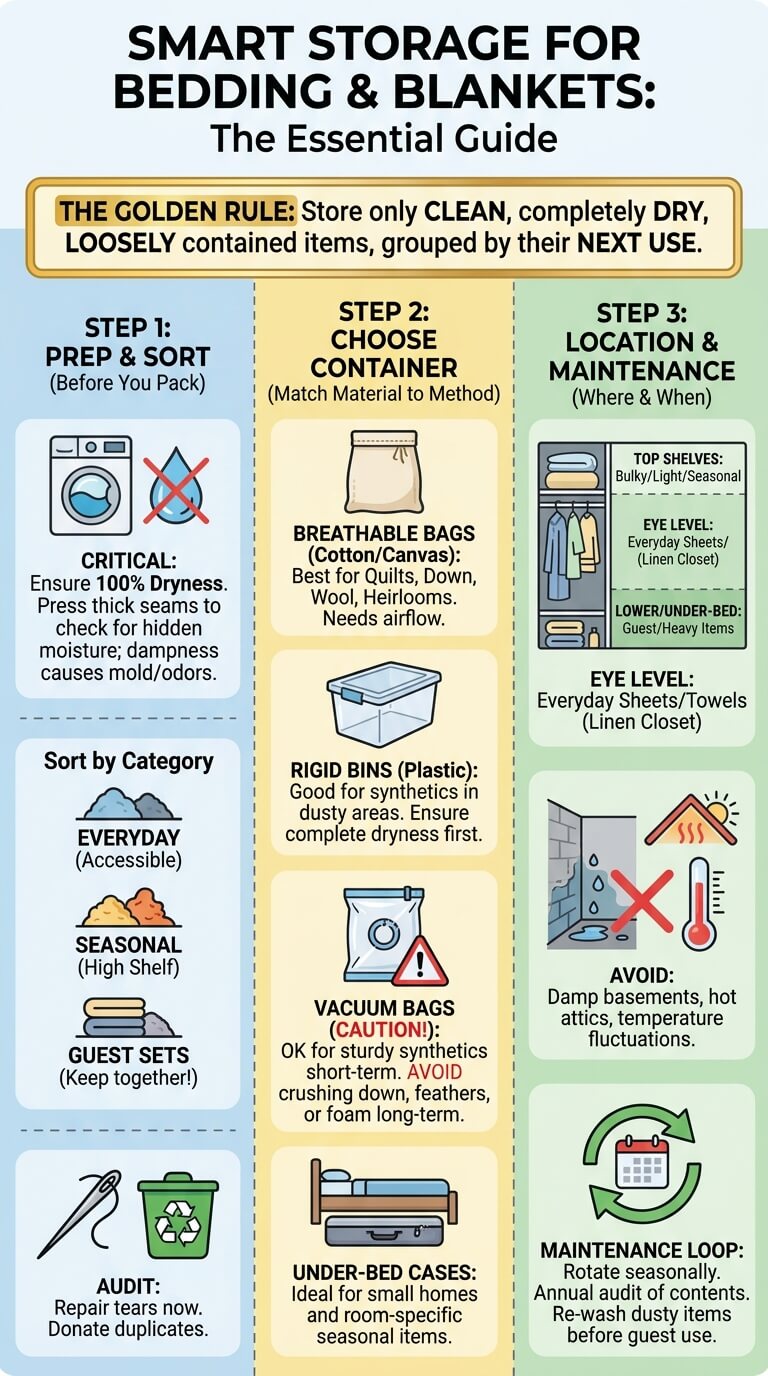
The simplest rule is this: store bedding only after it is clean, fully dry, loosely contained enough for the material, and grouped by the next time someone will need it. That one rule prevents most bedding storage problems, including mystery bins, crushed fill, stale-smelling blankets, and guest sets that are missing a pillowcase.
Clean and dry before storing
Bedding should not go into a storage bag right after use unless it has been washed or clearly does not need laundering. Body oils, skin flakes, pet hair, lotion, and dust can sit in fabric during storage. For items that can be washed at home, check the care tag first and follow the safest wash and dry method for the fabric and fill. The American Cleaning Institute laundry basics are a useful reminder to sort laundry and follow fabric care labels before washing or drying.
Dryness matters as much as cleanliness. A comforter can feel dry on the outside while a thick corner, seam, or fill pocket still holds moisture. Before storing, press the thickest areas with your hand. If they feel cool, heavy, or slightly damp compared with the rest of the item, keep drying or air it out longer.
Store by use frequency
Keep the bedding you reach for most often in the easiest zone. Everyday spare sheets, a current-season blanket, or a guest set used monthly should not be buried under holiday quilts. Less frequent items can move to top shelves, under-bed cases, or a labeled bin in a guest room closet.
Avoid crushing delicate fills
Some bedding handles compression better than others. A thin fleece throw may tolerate a tight roll. A down comforter, feather pillow, wool blanket, or heirloom quilt should not be smashed for months just to save a few inches. Long-term pressure can flatten loft, create stubborn creases, or stress seams.
Label bulky items clearly
Bulky bedding often looks identical once it is inside a bag. Label the outside by bed size, season, room, and contents. “Queen winter comforter,” “guest room sheet set and light blanket,” or “kids fleece throws” is more useful than “blankets.”
What Counts as Bedding and Blanket Storage
Bedding storage covers more than sheets. The biggest space problems usually come from soft items that are too puffy, too seasonal, or too irregularly shaped for a normal shelf stack. Separating these items from everyday linen closet supplies makes the whole home easier to manage.
Comforters and duvets
Comforters and duvet inserts are usually the bulkiest bedding items in a home. They may contain down, feathers, wool, cotton, polyester, or a down-alternative fill. Because the fill gives the comforter warmth and loft, storage should protect that fill instead of flattening it permanently.
quilts and throws
Quilts and throws are easier to fold than comforters, but they can still be damaged by poor storage. Heirloom quilts, handmade quilts, and delicate woven throws should not sit in direct contact with unfinished wood, damp floors, or rough baskets. Flat folds can also create permanent stress lines if the quilt stays in the same position for a long time.
guest bedding sets
Guest bedding works best when it is stored as a complete set. A set might include fitted sheet, flat sheet, pillowcases, duvet cover, blanket, and a mattress protector. Store the set by bed size and room, not by item type, if guests are the main reason you keep it.
extra pillows
Pillows need more space and more caution than flat bedding. A pillow that is compressed too tightly may not regain its shape, especially if it has a specialty foam, down, feather, or structured fill. Extra pillows should be fully dry and stored where they will not be bent by heavy bins.
what belongs in the linen closet instead
A linen closet should hold items used often enough to justify easy access: current sheet sets, everyday towels, washcloths, hand towels, and perhaps one active blanket. Bulky comforters, off-season bedding, and guest-only bundles can overwhelm that space.
Step 1: Sort Bedding by Use and Season
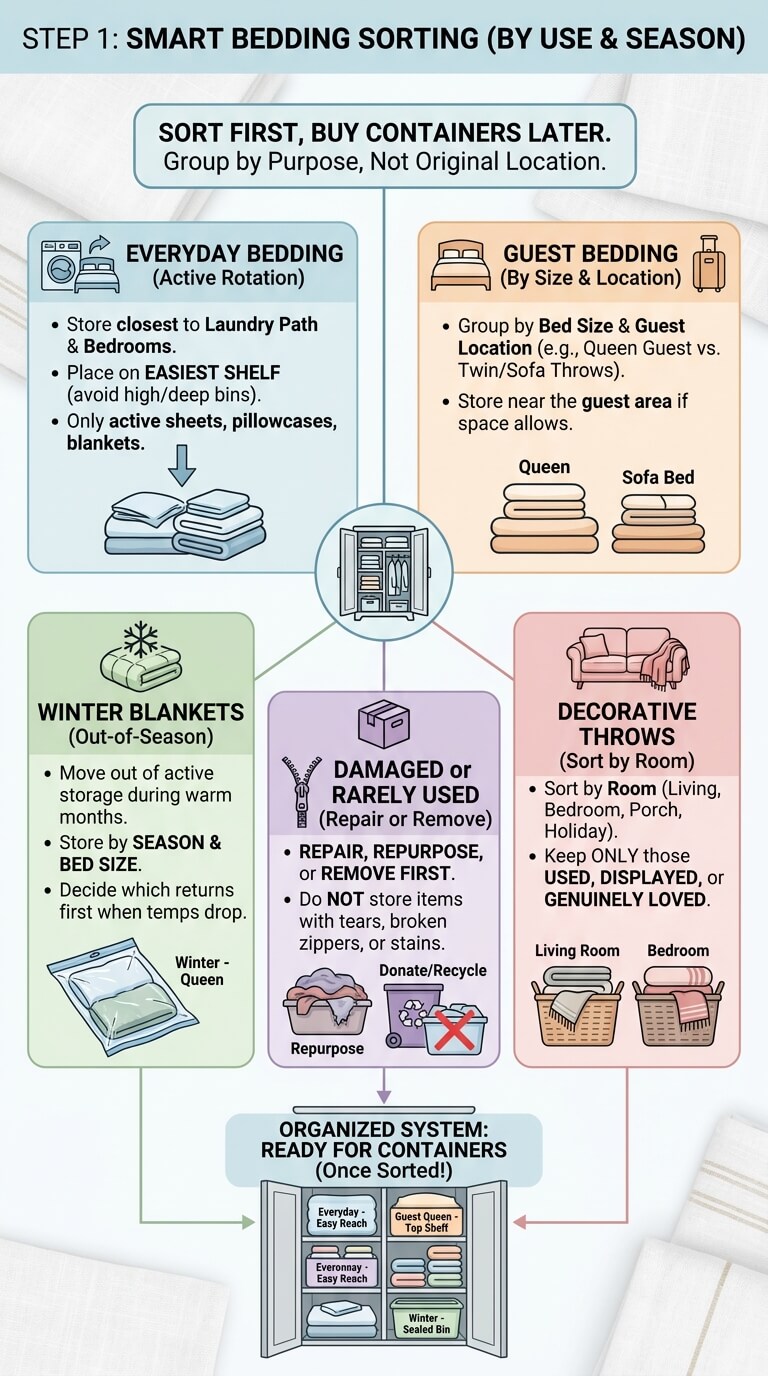
Sorting comes before containers. Buying storage bags before you know what you are keeping usually creates the wrong system. Pull out bedding and group it by how it is used, not by where it was found.
Everyday bedding
Everyday bedding includes the sheets, pillowcases, and blankets currently rotating on active beds. These pieces should stay closest to the laundry path and bedrooms. If your home has one linen closet, everyday bedding deserves the easiest shelf, not the highest shelf or deepest bin.
guest bedding
Guest bedding should be grouped by bed size and guest location. A queen guest set should not be mixed with kids twin sheets or sofa throws. If guests sleep on a pullout couch, store the correct bedding near that area if space allows.
winter blankets
Winter blankets, heavy quilts, and cold-weather comforters can move out of active storage during warm months. Store them by season and bed size. If you have multiple winter items, decide which one returns first when temperatures drop.
decorative throws
Decorative throws often pile up because they are easy to buy and hard to categorize. Sort them by room: living room, bedroom, guest room, porch, or holiday decor. Keep only the throws that are used, displayed, or genuinely loved.
damaged or rarely used bedding
Damaged bedding should be repaired, repurposed, or removed before it takes a storage spot. Torn seams, broken zippers, thin elastic, pilled fleece, or stained pillow protectors will not become easier to handle later.
Step 2: Clean, Dry, and Prepare Before Storage
Preparation is where bedding storage succeeds or fails. Clean but damp bedding can develop problems in storage. Dry but dirty bedding can hold odors or attract attention from pests. Rushed folding can hide damage that becomes worse the next time the item is washed.
Follow care labels
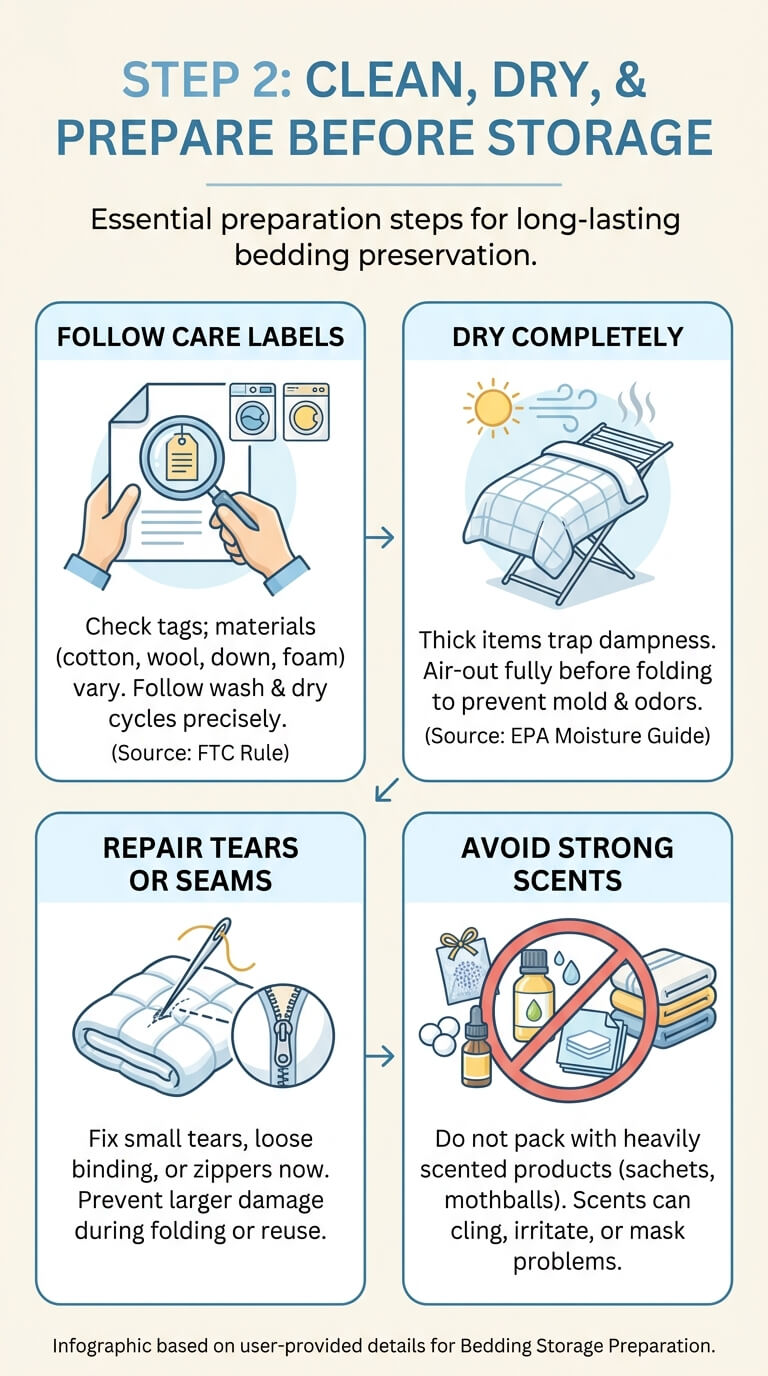
Care tags matter because bedding materials vary widely. Cotton sheets, wool blankets, down comforters, weighted blankets, foam pillows, and decorative quilts do not all tolerate the same wash cycle, water temperature, detergent amount, or drying method. The FTC care labeling rule explains how care instructions are meant to give regular care information for textile products.
dry completely
Moisture is one of the biggest storage risks. Thick bedding can trap dampness at seams, corners, and fill pockets. After drying, spread the item over a bed, banister, drying rack, or clean sofa for a final air-out period before folding.
The EPA notes that moisture control is central to mold control in homes, and its mold and moisture guide recommends keeping indoor humidity low and drying wet materials promptly. For bedding storage, that means avoiding damp closets, wet laundry areas, and bins placed directly where condensation or leaks can occur.
repair tears or loose seams
Small tears become larger when bedding is folded, pulled from bins, or laundered again. Check edges, quilt binding, comforter seams, pillow zippers, and duvet ties before storage. Repair what you can, or put the item in a small “repair before use” bag so it does not return to the bed unnoticed.
avoid storing strong scents with bedding
Do not pack bedding with strong fragrance sachets, loose dryer sheets, mothballs, essential oils, or heavily scented products unless the bedding label and household needs clearly allow it. Scents can cling to fabric, irritate sensitive sleepers, or mask a damp-storage problem instead of solving it.
Step 3: Choose Storage by Bedding Type
The best container depends on the item. A storage method that works for a spare synthetic blanket may be wrong for a quilt, pillow, or lofty comforter. Match the container to the bedding, the storage location, and how long the item will stay packed.

Breathable bags for quilts and natural fibers
Breathable cotton or fabric bags are a strong choice for quilts, wool blankets, cotton blankets, and heirloom pieces that need airflow. They protect from dust while reducing the risk of trapped moisture. A clean cotton sheet wrapped around a folded quilt can work if you do not have a specialty bag.
bins for protected storage
Plastic bins can protect bedding from dust, closet debris, and accidental spills, especially in apartments or shared storage areas. Choose bins that are large enough so bedding is not packed under pressure. Clear bins help with visibility, but a clear label is still useful.
vacuum bags and compression limits
Vacuum bags save space quickly, but they are best for sturdy synthetic bedding and short or medium storage periods. They are less ideal for down, feather, wool, foam, and delicate quilts. Always check the storage bag instructions and the bedding care label before compressing anything expensive or hard to replace.
under-bed cases
Under-bed cases work well for bulky items in small homes because they use space that often sits empty. Choose zippered fabric cases for blankets and comforters that need occasional access. Choose rigid low bins if the area gets dusty or if the case will be pulled out often.
storage benches and trunks
Benches and trunks can store throws, guest blankets, or spare bedding in rooms where closets are limited. They work best when the inside is smooth, clean, dry, and not packed with unrelated items. A bench at the foot of a guest bed can hold the exact bedding guests need.
Best Places to Store Bedding and Blankets
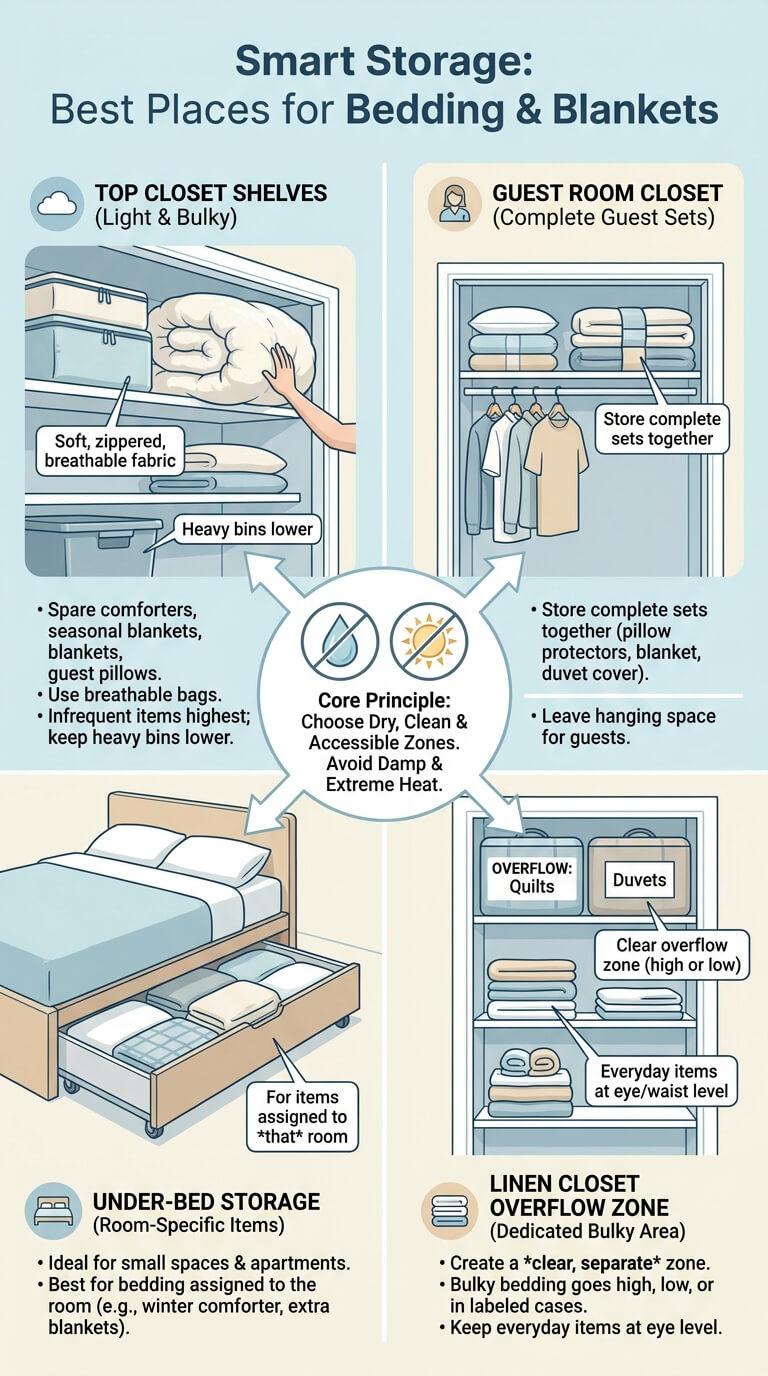
Location matters as much as container. A labeled cotton bag in a damp basement is still a poor choice. A beautiful basket in direct sun can fade a quilt. Look for dry, clean, accessible zones that match how often each item is needed.
Top closet shelves
Top closet shelves are useful for light but bulky items, such as spare comforters, seasonal blankets, or guest pillows in breathable bags. Put the least frequent items highest and keep heavy bins lower. A large comforter bag on a high shelf is safer than a hard, heavy bin that has to be lifted over your head.
under-bed storage
Under-bed storage is practical for apartments, small bedrooms, and homes without a linen closet. It works best for bedding assigned to that bedroom: a winter comforter for the bed above, a guest set for a sleeper sofa, or extra blankets for a child’s room.
Seasonal bedding can be handled like off-season clothing. Keep what you use now within reach and store seasonal clothes and fabric items in less valuable space.
guest room closet
A guest room closet is the natural place for guest bedding if you have one. Store complete guest sets together, with the pillow protectors, blanket, and duvet cover that belong to the room. Leave enough space so a guest can still hang clothes.
linen closet overflow zone
If the linen closet is the only available storage area, create a clear overflow zone instead of mixing bulky pieces into every shelf. Everyday towels and sheets stay at eye or waist level. Bulky bedding goes high, low, or in labeled cases on one dedicated shelf.
If your bedding shares space with towels and sheets, organize a linen closet first so every type of household linen has a clear shelf or zone.
places to avoid when damp or overheated
Avoid storing bedding in damp basements, garages with temperature swings, leaky attic areas, laundry rooms with poor ventilation, or closets against walls with condensation. Heat, humidity, pests, and dust can all make bedding harder to use later.
If you have no perfect location, choose the driest and cleanest option, protect the bedding in a suitable container, and inspect it more often. Storage is not a set-it-and-forget-it task when the location has known moisture or temperature problems.
Bedding Storage Plans for Small Homes
Small homes need stricter boundaries because every bulky item competes with clothes, shoes, cleaning tools, and luggage. The answer is not always more containers. Sometimes the best fix is fewer duplicates and clearer zones.
No linen closet
Without a linen closet, assign bedding to the room where it is used. Store the main bedroom’s spare bedding under that bed or on a bedroom closet shelf. Store sofa-bed bedding near the sofa if possible. Keep towels somewhere separate so bedding does not crowd daily bath supplies.
shared bedroom closet
In a shared bedroom closet, bedding should not take the best clothing space. Use top shelves for light bulky bags, under-bed cases for seasonal comforters, or a slim storage bench if the room allows it. Keep daily clothes and bedding from mixing on the same shelf.
If bedding keeps falling onto hanging clothes, the shelf is overloaded. Remove duplicates or shift rarely used bedding to a less active zone.
apartment under-bed storage
Apartment under-bed storage works best when every case has a job. One case can hold winter bedding, another can hold guest bedding, and a third can hold decorative throws if you truly use them. Avoid mixed cases labeled “miscellaneous bedding.”
Choose low cases with handles and zippers that can handle repeated pulling. If a case bends or tears every time you move it, it will not stay organized for long.
family bedding by room
Family households often do better with room-based bedding than one giant household bedding bin. Keep each child’s spare sheet set and seasonal blanket near that child’s room. Keep guest bedding by guest bed size. Keep parent bedding separate from kids bedding.
This makes laundry resets faster. It also helps another adult or older child find the correct bedding without needing to understand the whole household system.
Mistakes That Make Bedding Hard to Use Later
Most bedding storage mistakes are easy to miss because the closet looks neater at first. The problem appears later, when the item smells off, looks crushed, or cannot be found quickly.
Storing damp bedding
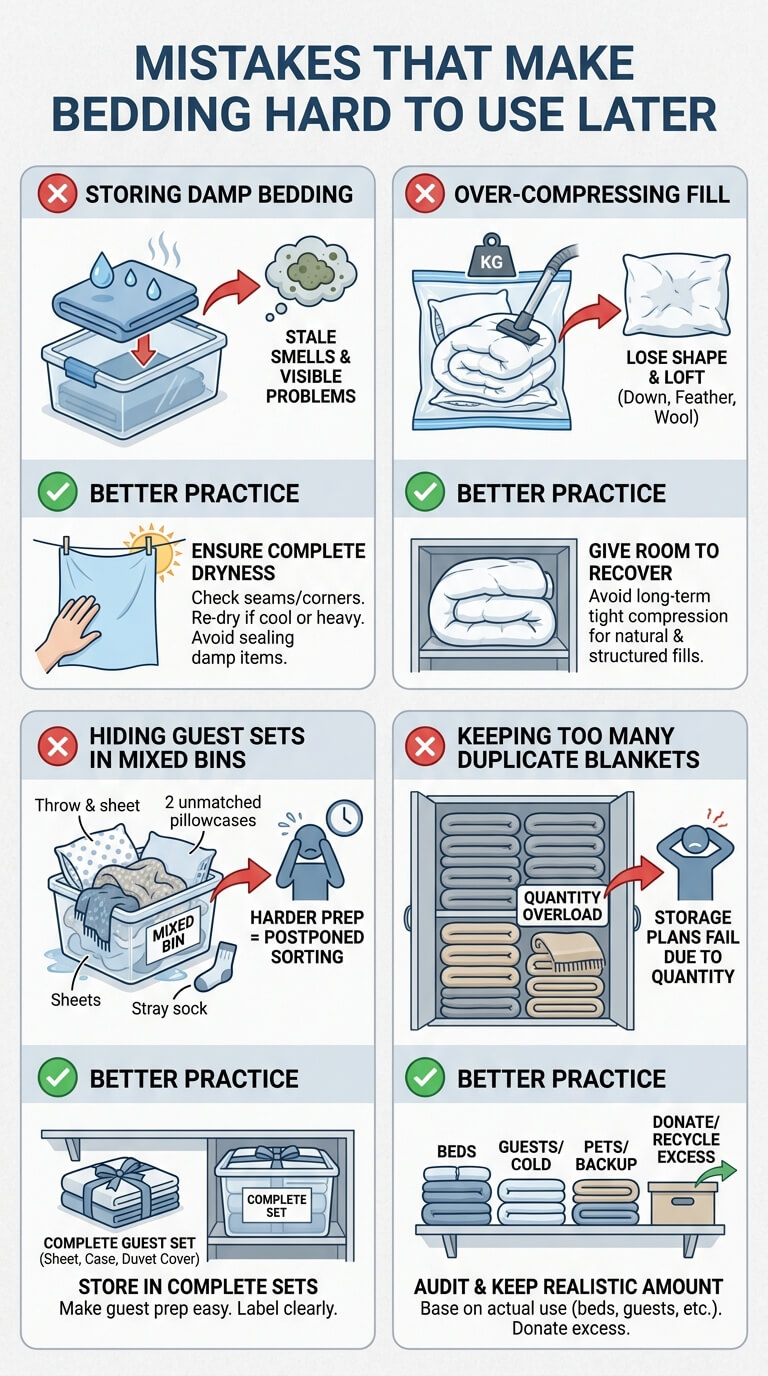
Damp bedding should never be packed away. Even slight moisture can create stale smells or visible problems in the wrong storage conditions. Thick items need extra drying time, especially along seams and corners.
Stop before folding if the item feels cool or heavy in one area. Air it out again, tumble dry if the label allows, or take it for professional cleaning if home drying is not working.
over-compressing fill
Over-compression is tempting because bedding takes so much room. The issue is that some fill types rely on air space. Down, feather, wool, and structured pillow fill can lose shape when forced flat for too long.
Save tight compression for sturdy items and temporary situations. For long-term storage, give important bedding enough room to recover.
hiding guest sets in mixed bins
Mixed bins make guest preparation harder. A bin with three flat sheets, one winter throw, two unmatched pillowcases, and a duvet cover is not a guest system. It is postponed sorting.
Store guest bedding in complete sets. If there is not enough room for the full set, reduce duplicates or move the bulky blanket nearby with the same label.
keeping too many duplicate blankets
Blankets multiply quietly. A good storage audit asks how many are actually used at the same time. Keep enough for beds, guests, cold weather, pets, and realistic backups. Donate, recycle, repurpose, or discard the rest according to condition and local options.
If every storage plan fails because there are too many blankets, the problem is quantity, not container choice.
Bedding and Blanket Maintenance Timeline
A timeline keeps bedding storage from becoming a once-a-year rescue project. These small checks fit naturally around laundry, guest visits, and seasonal changes.
After laundry
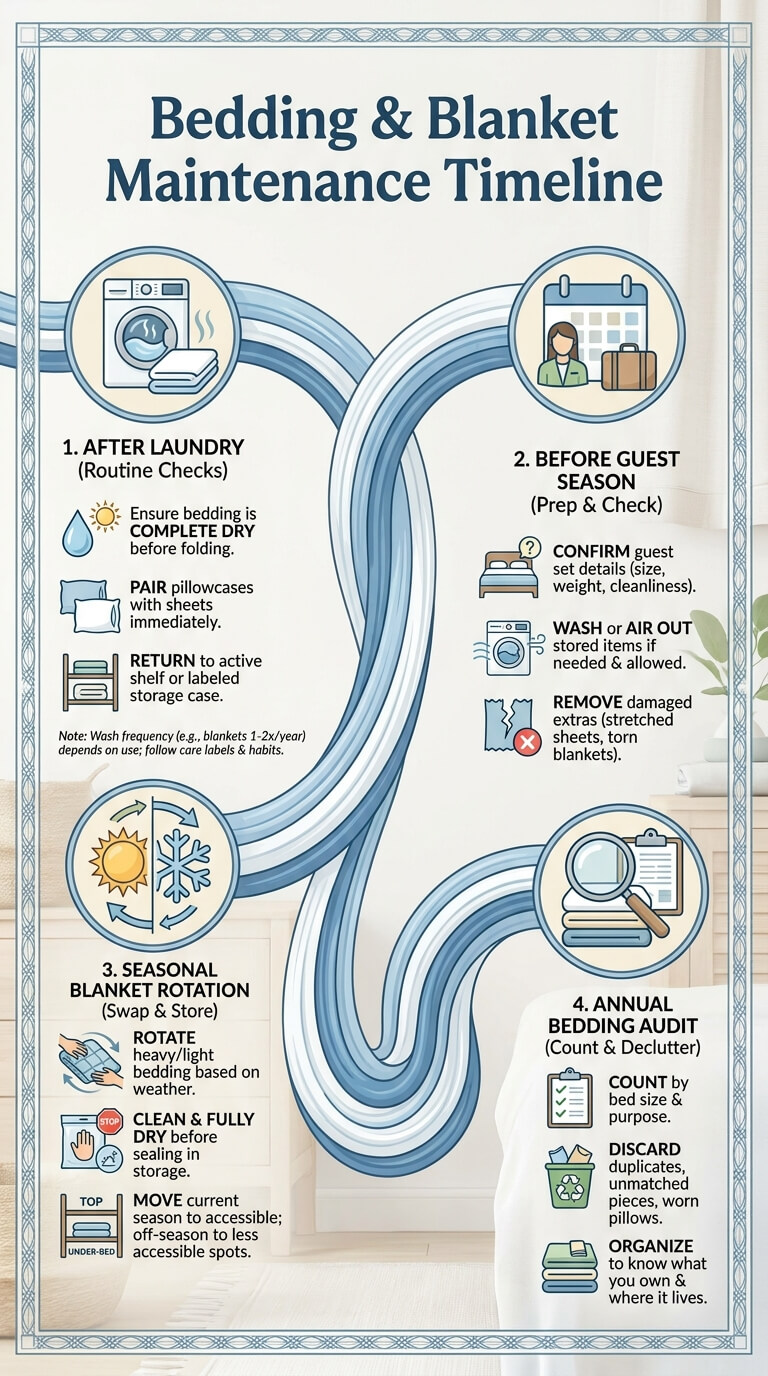
After laundry, fold bedding only when it is dry all the way through. Pair pillowcases with sheets immediately. Return everyday bedding to the active shelf and storage bedding to its labeled case.
Utah State University Extension’s laundry frequency guidance notes that blankets, comforters, bed pillows, and pillow shams may be washed once or twice a year depending on use, while other items need more frequent cleaning; the USU Extension laundry guidance is a helpful reminder that wash timing should match the item and household habits.
before guest season
Before holidays, summer visits, or any season when guests are likely, check guest bedding sets. Confirm bed size, pillowcases, blanket weight, and cleanliness. Wash or air out anything that has been stored a long time if the care label allows it.
This is also the moment to remove damaged extras. Guests should not be the first people to discover a stretched fitted sheet or a blanket with a torn edge.
seasonal blanket rotation
When weather changes, rotate heavy and light bedding. Move the current season to accessible storage and move the off-season set to a top shelf, under-bed case, or guest room closet. Check labels while moving items so the next rotation is easier.
Do not rotate bedding straight from the bed into a sealed bag. Clean it first if needed, dry it fully, and fold it in a way that fits the container without strain.
annual bedding audit
Once a year, count bedding by bed size and purpose. Look for duplicate blankets, unmatched sheet pieces, guest sets that no longer match your beds, pillows that have lost support, and storage bags that are torn or dusty.
An annual audit should leave you with fewer mysteries. You should know what you own, where it lives, and what it is for.
FAQ
These answers cover the storage decisions that usually create confusion once bedding is clean and sorted.
What is the best way to store blankets long term?
The best long-term method is to store clean, fully dry blankets in a breathable bag, clean cotton wrap, roomy bin, or labeled case in a dry indoor location. Choose the container based on material. Sturdy synthetic blankets can handle more compression than wool, down, delicate woven throws, or quilts. Avoid damp basements, hot attics, and mystery bins with mixed contents.
Should comforters be stored in vacuum bags?
Comforters can sometimes be stored in vacuum bags for short-term space saving, especially if they are synthetic and the care label does not warn against compression. Vacuum bags are not ideal for every comforter. Down, feather, wool, and lofty fills may need more room so they can recover their shape. Check both the comforter label and the vacuum bag instructions before compressing.
Can bedding be stored under a bed?
Yes, bedding can be stored under a bed if the area is clean, dry, easy to access, and protected from dust. Use a zippered fabric case or low bin, label it clearly, and avoid overfilling it. Under-bed storage works especially well for bedding assigned to that bed, such as a winter comforter or spare sheet set.
How do I store guest bedding in a small home?
Store guest bedding as complete sets by bed size. Place sheets and pillowcases together in a pillowcase or labeled bag, then keep the blanket or duvet nearby with the same label. In a small home, guest bedding can live under a bed, on a top closet shelf, in a storage bench, or in one dedicated linen closet overflow zone. The important part is that the full set can be found quickly.
What should stay in the linen closet instead?
The linen closet should keep everyday towels, washcloths, active sheet sets, and items used often enough to need quick access. Bulky comforters, off-season blankets, extra pillows, and guest-only bedding usually work better in separate labeled storage. This keeps the daily linen closet from becoming too crowded to reset after laundry.
Final Thoughts
Good bedding storage starts before the container. Sort by use, clean and dry each item properly, respect the material, and choose a storage zone that matches how often the bedding is needed. A small home may rely on under-bed cases and top shelves. A larger home may use a guest closet or dedicated overflow zone. Either way, the system should make the next use easier.
If you remember one habit, make it this: never store bulky bedding as a vague pile. A labeled comforter bag, a complete guest set, or a seasonal blanket case is easier to maintain than a bin of mixed soft goods. When bedding has a clear purpose and a clear home, closets stay calmer and guests are easier to prepare for.

Ethan Carter is the Founder & Editor of HomeCleanSecrets. Based in the United States, he has 5 years of experience creating practical home cleaning, laundry care, stain removal, decluttering, and home organization content. His goal is to help everyday households clean smarter and build simple routines that are easier to maintain.
Read more about Ethan Carter on his author page: https://homecleansecrets.com/ethan-carter/