

Messy dresser drawers usually come from two problems at once: too many clothes are assigned to the same small space, and the folding system hides what is inside. A good drawer setup does not need a matching set of bins or a perfect color arrangement. It needs a clear role for each drawer, clothing categories that make sense for the way you get dressed, and enough open space for the drawer to close without pushing fabric into the back.
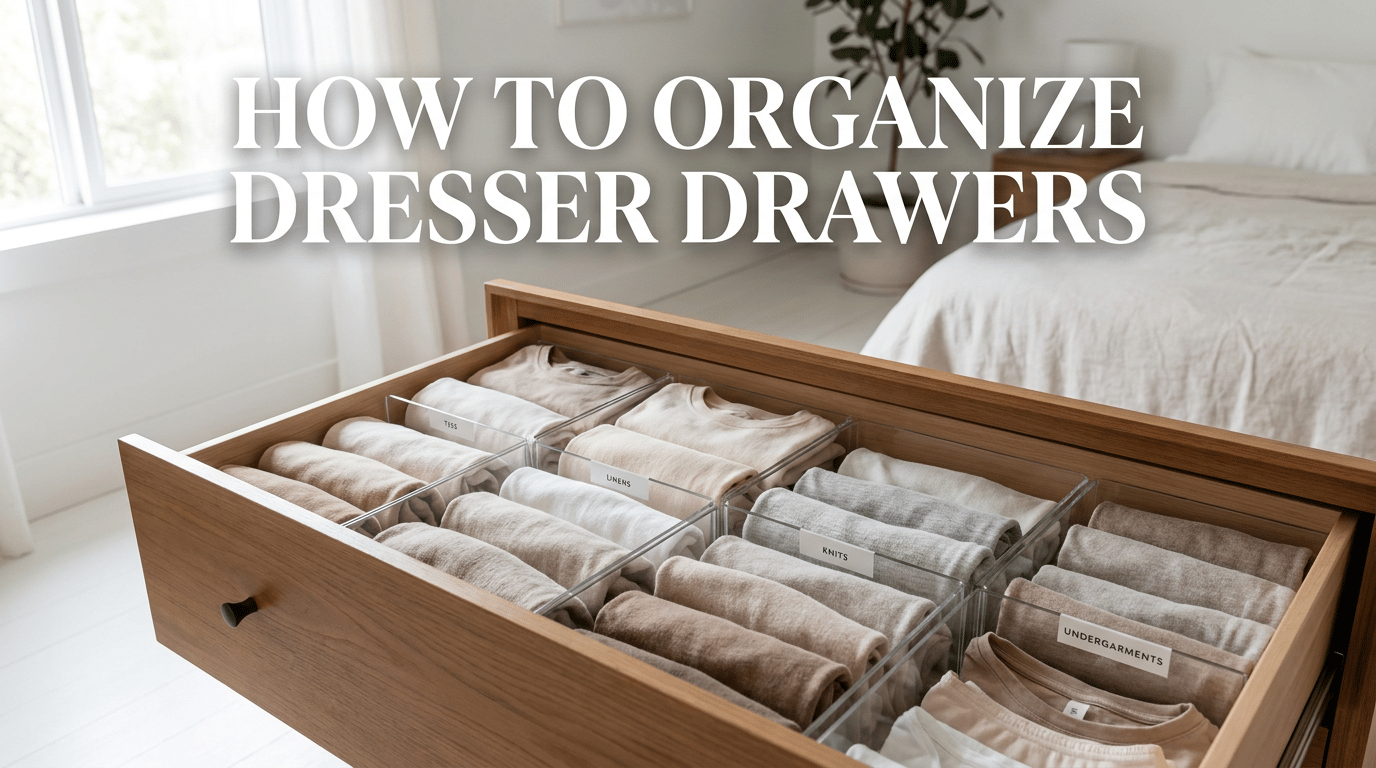
This guide shows how to organize dresser drawers from the inside out. It focuses on everyday folded clothing, small basics, kids clothes, laundry return, and simple dividers. It does not replace a full closet plan, a shoe storage system, or a seasonal clothing storage project. The goal is a dresser that opens easily, shows what you own, and can survive a normal laundry week.
Dresser drawers should work together with the closet, not compete with it. For a complete clothing storage system, connect your drawer setup with the closet organization and clothing storage guide.
If your closet is short on hanging space, drawers can take pressure off the closet. This is especially useful when you need to organize a small closet without forcing every item onto the rod.
Quick Answer: The Drawer Reset Sequence
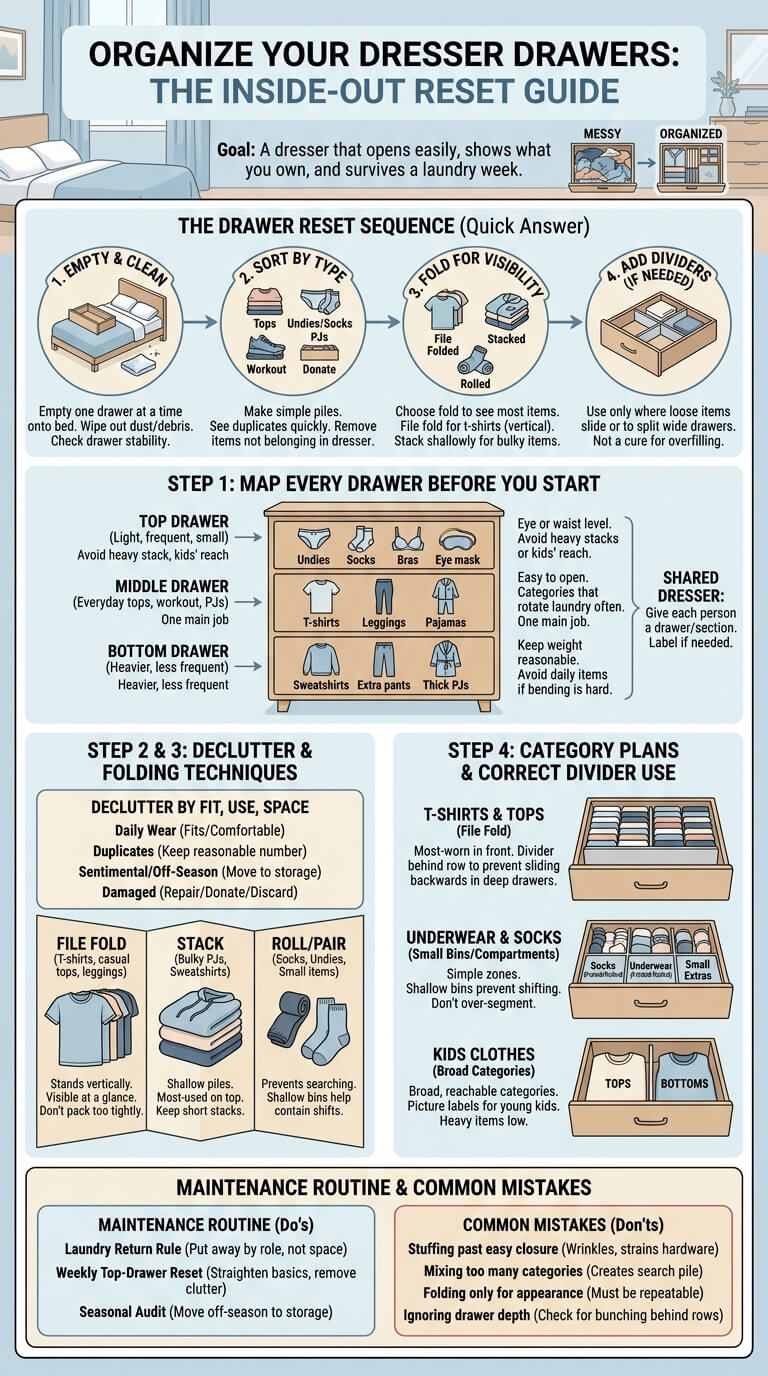
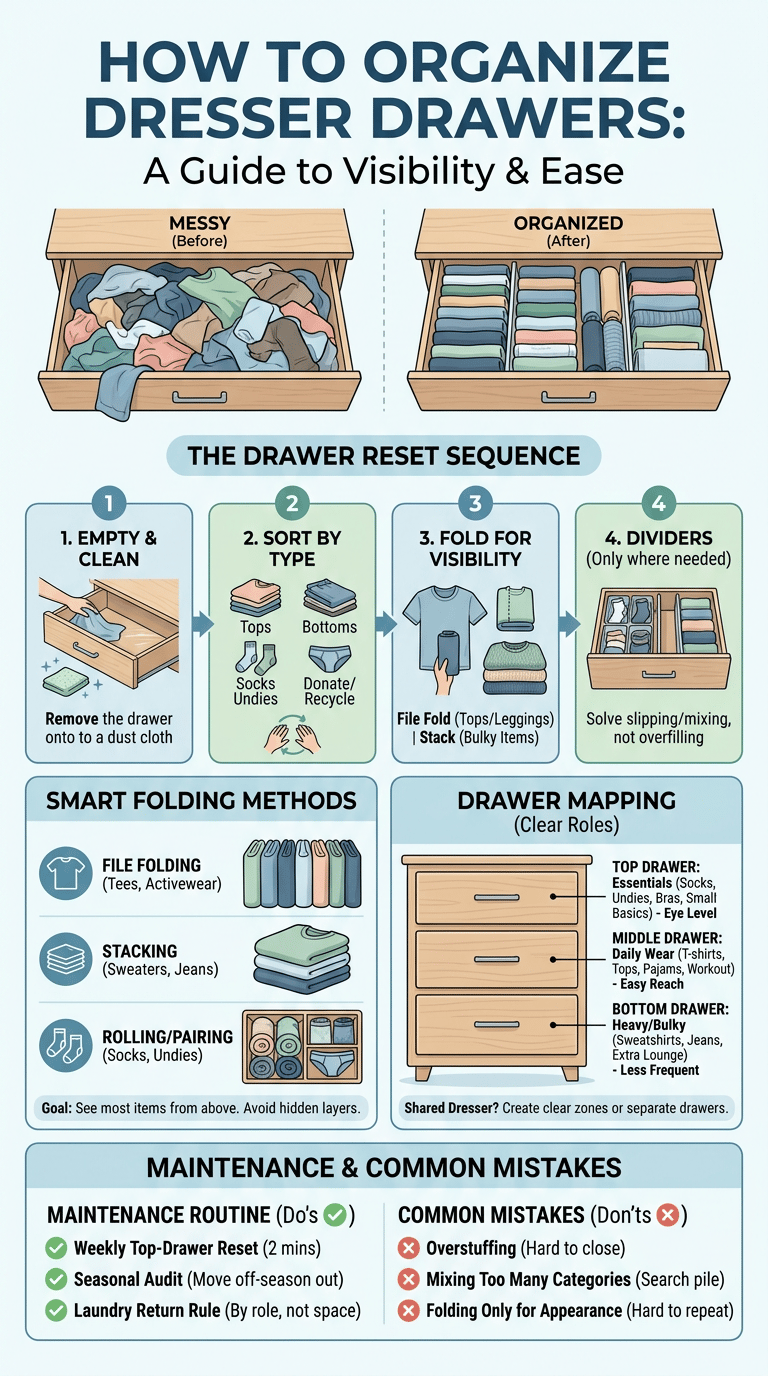
The easiest reset order is to work one drawer at a time, remove everything, sort by clothing type, choose what truly belongs in that drawer, fold for visibility, then add dividers only where loose items slide around. A good test is whether you can open the drawer, see the category you need, remove one item, and close the drawer without the rest of the stack collapsing.
Empty one drawer at a time
Start with one drawer, not the whole dresser. Empty it onto a bed or clean floor and wipe out dust, lint, and small debris. Working one drawer at a time keeps the project from taking over the room and helps you notice the actual capacity of that drawer. Stop if the drawer sticks, tilts, or feels unstable, because forcing a loaded drawer can make a weak dresser worse.
Sort by clothing type
Make simple piles: tops, underwear, socks, pajamas, workout clothes, kids basics, and items that do not belong in a dresser. Sorting by type shows duplicates quickly. It also prevents a drawer from becoming a mix of sleepwear, old T-shirts, scarves, receipts, and half-paired socks. Keep the category names plain enough that another person in the home would understand them.
Fold for visibility
Choose a fold that lets you see most items from above. File folding works well for T-shirts, casual tops, leggings, and some kids clothes because each item stands vertically. Stacking can work for bulky pajamas or sweatshirts when the pile is shallow. Visibility matters more than the folding trend. If a fold looks neat but hides half the drawer, it will not last.
Add dividers only where they solve a problem
Dividers help when small items slide together or when one wide drawer needs two categories. They are not a cure for overfilled storage. Add a divider after you know what the drawer will hold, not before. Measure the inside height, width, and depth, then check product dimensions and dresser limits before buying inserts or containers.
When Dresser Drawers Are the Right Storage Choice
Dresser drawers work best for clothes that can be folded without losing shape and that you reach for often. They are less useful for structured pieces, delicate garments that wrinkle easily, shoes, bulky bedding, and items you only need once or twice a year.
Folded everyday clothes
T-shirts, casual tops, leggings, basic shorts, pajamas, workout pieces, and soft loungewear are strong drawer candidates. They can usually handle folding and frequent handling. Keep the most-worn items near the top or in the easiest drawer to open. If a category is worn every week, it deserves a drawer location that does not require bending, digging, or moving other items first.
Drawers become hard to use when they hold clothes from every season at once. Move out-of-season pieces out of prime drawer space and store seasonal clothes separately.
Fabric matters when deciding whether a drawer is safe for a garment. Cotton basics and many knits are usually forgiving, while some fibers can react poorly to heat, repeated creasing, or rough handling. If a sweater, blouse, or specialty top feels delicate, check the care tag before folding it tightly. The University of Georgia textile fiber guidance is helpful for understanding why different fibers need different care.
Small items and basics
Underwear, socks, undershirts, camisoles, tights, slips, and small accessories need containment because they shift whenever the drawer opens. Shallow compartments or small bins can help. Keep the system simple: one zone for socks, one for underwear, one for small extras. Too many tiny compartments turn laundry return into a sorting chore.
Kids clothes
Dresser drawers are useful for kids when categories are broad and reachable. A young child may do better with one drawer for tops, one for bottoms, and one for pajamas than with narrow divisions by fabric, color, or outfit. Keep heavy items low and do not use the top of a dresser as tempting toy storage. The CPSC Anchor It guidance explains why unsecured dressers and other furniture can be a serious tip-over hazard, especially around children.
Items that should move to hangers or seasonal storage
Blazers, dresses, tailored shirts, pleated skirts, coats, and special-occasion clothing usually belong on hangers or in another storage zone. Bulky winter items may need seasonal storage instead of taking over daily drawers. If you only wear an item during one part of the year, decide whether it belongs in the everyday dresser at all.
Step 1: Map Every Drawer Before You Start
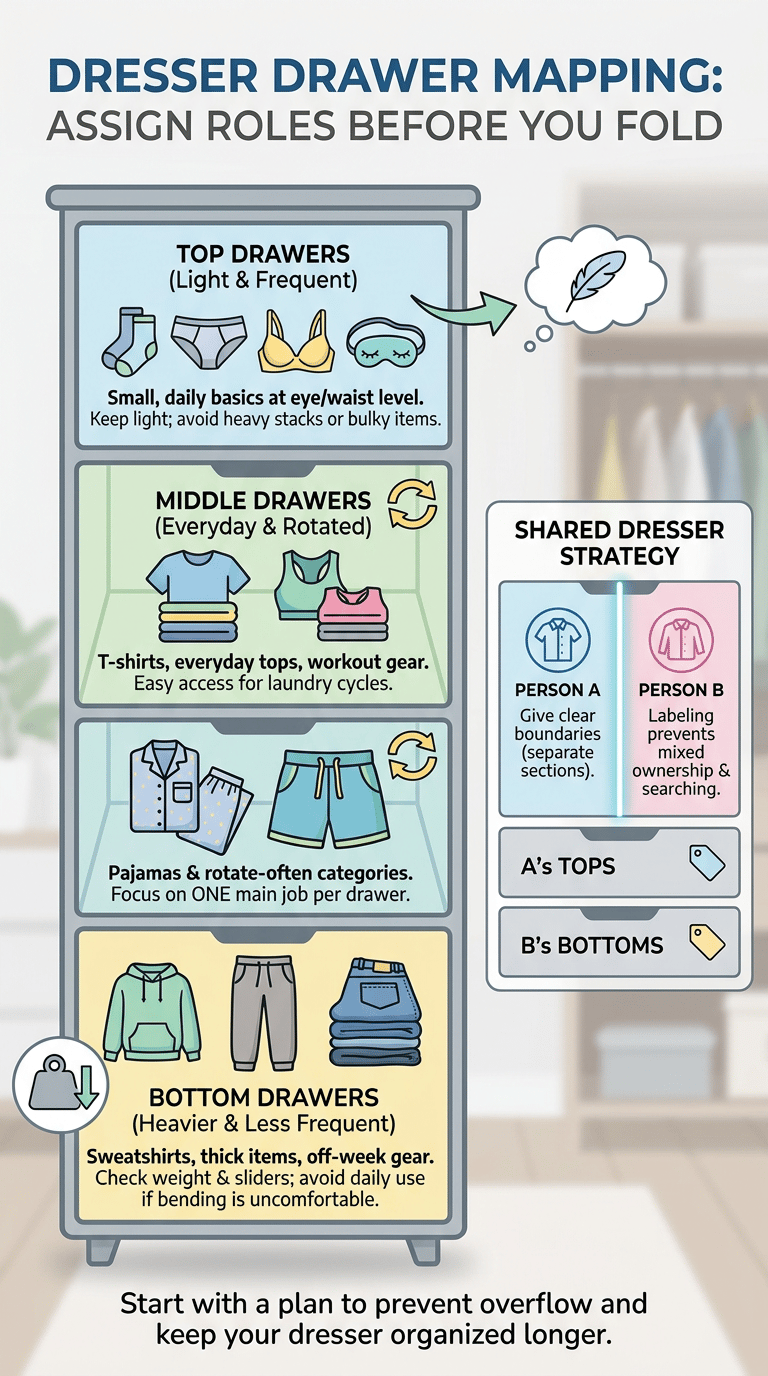
A drawer map is a simple assignment list. It prevents the same dresser from holding random overflow in every drawer. Before you fold anything, decide what each drawer should do based on reach, depth, weight, and the person using it.
Top drawer roles
Top drawers should hold light, frequent, small items. Underwear, socks, undershirts, bras, sleep masks, or daily basics are easier to manage when they sit near eye level or waist level. Avoid loading a top drawer with heavy stacks, electronics, or items a child may climb to reach. If a top drawer is shallow, use it for low-profile categories rather than forcing bulky clothes inside.
Middle drawer roles
Middle drawers are usually the best place for T-shirts, everyday tops, workout clothes, and pajamas. They are easy to open and can handle categories that rotate through laundry often. A middle drawer should have one main job. When it holds shirts, shorts, pajamas, and random accessories together, the drawer becomes messy again after two laundry cycles.
Bottom drawer roles
Bottom drawers can hold heavier or less frequent folded items, such as sweatshirts, extra lounge pants, thick pajamas, or off-week workout gear. Keep weight reasonable and check how the drawer slides. Heavy clothing packed tightly into a low drawer can strain cheap runners and make the dresser difficult to use. If bending is uncomfortable, avoid assigning daily items to the lowest drawer.
Shared dresser decisions
A shared dresser needs boundaries. Give each person a drawer, half drawer, or clearly divided section. Mixed ownership creates small arguments and messy searching. If two people share one wide drawer, put the most-used categories near the front for each person. Labeling inside the drawer can help children, guests, or partners return laundry without guessing.
After the drawer reset, the real challenge is maintenance. A simple routine to keep clothes organized will stop drawers from turning back into piles.
Step 2: Declutter by Fit, Use, and Drawer Space
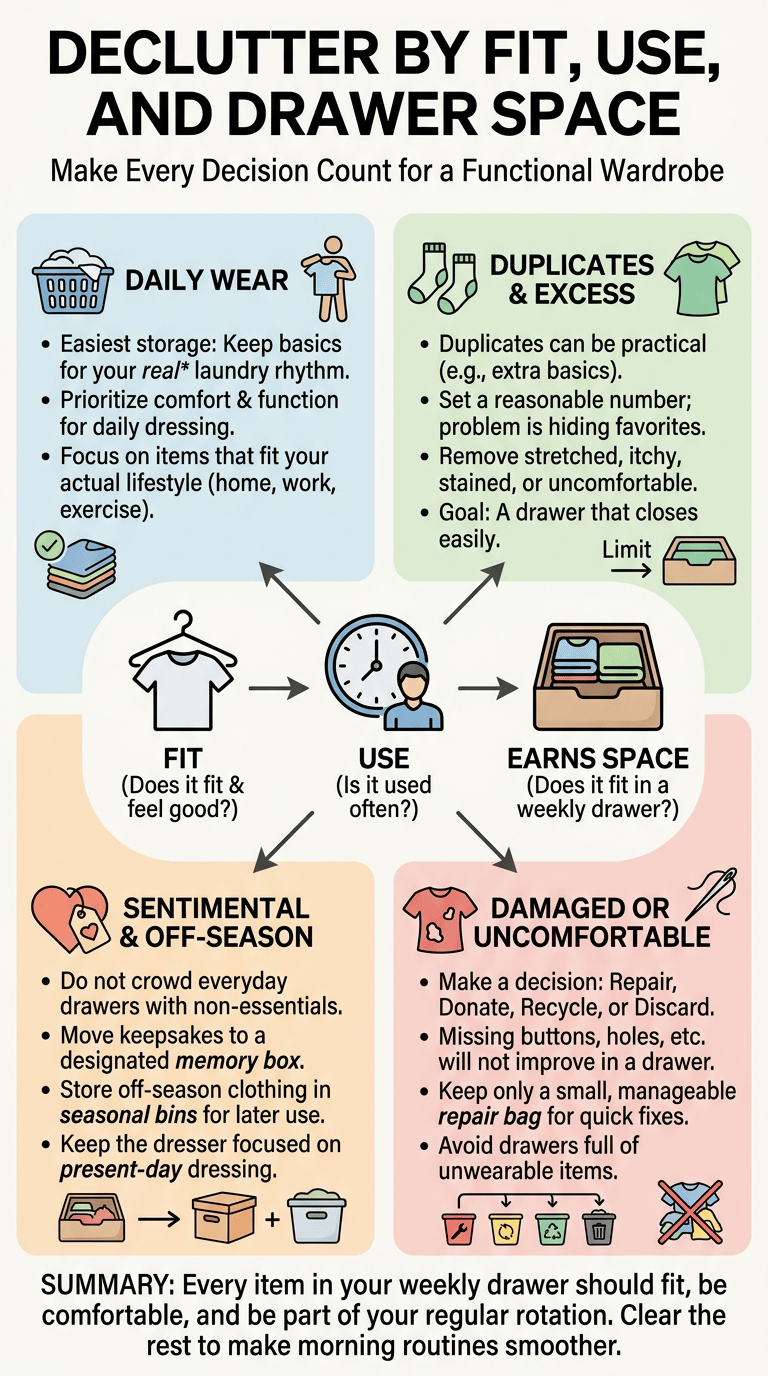
Drawer decluttering works better when every decision connects to fit, use, or space. Do not start by asking whether an item is good or bad. Ask whether it fits, whether it is used, and whether it earns space in a drawer you open every week.
Daily wear
Daily wear deserves the easiest storage. Keep enough basics for your real laundry rhythm, not an imaginary perfect week. If laundry is done once a week, you probably need more than two shirts but not thirty. Keep the items that fit, feel comfortable, and match the way you actually dress at home, at work, or after exercise.
duplicates and excess basics
Duplicates are not automatically bad. Extra socks, underwear, and undershirts can be practical. The problem starts when extras hide the pieces you like. Set a reasonable number for each category, then remove stretched, itchy, stained, or uncomfortable duplicates. A drawer that closes easily is more useful than a backup supply that makes every morning slower.
sentimental or off-season items
Sentimental shirts, old team clothing, vacation tops, and off-season pieces should not crowd everyday drawers unless you truly wear them. Move keepsakes to a memory box or a labeled storage bin. Move off-season clothing to seasonal storage if it will not be used for several months. This keeps the dresser focused on present-day dressing, not every clothing story you own.
damaged or uncomfortable clothes
Make a repair, donate, recycle, or discard decision before the clothes go back. Missing buttons, stretched elastic, holes, scratchy seams, and warped collars will not improve inside a drawer. Keep a small repair bag only if you will handle it soon. A good limit is one small bag, not a drawer full of clothing that cannot be worn.
Step 3: Fold Clothes So You Can See Them
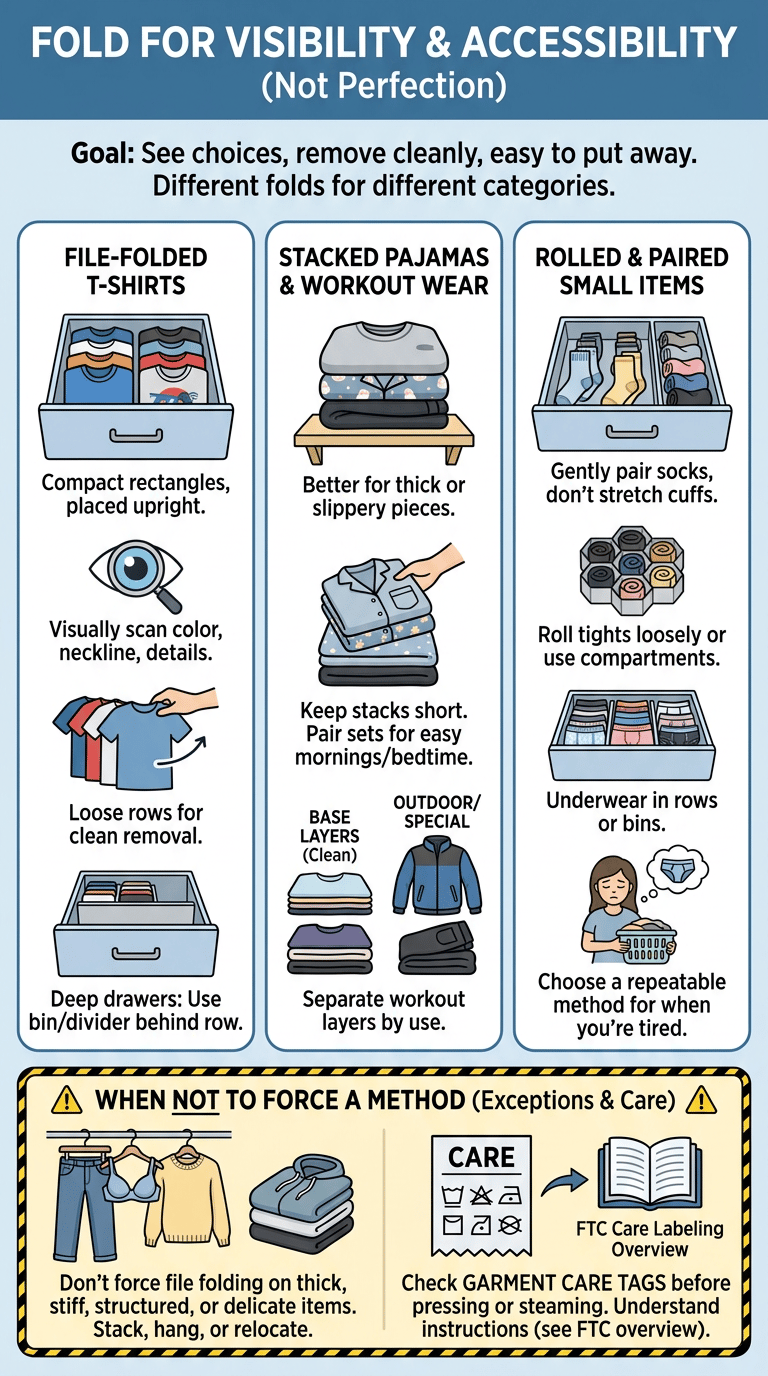
Folding is not about making the drawer look perfect for one day. It should let you see the choices, remove one piece cleanly, and put laundry away without rebuilding the whole drawer. Different clothing categories need different folds.
File-folded t-shirts
File-folded T-shirts are folded into compact rectangles and placed upright, like files in a drawer. This makes color, neckline, or graphic details visible at a glance. Keep rows loose enough to remove one shirt without pulling three others. If the drawer is deep, place an open bin or divider behind the row so shirts do not slide backward.
Stacked pajamas and workout wear
Pajamas and workout wear can be file-folded, but stacking may work better when pieces are thick or slippery. Keep stacks short, ideally with the most-used sets on top. Pair pajama tops and bottoms if that makes mornings or bedtime easier. For workout clothes, separate clean base layers from items used for outdoor weather or special activities.
Rolled or paired small items
Socks, underwear, tights, and small basics need a method that prevents searching. Pair socks gently without stretching cuffs into tight balls. Roll tights loosely or place them in small compartments. Underwear can stand in rows or sit in shallow bins. The right method is the one you can repeat when you are tired and holding a basket of clean laundry.
When not to force a folding method
Do not force file folding on every item. Thick sweatshirts, stiff jeans, delicate knits, bras with molded cups, and structured pieces may need stacking, hanging, or a different location. Read garment care tags before pressing, steaming, or using heat to make a fold look sharper. The FTC notes that clothing care labels give regular care instructions, and the FTC care labeling overview can help readers understand why those labels matter.
Step 4: Use Dividers and Containers Correctly
Dividers work best after the drawer has been edited. They create edges, not extra space. A crowded drawer with dividers is still crowded, and it may become harder to use because every compartment is tight.
Adjustable dividers
Adjustable dividers are useful in wide drawers that hold T-shirts, tops, pajamas, or mixed clothing for two people. Choose dividers that fit the drawer depth and do not scrape the sides. Test one drawer before buying a full set. If the divider pops loose every time the drawer opens, it is adding frustration instead of order.
Small bins
Small bins help with socks, underwear, kids accessories, hair items, or workout extras. Soft bins are forgiving in shallow drawers. Rigid bins give cleaner edges but need exact measurements. Leave enough space for your hand to lift items out. A bin that fits the drawer but not the way your hand moves will feel annoying every day.
Sock and underwear compartments
Compartment inserts can be helpful for small basics when the household will use them correctly. They are less helpful when every pocket is too small or when laundry return becomes too detailed. Sort by function first: everyday socks, exercise socks, dress socks, underwear, and backup items. Skip color sorting unless color is how you actually choose what to wear.
Avoiding over-segmentation
Too many sections make a dresser fragile. One misplaced shirt starts a chain of wrong categories, and the system becomes harder than the mess it replaced. Aim for broad zones that still guide the user. Adults may manage narrow categories, but kids and busy households usually need larger, clearer spaces that tolerate fast laundry return.
Drawer Plans by Clothing Category
Each clothing category needs a slightly different drawer plan. Use these as starting points, then adjust for drawer depth, the number of people sharing the dresser, and how often laundry returns to the room.
T-shirts and tops
T-shirts and casual tops usually work best in one row or two rows of file folds. Put the most-worn shirts in the front or easiest row. Keep graphic shirts facing the same direction if that helps recognition. Separate work tops from sleep shirts if mixing them causes morning mistakes.
underwear and socks
Underwear and socks need small boundaries. Use shallow bins, soft compartments, or a front-and-back split. Discard stretched elastic and single socks that have been waiting too long for a match. Keep special socks, tights, or shapewear in a separate small section so everyday basics do not become hard to find.
pajamas and loungewear
Pajamas and loungewear can take over a dresser because the fabric is soft and bulky. Keep complete sets together when possible. Store heavy robes or thick sweatshirts elsewhere if they make the drawer hard to close. A simple rule works well: if it is worn for sleep or relaxed evenings, it belongs here; if it is old clothing you never choose, remove it.
workout clothes
Workout clothes should be sorted by activity or layer. Everyday gym pieces can share one drawer section, while outdoor layers, swim items, or sports uniforms may need a separate bin. Wash and dry performance fabrics according to the care tag. The American Cleaning Institute laundry guidance is a useful reference for basic sorting and fabric care symbols before clothes return to drawers.
kids clothing
Kids clothing works best with fewer categories and reachable drawers. Try tops, bottoms, pajamas, and underwear or socks. Add picture labels inside drawers for younger children. Keep outgrown clothing out of the active dresser. A small try-on basket can hold questionable pieces until the next laundry day, but it should not become permanent overflow.
Common Dresser Drawer Mistakes
Most dresser problems return because the system is too full, too detailed, or based on how the drawer looks when finished instead of how the household uses it during a normal week.
Stuffing drawers past easy closure
A drawer should close with light pressure. If you have to push down fabric, hold clothing back, or slam the drawer, it is too full. Overstuffing wrinkles clothes, hides items, and strains drawer hardware. Move bulky or rarely used pieces out before buying more dividers.
Mixing too many categories
One drawer can hold more than one category only when the categories are clear and small. Socks and underwear can share a drawer. T-shirts, swimwear, scarves, receipts, workout gear, and off-season clothing should not all share one space. The more unrelated the contents are, the faster the drawer becomes a search pile.
Folding only for appearance
A beautiful fold that no one can repeat will fail. Choose folds based on visibility, fabric, and speed. If one person in the home does the laundry, the system must work for that person. If children put away their own clothes, the fold may need to be simpler than what looks best online.
Ignoring drawer depth
Drawer depth changes the storage method. Shallow drawers need low folds and small items. Deep drawers can handle upright shirts, but they may need a divider so rows do not fall backward. Tall drawers can hold bulkier clothing, but heavy stacks may make slides wear faster. Check how the drawer moves after it is loaded.
One practical check is to load the drawer, open it halfway, and look at the back corners. If clothing is bunching behind the row, the drawer is too deep for that fold without a backstop. If the front row tips forward, the fold is too tall or packed too loosely. Small adjustments here prevent the same mess from returning.
Maintenance Routine for Dresser Drawers
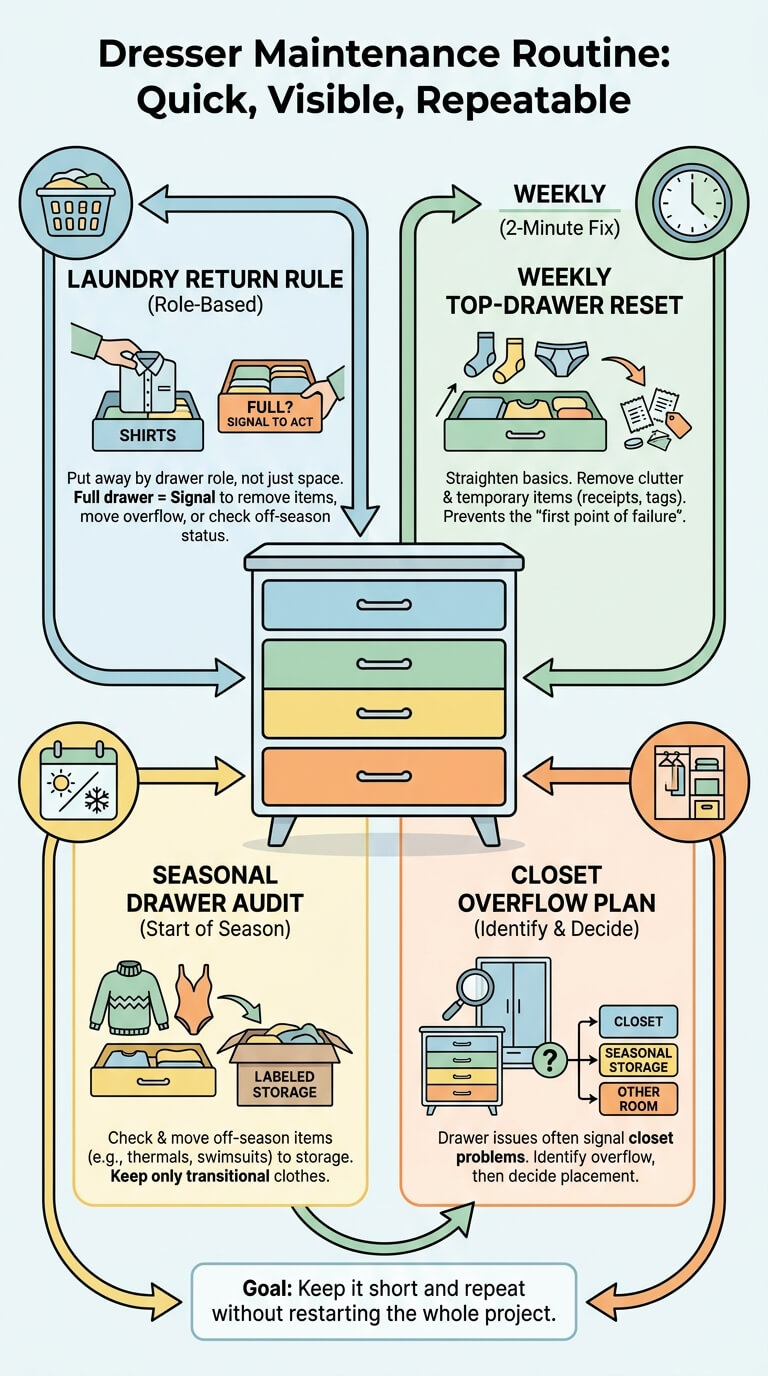
A dresser stays organized when maintenance is built into the laundry cycle. The routine should be short, visible, and easy enough to repeat without restarting the whole project.
Laundry return rule
Put laundry away by drawer role, not by the nearest open space. If a shirt category is full, pause before forcing more shirts in. That is a signal to remove something, move overflow to the closet, or check whether off-season items are stealing daily space. Clean clothes sitting on top of the dresser often mean the drawer assignments are unclear or too full.
Weekly top-drawer reset
Top drawers collect the most small-item disorder. Once a week, straighten socks, underwear, and daily basics for two minutes. Remove receipts, tags, loose change, and items that landed there temporarily. This tiny reset prevents the drawer you use most from becoming the first point of failure.
Seasonal drawer audit
At the start of a warm or cold season, check which clothing should leave the dresser. Heavy thermals, summer shorts, swimsuits, and holiday pajamas may not need active drawer space all year. Move clean off-season items to labeled storage. Keep only transitional clothing that you might realistically wear soon.
When to move overflow back to the closet plan
Some drawer problems are really closet problems. If hanging clothes are crammed, folded pieces may drift into drawers that are already full. If shoes, bags, or bedding share clothing space, the dresser may be carrying too much of the bedroom storage load. Use the drawer reset to identify overflow, then decide what belongs in the closet, seasonal storage, or another room.
FAQ
These answers focus on dresser drawers, folded clothing, dividers, and daily maintenance. Broader closet layouts, shoe storage, and long-term seasonal packing need their own systems.
What is the best way to organize dresser drawers?
The best way is to give each drawer one clear role, remove items that do not fit or get used, fold clothes so you can see them, and use dividers only where small items need boundaries. Start with daily basics in the easiest drawers and move bulky, delicate, or off-season pieces elsewhere.
Are drawer dividers worth it?
Drawer dividers are worth it when they solve a specific problem, such as socks sliding into underwear or T-shirts falling sideways in a wide drawer. They are not worth it when the drawer is simply too full. Edit the contents first, measure carefully, then buy the fewest dividers needed.
Should t-shirts be folded or hung?
Most casual T-shirts can be folded in dresser drawers, especially when drawer space is easier to access than closet rod space. Hang shirts that wrinkle easily, need to keep a shape, or are part of work outfits. File folding is helpful when you want to see every shirt from above.
How do I keep kids dresser drawers organized?
Use broad categories, reachable drawers, simple folds, and labels children can understand. Keep heavy items low, avoid storing tempting objects on top of the dresser, and anchor furniture according to the manufacturer instructions and appropriate safety guidance. Remove outgrown clothes often so kids are not sorting through items that no longer fit.
How do I stop drawers from getting messy again?
Stop the mess by reducing excess, keeping one role per drawer, returning laundry to the same place every time, and doing a short weekly reset. When a drawer becomes hard to close, treat it as a capacity warning. Remove duplicates or move off-season pieces before the drawer turns back into a pile.
Final Thoughts
Dresser drawer organization works when it matches the clothes you actually fold, the drawer depth you actually have, and the laundry routine you actually follow. Start with one drawer, choose a clear role, remove what does not belong, fold for visibility, and add simple boundaries only where they help. Once the setup is realistic, maintenance becomes a few minutes each week instead of another full bedroom project.

Ethan Carter is the Founder & Editor of HomeCleanSecrets. Based in the United States, he has 5 years of experience creating practical home cleaning, laundry care, stain removal, decluttering, and home organization content. His goal is to help everyday households clean smarter and build simple routines that are easier to maintain.
Read more about Ethan Carter on his author page: https://homecleansecrets.com/ethan-carter/