
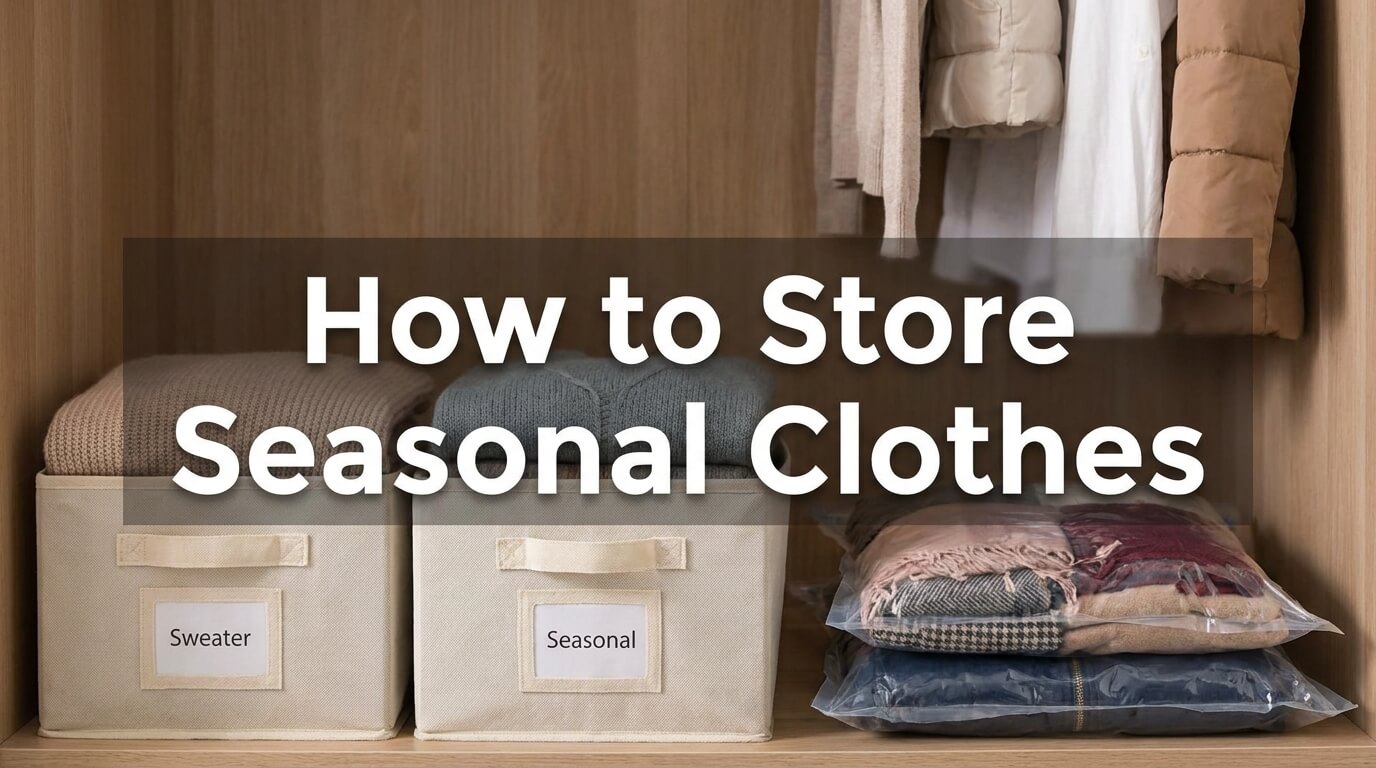
Seasonal clothing storage should make your daily closet easier, not create a mystery pile that you dread opening next year. The best system starts before the first sweater, coat, swimsuit, or linen shirt goes into a bin. Clothes need to be clean, dry, sorted by next-use season, and stored where dampness, heat, crushing, and forgotten labels are less likely.

Learning how to store seasonal clothes is especially helpful when a closet is small, a family has several sizes in rotation, or bulky winter pieces are crowding clothes that are needed every week. This guide focuses on the off-season workflow: what to remove, clean, fold, hang, label, and bring back later. It does not rebuild your daily closet or organize every dresser drawer.
Seasonal storage should make your daily closet easier to use, not create another hidden mess. For the full setup, connect this step to the closet organization and clothing storage guide.
This matters even more when your closet is small. If every inch counts, organize a small closet first so you know which items deserve daily-access space.
A seasonal rotation is not a one-time task. To keep clothes organized, create a simple habit for reviewing what comes back into the closet at the start of each season.
Quick Answer: The Safe Seasonal Storage Order
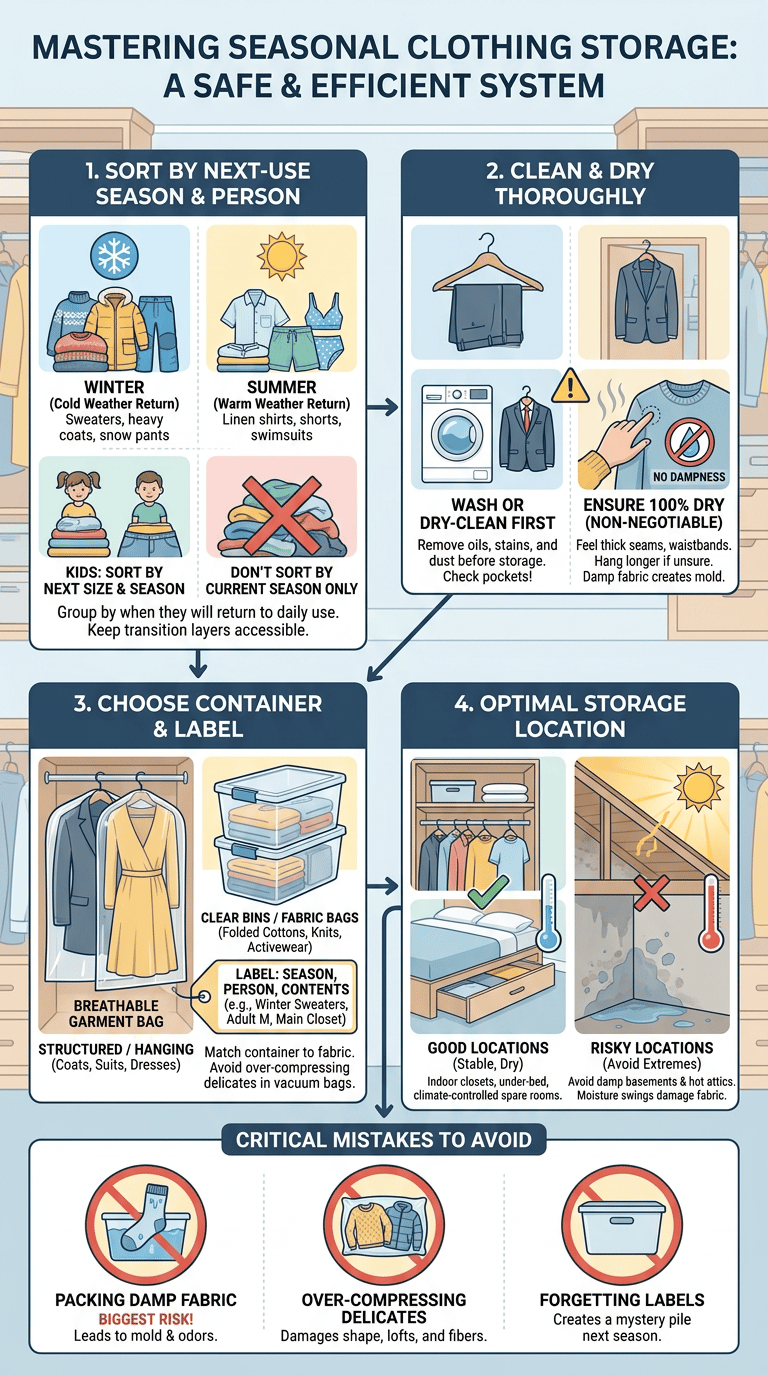
The safest seasonal storage order is simple: sort first, clean what will be stored, let each piece dry fully, match the container to the fabric, label by season and person, and choose a storage spot that avoids dampness and extreme heat. A good test is whether you could open the container six months later and understand the contents without unfolding every item.

Wash or dry-clean first
Store only clean clothes. Body oils, food marks, deodorant residue, and outdoor dust can become harder to remove after months in storage. Everyday washable items should be laundered before packing, while coats, suits, silk, wool, and embellished garments may need care based on the tag. The American Cleaning Institute laundry basics are useful when you need a plain reminder on sorting, detergent use, and laundry labels before storage.
Sort by next-use season
Do not sort only by current season. Sort by the next time the clothes will return to daily use. Winter coats, snow pants, wool sweaters, and thermal layers can go together if they return in cold weather. Linen shirts, shorts, swimsuits, and light dresses can share a warm-weather zone. With children, sort by next size and season instead of placing every hand-me-down in one mixed container.
Choose the right container
The container should match the fabric and the storage location. A breathable garment bag works well for structured pieces that should hang. A clear plastic bin works well for folded cotton, denim, synthetic activewear, and kids clothing in a dry indoor space. A fabric storage bag can be useful on a closet shelf when the contents need light protection but not airtight sealing. Vacuum bags have limits because they compress fibers and can leave delicate items misshapen.
The same storage logic also works for bulky home fabrics. If winter blankets or extra bedding are taking up closet space, use a separate plan to store bedding and blankets.
Label by season and person
A label should tell you what is inside without opening the bin. “Winter” is less helpful than “Winter sweaters, adult, main closet” or “Summer size 4T, play clothes.” Put labels on the front and top if containers stack. Add a simple note card inside the bin for special items, repairs needed, or pieces that should be tried on before returning to the closet.
Store away from damp or heat-prone areas
Storage location matters as much as folding. Choose a dry indoor closet, under-bed drawer, spare room closet, or top shelf when possible. Be careful with damp basements, unconditioned garages, and hot attics because fabric can react poorly to moisture swings and high heat. Fix past water intrusion, condensation, or a persistent damp feel before placing clothing there. The EPA explains moisture control principles in its mold and moisture guidance.
When Seasonal Clothing Storage Makes Sense
Seasonal storage is most useful when off-season clothes block daily access. It should not become a way to keep every unwanted item. Before buying bins, identify the real driver: closet size, climate, children’s growth, or special clothing used only a few times a year.

Small closets
A small closet works better when it holds current-season clothes plus a few all-year basics. Thick coats, ski layers, holiday outfits, and heavy sweaters can dominate rods and shelves. Moving them into labeled off-season storage gives the daily closet room to function. Keep one transitional layer available, but do not leave the full winter category in the main closet during warm months.
Climate changes
Homes with hot summers and cold winters benefit from a planned swap. The same closet rarely serves linen shirts, wool coats, swimsuits, rain gear, and thermal layers equally well all year. In milder climates, the swap may be smaller. You might only rotate heavy outerwear, beach clothing, and holiday pieces. Match the size of the storage project to the climate instead of copying a system made for a different region.
Kids clothing rotation
Children’s clothing needs a separate logic because size matters as much as season. Store clean hand-me-downs by size, season, and child. Avoid one bin labeled “kids clothes” because it becomes a sorting project every time someone grows. Add a small “try on first” bag for pieces with uncertain fit. When an item is stained, stretched, or uncomfortable, decide now.
Occasion and specialty clothing
Specialty clothing includes formalwear, uniforms, costumes, ski wear, heavy rain gear, and maternity clothes. These items may not follow the normal seasonal calendar, so group them by occasion and storage requirement. Structured garments usually need hanging support. Foldable items can go in a labeled bin. Keep accessories only when they belong to the same use.
Step 1: Decide What Should Not Be Stored Yet

The fastest way to ruin seasonal storage is to pack items that need attention. Storage should start with a pause, not a bin. Lay out the category you plan to remove from the closet and check each item for dirt, damage, fit, missing buttons, uncertain care instructions, or a realistic chance that you will need it soon.
Dirty clothes
Dirty clothes should stay out of storage until they are cleaned. Check cuffs, collars, underarms, pockets, hems, and shirt fronts where small marks hide. A faint stain can become more obvious later. Empty every pocket before laundering or dry cleaning because lip balm, receipts, tissues, candy, and small metal items can create wash problems or marks inside storage.
Damaged clothes
Clothes with loose hems, missing buttons, broken zippers, small holes, or pulled threads need a decision before storage. Create three piles: repair soon, donate if wearable, and discard if not useful. Do not pack repairs into long-term storage unless you label them clearly. Otherwise, the item will return next season still unwearable.
Items you may need during the season
Keep a small transition group outside deep storage. A lightweight jacket, one sweater, rain layer, swimsuit, or formal outfit may be needed even when the main season has changed. This is especially useful for travel, unpredictable weather, school events, and family photos. The transition group should be small enough to fit in the daily closet without crowding it.
Clothes with uncertain care requirements
Pause when the care tag is missing, confusing, or strict. Delicate fabrics, lined garments, wool, silk, leather trim, beadwork, and tailored pieces may need special cleaning or storage. Read the garment label before washing or packing. The FTC explains care labeling expectations for apparel in its textile and apparel labeling guidance, which is helpful when you want to understand why care tags matter.
Step 2: Clean, Dry, and Prepare Clothes

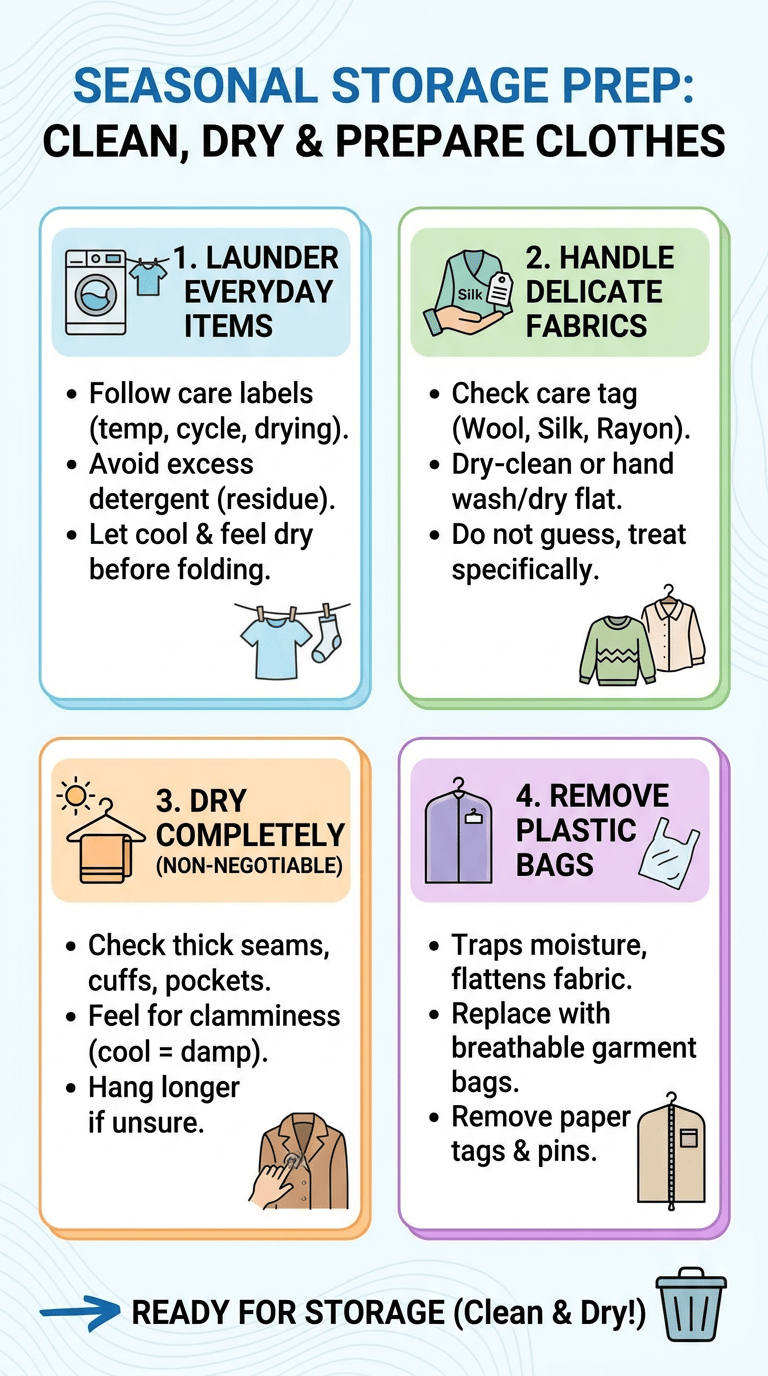
Preparation is the part of seasonal storage that protects the clothes. Neat folding cannot fix damp fabric, residue, or the wrong cleaning method. Work by fabric group so the task feels manageable: everyday washable clothes first, delicate items second, outerwear third, and accessories last.
Launder everyday items
Wash everyday cotton, denim, socks, T-shirts, pajamas, washable summer clothes, and many synthetic basics before storage. Use the care label for water temperature, cycle, bleach limits, and drying method. Avoid too much detergent because residue can make fabric feel stiff. Let the final load cool and feel dry before folding because warm fabric can hide damp seams or waistbands.
Handle delicate fabrics by care tag
Wool, silk, rayon, lace, lined jackets, and embellished garments need more caution. Some pieces should be dry-cleaned. Others may need hand washing, drying flat, or storage without compression. Do not guess based only on how the fabric looks. A soft sweater and a lined blazer can both be “winter clothes,” but they should not be treated the same way. Keep receipts or cleaning tags until the item is ready to pack.
Dry completely before packing
Complete dryness is non-negotiable. Check thick seams, waistbands, cuffs, collars, sweater folds, pockets, and coat linings. A good test is to hold the thickest part for a few seconds and feel whether it is cool or clammy. Hang items longer if you are not sure. Stop packing if a bin fogs or the storage space feels damp.
Remove items from plastic dry-cleaning bags when appropriate
Thin plastic dry-cleaning bags are meant for transport, not long-term garment protection. They can trap moisture and flatten fabric around shoulders. Remove them when the garment is home, then use a breathable garment bag if the item needs dust protection while hanging. Keep the cleaner’s paper tag only long enough to confirm the item is ready, then remove loose paper or pins before storage.
Step 3: Choose Containers by Fabric and Storage Location

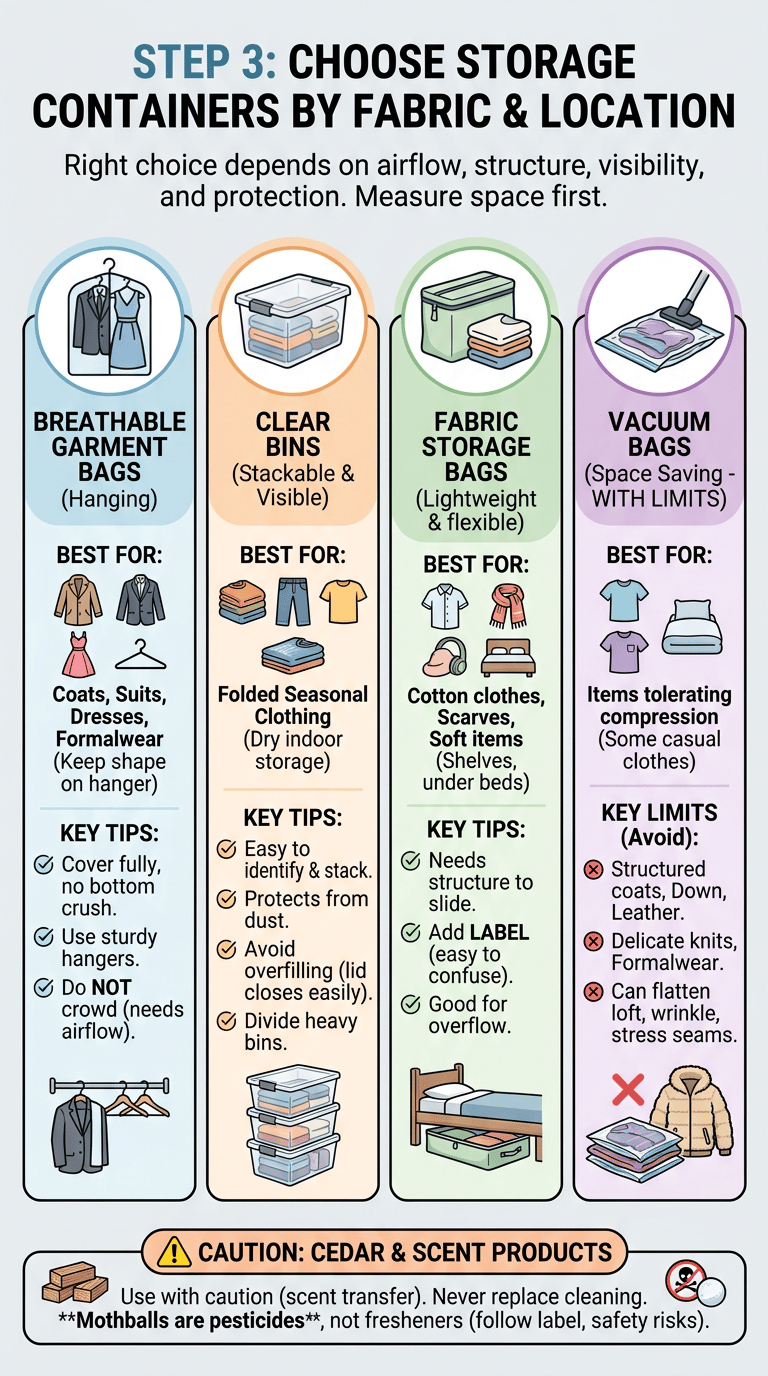
There is no single best container for every seasonal wardrobe. The right choice depends on airflow, structure, visibility, pest caution, and stackable protection. Before buying anything, measure the shelf, under-bed space, or closet area where the container will live.
Breathable garment bags
Breathable garment bags are best for coats, suits, dresses, formalwear, and garments that should keep their shape on a hanger. Choose bags that cover the item fully without crushing the bottom. Use sturdy hangers that support shoulders. Do not crowd five bulky garments into one narrow hanging space because the fabric still needs room to hang naturally.
Clear bins
Clear bins are practical for folded seasonal clothing in dry indoor storage. They make contents easy to identify, stack well, and protect clothes from dust. Avoid overfilling. The lid should close without pressing down hard. If a bin is heavy enough that you avoid moving it, divide the category into two smaller bins.
Fabric storage bags
Fabric bags work well on shelves, under beds, or in closets where you want lighter weight storage. They are useful for cotton clothes, scarves, soft accessories, and overflow that should not be sealed too tightly. Choose bags with enough structure to slide in and out without collapsing. Add a label pocket or tie-on tag because soft bags are easy to confuse when several are stacked.
Vacuum bags and their limits
Vacuum bags save space, but they are not right for everything. They can flatten loft, wrinkle garments, stress seams, and compress knits. Use them only for items that tolerate compression, such as some casual clothes, and avoid structured coats, down, leather, delicate knits, formalwear, or anything you would be upset to reshape later.
Cedar or scent products with caution
Cedar blocks, sachets, and other scented products should never replace cleaning and dry storage. Use them cautiously because strong scents can transfer to fabric or bother sensitive household members. Be especially careful with mothballs. They are pesticides, not simple closet fresheners, and should be used only as directed on the label. Poison Control gives a clear safety overview of mothball risks and use limits.
Step 4: Fold, Hang, or Roll by Clothing Type
The packing method should protect the shape of the garment and make the category easy to reopen. Fold heavy soft items, hang structured pieces, roll only casual lightweight pieces when it improves visibility, and avoid forcing bulky clothing into containers that are too small.
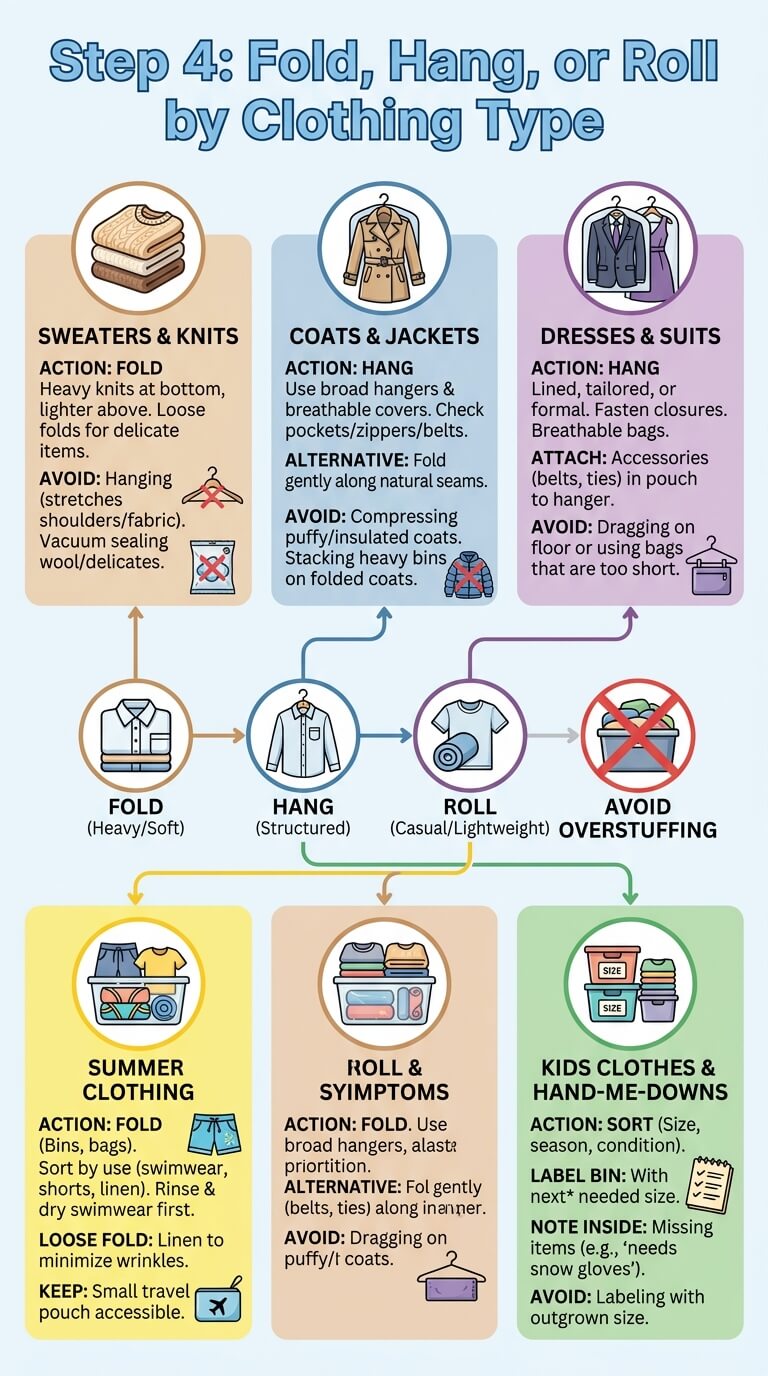
Sweaters and knits
Fold sweaters and knits instead of hanging them for long storage. Hanging can stretch shoulders and lengthen heavy knit fabric. Place heavier knits at the bottom of a bin or shelf, then lighter pieces above. Avoid sharp folds on delicate knits by folding loosely. Do not vacuum seal wool or delicate sweaters unless the care instructions and your tolerance for wrinkles make that acceptable.
Coats and jackets
Hang structured coats and jackets when possible. Use broad hangers and breathable covers. If a coat must be folded, fold it gently along natural seams and avoid stacking heavy bins on top. Puffer jackets and insulated coats may lose loft when compressed too long. Before storage, check pockets, zippers, removable hoods, and belts so every piece returns together next season.
Dresses and suits
Dresses and suits usually need hanging storage, especially when they are lined, tailored, or formal. Fasten buttons or zippers so the garment hangs evenly. Cover with a breathable garment bag. Keep matching belts, ties, or small accessories in a small labeled pouch attached to the hanger, not loose at the bottom of the closet. Stop if the garment is too long for the bag or drags on the floor.
Summer clothing
Most summer clothing can be folded in clear bins, fabric bags, or dresser overflow boxes. Sort swimwear, shorts, linen pieces, lightweight dresses, and T-shirts by use. Swimwear should be rinsed and fully dry before storage. Linen wrinkles easily, so fold it loosely and avoid packing it under heavy winter clothes. A small summer travel pouch can stay accessible if warm-weather trips happen outside the normal season.
Kids clothes and hand-me-downs
Kids clothing should be sorted by size, season, and condition. Label bins with the size that will be needed next, not the size your child just outgrew. Keep a small note inside with missing items, such as “needs snow gloves” or “only two school pants.” This makes future shopping more accurate and prevents buying duplicates because the storage bin was unclear.
Best Places to Store Seasonal Clothes
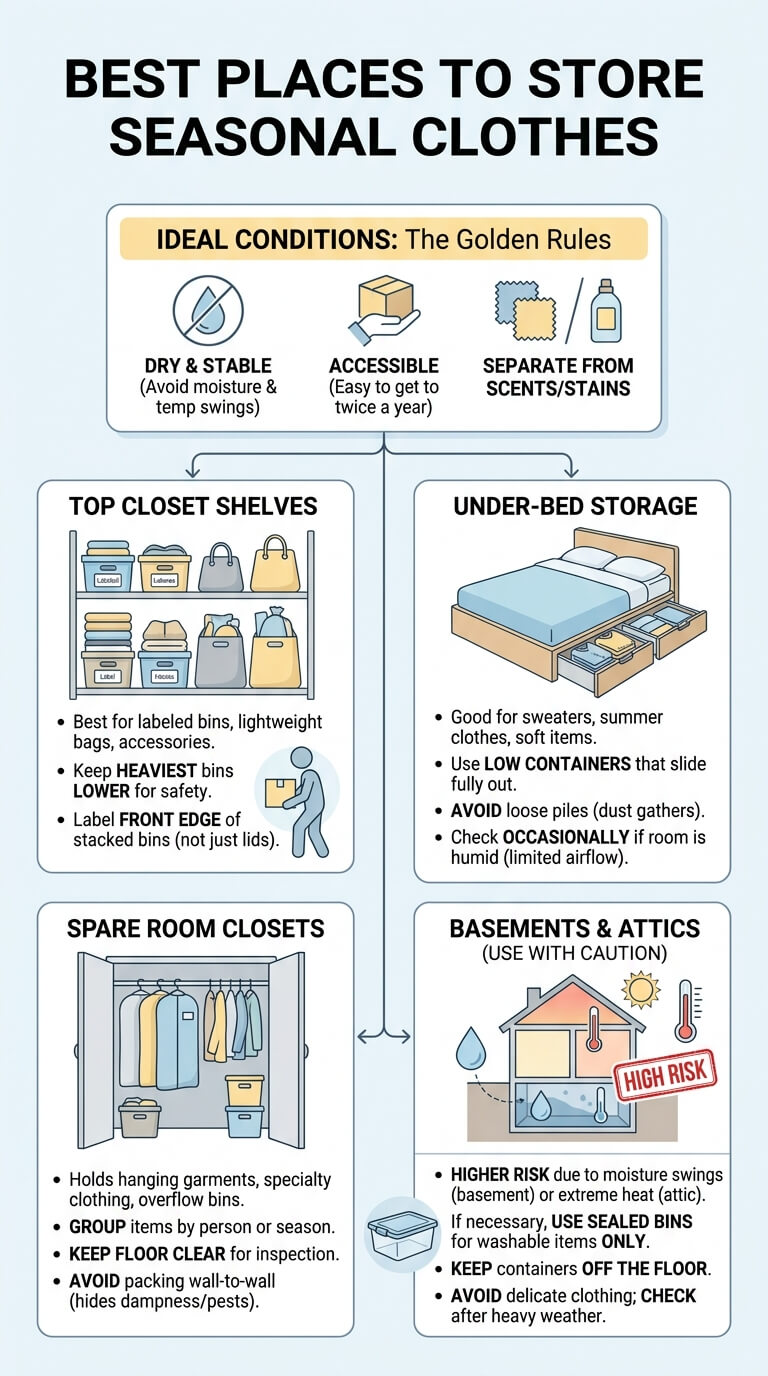
The best place is dry, reasonably stable, easy enough to access twice a year, and separate from products that can stain or scent fabric. Convenience matters, but not at the expense of moisture or heat exposure. Choose the most stable indoor option before using garage, attic, or basement space.
Top closet shelves
Top closet shelves work well for labeled bins, lightweight fabric bags, and seasonal accessories. Keep the heaviest bins lower so they are safer to lift. If a bin must live overhead, it should be small enough to handle with two hands. Use labels on the front edge, not just the lid, because stacked containers hide top labels.
Under-bed storage
Under-bed storage is useful for sweaters, summer clothes, kids clothing, and soft off-season items. Choose low containers that slide out fully. Avoid loose piles under the bed because dust gathers quickly and clothing gets forgotten. If the room is humid, check under-bed bins occasionally because air circulation is limited.
Spare room closets
A spare room closet can hold hanging garments, specialty clothing, and bins that should not crowd the main closet. Group items by person or season instead of spreading them randomly across the rod. Keep the floor clear enough to inspect the area. A closet that is packed wall to wall is hard to check for dampness, pests, or hidden damage.
Avoiding damp basements and hot attics when possible
Basements and attics are not automatically forbidden, but they are higher risk in many homes. Basements can have moisture swings, and attics can become very hot. If those are your only options, use sealed bins for washable casual items, keep containers off the floor, avoid delicate clothing, and check after heavy rain or temperature changes.
Seasonal Swap Checklist
A seasonal swap should feel like a reset, not a full wardrobe crisis. Use the same order each time: remove, inspect, clean, repair, store, then bring in the next season. Keep a donation bag and repair bag nearby so decisions do not drift back into the closet.

Spring-to-summer swap
Remove heavy coats, wool sweaters, thermal layers, thick socks, gloves, and cold-weather accessories from the daily closet. Clean them first, then fold or hang by fabric type. Keep one light jacket or sweater available for cool evenings. Bring summer clothes forward, but check swimwear, sandals, and light shirts before assuming they are ready.
Fall-to-winter swap
Pack shorts, lightweight dresses, swimsuits, linen clothing, and warm-weather accessories after cleaning and drying. Bring forward coats, boots, sweaters, and cold-weather layers. Check zipper function, missing gloves, worn socks, and pieces that need dry cleaning before cold weather arrives. A timely fall check prevents urgent shopping when the first cold week hits.
Donation and repair checkpoint
Each swap should include a decision point. Clothes that did not fit, were uncomfortable, stayed unworn all season, or need repairs should not automatically receive storage space. Try items on when fit is uncertain. Keep only repairs you genuinely plan to complete. Donation items should be clean and usable, not a way to move damaged clothing out of sight.
Label update and inventory note
Update labels after every swap. A bin that says “winter” from two years ago may no longer describe the contents. Add the year, person, size, and category when helpful. A small inventory note is useful for children’s clothing and specialty gear. It does not need to be perfect. Even three lines can prevent opening multiple bins next season.
Mistakes That Damage or Hide Seasonal Clothes
Most seasonal storage problems are caused by rushing the final hour of the project. Clothes are packed slightly damp, delicate items are compressed, labels are skipped, or uncertain pieces are stored because it feels easier than making a decision. These mistakes are avoidable if you slow down before the lid closes.
Packing damp fabric
Damp fabric is the biggest stop sign. Do not pack clothing straight from a steamy laundry room, a barely dry dryer load, or a humid closet. Thick seams and lined garments need extra time. If you are unsure, hang the item overnight. A storage system that starts dry is much easier to maintain than one that hides moisture inside a sealed container.
Over-compressing delicate items
Compression can save space, but it can also create deep wrinkles, flatten insulation, distort knits, and stress seams. Do not sit on bins or force lids closed. If the lid bulges, divide the contents. Save compression for items that can tolerate it, and keep structured garments, delicate knits, down, and formalwear out of tightly packed bags.
Forgetting labels
Unlabeled storage wastes time later. You may remember the contents for a week, but not after several months or after someone else moves the bins. Label by season, person, size, and category. Put the label where it can be seen from the storage position. A bin stored sideways needs a side label, not only a lid label.
Storing too many maybe items
Seasonal storage can become a hiding place for clothes you do not wear, do not like, or do not know how to repair. A few uncertain pieces are normal. A full bin of maybe items is a delayed decluttering task. Limit the maybe category to one small bag or section, then revisit it at the next swap. If it still has not earned a place, let it go.
FAQ
These answers focus on seasonal clothing storage decisions that come up after sorting and before the containers go back on the shelf.
Should seasonal clothes be stored in plastic bins?
Plastic bins are useful for many washable seasonal clothes when the storage area is dry and the items are fully clean and dry before packing. They protect against dust and make stacking easier. They are not the best choice for every garment. Structured coats, suits, delicate fabrics, leather-trimmed pieces, and formalwear often do better hanging in breathable garment bags.
Is it okay to vacuum seal clothes?
Vacuum sealing is okay for some casual, durable items when space is tight, but it should be used carefully. Avoid vacuum sealing delicate knits, wool sweaters, down coats, structured jackets, formalwear, leather, and anything that could be damaged by long compression. If you use vacuum bags, open them periodically and refold the contents so pressure is not always on the same areas.
Should clothes be washed before storage?
Yes, clothes should usually be washed or properly cleaned before seasonal storage. Invisible body oils, food residue, deodorant marks, and outdoor dust can become harder to remove over time. Read the care tag before washing. Some garments need dry cleaning, hand washing, drying flat, or a different method than the rest of the load.
Where should I store winter clothes in a small home?
In a small home, start with top closet shelves, under-bed containers, a spare room closet, or a labeled bin in the most stable indoor area available. Keep only one or two transitional cold-weather items in the daily closet during warm months. Avoid placing valuable winter clothes in damp basements or hot attics unless you have no other option and can protect and check the containers.
How often should I rotate seasonal clothes?
Most homes can rotate seasonal clothes twice a year, once before warm weather and once before cold weather. In climates with mild changes, a smaller quarterly adjustment may work better. Families with children may need extra size checks. The right schedule is the one that keeps daily clothes reachable without packing away items you still need.
Final Thoughts
Seasonal clothing storage works when it is clean, dry, labeled, and realistic. Remove clothes that truly belong out of daily rotation, clean them before storage, match the container to the fabric, and choose the most stable location. Next season, reopening the closet should feel clear instead of chaotic.

Ethan Carter is the Founder & Editor of HomeCleanSecrets. Based in the United States, he has 5 years of experience creating practical home cleaning, laundry care, stain removal, decluttering, and home organization content. His goal is to help everyday households clean smarter and build simple routines that are easier to maintain.
Read more about Ethan Carter on his author page: https://homecleansecrets.com/ethan-carter/