
Choosing the right dehumidifier size is less about buying the biggest machine on the shelf and more about matching capacity to the room you actually need to dry. A small bedroom with light summer humidity does not need the same unit as a cool basement that smells musty after every rain. A good size choice starts with three facts: the square footage of the area, how damp the space feels or measures, and whether the room has airflow, drainage, or repair issues that will make any unit work harder.
Dehumidifier capacity is usually shown in pints per day, which means the amount of water the unit can remove under test conditions. ENERGY STAR explains that dehumidifier capacity is measured as water removal over a 24-hour period under specified conditions, so the number is best used as a comparison point rather than a perfect promise for every home. You can read more about the current test context in ENERGY STAR dehumidifier testing and capacity guidance.
This sizing guide gives you a practical way to narrow the range before you buy. It does not replace the product manual, the label on the unit, or a professional check when water is entering the home. It will help you avoid the two most common sizing mistakes: buying a weak unit because it is cheaper, or buying an oversized unit that is loud, bulky, and inconvenient in the room where you need it most.

Quick Answer: Match Capacity to Room Size and Dampness

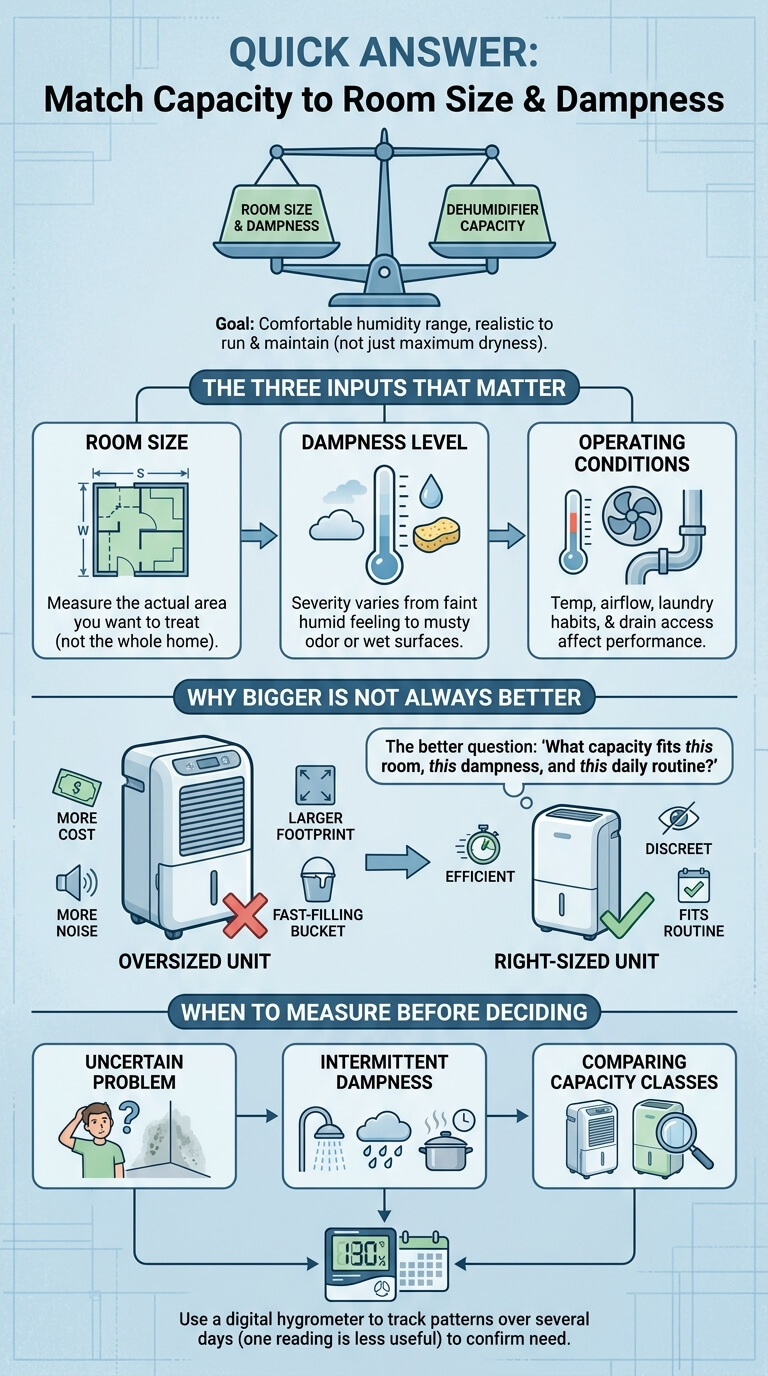
Most shoppers can start with a simple rule: a larger and damper area needs a higher pint capacity, while a smaller and only mildly humid room can use a smaller unit or sometimes no full-size dehumidifier at all. The goal is not to dry the air as much as possible. The goal is to bring indoor humidity into a comfortable range while keeping the unit realistic to empty, drain, clean, and run.
If the space has more than one moisture issue, such as closet odor, condensation, and unknown humidity, step back and compare the broader home moisture control products before choosing capacity.
The three inputs that matter
Start with room size, dampness level, and operating conditions. Room size tells you the amount of air the unit must work through. Dampness level tells you how much moisture the unit may need to remove. Operating conditions include temperature, airflow, doors, windows, laundry habits, and whether the room has a drain nearby.
- Room size: Measure the actual area you want to treat, not the whole home unless the unit is designed and installed for that purpose.
- Dampness severity: A faint humid feeling is different from musty odor, condensation, or wet surfaces.
- Room conditions: A cold basement, blocked airflow, or open stairwell can change how well the unit performs.
Why bigger is not always better
A larger dehumidifier can remove more moisture, but it can also cost more, take up more space, make more noise, and fill a bucket faster if drainage is not planned. In a small bedroom or office, an oversized unit may feel disruptive even if it can technically handle the square footage. The better question is not “What is the biggest unit I can afford?” It is “What capacity fits this room, this dampness level, and this daily routine?”
When to measure before deciding
Measure before buying when the room feels damp only at certain times, when you are unsure whether humidity is the real problem, or when you are comparing two nearby capacity classes. A small digital hygrometer can show whether the room is mildly humid, repeatedly high, or only temporarily damp after showers, laundry, rain, or cooking. One reading is less useful than a pattern over several days.
When the room only feels damp sometimes, measure humidity first so you are not sizing a machine from guesswork.
Understand Dehumidifier Capacity
Capacity is the main sizing number, but it is often misunderstood. Shoppers see 22-pint, 35-pint, 50-pint, or larger capacities and assume those numbers describe room size. They do not. They describe how much water a unit is rated to remove in a day under test conditions. The room size recommendation comes from combining that capacity with the dampness level and the space where the unit will run.
What pint capacity means
Pint capacity is the amount of moisture a dehumidifier can remove from the surrounding air over 24 hours under defined conditions. It does not mean the bucket holds that many pints. A unit may be rated for 50 pints per day while having a much smaller bucket that must be emptied more often unless a drain hose or pump is used.
Why ratings can be confusing
Older online advice and older product pages may use rating methods that do not match the current way dehumidifiers are listed. A unit that used to be described with a higher pint number may now appear in a lower category under a newer test method. That does not always mean the newer product is weaker. It may reflect a different test condition.
How humidity level and temperature affect performance
Dehumidifiers usually work harder in warm, humid air and can remove less water in cooler spaces. A cool basement may need careful sizing because the air can feel damp even when the unit is not collecting water as quickly as expected. Some models are designed with basement operation in mind, but every unit still has temperature limits in the manual.
Step 1: Measure the Space
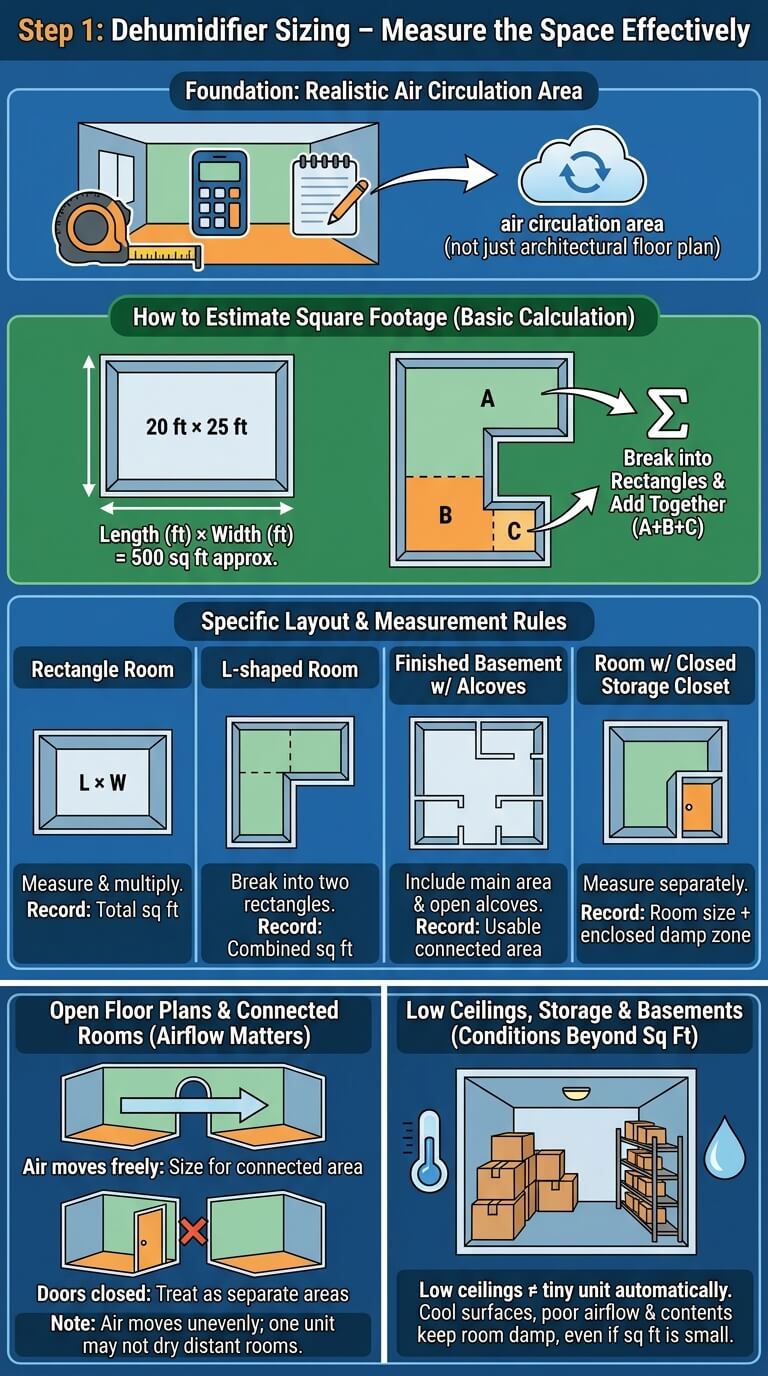
Square footage is the foundation of dehumidifier sizing. You do not need architectural drawings. You need a realistic estimate of the area where air can circulate while the unit runs. A tape measure, phone calculator, and a few notes about doorways are usually enough.
How to estimate square footage
Measure the length and width of the room in feet, then multiply them. A 20-foot by 25-foot basement zone is about 500 square feet. A 12-foot by 14-foot bedroom is about 168 square feet. If the room is irregular, divide it into rectangles, calculate each one, and add them together.
| Room shape | How to measure | What to write down |
|---|---|---|
| Rectangle | Length multiplied by width | Total square feet |
| L-shaped room | Break into two rectangles | Combined square feet |
| Finished basement with alcoves | Main area plus open alcoves | Usable connected area |
| Room with closed storage closet | Measure room and closet separately | Room size plus enclosed damp zone |
Open floor plans and connected rooms
Open floor plans are harder to size because air moves unevenly. A dehumidifier in a living room may not dry a hallway, bedroom, or closed office at the same rate. If the space is open and connected, size for the connected area only if air can move freely. If doors are usually closed, treat each room as a separate area.
Low ceilings, storage rooms, and basement zones
Low ceilings reduce air volume, but they do not automatically mean you can choose a tiny unit. Basement storage rooms often have cool surfaces, boxes, fabric, and poor airflow. Those conditions can keep the room feeling damp even when the square footage looks small.
Step 2: Judge Dampness Severity
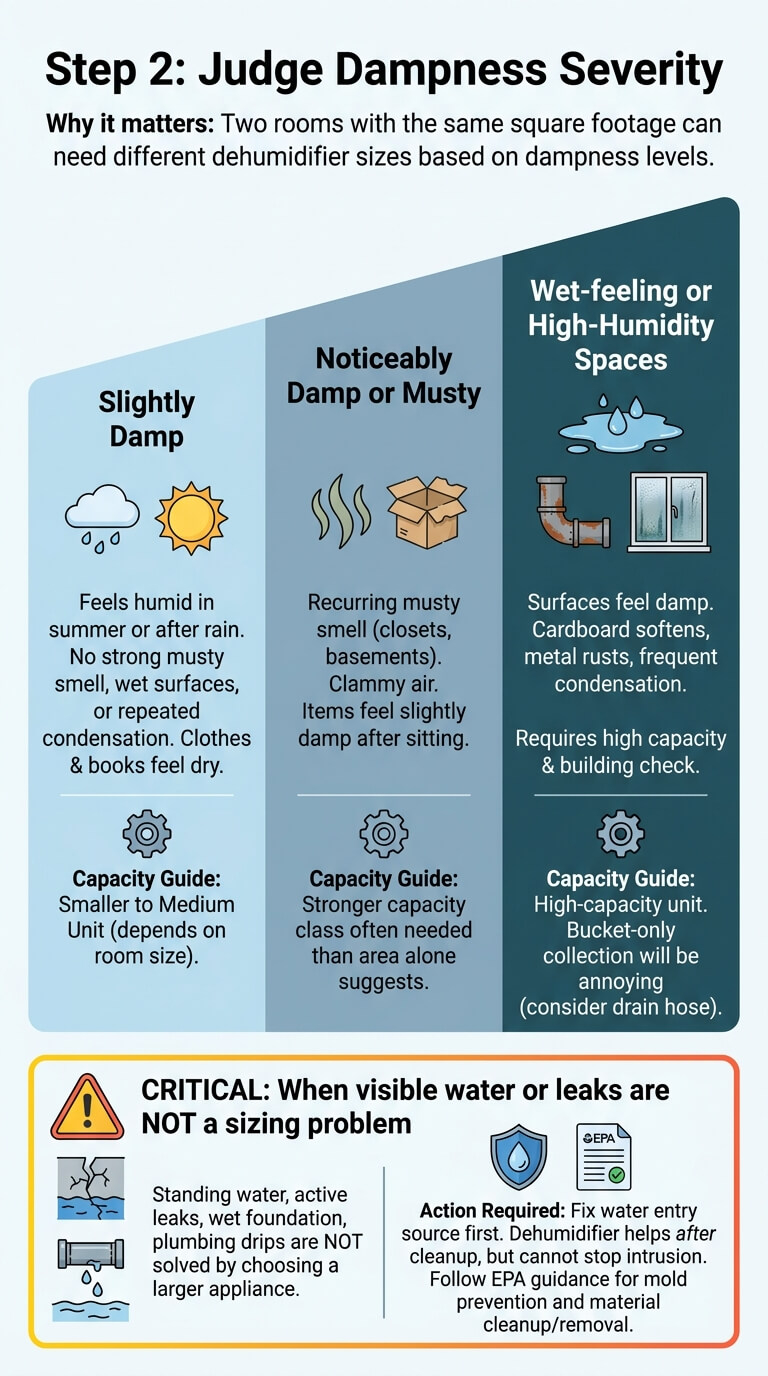
After measuring square footage, decide how damp the room is. This step matters because two rooms with the same area can need different dehumidifier sizes. A lightly humid 500-square-foot finished basement is not the same as a musty 500-square-foot unfinished basement after heavy rain.
Slightly damp
A slightly damp room may feel humid during summer or after rain, but it does not have a strong musty smell, wet surfaces, or repeated condensation. Clothes, books, and furniture do not feel damp to the touch. In this situation, you may be choosing between a smaller and medium capacity unit depending on room size.
Noticeably damp or musty
A noticeably damp room has a recurring musty smell, clammy air, or items that feel slightly damp after sitting in the space. You may notice the odor when opening the basement door, closet door, or storage area. This is where many shoppers need a stronger capacity class than square footage alone suggests.
Wet-feeling or high-humidity spaces
A wet-feeling room needs more caution. If surfaces feel damp, cardboard softens, metal rusts, or condensation appears often, the room may need a high-capacity unit plus a closer look at the building condition. The unit may collect a lot of water, so bucket-only operation can become annoying fast.
When visible water or leaks are not a sizing problem
Standing water, active leaks, wet foundation areas, or plumbing drips are not solved by choosing a larger appliance. The dehumidifier may reduce air moisture after cleanup, but it cannot stop water from entering. EPA moisture guidance emphasizes that moisture control is central to preventing mold growth, and wet materials may need cleanup or removal depending on the situation. Review EPA guidance on mold and moisture when moisture is recurring or materials are affected.
Dehumidifier Size Chart by Room and Dampness Level
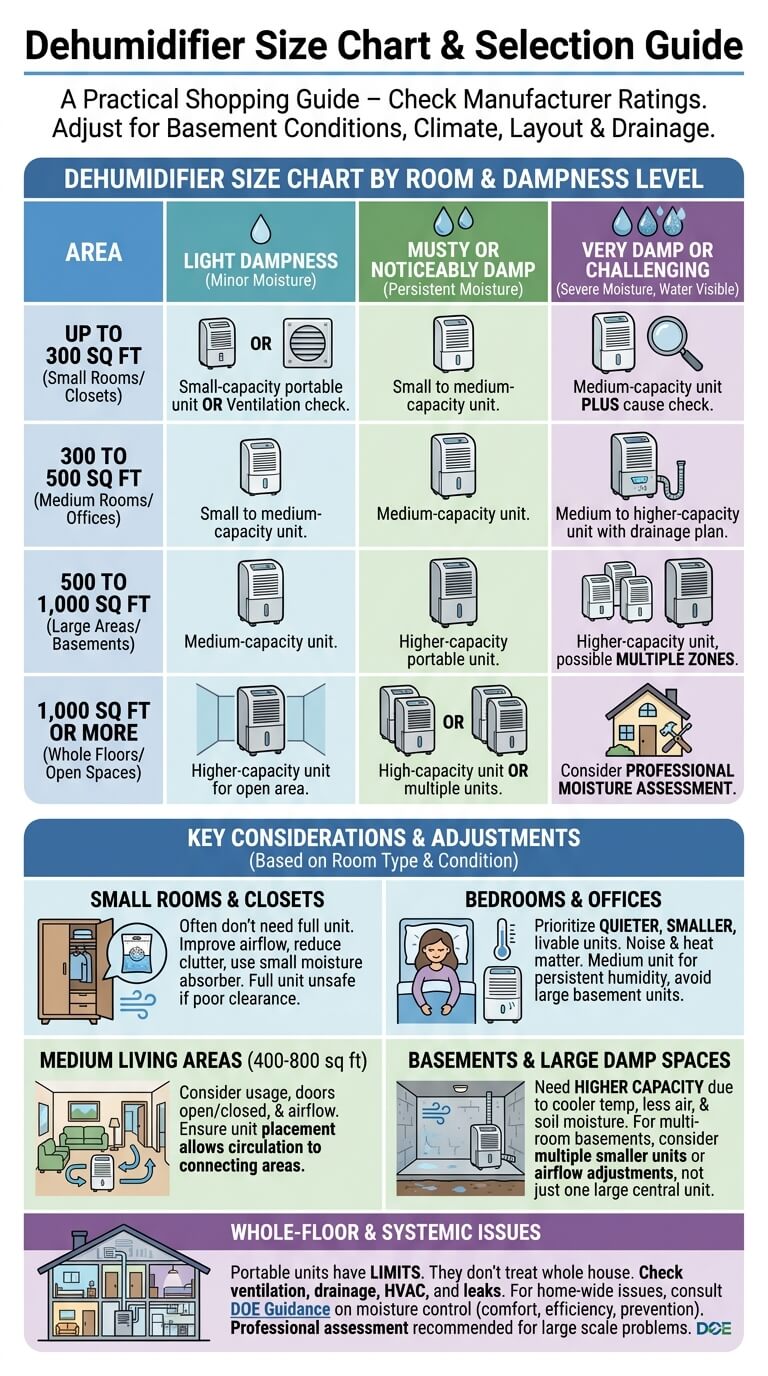
The chart below is a practical shopping guide, not a guarantee. Manufacturer recommendations vary, and current pint ratings should be checked on the exact product. Use the chart to choose a starting capacity range, then adjust for basement conditions, climate, room layout, and drainage needs.
| Area | Light dampness | Musty or noticeably damp | Very damp or challenging |
|---|---|---|---|
| Up to 300 sq ft | Small-capacity portable unit or ventilation check | Small to medium-capacity unit | Medium-capacity unit plus cause check |
| 300 to 500 sq ft | Small to medium-capacity unit | Medium-capacity unit | Medium to higher-capacity unit with drainage plan |
| 500 to 1,000 sq ft | Medium-capacity unit | Higher-capacity portable unit | Higher-capacity unit, possible multiple zones |
| 1,000 sq ft or more | Higher-capacity unit for open area | High-capacity unit or multiple units | Consider professional moisture assessment |
Small rooms and closets that may not need a full unit
Small closets, wardrobes, and tiny storage cabinets often do not need a full portable dehumidifier. They may need better airflow, fewer packed items, a small moisture absorber, or a separate room-level fix if the surrounding room is humid. A full-size unit in a closet can be unsafe or ineffective if clearance is poor.
Bedrooms and offices
Bedrooms and home offices usually need a quieter, smaller, more livable sizing decision. The room may be under 300 square feet, but noise and heat output matter because people spend long periods there. A medium unit may be useful if humidity is persistent, yet a very large basement-style unit may be unpleasant in a sleeping space.
Medium living areas
Living rooms, dens, and finished lower-level rooms often sit in the middle range. Their square footage may be 400 to 800 square feet, and they may connect to hallways or stairs. The sizing decision should include how the room is used, whether doors stay open, and whether the unit can sit where air can circulate.
Basements and large damp spaces
Basements often need more capacity than a similar-size above-grade room because they can be cooler, more enclosed, and closer to moisture from soil, foundation walls, laundry, or stored items. Finished basements may still behave like damp zones if airflow is weak or if exterior walls stay cool.
A 500 to 1,000 square foot basement with musty air usually points toward a higher-capacity portable unit, especially if the area is open. If the basement has several closed rooms, one large unit in the center may not dry every room evenly. Multiple smaller units or door and fan adjustments may work better than one oversized unit hidden in a corner.
Whole-floor limitations
A portable dehumidifier is not the same as a whole-house moisture system. It may help a large open area, but it has limits when rooms are separated by closed doors, long hallways, stairwells, or different moisture causes. Whole-floor claims should be checked against manufacturer specifications and the real layout of the home.
When the dampness affects the entire home, also look at ventilation, drainage, HVAC operation, and building leaks. The Department of Energy notes that moisture control is tied to comfort, efficiency, and prevention of moisture problems in the home. Their moisture control guidance is useful when the issue seems larger than one room.
Sizing Examples for Common US Homes

Examples are often easier than charts because real homes have awkward layouts and mixed causes. Use these scenarios as a way to think through your own room, then verify with product specifications before buying.
500-square-foot basement
A 500-square-foot basement that feels mildly humid in summer may be handled by a medium-capacity unit. If the same basement smells musty, has cardboard that softens, or stays humid after rain, move toward a higher-capacity portable unit and plan continuous drainage if possible.
300-square-foot bedroom
A 300-square-foot bedroom with light seasonal humidity may only need a smaller portable unit, especially if the door stays mostly closed and the room has normal airflow. Noise, heat, and bucket access matter more here than maximum moisture removal.
800-square-foot finished basement
An 800-square-foot finished basement with musty air needs a stronger sizing approach. If it is open and mostly one zone, a higher-capacity unit may be a reasonable starting point. If it has bedrooms, storage rooms, and closed doors, a single unit may not move air through every space.
Laundry room with periodic moisture
A laundry room may not need a large dehumidifier if humidity spikes only while machines are running and falls soon afterward. Check dryer venting, washer leaks, room ventilation, and door habits first. If the room stays humid for hours after laundry, a small or medium unit may help.
Apartment with seasonal humidity
An apartment may have limited storage, fewer drain options, and noise concerns. A moderate unit in the main damp area may be better than a bulky high-capacity unit that is hard to place. If humidity is seasonal, choose a size that you can store safely when not in use.
Adjustments That Change the Size You Need
Charts are starting points. The real room may need an adjustment because moisture is not only about square footage. Climate, habits, airflow, temperature, and drainage convenience all change how hard the unit must work.
Climate and season
Homes in humid regions or homes with long damp seasons often need a more capable unit than homes with short seasonal spikes. Summer humidity, heavy rain periods, and coastal conditions can all increase the load. A room that seems fine in winter may need a stronger unit during humid months.
Number of occupants and laundry use
People add moisture through daily living, especially in busy households with frequent showers, cooking, and laundry. A basement with a laundry area may need more capacity than a basement used only for storage. Wet sports gear, drying racks, and towels can also change the load.
Doors, airflow, and closed rooms
A dehumidifier can only treat air that reaches it. Closed doors, packed storage, furniture, curtains, and narrow hallways limit performance. In a divided basement or apartment, buying one larger unit may not solve dampness behind closed doors.
If the capacity looks right on paper but the room still feels damp, check where to place the dehumidifier before assuming the unit is too small.
Cold basement conditions
Cold air can make dehumidifier performance less predictable. Some units may frost, collect less water, or cycle differently when the room is below the recommended operating range. Basements that stay cool in spring or fall need extra attention to the product manual.
Drainage convenience
Capacity and drainage are connected. A higher-capacity unit can remove more water, but that water must go somewhere. If you cannot empty the bucket regularly, the unit may shut off while the room remains damp.
Mistakes That Make the Right Size Perform Poorly
A well-sized dehumidifier can still disappoint if it is used incorrectly. Before returning a unit or buying a larger one, check these common performance problems.
Some problems come from setup rather than capacity, so it is worth checking common dehumidifier mistakes before replacing the unit.
Poor placement
A unit placed too close to walls, furniture, curtains, or storage bins may not pull in enough air. The room can stay damp even when the capacity is appropriate. Follow the manual’s clearance instructions and keep intake and exhaust areas open.
Dirty filter or blocked intake
A dirty filter reduces airflow and makes the unit work harder. Dust, pet hair, lint, and basement debris can build up faster than expected. A unit that seemed too small may simply need cleaning.
Wrong humidity set point
Setting the humidity too low can make the unit run constantly, waste energy, and still feel disappointing in a damp room with an ongoing moisture problem. Setting it too high may leave the room feeling clammy. Many homes aim for a moderate indoor humidity range, but the exact setting should match comfort, season, and the unit’s instructions.
Open windows during humid weather
Running a dehumidifier with windows open during humid weather can make the unit fight outdoor air. The bucket may fill quickly while the room never improves. This is not always a sizing failure.
Choosing capacity without drainage planning
A unit that shuts off because the bucket is full is not drying the room. This is common when a damp basement needs a high-capacity unit but the household does not want to empty the bucket often. The capacity may be correct, but the setup is not sustainable.
Check whether the model supports gravity drainage or a pump, then read the manual before connecting anything. ENERGY STAR notes that certified dehumidifiers are designed to remove moisture efficiently compared with conventional models of similar size, but efficiency still depends on selecting and using the appliance properly. Their dehumidifier product guidance can help when comparing current models.
When Sizing Is Not Enough
Some moisture problems should not be treated as shopping problems. A larger dehumidifier may reduce humidity after cleanup, but it should not be used to ignore water entry, structural issues, or repeated growth on materials.
Persistent leaks
If water appears after rain, around plumbing, under appliances, or near the foundation, fix the leak path first. A dehumidifier can collect moisture from the air, but it cannot stop liquid water from entering the room. Running a larger unit may hide the symptom while damage continues.
Wet foundation or plumbing concerns
Foundation seepage, sump issues, roof drainage problems, and plumbing leaks need repair attention. The right dehumidifier size may be part of the comfort plan after the issue is corrected, but it is not the first fix.
Repeated mold growth
Repeated visible growth means the moisture condition is not controlled. Avoid making health promises or assuming the dehumidifier alone will solve it. Clean and repair decisions depend on the material, size of the affected area, and the reason moisture keeps returning.
When to stop relying on appliances alone
Stop treating the purchase as the solution if the room has standing water, electrical concerns, sagging materials, strong sewage-like odors, or a known leak. These are not capacity questions. They call for cleanup, repair, or professional help depending on severity.
FAQ
These answers cover the sizing questions that usually come up right before someone chooses a model.
What size dehumidifier do I need for a basement?
A small, lightly humid basement may only need a medium-capacity unit, but a musty 500 to 1,000 square foot basement often needs a higher-capacity portable unit. The best choice depends on square footage, dampness severity, temperature, airflow, and drainage. If the basement has leaks or standing water, fix those issues before treating the question as a sizing problem.
Can I use one dehumidifier for multiple rooms?
One unit can help multiple rooms only when air moves freely between them. Open floor plans are easier than closed bedrooms, packed storage rooms, or long hallways. If doors stay closed, each damp room may need its own plan. A larger unit in one room may not dry another room that has poor airflow.
Is a 50-pint dehumidifier too large for a bedroom?
It can be more than a bedroom needs, especially if the room is small and only mildly humid. A 50-pint class unit may be louder, larger, and more awkward than necessary in a sleeping space. It may make sense only if the bedroom is unusually damp, connected to a larger damp area, or part of a layout where the manufacturer recommends that capacity.
Should I size by square feet or humidity level?
Use both. Square footage tells you how much area the unit must treat, while humidity level and dampness signs tell you how much moisture the unit must remove. A small but very damp laundry room may need more capacity than its size suggests. A larger room with only mild seasonal humidity may not need the biggest unit.
Do I need a different size in winter?
Maybe. Winter conditions can change indoor humidity, basement temperature, and how often the unit runs. Some rooms are dampest in summer, while cool basements may feel damp in shoulder seasons. Check the manual’s temperature range and track humidity before assuming the same setting or size works the same way all year.
Final Thoughts
The right dehumidifier size starts with the room, not the product shelf. Measure the square footage, judge dampness honestly, check humidity patterns, and think about where the collected water will go. A larger capacity can help in a damp basement or large open area, but it cannot fix leaks, blocked airflow, dirty filters, or poor placement.
Before buying, write down the room size, dampness level, temperature conditions, drain options, and noise concerns. Then compare current product specifications and manual limits. That small amount of planning makes it much easier to choose a dehumidifier that is strong enough to help, realistic enough to use, and safe enough for the room where it will actually run.

Ethan Carter is the Founder & Editor of HomeCleanSecrets. Based in the United States, he has 5 years of experience creating practical home cleaning, laundry care, stain removal, decluttering, and home organization content. His goal is to help everyday households clean smarter and build simple routines that are easier to maintain.
Read more about Ethan Carter on his author page: https://homecleansecrets.com/ethan-carter/