
A pet home gets messy fast when food, toys, leashes, litter, towels, grooming tools, and cleaning products all compete for the same few shelves. A good pet supplies organization guide does not start with buying more bins. It starts with deciding where each category belongs, how often it is used, and what should never sit together.

This guide gives you a whole-home framework for building a pet supply system that works in a small apartment, busy family home, mudroom, kitchen cabinet, laundry area, or shared entryway. The goal is simple: daily pet care should feel easier, backups should be easy to find, and anything that touches food, waste, moisture, or cleaners should have safer boundaries.
Quick Overview of the Pet Supply System
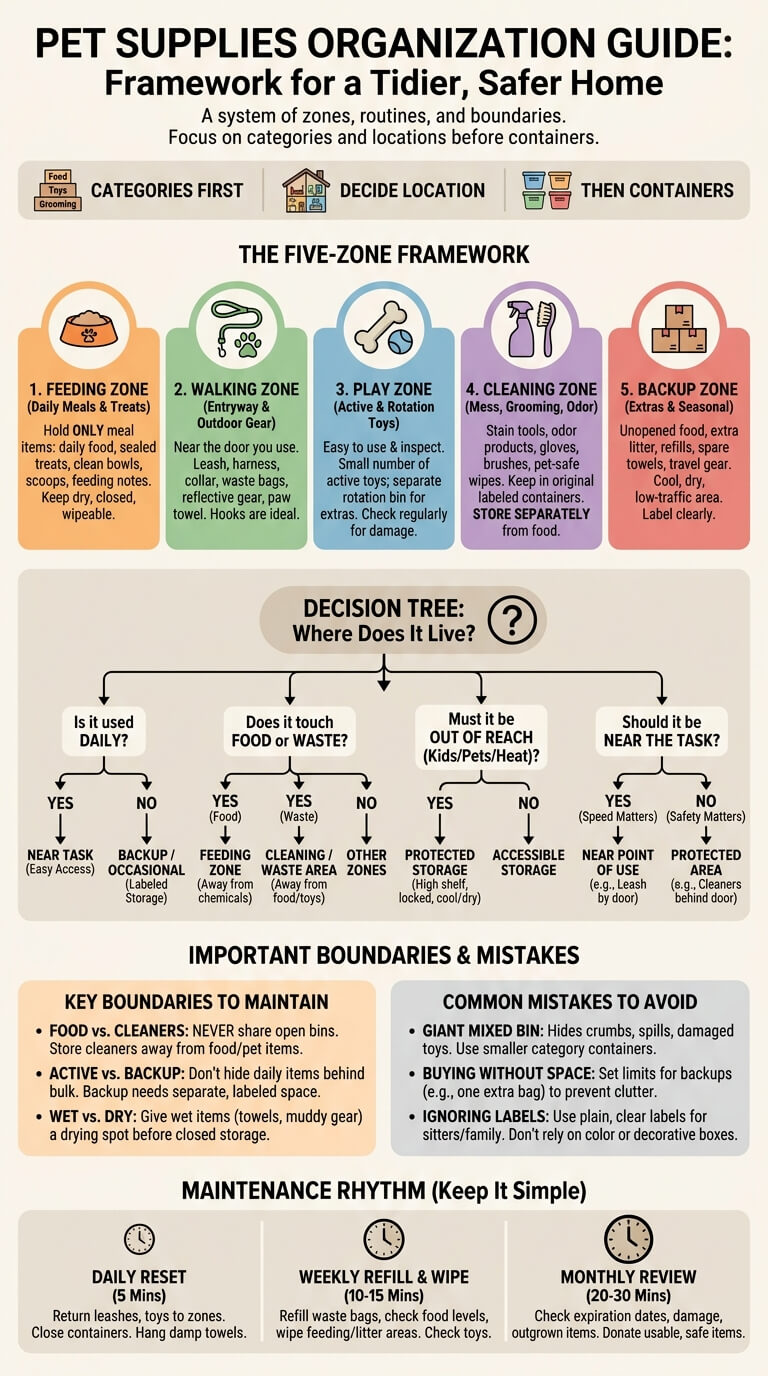
A pet supply system is the set of zones, containers, routines, and limits that keep pet care items easy to reach without letting them spread through the whole home. Think in categories first, then containers second. The best container is not helpful if it holds the wrong mix of items.
What belongs in a pet supply system
Your system should include the items you touch during normal pet care: food, treats, bowls, scoops, leashes, collars, harnesses, waste bags, litter tools, toys, grooming tools, towels, stain supplies, odor supplies, medications, paperwork, and backup stock. Beds, crates, carriers, seasonal coats, and travel gear may also belong if they are creating clutter or getting lost.
A good test is to ask whether someone else could care for your pet for one day without asking where everything is. If the answer is no, the system needs clearer zones, labels, or fewer hiding places.
The difference between storage, routines, and safety limits
Storage is where an item lives. A routine is when you check, refill, wash, or replace it. A safety limit is the rule that protects pets, people, surfaces, and supplies. Food might be stored near the feeding area, but cleaning spray should not share the same open bin with treats or toys. Litter may live near the box, but heavy backup bags may need a lower shelf to avoid spills or injuries.
What this guide will and will not cover
This page covers the big framework: zones, categories, decision points, maintenance rhythm, small-space options, multi-pet planning, and common mistakes. It gives enough detail to help you set up the whole system without turning every category into a separate deep project.
It does not go deeply into choosing dog food containers, controlling litter moisture, setting up every toy rotation step, building a full leash wall, storing every cleaning chemical, or designing a complete after-walk cleaning station. Those deserve their own focused processes because each has different risks, materials, and daily habits.
Why Pet Supplies Get Messy So Fast
Pet clutter is different from ordinary household clutter because many items are used every day, some are messy or wet, and some must stay away from food, pets, kids, heat, or moisture. When those differences are ignored, supplies drift into whatever spot is closest.
Daily-use items land in the wrong room
Leashes get dropped on chairs because the hooks are too far from the door. Treats end up on counters because the cabinet is full. Towels sit on the floor because there is no landing spot after muddy walks. These are not discipline problems. They are location problems.
Place daily items within one or two steps of the task. The leash belongs where the walk begins. Paw towels belong where wet paws enter. Food scoops belong with food, not in a random drawer across the kitchen. When the natural drop spot becomes the correct spot, the system starts maintaining itself.
Backups hide behind active supplies
Bulk food, extra litter, unopened waste bags, replacement collars, spare bowls, and seasonal gear often hide behind the items used today. That creates two problems. You cannot see what you already own, and you pull everything out just to reach one active item.
Separate active supplies from backup supplies. Active items should be quick to grab. Backups can live in a protected shelf, closet, bin, or lower cabinet as long as they are labeled and reviewed before you buy more.
Food, litter, toys, and cleaners have different storage needs
Pet food needs cool, dry storage and protection from pests and overeating. The FDA pet food handling guidance recommends keeping dry pet food in a cool, dry place and securing it so pets cannot eat a large supply at once. Litter needs moisture control and sturdy handling. Toys need damage checks. Cleaners need label-based storage and separation from food and pet-contact items.
Trying to store these categories together in one giant pet bin usually fails. A mixed bin hides spills, crumbs, chewed toys, damp towels, and cleaners in the same place. Category boundaries make the system easier to clean and safer to use.
The Five-Zone Framework for Organizing Pet Supplies
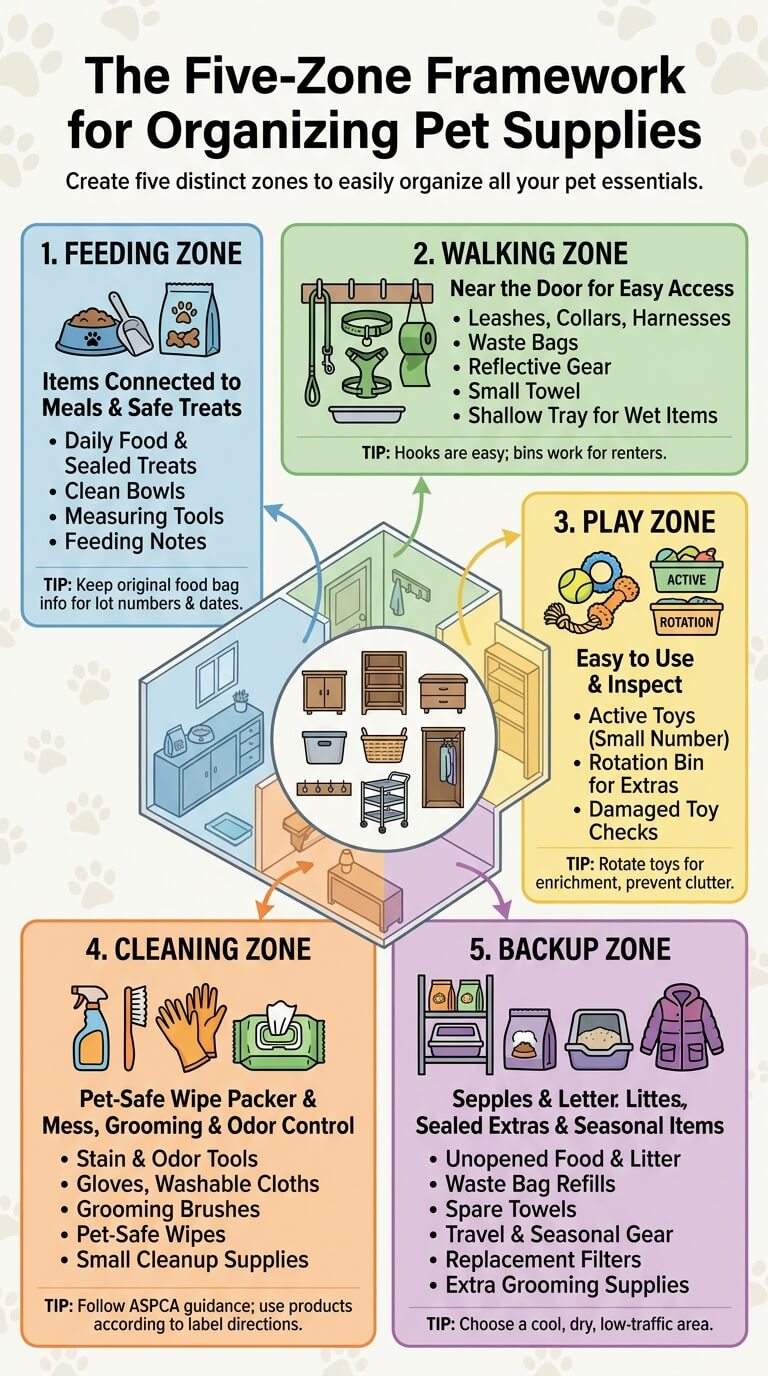
The easiest way to organize pet supplies is to create five zones. A zone can be a cabinet, shelf, drawer, bin, basket, hook rail, rolling cart, or part of a closet. The zone matters more than the furniture.
Feeding zone for food, bowls, treats, and scoops
The feeding zone should hold only the items connected to meals and safe treats. Keep daily food, sealed treats, clean bowls, measuring tools, and feeding notes here. If you use a storage container, keep the food bag information or original bag with the food so lot numbers, dates, and feeding details are not lost.
Walking zone for leashes, collars, harnesses, and towels
The walking zone belongs near the door you actually use. It should hold the leash, harness, collar, waste bags, reflective gear, small towel, and possibly a shallow tray for wet items. Hooks work well because they make the next walk easy, but a small bin can work for renters who cannot drill into walls.
Play zone for toys, rotation bins, and damaged toy checks
The play zone should make toys easy to use and easy to inspect. Keep a small number of active toys where your pet plays, then store extra toys in a separate rotation bin. This prevents every toy from living on the floor while still giving you options for enrichment.
Cleaning zone for pet mess supplies, grooming tools, and odor control
The cleaning zone is for stain tools, odor products, gloves, washable cloths, grooming brushes, pet-safe wipes if used, and small cleanup supplies. Keep products in their original containers whenever the label matters. The ASPCA guidance on household products notes that cleaning products should be used according to label directions around pets.
Backup zone for unopened food, litter, medications, and seasonal gear
The backup zone holds sealed extras that you do not need every day: unopened food, extra litter, waste bag refills, spare towels, travel gear, seasonal coats, replacement filters, and extra grooming supplies. Choose a cool, dry, low-traffic area when possible.
Decision Tree: Where Should Each Pet Item Live?
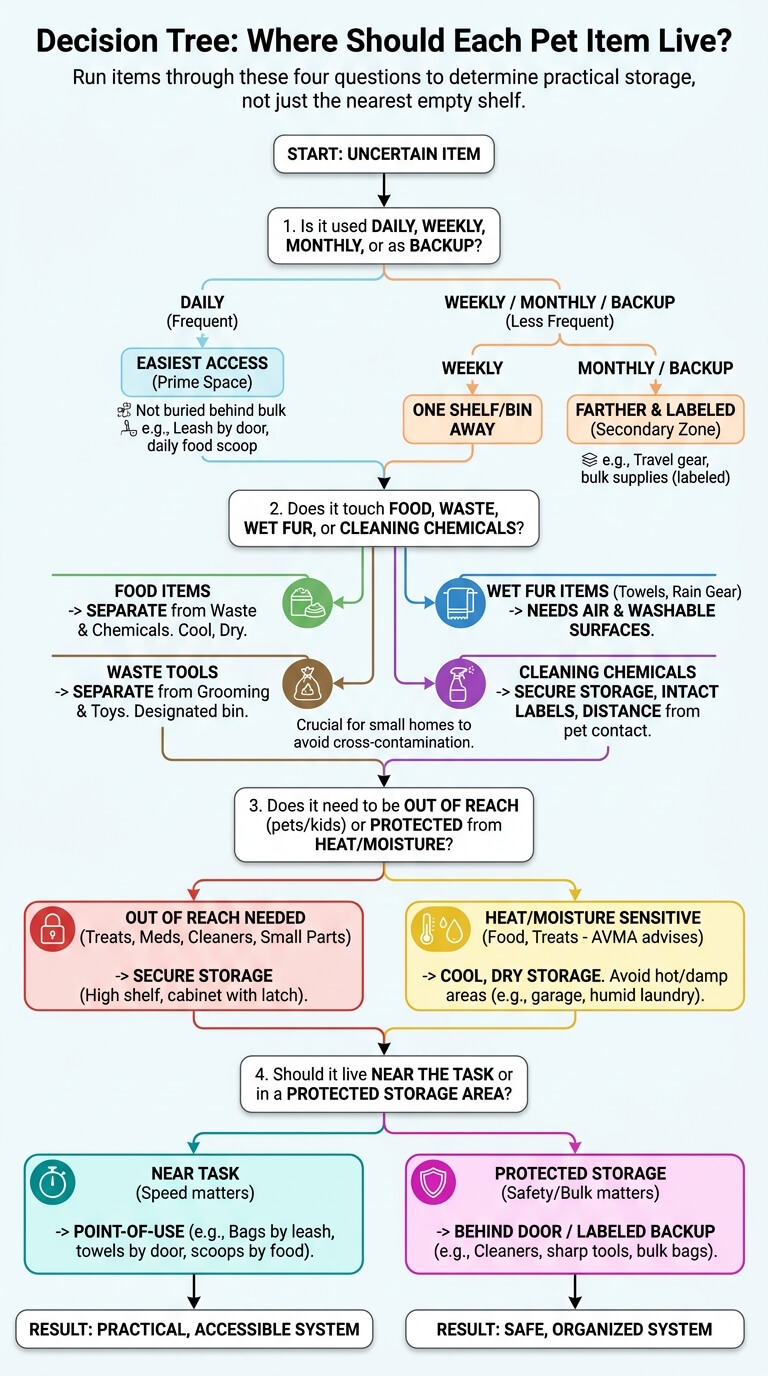
When you are unsure where something belongs, run it through four questions. This keeps the system practical instead of letting every item default to the nearest empty shelf.
Is it used daily, weekly, monthly, or only as backup
Daily items need the easiest access. Weekly items can be one shelf or one bin away. Monthly and backup items can live farther from the task as long as they are labeled. This one question prevents the most common storage mistake: giving prime space to items used twice a year while daily supplies sit on counters.
If you use an item every day, do not bury it behind bulk stock. If you use it only when traveling, it should not occupy the entryway basket.
Does it touch food, waste, wet fur, or cleaning chemicals
Items that touch food should stay away from waste supplies and cleaning chemicals. Waste tools should not share a bin with grooming brushes or toys. Wet fur items, such as towels or rain gear, need air and washable surfaces. Cleaning chemicals need secure storage, intact labels, and distance from pet-contact items.
This question is especially useful in small homes because it tells you what can share a cabinet and what only looks convenient until something spills.
Does it need to be out of reach from pets, kids, heat, or moisture
Treats, chews, medications, cleaners, litter additives, and small accessories may need protected storage. Heat and moisture can also make supplies harder to manage. A garage, bathroom, or laundry room may seem convenient, but check whether the space gets hot, damp, or easy for pets to access.
The American Veterinary Medical Association pet food handling resource advises cool, dry storage for dry food and treats. That makes a humid laundry corner or sunny window area a poor choice for food, even if the shelf is empty.
Should it live near the task or in a protected storage area
Some items should live near the task because speed matters. Waste bags near the leash, towels near the door, and scoops near food make daily care smoother. Other items should live in a protected area because safety matters more than convenience. Cleaners, medications, sharp grooming tools, and bulk bags often belong behind a door or in a labeled backup zone.
Category Breakdown: What to Store Together and What to Separate
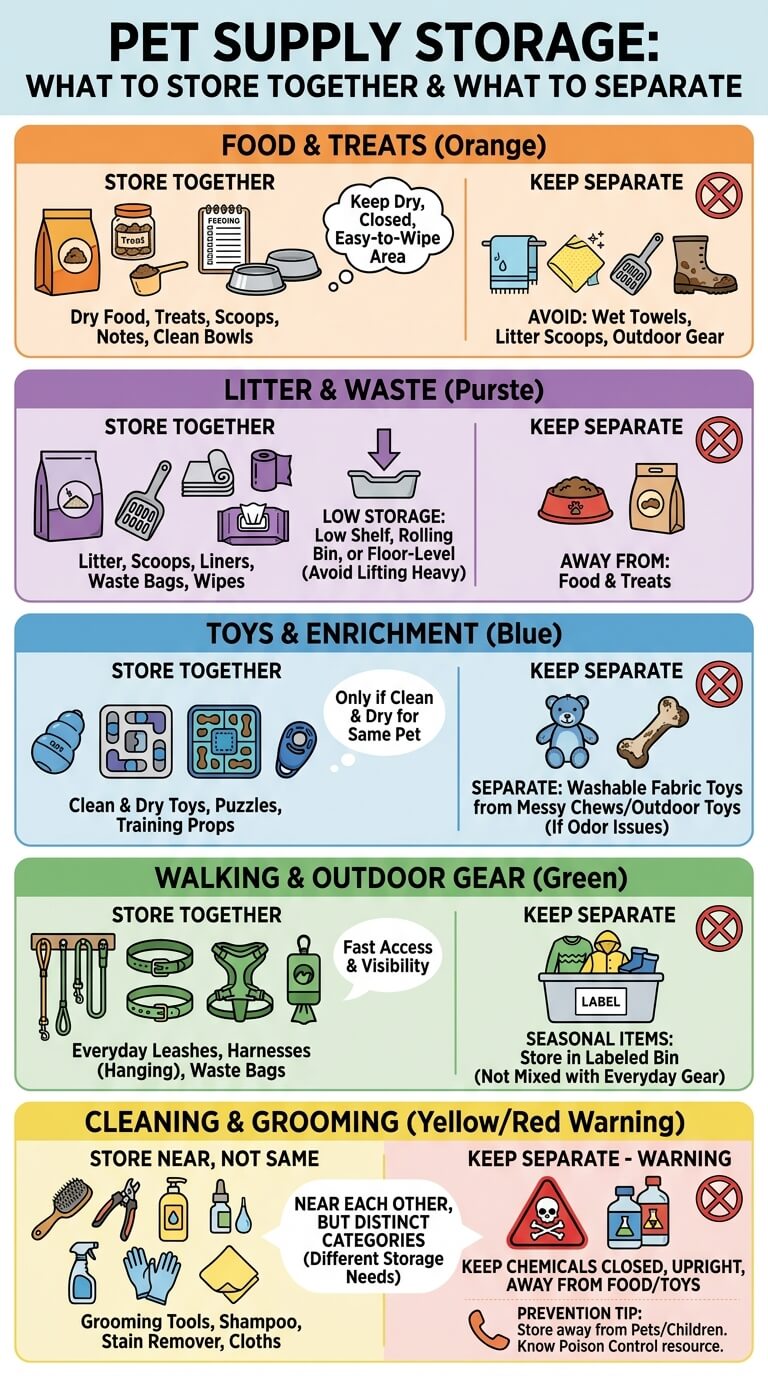
Once your zones are chosen, sort supplies by category. This is where the system becomes easy to explain to family members, guests, or pet sitters.
Food and treat storage boundaries
Store food, treats, measuring scoops, feeding notes, and clean bowl accessories together. Keep the area dry, closed, and easy to wipe. Avoid mixing open food with wet towels, cleaning cloths, litter scoops, or outdoor gear.
Cat litter and waste supply boundaries
Litter bags, scoops, liners, waste bags, and box wipes need their own area. Keep them away from food and treats, and avoid storing heavy litter where it must be lifted from above shoulder height. A low shelf, rolling bin, or floor-level container is usually easier and safer.
Toys and enrichment supplies
Toys, puzzle feeders, treat mats, training props, and chews can live together only when they are clean, dry, and appropriate for the same pet. Keep washable fabric toys separate from messy chews or outdoor toys if odor is a recurring problem.
Leashes, collars, harnesses, and outdoor gear
Walking gear needs fast access and visibility. Hang leashes and harnesses so they do not tangle. Keep waste bags beside them. Store seasonal items, such as sweaters, raincoats, booties, or cooling gear, in a nearby labeled bin rather than mixing them with everyday leashes.
Pet cleaning supplies and grooming supplies
Cleaning supplies and grooming supplies can live near each other, but they should not be treated as the same category. Brushes, nail tools, shampoo, ear products, stain remover, gloves, cloths, and odor products have different label instructions and storage needs.
Keep chemical products closed, upright, and away from food or toys. The Poison Control help resource is a practical page to know about for possible poison exposures, but prevention starts with storing products where pets and children cannot investigate them.
Small-Space Pet Supply Organization
Small homes do not need a pet room. They need tighter boundaries. Your goal is to make each zone compact, visible, and easy to reset without using every empty corner.
Apartment-friendly storage zones
In an apartment, a feeding zone might be one kitchen cabinet shelf, a walking zone might be a hook over the door, and a cleaning zone might be a locked tote on a laundry shelf. The backup zone may be under a bed, inside a closet, or on a low pantry shelf.
Using vertical space without blocking walkways
Vertical storage helps when floor space is limited, but it has to be safe and reachable. Hooks, wall pockets, over-door organizers, and slim shelving can work well for light items such as leashes, waste bags, grooming brushes, and paperwork.
Avoiding overbuying when storage is limited
Bulk buying can save money, but only when you have a real backup zone. Without one, bulk supplies become clutter, block access, and make it harder to see what is open. Set a maximum number for backups: one extra food bag, one extra litter bag, one waste bag refill box, or whatever fits your home.
Multi-Pet and Multi-Room Systems
More pets can mean more supplies, but the answer is not always more storage. The system should show which items are shared, which belong to one pet, and which rooms need quick access.
Separating dog and cat supplies without duplicate clutter
Separate species-specific items that could cause confusion: food, treats, medications, grooming tools, litter items, and certain toys. Shared towels, cleaning cloths, waste bags, and some grooming supplies can stay together if they are clearly labeled and safe for both pets.
Labeling by pet, task, or room
Labels work best when they match the way people search. A pet sitter may understand “Milo food,†“cat litter,†and “walk kit†faster than decorative labels like “daily care.†Choose plain labels that remove guesswork.
Color coding can help in multi-pet homes, but do not rely on color alone. Write the pet name or task on the label so guests, family members, and emergency helpers can understand it quickly.
Making the system easy for family members or pet sitters
A pet supply system should be readable to someone who did not set it up. Keep feeding instructions near food, leash gear near the door, cleanup supplies in one protected spot, and medication directions where they belong. Avoid hiding critical items in decorative boxes that nobody can identify.
Maintenance Rhythm for a Pet Supply System
Organization only works when it has a rhythm. The rhythm does not need to be complicated. Short, repeated resets are better than a major cleanout every time the cabinet explodes.
Five-minute daily reset
At the end of the day, return leashes to hooks, place toys back in the active basket, close food and treat containers, hang damp towels where they can dry, and move dirty cloths to laundry. This reset should be short enough that it still happens on busy nights.
Weekly refill and wipe-down
Once a week, refill waste bags, check food levels, wipe the feeding shelf, shake crumbs from the treat area, wash or replace dirty towels, and check whether any toys need washing or removal. Wipe bins or shelves that collect litter dust, fur, or crumbs.
If you use scented products, sprays, or odor tools, follow label directions and avoid overusing them in closed spaces. The EPA guide to indoor air quality explains that indoor pollutant levels can be affected by product emissions, ventilation, temperature, and humidity.
Monthly expired, damaged, or outgrown item review
Once a month, check expiration dates, torn toys, outgrown collars, cracked bowls, bent scoops, worn harnesses, old medications, and supplies your pet no longer uses. Donate only items that are clean, safe, and accepted by the organization receiving them.
Topic Summaries for Deeper Help
Once the whole-home system is in place, some categories may still need their own focused process. Use these summaries to identify which smaller project matters most in your home.
When to use the general pet supply organizing guide
If your supplies are spread across several rooms, start with one practical reset before buying more bins. A room-by-room approach can help you organize pet supplies room by room without turning every cabinet into pet overflow.
A hands-on pet supply organizing workflow is helpful when your main problem is clutter, not a specific safety or storage issue. It can walk through emptying a shelf, sorting categories, choosing containers, labeling, and resetting the space step by step.
When dog food storage needs its own process
Dog food usually needs tighter boundaries than general accessories because freshness, pests, heat, and moisture all matter. A separate dog food storage setup can keep kibble, treats, and scoops easier to manage.
Dog food storage deserves its own process when you buy large bags, use multiple diets, have pests, store food in a garage, or have a dog that can open cabinets. The main questions become container type, original bag information, temperature, moisture, and access control.
When cat litter storage needs moisture and odor control
Cat litter should not share space casually with food, toys, or grooming items. A dedicated cat litter storage setup helps keep litter, scoops, liners, and waste supplies in a cleaner zone.
Cat litter needs special attention when bags tear, dust spreads, the storage area smells, or litter is stored in a damp bathroom or laundry space. The system needs sturdy handling, moisture awareness, and separation from food and grooming supplies.
When toys need rotation and damage checks
Toys need a different kind of system because they move through the house every day. A simple way to organize pet toys without clutter is to separate active toys, backup toys, wet toys, and damaged toys.
Toy organization becomes its own project when baskets overflow, toys smell, enrichment items get lost, or damaged toys keep returning to the floor. A rotation plan can reduce clutter while making play feel fresh.
When leashes and collars need an entryway system
Walking gear should live where the walk actually starts. If leashes, collars, harnesses, and waste bags keep landing on chairs or counters, it helps to organize leashes and collars near the door.
Leash organization needs focused attention when walks start with searching, harnesses tangle, waste bags run out, or wet gear lands on furniture. The entryway system should support the real walk path, not the prettiest wall.
When cleaning supplies need safer separation
Cleaning products, towels, gloves, and wipes should not be mixed casually with food, toys, or daily walking gear. A safer storage setup can help you store pet cleaning supplies safely without slowing down cleanup.
Pet cleaning supplies need deeper planning when stain removers, disinfectants, odor products, gloves, and cloths are mixed with food or toys. Storage should follow product labels and keep curious pets away from containers.
When a pet cleaning station is worth setting up
If muddy paws, wet towels, or quick pet messes keep spreading into nearby rooms, a small station may work better than a loose supply bin. You can set up a pet cleaning station near the entry, laundry area, or the place where messes happen most.
A cleaning station is worth considering when mud, accidents, shedding, litter tracking, or paw cleanup happen often. It does not need to be elaborate. The best version keeps towels, gloves, cloths, and approved products near the mess while still respecting safety limits.
Common Mistakes That Make Pet Storage Harder
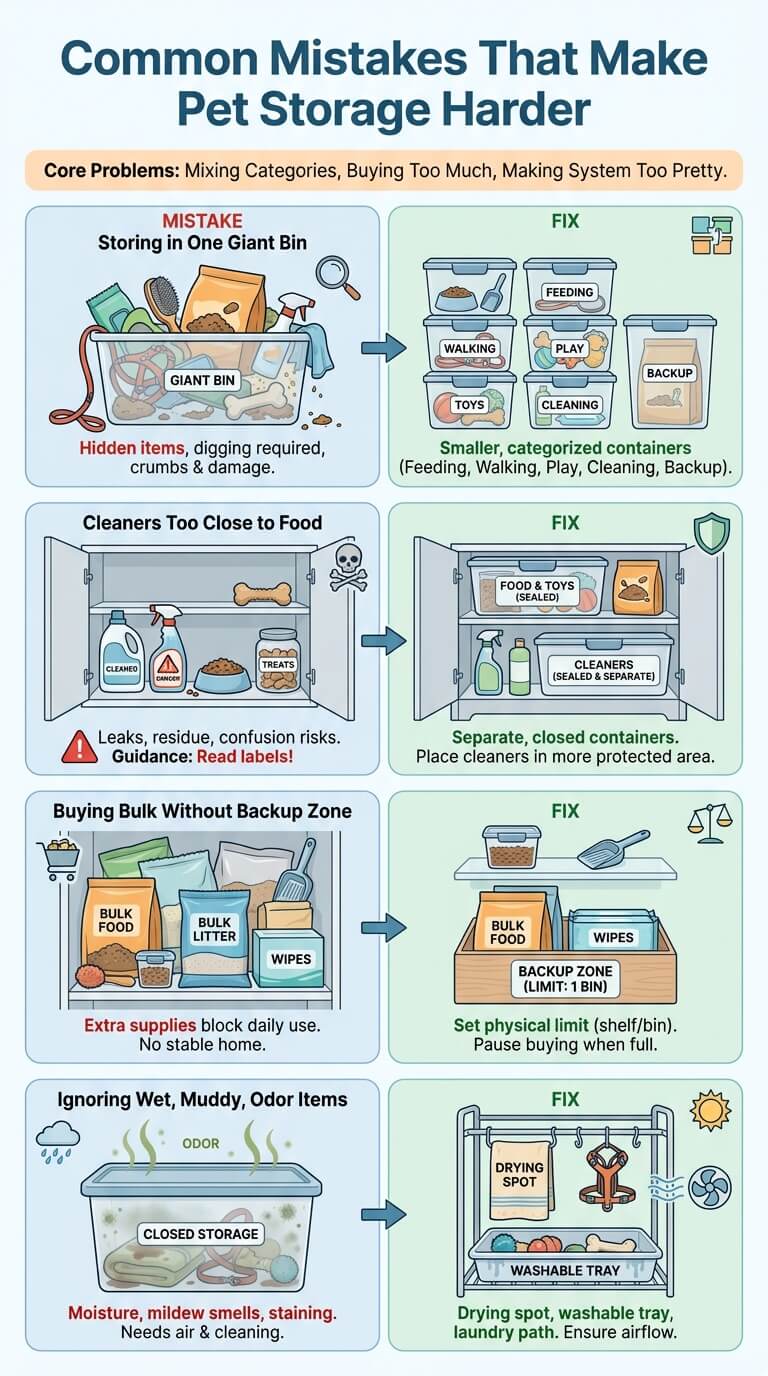
Most pet storage problems come from mixing categories, buying too much, or making the system too pretty to use. These mistakes are easy to fix once you see them.
Storing everything in one giant bin
A giant bin looks simple at first, but it hides small tools, crumbs, damp cloths, damaged toys, and duplicate supplies. It also forces every user to dig through unrelated items. Replace the giant bin with smaller category containers: feeding, walking, play, cleaning, and backup.
Keeping cleaners too close to food or toys
Cleaning products should not share open storage with food, treats, bowls, or toys. Even when products are closed, leaks, residue, and confusion can create avoidable problems. The Humane World guidance on cleaning products around pets emphasizes reading labels and following product instructions carefully.
If a cabinet must hold both categories because space is limited, use separate closed containers and place cleaners in the more protected area.
Buying bulk without a backup zone
Bulk supplies only help when they have a stable home. Without a backup zone, extra food, litter, wipes, and bags block the supplies you use today. Set a physical limit before buying: one shelf, one low bin, or one closet section. When that space is full, pause buying until it clears.
Ignoring wet, muddy, or odor-prone items
Wet towels, muddy harnesses, damp toys, and odor-prone cloths should not go straight into closed storage. Give them a drying spot, washable tray, or laundry path. Stop if you see moisture inside bins, mildew-like smells, or repeated staining on nearby surfaces. The storage location may need more air, cleaning, or separation.
Pet Supply Organization FAQ
These answers focus on the whole-home decisions that help the whole system stay simple, separated, and easy to maintain.
What is the best way to organize pet supplies in a small home?
Create a few compact zones instead of scattering supplies everywhere. Put daily food and treats in one feeding spot, walking gear near the real exit, toys in a small active basket, cleaners in protected storage, and backups in one labeled area. Limit bulk buying to the space you actually have.
Should pet food and cleaning supplies be stored together?
No, not in the same open bin or shelf area. Pet food, treats, bowls, and scoops should stay separate from stain removers, disinfectants, odor products, and other cleaners. In a very small home, use separate closed containers and store cleaners where pets and children cannot access them.
How often should pet supplies be decluttered?
Do a small daily reset, a weekly refill and wipe-down, and a monthly review for expired, damaged, outgrown, or unused items. The monthly review is especially useful for toys, collars, medications, treats, food, grooming products, and backup stock.
What pet supplies should be kept near the door?
Keep the items needed for leaving and returning: leash, collar or harness, waste bags, reflective gear, small towel, paw cloth, and a washable tray or mat if wet gear is common. Do not store food or cleaning chemicals in the entry basket just because there is space.
How can a pet supply system stay easy for guests or pet sitters?
Use plain labels, keep feeding instructions near food, store walk gear where the walk starts, and place cleanup supplies in one protected but easy-to-find spot. A guest should be able to identify the pet name, task, and supply category without opening five decorative boxes.
Final Thoughts
A reliable pet supply system is not about making every shelf look perfect. It is about matching each item to the task, separating categories that should not mix, and creating a rhythm that is easy to repeat. Start with the five zones: feeding, walking, play, cleaning, and backup. Then use the decision tree whenever a stray item has no clear home.
Once the main setup is set, the next improvements become obvious. Maybe food storage needs better protection, litter needs a cleaner boundary, toys need rotation, leashes need an entryway reset, or pet cleaning products need safer separation. Fix the category causing the most daily friction first, and the rest of the system becomes much easier to maintain.

Ethan Carter is the Founder & Editor of HomeCleanSecrets. Based in the United States, he has 5 years of experience creating practical home cleaning, laundry care, stain removal, decluttering, and home organization content. His goal is to help everyday households clean smarter and build simple routines that are easier to maintain.
Read more about Ethan Carter on his author page: https://homecleansecrets.com/ethan-carter/