
If walks keep starting with a search through a basket, a tangled leash, or a missing harness, the problem is not your memory. The gear does not have a clear home. The best way to organize leashes and collars is to create one walking gear station near the door you actually use, then separate daily gear, wet gear, backups, and seasonal items so every walk begins and ends in the same order.

This guide focuses only on walking gear: leashes, collars, harnesses, poop bags, treat pouches, towels, lights, tags, and outdoor accessories. It is not a full pet supply system, and it will not turn into food storage, toy rotation, or cleaning chemical storage. The goal is simple: make the next walk easier, keep dirty gear from spreading through the house, and make safety checks easier to remember.
Quick Answer: Set Up a Walking Gear Station
This guide focuses on walking gear. If the entryway is only one messy part of the pet area, use a whole-home pet supply system to place food, toys, litter, cleaners, and backups in the right zones.

A walking gear station is a small command area for the items you grab when leaving the house with your dog and the items you need when returning. It can be a wall hook area, closet basket, slim shelf, mudroom rail, or no-drill rack.
Put daily walking gear near the exit
Place the gear at the exit used for most walks, not necessarily the prettiest entry. If the dog leaves through the garage door every morning, a station near the front door will fail. The daily leash, fitted harness, current collar, and poop bag holder should be reachable without crossing the home. A good test is whether you can grab bags, leash up, and step out without searching.
Use hooks, trays, and small bins
Hooks keep leashes and harnesses visible. A tray catches tags, lights, bag rolls, and treat pouches. A small bin holds backups that are useful but not needed every day. Avoid one deep basket because it hides small items and tangles clips. If you use wall hooks or a freestanding rack in a home with children, check weight limits and stability before loading it; the CPSC Anchor It guidance is a useful reminder that tall or pullable storage should be secured according to instructions.
Separate clean, wet, backup, and seasonal gear
Daily dry gear can hang together. Wet leashes need airflow. Backup collars belong in a labeled bin or pouch. Seasonal items, such as reflective lights, cooling bandanas, booties, rain jackets, or winter paw protection, should not crowd the main hook unless they are currently in use. This separation prevents the door zone from becoming a general pet junk drawer.
What Belongs in a Leash and Collar Zone

The best station contains enough gear to leave quickly without turning the entryway into pet storage overflow. Think in three groups: dog gear, walk support, and return-home items.
Everyday leash, collar, harness, and ID gear
The daily set should include the leash your dog normally uses, the harness or collar used for walks, and visible identification. Store the leash so the handle is easy to grab and the clasp is visible. Collars with ID tags can hang on a dedicated hook, but a collar worn by the dog should still be checked regularly for fit and wear. The Humane Society explains common collar types and fit basics in its guidance on dog collars, which is helpful when deciding what belongs in the daily set versus a backup bin.
Poop bags, treat pouch, and walking accessories
Poop bags should be stored where you can refill before the roll runs out. Keep one open roll attached to the leash or pouch and two to four extra rolls in the tray. A treat pouch, small flashlight, reflective clip, or collapsible water bowl can share the tray if they are part of your routine. Do not add grooming tools, medicine, or cleaning sprays to this tray. The more categories you mix in, the less reliable the station becomes.
Towels and paw wipes for return trips
A small stack of washable towels beside the exit helps after rainy walks, muddy yards, or wet grass. Paw wipes can be useful if your pet tolerates them and the product is intended for pets. Keep towels in an open basket or on a shelf, not on top of wet leashes. If the dog comes home muddy often, the leash zone can hold the first towel while the deeper cleanup routine belongs at a separate cleaning station.
Backup collars, lights, and seasonal gear
Backups are useful when a collar breaks, a leash gets soaked, or a pet sitter needs a simple setup. Store them in a labeled bin near, but not on, the daily hooks. Keep backup ID tags, clip-on lights, spare poop bags, and specialty leashes together.
Choose the Right Location
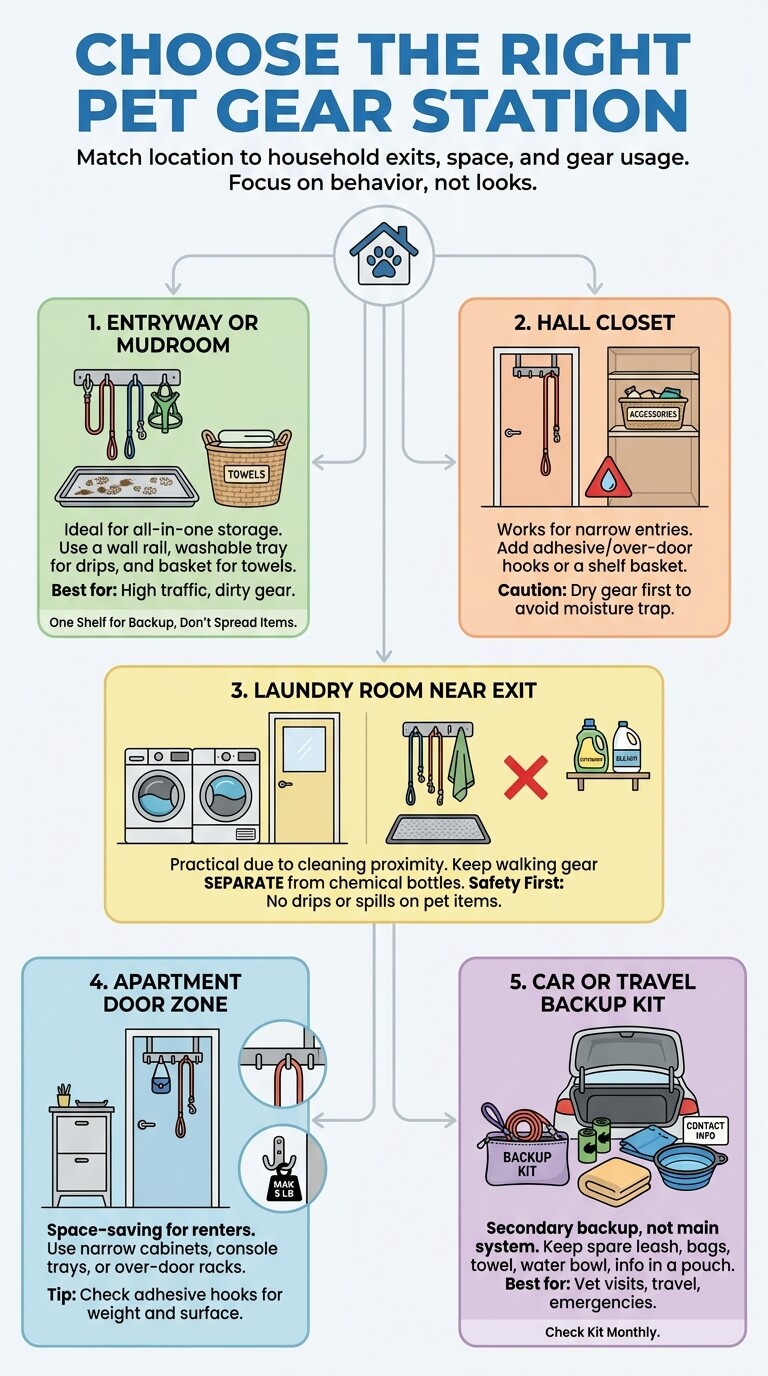
The correct location depends on how your household exits, how much space you have, and how wet or dirty the gear gets. Choose the spot that matches behavior, not the spot that looks best in photos.
Entryway or mudroom
A mudroom is ideal because it can handle hooks, towels, mats, and shoes in one place. Use a wall rail for leashes and harnesses, a washable tray below for drips, and a basket for towels. If the mudroom has cabinets, reserve one small shelf for backup gear instead of spreading pet items across several drawers.
Hall closet
A hall closet works well when the front entry is narrow. Add adhesive or over-door hooks if the door can handle them, or use a basket on an eye-level shelf for accessories. Keep wet gear outside the closed closet until dry. Closed closets hide clutter, but they can also trap moisture.
Laundry room near an exit
A laundry room near a side door can be a practical station because towels, washable mats, and dirty items are already close to cleaning routines. Keep walking gear separate from detergents, stain removers, bleach, or other cleaners. Leashes and collars should not hang where chemical bottles can drip, spill, or be knocked into pet gear.
Apartment door zone
Apartment renters can use a narrow shoe cabinet, a small tray on a console table, an over-door rack, or removable hooks rated for the item weight. Place a washable mat below the hooks. Before using adhesive hooks, check the package instructions and surface type.
Car or travel backup kit
A car kit should be a backup, not the main home system. Keep a spare leash, waste bags, towel, water bowl, and copy of basic contact information in a pouch or small tote. Check the kit monthly. A car kit is especially useful for vet visits, hikes, pet sitters, and travel days.
Sort and Declutter Walking Gear
Before buying hooks or bins, empty the current leash basket, drawer, closet, and car pouch. Lay everything on the floor or a table. Sorting first prevents storage for gear you do not need.
Daily-use versus backup gear
Leashes and collars are easier to maintain when the rest of the pet setup is sorted too. After the walking zone is fixed, organize the rest of your pet supplies so backups and daily items stop competing for the same hooks and baskets.
Daily-use gear is what you reach for several times a week. Backup gear is what you would use if the daily item is wet, missing, being washed, or needed by a pet sitter. Most homes need one daily leash setup per dog, one backup leash, and a few specialty items. If five leashes hang by the door but one is used, the extras slow the system.
Worn, outgrown, or unsafe items
Check every leash clasp, collar buckle, harness strap, ring, and stitched seam. Retire gear with fraying, cracked plastic, rusted metal, weak snaps, stretched elastic, or rough edges that rub the dog. A collar that fit last year may not fit now. Weight, coat, and growth changes can affect fit. Stop using any item that slips, pinches, or seems damaged, and follow the manufacturer care and replacement instructions for that product.
Duplicate leashes and specialty gear
Duplicate leashes are useful only when each has a purpose. Keep one standard walk leash, one backup, and any specialty leash you genuinely use, such as a long line for supervised training in allowed spaces or a reflective leash for night walks. Do not keep broken leashes, mystery straps, or collars with missing hardware in the door zone. If an item is kept only because it might be useful someday, move it out of the daily station.
What to keep for pet sitters or emergencies
Create a simple pet sitter pouch with one labeled leash, current instructions, waste bags, and any gear the sitter is allowed to use. Keep it near the station but separate from daily hooks. Emergency gear should be obvious, not a complicated specialty setup.
Build the Walking Gear Station Step-by-Step

After sorting, build the station in layers. Start with the items that must be grabbed every walk, then add accessories and return-home items.
Install or place hooks at a reachable height
Hooks should be high enough that pets cannot chew or drag gear, but low enough that every regular walker can reach them. For children who help with walks, place only safe, lightweight items within their reach and keep heavier gear or complicated setups higher. Use hardware suited to the wall, door, or furniture material. If a hook wiggles or bends, fix it before using it again.
Add a tray for small accessories
A shallow tray prevents small items from scattering. Put bag rolls, lights, keys for dog parks, a treat pouch, and a tiny flashlight in the tray. The tray should be easy to empty and wipe.
Create a bag refill spot
Running out of waste bags is usually a refill problem, not a memory problem. Keep extra rolls in the same spot every time. Refill the leash holder before it is empty. A small label that says “bags†can help guests, pet sitters, and kids reset the station correctly.
Add a towel or wipe zone
Place towels where the dog enters, not three rooms away. A slim basket, wall shelf, or washable hanging bag can work. Store pet-safe wipes according to the label and close the package tightly. Wet towels should go to laundry or a drying spot instead of back into the clean basket.
Label by dog, size, or walk type
Labels are most helpful in multi-dog homes, homes with pet sitters, and homes where different people handle walks. Label by dog name, gear size, or walk type. Examples include “daily,†“night walk,†“backup,†and “pet sitter.†The right amount of labeling makes reset easier without turning the station into a project.
Storage Ideas by Home Type
The same organizing logic works in different homes, but the storage product should match the space.
Small apartment no-drill options
Use an over-door hook rack, a narrow freestanding entry shelf, a magnetic container if the door is metal and the gear is light, or removable hooks rated for the weight. Keep the system shallow so it does not block the door swing. Choose one hook for the daily leash and one small container for accessories.
Mudroom wall system
A mudroom can hold a more complete setup: hooks for each dog, a mat below, towel basket, accessory tray, and backup bin. Keep the walking zone separate from shoes and sports gear. If the mudroom also stores cleaners, place pet walking gear on a different shelf or wall area.
Closet basket and hook setup
In a closet, use hooks on the side wall or inside door for dry daily gear and a labeled basket for backups. Do not put damp leashes into a lidded bin. A breathable mesh pouch works better for items that need airflow.
Command center near garage entry
Garage entries are useful for dogs that go out through the driveway or yard. Use hooks near the interior door rather than deep inside the garage, where heat, humidity, dust, or pests may affect gear. Avoid storing fabric collars and treat pouches next to fuel, pesticides, paint, or automotive chemicals.
Minimal setup for one dog
A minimal station can be one hook, one tray, and one towel basket. Hang the daily leash and harness together. Put waste bags and a light in the tray. Keep the backup leash in a nearby drawer.
Keep Wet or Muddy Gear From Spreading Mess
Muddy walks need a reset point, not just more hooks. If towels, wipes, and paw tools are part of your routine, set up a pet cleaning station beside the walking gear zone.

Wet gear needs a different workflow than clean gear. The aim is to dry the item and protect nearby surfaces.
Drying hooks for wet leashes
Hang wet leashes open, not coiled. Airflow helps fabric dry and makes damage easier to spot. A separate drying hook near the door is better than returning a wet leash to the daily hook. If the leash label allows washing, clean it according to the care instructions and let it dry fully before storage.
Washable mats and trays
A washable mat below the station catches drips from leashes, paws, umbrellas, and shoes. Choose a mat that can be shaken out or washed easily. Boot trays can work under hooks in narrow areas. Empty the tray after muddy walks instead of letting grit dry and spread into the entryway.
Towel storage beside the door
Keep two types of towels if your dog comes in wet often: clean towels ready for use and a used-towel spot that goes to laundry. The used-towel spot can be a washable hanging bag or a small hamper with airflow. The ASPCA general dog care guidance notes routine grooming and checks as part of dog care, and an after-walk towel moment is a practical time to notice burrs, mud, or irritation without turning every walk into a full bath.
When to move items to a cleaning station
Move items away from the leash station when they are muddy, smelly, sticky, or contaminated with something you would not want on your hands or floor. The walking station can handle normal wetness. A cleaning station should handle dirty towels, paw cleaning, washable gear, and mess products. This boundary keeps the entry area useful.
Organizing for Multiple Dogs
Multiple dogs need separation more than they need more products. The common problems are tangles, swapped harnesses, and missing gear.
Color-coding or labeling by dog
Give each dog a color, hook, label, or bin. Keep the color system simple enough that a guest can understand it. If one dog wears a red harness, use a matching label for that dog’s gear. Do not rely only on memory if the dogs are different sizes or need different gear.
Separate hooks for each walking set
Each dog should have a complete walking set on one hook or in one visible section. Hang the leash with the harness or collar it pairs with. This prevents rushed gear swaps.
Backup gear and emergency contact tags
Backup gear should be labeled by dog and stored behind or below daily gear. Store extra ID tags, temporary travel tags, or pet sitter notes in a small pouch. If medical, mobility, or behavior needs affect walks, keep instructions clear. Broad pet walking advice, including pacing and leash behavior, is covered in the AVMA walking your pet guidance.
Preventing tangled leashes
Hang leashes by handle, not by the clasp, so clips do not swing into other gear. Coil long lines separately and keep them away from daily leashes. If two dogs are walked together, store paired leashes side by side.
Maintenance Checklist
A leash station only works if it resets quickly. Use a simple schedule.
Daily return reset
After each walk, hang the leash back on its hook, return the treat pouch, check whether the bag roll is low, and place dirty towels in the used-towel spot. If the leash is wet, move it to the drying hook.
Weekly bag and towel refill
Once a week, refill poop bags, restock clean towels, empty the accessory tray, and remove anything that does not belong. Check treat pouches for crumbs.
Monthly fit, wear, and tag check
Once a month, check collar fit, harness straps, buckles, leash clasps, reflective items, lights, batteries, and ID tags. The ASPCApro leash handling resource describes choosing and placing walking equipment as part of good handling practice, so keep a monthly check habit alongside your leash handling routine.
Seasonal gear swap
At the start of a season, move current items forward and store off-season items in a labeled bin. Summer may require a water bowl, cooling accessories, or early-morning visibility gear. Winter may require lights, reflective clips, rain gear, or paw protection.
Common Mistakes With Leash and Collar Storage
Most leash stations fail because they are overloaded, damp, unsafe, or too far from the real exit. Fixing these mistakes matters more than buying a larger organizer.
Storing wet gear in closed bins
Wet nylon, fabric, and padded gear should not be shoved into a closed basket. Moisture can create odor. Hang items open until dry, then return them to their normal hook or bin.
Mixing walking gear with cleaning chemicals
Do not let cleaning sprays or wipes sit loose with collars and leashes. Store pet cleaning supplies safely so products stay labeled, contained, and separate from gear your pet wears.
Do not store leashes, collars, harnesses, towels, or treat pouches with cleaning sprays, laundry additives, pesticides, automotive products, or odor removers. Spills and residue can transfer. Walking gear touches your hands and your pet, so keep it separate.
Keeping too many backups by the door
Backups are helpful until they crowd the daily gear. Store only what solves a real problem: one spare leash, one spare collar or harness if appropriate, extra bags, and seasonal accessories you use now. Move rarely used items to a labeled storage bin away from the exit.
Placing hooks where pets or children can pull them down
Low hooks may look convenient, but they can invite chewing, pulling, or swinging gear. Place hooks where gear is reachable by adults but not tempting to pets. If children help with walks, give them a safe, lightweight task such as checking bags or carrying a towel while an adult handles leash attachment.
Forgetting collar fit checks
A tidy collar hook does not mean the collar still fits. Check fit after grooming, weight change, growth, coat changes, or a long storage period. Replace items that rub, slip, crack, fray, or no longer adjust properly. Organization should make these checks easier.
Adjacent Pet Supply Problems
A walking station connects naturally with other pet zones, but it should not absorb all of them. Keep boundaries clear.
After-walk cleaning station
If your dog often returns muddy, the leash station can hold the first towel and drying hook. The cleaning station should hold the fuller cleanup setup, such as washable towels, pet-safe wipes, dirty towel handling, and surface cleanup supplies. This keeps the exit zone quick.
Whole-home pet supply organization
The leash station is one zone inside a larger pet supply system. Food, medicine, grooming, toys, travel gear, and cleaning items need separate homes. The walking station should stay focused on the moments before and after a walk.
Outdoor toy storage and car kits
Balls, tug toys, and water toys should not tangle with daily leashes. If play items are creating entryway clutter, organize outdoor pet toys separately from the walking gear.
Outdoor toys, fetch gear, and travel supplies can sit near the leash station if they are used for walks, but they should have their own bin. Car kits should hold duplicates that support trips, not the daily gear you need at home.
Leash and Collar Organization FAQ
These answers handle the common setup questions that come up once the main station is built.
Where should leashes be stored?
Store leashes near the door used for most walks. A hook, wall rail, over-door rack, or closet hook works if the leash is visible, dry, and easy to grab. Keep the daily leash separate from backups and wet gear.
How do you organize leashes in a small entryway?
Use one vertical surface and one small container. A removable hook or over-door hook can hold the daily leash and harness, while a shallow tray holds bags and small accessories. Keep backup gear somewhere nearby but not in the main doorway path.
How many leashes should one dog have accessible?
Most dogs need one daily leash accessible and one backup leash nearby. Specialty leashes should be stored only if they are used for a specific routine. Too many at the door causes tangles.
Should collars and harnesses be stored together?
Collars and harnesses can be stored together when they are part of the same walking set. In multi-dog homes, keep each dog’s gear on a separate hook or labeled section. Store outgrown, seasonal, or backup items away from the daily set.
How do you store wet leashes after a walk?
Hang wet leashes open on a drying hook with a mat or tray underneath. Do not put wet leashes into a closed basket or closet. Once fully dry, return them to the daily hook.
Final Thoughts
The easiest leash and collar system is small, visible, and close to the real exit. Give daily gear a hook, small accessories a tray, towels a clean basket, and wet items a drying spot. Once the station is built, the most important habit is the one-minute reset after each walk. That habit keeps leashes untangled and the next walk calmer.

Ethan Carter is the Founder & Editor of HomeCleanSecrets. Based in the United States, he has 5 years of experience creating practical home cleaning, laundry care, stain removal, decluttering, and home organization content. His goal is to help everyday households clean smarter and build simple routines that are easier to maintain.
Read more about Ethan Carter on his author page: https://homecleansecrets.com/ethan-carter/