
Pet cleaning supplies need to be close enough for quick accidents, but not so close that a dog, cat, child, or guest can knock them over, chew them, spill them, or confuse them with food. The best setup is not one giant bucket of random sprays.
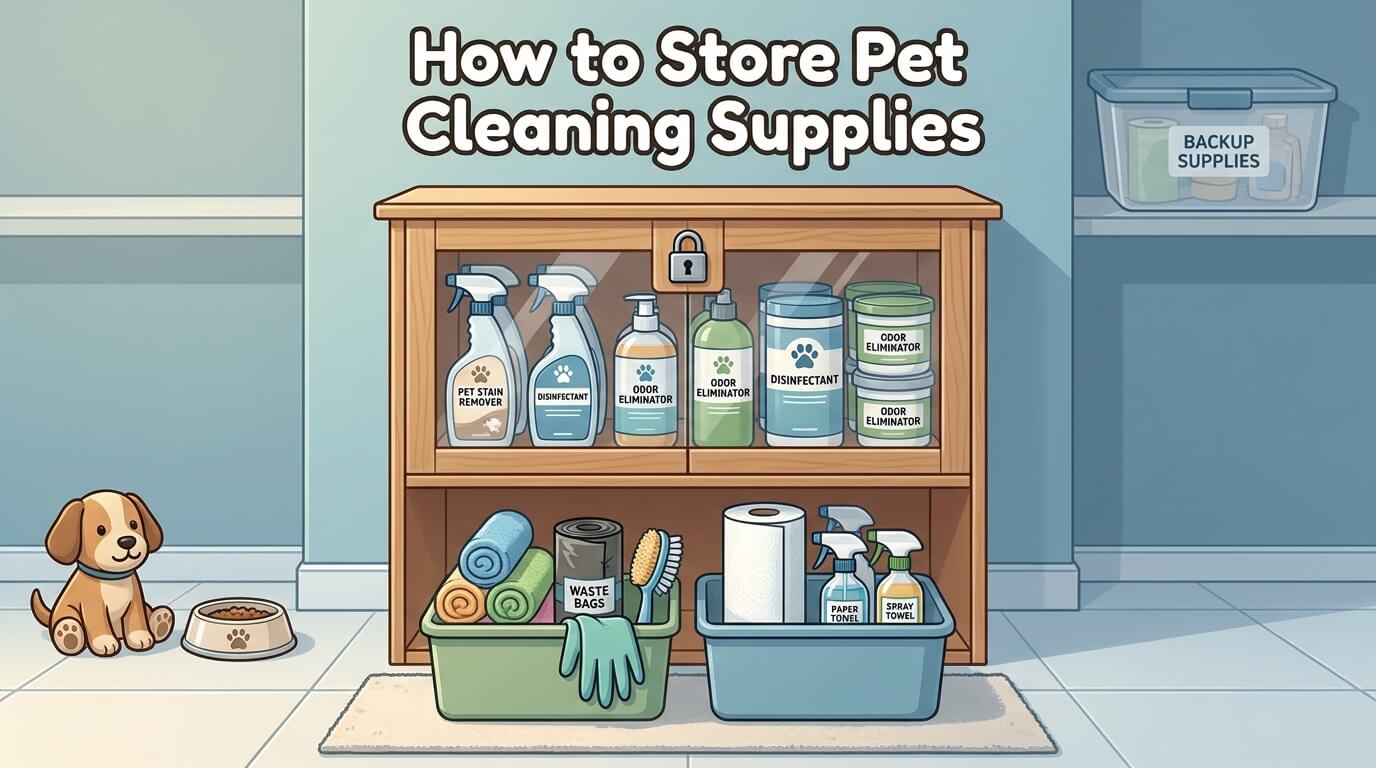
This guide focuses on storage, not stain removal instructions for every mess. You will learn what belongs in a pet cleaning supply system, where to place different products, what should never be mixed or decanted, and how to maintain the setup after muddy walks, litter tracking, grooming, accidents, and odor-control tasks.
Quick Answer: Store Pet Cleaning Supplies Safely and Accessibly
This guide focuses on cleaning supplies only. If cleaners are part of a larger pet storage problem, use a whole-home pet supply storage system to decide what belongs with food, toys, litter, leashes, and backups.

The safest pet cleaning supply setup has three layers: an active kit for common messes, a higher or locked area for chemical products, and a separate backup zone for refills. That keeps the daily workflow fast while reducing casual access to products that should not sit on floors, low shelves, or open baskets.
Keep labels visible and products closed
Every spray, wipe tub, disinfectant, odor product, laundry additive, and grooming cleaner should stay readable from the front or top. Keep caps tight, sprayers turned off when the bottle allows it, and tubs fully sealed.
Separate cleaners from food, toys, litter, and bedding
Cleaning products should not share a bin with treats, food scoops, chew toys, litter scoops, blankets, or pet beds. Even sealed products can leak, shed residue, or pick up odors.
Use a grab-and-go kit for common messes
A small caddy works well for everyday pet messes: gloves, waste bags, washable cloths, paper towels, a surface-appropriate stain product, and a small brush if the label or surface allows scrubbing. Keep this kit light enough to carry with one hand.
Keep higher-risk products out of pet and child reach
Bleach products, disinfectants, strong odor treatments, concentrated cleaners, aerosols, and anything with a hazard warning need a higher shelf, locked cabinet, or closed utility area. Poison Control advises keeping cleaning products in original containers and away from children, which also helps in homes with curious pets. Poison Control cleaning product safety guidance is worth checking before you reorganize a cabinet full of mixed products.
What Counts as Pet Cleaning Supplies
Pet cleaning supplies include more than obvious stain removers. Anything used to clean pet messes, handle waste, wash pet textiles, manage odors, or support grooming cleanup belongs in this category. Defining the category first helps you avoid mixing cleaning products with general pet supplies that need different storage conditions.
Stain removers and odor products
Pet stain removers, enzyme products, carpet sprays, upholstery cleaners, odor absorbers, and urine-treatment products should be grouped by surface and task. A carpet-safe product does not automatically belong on hardwood, natural stone, leather, sealed grout, or upholstery.
Disinfectants and surface cleaners
Disinfectants, sanitizing products, bathroom cleaners, floor cleaners, and hard-surface sprays can have contact time, ventilation, rinsing, and surface limits. The CDC recommends following label directions and choosing products suitable for the surface being cleaned. CDC home cleaning guidance is a helpful baseline when deciding whether a disinfectant belongs in your active kit or a separate higher-risk area.
Wipes, towels, brushes, gloves, and bags
Soft and disposable supplies make the storage system work during real messes. Keep gloves, waste bags, washable towels, microfiber cloths, small scrub brushes, lint rollers, and disposable wipes in a dry area beside the active kit.
Grooming and bathing support supplies
Bathing and grooming cleanup supplies include pet shampoo, grooming wipes, ear-cleaning support products, comb-cleaning brushes, nail-trim cleanup cloths, and old towels used for drying. These can sit near a bathroom, laundry room, or grooming area, but they still need separation from household cleaners.
Products that should not be stored casually
Some items should never live in an open basket near a pet bed or feeding area. Examples include concentrated disinfectants, pest products, drain cleaners, toilet cleaners, laundry packets, aerosols, strong fragrance products, and any bottle with an unreadable label.
Safety Rules Before Organizing Cleaners

Organizing unsafe storage does not make it safe. Before buying bins or labels, check what the products are, what condition they are in, and whether they should stay in your home at all. This is especially important in multi-pet homes, small apartments, and houses where supplies collect under sinks.
Read labels before moving or decanting products
Read the label before moving a cleaner into a new spot. Some products need temperature limits, ventilation, upright storage, or distance from heat.
Do not mix cleaning products
Do not combine cleaners in one bottle, one bucket, one mop tank, or one tray. This includes mixing products because one bottle is almost empty.
Keep products in original containers when possible
Original containers keep the product name, directions, warnings, lot information, and emergency instructions together. The American Cleaning Institute also emphasizes keeping cleaning products in original containers with labels intact and putting them away promptly after use. Cleaning product safety guidance from ACI supports this label-first storage habit.
Consider pets, children, ventilation, and surface limits
Storage decisions should match the animals and people in the home. A low cabinet might work for a calm adult-only household, but not for a puppy, a cat that opens doors, or a child who explores under sinks.
Decide What Should Be Stored Together
Cleaning supplies are easier to store when the rest of the pet area is not mixed together. Sort cleaning supplies with the rest of the pet system so towels, toys, food, and cleaners do not land in one shared bin.

Group pet cleaning supplies by task, not by bottle shape. Task-based grouping helps you grab the correct items quickly without sorting through every product in the house. It also keeps heavy-use items from hiding behind backups that only need monthly attention.
Quick mess cleanup kit
Storage and workflow are not the same thing. If the same towel, wipe, and brush are used every day, set up a pet cleaning station while keeping backup cleaners stored safely elsewhere.
This kit is for immediate accidents, muddy paw prints, vomit, tracked litter, or small spills. Include gloves, bags, absorbent towels, paper towels if you use them, and one or two products matched to your most common surfaces.
Laundry and towel kit
Pet towels, washable cloths, bedding pre-treatment products, lint tools, and laundry-safe odor products belong near the laundry path. This kit should be dry, washable, and easy to reset.
Litter area cleaning kit
A litter area kit can include small trash bags, gloves, a dustpan, a brush, surface-safe cleaner, and spare wipes. Keep this kit near the litter zone but not inside the litter container or beside open bedding.
Bathing and grooming kit
Bathing supplies should include towels, pet shampoo, a washable mat, grooming brushes, and cleanup cloths. Keep human disinfectants and bathroom cleaners out of this kit.
Backup cleaning products
Backups should not overflow into the active kit. Store unopened bottles upright in a secondary bin or upper cabinet, with older products in front.
Best Places to Store Pet Cleaning Supplies

The best location depends on mess frequency, surface type, pet behavior, and household access. Choose a place that stays dry, supports upright bottles, and does not put cleaners beside food, toys, bedding, or open litter.
Laundry room cabinet
A laundry room cabinet is often the strongest choice because towels, washable cloths, gloves, and laundry products already move through that space. Keep pet-specific products in a labeled bin rather than loose among detergent bottles.
Utility closet
A utility closet works well for backups, mops, brooms, brushes, and larger bins. Give pet supplies a dedicated shelf instead of placing them under leaky mop buckets or behind seasonal tools.
Under-sink cautions
Under-sink storage is convenient but often risky. Pipes leak, cabinets stay dark, and pets may learn to nose doors open.
Bathroom storage cautions
Bathrooms can work for bathing support supplies, but they are not ideal for every cleaner. Humidity, heat swings, and crowded cabinets can damage labels or encourage people to stack bottles.
Entryway or mudroom limited-use storage
An entryway or mudroom can hold towels, paw wipes, waste bags, and a small mat for after-walk messes. Avoid turning the entry shelf into a chemical shelf.
Pet Cleaning Supply Storage Setup Step-by-Step
A clean setup starts with editing. Empty the cabinet or shelf first so you can see duplicates, old products, unlabeled bottles, damp towels, broken brushes, and supplies that belong elsewhere. Then rebuild the system by task and risk level.
Remove expired, leaking, or unknown products
Discard products that are leaking, separated, dried out, unlabeled, or impossible to identify. Do not smell unknown cleaners closely to guess what they are. Wipe sticky shelves with a product suitable for that surface, let the area dry, and keep questionable products away from pets while you sort.
Group by task and risk level
Create piles for everyday messes, laundry, litter-area cleanup, bathing support, grooming cleanup, and backups. Within each pile, separate low-risk accessories from stronger chemical products. Gloves and bags can sit in an open caddy. Disinfectants and stronger odor treatments usually need a more controlled spot.
Choose bins, caddies, or locked storage
Pick containers after sorting, not before. Open caddies work for towels, gloves, bags, and a small number of active products. Lidded bins work for backups. Locked storage or high shelves make sense for products that pets or children should never handle. Choose washable containers because leaks and damp cloths happen.
Label by task and surface
Labels should answer two questions: what is this kit for, and where can it be used? Examples include “carpet accidents,†“litter area,†“laundry towels,†and “bath support.†Avoid vague labels like “pet stuff.†The more specific the label, the less likely someone grabs an upholstery product for wood floors or a hard-surface disinfectant for bedding.
Add towels, gloves, and trash bags without crowding chemicals
Soft supplies should support the product, not bury it. Put gloves and bags in a small side pouch, towels in a separate stack, and bottles upright with space around sprayers. When bottles are squeezed into a caddy, caps loosen, labels rub off, and people stop noticing leaks.
Storage Containers and Caddies

The container should make the safe action easier. It should hold bottles upright, let labels remain visible, and clean up easily after a spill. A pretty container that hides warnings or invites decanting is not the right choice for pet cleaning products.
Open caddies for active supplies
Open caddies are best for the active kit because you can see contents quickly. Choose one with a flat base, a stable handle, and sections that keep bottles upright. Store the caddy in a closed cabinet or high shelf if the contents include products a pet should not access.
Lidded bins for backups
Backups do not need to sit in the active cleanup path. A lidded bin keeps unopened refills grouped and dust-free, especially in a closet or garage-adjacent utility area. Do not pack the bin so full that bottles lie sideways. Upright storage makes leaks and label checks easier.
Locking or high storage for higher-risk products
Locking storage is helpful in homes with children, chewing puppies, counter-surfing dogs, or cats that open cabinets. High storage is useful too, but avoid shelves so high that bottles can fall during retrieval. The goal is controlled access, not an obstacle course.
Washable bins for leak protection
Plastic trays, washable bins, and removable shelf liners make leaks easier to catch. Check the bottom of the bin during monthly resets. If residue appears, remove every product, wash and dry the bin, inspect each bottle, and replace anything with a cracked cap or sticky seam.
What not to decant
Do not decant disinfectants, bleach products, enzyme cleaners, concentrated products, aerosols, or anything with special directions unless the product label clearly permits it and the new container carries the necessary information. Decorative bottles can erase warnings, dilution directions, surface limits, and emergency details.
Keep Cleaning Supplies Away From Pet Food, Toys, and Bedding
Pet cleaning supply storage works only when it respects other pet zones. Food, toys, bedding, and litter each have their own contamination, odor, and moisture concerns. The simplest rule is physical separation: different shelves, different bins, and preferably different cabinets.
Food storage separation
Food needs a cleaner boundary than many people give it. Keep cleaners away from dog food so kibble, treats, bowls, and scoops are not stored beside sprays or odor products.
Pet food, treats, bowls, scoops, and medications should never share a bin with stain removers or disinfectants. Even sealed products can make the area smell chemical or confusing. Put feeding supplies where hands are clean and surfaces are dry, then keep cleaning products in a separate cleaning zone.
Toy and enrichment separation
Toys absorb smells and residue, especially fabric toys, rope toys, and lick mats. Store clean toys in their own basket or rotation bin. Keep cleaning products far enough away that a toy cannot fall into the cleaner caddy and later end up in a pet’s mouth.
Bedding and towel separation
Clean bedding should not sit next to sprays or open cleaning cloths. Pet towels are different from pet bedding because towels are part of the cleanup workflow.
Cat litter and waste area boundaries
Litter tools and cleaning products should not collapse into one messy bucket. Store cat litter in its own dry zone, then keep gloves, wipes, and cleaners nearby only if they stay contained and clearly separated.
Litter supplies create dust, tracking, and waste-handling needs. Keep bags, gloves, and a surface-safe cleaner nearby, but do not store multiple chemical products beside open litter or inside the same bulk litter bin. A small litter cleaning kit is useful. A chemical pile next to the litter box is not.
Maintenance Checklist for Pet Cleaning Supplies
The system stays safe only if it gets reset. Pet mess supplies are used under stress, so bottles get left out, towels get damp, and gloves disappear. A short maintenance rhythm prevents the cabinet from sliding back into clutter.
After-use reset
After each cleanup, close bottles, wipe sticky caps, return products upright, remove dirty towels, and restock gloves or bags if the kit is nearly empty. A thirty-second reset is easier than rebuilding the kit during the next accident.
Weekly towel and wipe refill
Once a week, check washable towels, wipes, bags, and gloves. Replace damp or smelly items and move dirty towels to laundry. If wipes are drying out, check that the lid closes fully and that the tub is stored upright away from heat.
Monthly label, leak, and expiration check
Once a month, pull the caddy or bin into good light. Check labels, caps, sprayers, seams, and expiration dates where listed. The EPA Safer Choice program can also help when you are comparing products and looking for options that meet its safer-product standard. EPA Safer Choice product information is a useful reference during product review, not a reason to ignore labels.
Seasonal product review
Seasonal changes affect pet cleaning supplies. Rainy months may need more towels near the door.
Common Mistakes to Avoid
Most pet cleaning supply problems come from convenience without boundaries. The bottle is placed where the mess happens, then another bottle joins it, then towels, toys, food, and litter tools end up in the same crowded zone. These mistakes are easy to fix when you know what to look for.
Mixing products in one unlabeled bin
A mystery bin slows every cleanup and increases risk. If you cannot tell what each product is without picking up every bottle, the bin is not organized. Separate by task, label the bin, and remove anything with a missing or unreadable label.
Storing cleaners beside pet food
Food zones should feel clean, dry, and simple. Cleaners beside food create spill risk and make refill routines messy. Move cleaning products to a different shelf or cabinet, even if that means the active kit has to live a few steps farther from the feeding area.
Leaving spray bottles on the floor
Floor storage invites chewing, tipping, leaking, and accidental sprays. A dog can nose a bottle. A cat can knock it down. A child can pick it up. Store active bottles upright in a caddy that returns to a cabinet, closet, or high shelf after use.
Forgetting surface restrictions
A product that works on one surface can damage another. Hardwood, wool rugs, stone, sealed grout, upholstery, and leather may have specific care limits. Keep product labels visible and write surface notes on the bin when several people handle pet cleanup.
Keeping old products with unreadable labels
Old products with unreadable labels are not harmless clutter. They remove the directions you need most. When a label is gone, faded, soaked, or detached, do not keep guessing. Replace the product only if it is still useful, and store the new one where the label stays dry and visible.
Edge Cases: Small Apartments, Multi-Pet Homes, and Sensitive Surfaces
Not every home has a utility closet or mudroom. The storage system should scale to your space and pet behavior. Small homes need tighter editing, multi-pet homes need clearer boundaries, and sensitive surfaces need stronger label discipline.
One-caddy apartment setup
In a small apartment, one active caddy and one backup bin may be enough. Keep the caddy in a high bathroom cabinet, laundry nook, or closet shelf.
Separate kits for dog and cat areas
A dog entryway kit may need towels, paw wipes, bags, and a mat. A cat area kit may need gloves, bags, a dustpan, and a surface-safe cleaner. Separate kits prevent litter tools from mixing with after-walk towels and keep each task faster.
Hardwood, upholstery, and carpet product limits
Sensitive surfaces deserve a labeled mini-section inside the kit. Keep carpet products, upholstery products, and hard-floor products separated, especially if bottles look similar. If you are unsure whether a product matches the surface, pause and check the product label and the surface care guide before applying it.
When to stop and read the label or call a professional
Stop if a product has an unreadable label, a sharp unexpected odor, visible leaking, a damaged cap, or unclear surface directions. Stop if a pet may have contacted or ingested a cleaner. ASPCA notes that household products, including some cleaners, can be hazardous to pets, so suspected exposure deserves prompt advice from a veterinarian or poison help line. ASPCA information on household products and pets is a practical reminder to take exposure concerns seriously.
Adjacent Pet Organization Issues
Cleaning supply storage connects naturally to other pet systems, but it should not absorb them. Keep this article’s main job in mind: safe, organized storage for cleaning and hygiene supplies. Other zones can sit nearby without becoming the same system.
Turning supplies into a full pet cleaning station
A full pet cleaning station includes a landing area, towels, trash path, laundry path, tools, and a reset routine. Storage is one part of that station, not the whole thing. If muddy paws or accidents happen often, your next step may be planning the workflow zone, not buying more sprays.
Cat litter storage and waste tools
Litter storage focuses on keeping bulk litter dry, accessible, and contained. Waste tools need their own boundaries, and cleaning products should stay limited to what the litter area truly needs. Avoid storing extra disinfectants, odor sprays, and wipes beside open litter simply because the shelf is nearby.
Leash area towels and after-walk messes
After-walk towels can live near leashes and collars, but cleaning products should be more controlled. Keep towels, bags, and a mat in the entry area, then store stronger products in a closed cabinet or caddy that returns to its proper spot after use.
Pet Cleaning Supply Storage FAQ
These answers focus on storage decisions rather than detailed cleaning methods. When a product label gives different directions, follow the label.
Where should pet cleaning supplies be stored?
Store most pet cleaning supplies in a laundry room cabinet, utility closet, high bathroom shelf, or closed cabinet near the main cleanup path. Keep active supplies grouped by task, store bottles upright, and separate cleaners from food, toys, bedding, and litter.
Can pet cleaners be stored under the sink?
They can be stored under the sink only if the cabinet stays dry, closes securely, and keeps products away from pet food or towels. Use a washable tray, keep labels visible, and check for pipe leaks.
Should pet cleaning products stay in their original bottles?
Yes, original bottles are usually the safest choice because they keep directions, warnings, surface limits, and emergency details with the product. Do not move cleaners into decorative bottles or unlabeled sprayers.
What should go in a pet mess cleaning kit?
A basic kit can include gloves, waste bags, absorbent towels, paper towels if you use them, a small brush, and one or two surface-appropriate products for your most common messes. Keep the kit small. Store stronger products separately if pets or children can access the caddy.
How often should pet cleaning supplies be checked?
Reset the active kit after each use, refill towels and disposable items weekly, and inspect labels, leaks, caps, and expiration dates monthly. Review the whole setup seasonally, especially before rainy weather, shedding season, travel, or any period when pet messes become more frequent.
Final Thoughts
Pet cleaning supplies work best when they are easy for adults to find and hard for pets or children to access casually. Keep labels visible, do not mix products, store bottles upright, separate cleaners from food and toys, and build small task-based kits instead of one overloaded bin.

Ethan Carter is the Founder & Editor of HomeCleanSecrets. Based in the United States, he has 5 years of experience creating practical home cleaning, laundry care, stain removal, decluttering, and home organization content. His goal is to help everyday households clean smarter and build simple routines that are easier to maintain.
Read more about Ethan Carter on his author page: https://homecleansecrets.com/ethan-carter/