
A good pet cleaning station gives you one place to handle muddy paws, litter dust, shedding, accidents, towels, wipes, and cleanup tools before the mess spreads. The best station is the closest safe place where you can clean, dry, discard, and reset.

This guide shows how to choose the right location, stock the right supplies, separate clean and dirty items, and keep the station usable after the first week.
Quick Answer: What a Pet Cleaning Station Needs
This guide focuses on the station itself. If the cleaning station is only one part of a larger pet storage issue, start with the whole-home pet supply system so food, toys, litter, leashes, cleaners, and backups each have a clear place.

A pet cleaning station needs five parts: a landing area, basic cleanup supplies, safe cleaner storage, a laundry or trash path, and a reset routine. Missing one part usually creates damp towels, half-used wipes, or bottles nobody wants to touch.
A cleanup surface or landing area
The landing area is where the pet pauses before moving deeper into the home. It might be a washable mat, tray, towel hook, or bathroom corner. A good test is simple: can you stop the pet there, reach what you need, and clean without blocking the walkway?
Towels, wipes, gloves, bags, and brushes
Daily supplies should be boring and reachable. Keep a few washable towels, gloves, waste bags, a small brush, and surface-appropriate wipes or cloths nearby. The active zone should only hold what you use during the first two minutes of a mess.
Safe storage for cleaners
Cleaning products should stay closed, labeled, and away from curious pets and children. Keep towels and waste bags in the active caddy, while sprays, odor products, disinfectants, and concentrates sit higher or locked. Poison Control explains why labels, ventilation, and product separation matter: Poison Control cleaning product safety guidance.
A laundry or disposal path
The station needs somewhere for dirty towels, used bags, litter crumbs, and hair. Add a small lidded hamper, a washable wet bag, a trash can with liners, or a direct route to the laundry room. Choose the option based on whether the mess is water, mud, fur, waste, or product residue.
A reset routine
After each cleanup, return the station to ready mode. Hang damp towels, move dirty cloths to laundry, close cleaners, wipe the mat, and refill what is low. An unreset station becomes clutter.
When a Pet Cleaning Station Is Worth It
A station is worth it when pet messes are predictable. If you know which door gets muddy, which litter area tracks crumbs, or which bathroom gets used after grooming, a small station saves time and keeps supplies from spreading into every cabinet.
Muddy paws and rainy walks
Dogs that enter through the same door after walks are the easiest case. Place towels, a soft cloth, a washable mat, and waste bags near the entry. If the doorway is narrow, mount hooks above pet reach and keep the floor zone limited to one mat and one small bin.
Litter tracking and small accidents
Cats need a different setup. Keep a small dustpan, bags, gloves, and surface-safe cleaner near the litter area, but do not crowd the box with strong smells or obstacles.
Grooming, shedding, and bath prep
Grooming cleanup needs towels, brushes, combs, a hair tool, and a washable surface. If baths happen in a bathroom, keep towels on hooks and dirty laundry routed to a hamper. If brushing happens in the laundry room, a small mat and hair bin may matter more than sprays.
Multi-pet households
Multi-pet homes need clearer zones. One pet may track mud, another may shed heavily, and another may need litter cleanup. Build one main cleanup area and add smaller task kits where the mess begins.
When a simple caddy is enough
A full station is not always necessary. Renters or people with one low-mess pet may only need a handled caddy with towels, gloves, bags, a brush, and one approved cleaner. The caddy still needs a storage home and a dirty-towel plan.
Decision Tree: Where Should the Station Go?

The best location is not always the prettiest one. Pick the spot by mess type, surface, water access, product safety, and the route to laundry or trash.
Is the mess coming from outside, litter, food, or grooming?
If the mess comes from outside, use the entry the pet actually uses. If it comes from litter, keep tools near the litter zone but away from the box opening. Grooming messes belong in a bathroom, laundry room, or another washable area. Food messes belong near feeding storage, not beside chemical cleaners.
Do you need water access?
Paw wiping often needs only damp cloths, but baths, muddy legs, and some accidents may need a sink or tub. If you choose a water-adjacent station, add a drying mat, a towel hook, and a hamper route before adding more products.
Is there ventilation and washable flooring?
Entryways, tile bathrooms, laundry rooms, and mudrooms usually work better than bedrooms or carpeted hallways. If cleaners or damp towels are used, airflow matters. Wet towels and mats should not become moisture traps, as EPA moisture guidance explains: EPA guidance on mold and moisture in the home.
Can pets and children reach the supplies?
Assume floor-level bins are reachable unless they lock or hold only clean towels. Sprays, detergents, odor products, grooming liquids, blades, scissors, and small parts should sit higher, behind a door, or in a child-resistant storage area.
Is there a laundry or trash route nearby?
A station fails when dirty items have nowhere to go. Stand there with a wet towel or used waste bag in mind. If the next step is across the house, add a hamper, wet bag, trash can, or second mini station.
Pet Cleaning Station Supply List
A station works best when it is part of a larger setup, not a catchall cart. Sort pet supplies into practical zones so the station holds only the items used for real cleanup.

Stock the station for your most common mess first. Extra products make the area harder to use and less safe. A compact supply list is easier to maintain than a crowded shelf.
Towels and washable cloths
Keep two to six towels in the active station, depending on pet size and weather. Small cloths work for paws, while older bath towels are better for wet coats. Use a separate color, label, or shelf so pet towels do not blend with kitchen or face towels.
Wipes, gloves, and waste bags
Wipes, gloves, and bags handle quick messes, but they should not replace towel and laundry flow. Keep gloves easy to grab and place bags near the task that creates waste, such as litter tracking, accident cleanup, or outdoor walks.
Brushes, combs, and grooming tools
A grooming station can include a brush, comb, nail file, hair tool, and a small container for loose fur. Store sharp tools, medicated products, and powered devices out of reach. Check tool instructions before washing or storing damp.
Surface-safe cleaners and odor products
Choose cleaners based on the surface, not only the pet mess. Carpet, sealed tile, hardwood, upholstery, and washable mats may need different products. Read the product label before use, and check flooring, rug, or upholstery care guidance when the surface is delicate or new.
Mats, trays, and bins
Outdoor toys should not go straight back into the main toy basket when they are wet or dirty. Create a drying spot for outdoor toys so play items reset before they return to storage.
A washable mat catches paw dirt, a tray contains drips, and bins separate clean supplies from dirty items. Avoid deep baskets that hide damp cloths. Shallow bins, divided caddies, and hooks make washing and refilling easier.
Refill and backup supplies
Backups should not crowd the active station. Keep one small refill of bags, wipes, or gloves nearby, then store bulk supplies in a separate cabinet.
Station Layout by Home Type
The same supplies can work differently depending on the home. A mudroom station can spread out, while an apartment station may need to disappear into a caddy. The layout should respect traffic, flooring, storage height, and where the pet naturally enters or rests.
Entryway or mudroom station
An entryway station should include a washable landing mat, towel hooks, a narrow caddy, waste bags, and a dirty-towel route. Keep leashes nearby if this is also the walk zone, but do not let walking gear bury cleaning supplies.
Laundry room station
A laundry room works well because towels, water, and washable flooring are usually nearby. Keep pet towels separate from household laundry until they are washed. Store cleaners higher than floor level, and avoid placing sprays directly beside detergent pods, pet food, or loose grooming tools.
Bathroom station
A bathroom station is useful for baths, muddy legs, and grooming. Use towel hooks, a quick-drying mat, and a small movable caddy. Check product labels before using cleaners in a small enclosed room, and ventilate after wet cleanup.
Apartment caddy station
Apartment stations should be compact. A lidded bin or handled caddy can hold towels, bags, gloves, a brush, and one surface-appropriate cleaner. Keep the caddy in a closet, laundry nook, or bathroom shelf, not in the pet’s sleeping area. Add a foldable mat if the doorway has carpet.
Garage or outdoor-adjacent cautions
A garage can handle mud, but heat, cold, pests, and chemical storage make it less ideal for many products. Do not store cleaners where labels can peel, bottles can freeze or overheat, or pets can knock containers over.
Build the Station Step-by-Step

Set up the station in layers. Start with the mess that happens most often, then add only what makes cleanup faster, safer, or easier to reset.
Pick the main mess scenario
Choose one primary purpose: muddy paws, litter tracking, grooming, accident response, or bath cleanup. Add secondary supplies later.
Choose the safest reachable location
The location should be close enough to use but safe enough to store. Place towels and bags within arm’s reach. Store cleaners, grooming liquids, and higher-risk tools in a higher cabinet, locking bin, or closet shelf.
Set up clean, dirty, and backup zones
Divide the station into three zones. Clean items include folded towels, gloves, bags, and brushes. Dirty items include used towels, hair, waste, and wet mats. Backup items include unopened refills. Keep these zones separate so damp supplies and duplicate packages do not pile up.
Add towel and laundry flow
Put towel flow in place before adding more cleaners. Add hooks for damp towels, a hamper for dirty cloths, and a washing rhythm that matches your pet’s mess level. Stop storing damp towels in closed plastic bins, especially in warm or humid spaces.
Label products by task and surface
Labels should answer two questions: what job is this for, and what surfaces can it touch? A bottle marked only “pet cleaner†is not enough. Keep the original label visible and avoid unlabeled decorative bottles.
Test the station during one real cleanup
After setup, use the station during one normal mess. Notice what you reached for first and what was missing. Adjust based on that cleanup, not on how the station looked when freshly arranged.
Keep Cleaning Products Safe Inside the Station
Do not store every cleaner in the station just because it is convenient. Store pet cleaning supplies safely, then keep only the daily-use tools in the station if the location is appropriate.
A pet cleaning station should make cleanup easier without making products easier for pets to reach. Separate the active cleanup tools from the products that need stricter storage, and keep labels readable.
What can stay in the active caddy
The active caddy can hold clean towels, waste bags, gloves, a dustpan, a soft brush, a washable mat, and basic grooming items without special storage limits. Keep chemicals and sharp tools elsewhere.
What should be stored higher or locked
Sprays, disinfectants, stain removers, odor products, detergents, medicated shampoos, scissors, nail tools, and small parts should stay higher, locked, or behind a closed door. If a product would be a concern if spilled, chewed, swallowed, or sprayed accidentally, it should not sit in an open floor basket.
Why labels and original containers matter
Original containers keep directions, warnings, surface limits, and emergency information with the product. If a label is damaged, do not guess. Replace the product or check manufacturer directions. The ASPCA explains household products that need care around animals: ASPCA household product guidance for pets.
Separating cleaners from food, toys, and pet bedding
Keep cleaners away from food storage, treat bins, toy baskets, litter refills, beds, blankets, and clean towels. The station may sit nearby, but supplies should not share the same open bin. Separation reduces spills and accidental contact.
Pet Cleaning Station Ideas by Task
Different messes need different station setups. The ideas below keep the station specific, which makes it easier to maintain and easier for other household members to use correctly.
Paw cleaning station near the door
The station should work with the walking gear, not fight it. Organize leashes and collars near the station so wet gear, towels, bags, and daily walking items reset in the same area.
Place a washable mat, two paw towels, waste bags, a soft cloth, and a hook near the door. If you use a paw washer, store it empty and dry between uses. Add a small tray for wet boots or pet gear if the same entry handles rainy walks.
Litter cleanup station near the litter area
Keep a small broom or handheld vacuum, bags, gloves, and a washable mat near the litter area. Store extra litter separately so the cleanup tools do not crowd the box. If a cat starts avoiding the area, check whether the station has made the space noisy, cramped, or strongly scented.
Grooming cleanup station near bath or laundry
Keep brushes, combs, towels, a hair collector, and a small trash container near the grooming spot. Add a non-slip mat if grooming happens on tile. Store sharp tools higher and dry tools fully before putting them away.
Accident cleanup station for carpets and upholstery
Keep gloves, towels, bags, and the correct cleaner for the surface. Blot first when the product directions call for it, and avoid soaking carpet or upholstery. Delicate rugs, specialty fabrics, or repeated stains may need professional care rather than repeated DIY attempts.
Travel or car cleanup kit
A travel kit can hold towels, bags, gloves, a collapsible bowl, and a small mat. Avoid leaving cleaners in a hot car unless the label allows it. Replace damp towels after trips so the kit does not smell stale the next time you need it.
Maintenance and Refill Schedule
The station works only if it stays ready. Maintenance does not need to be complicated, but it should happen at predictable points: after each cleanup, once a week, once a month, and during messy seasons.
After each cleanup reset
Return clean tools to their spots, move dirty towels to the hamper, throw away used bags, close bottles, and wipe the mat if needed. The reset should take less than two minutes. If it takes longer, the station has too many items or the disposal route is too far away.
Weekly towel and trash reset
Wash pet towels, empty the trash, restock bags and gloves, and shake or wash mats. If the station smells, check hidden damp cloths and the underside of mats. CDC guidance helps separate routine cleaning from times that require disinfecting: CDC home cleaning and disinfecting guidance.
Monthly product, label, and surface check
Once a month, check for leaking bottles, unreadable labels, expired products, stiff brushes, worn mats, and towels that no longer wash clean. Confirm that each cleaner still matches the surface where you use it. Remove duplicates that have collected in the station.
Seasonal muddy-weather adjustment
Rainy and snowy seasons may need more towels, a larger mat, and a faster laundry rhythm. Dry seasons may need more grooming and shedding tools instead. Adjust the station with the season instead of letting winter supplies sit in the entry all year.
Common Pet Cleaning Station Mistakes
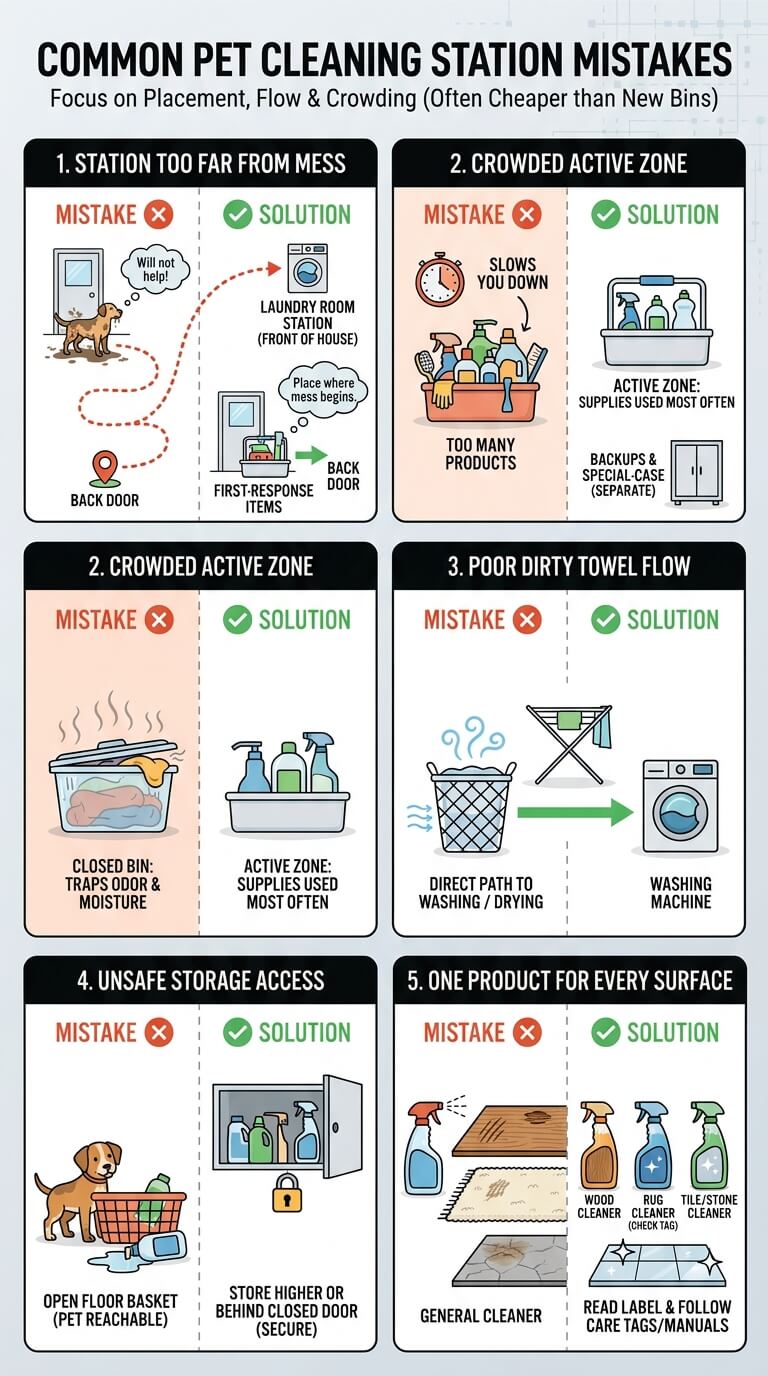
Most station problems come from placement, crowding, and missing dirty-item flow. Correcting those issues is usually cheaper than buying more bins.
Making the station too far from the mess
If the dog enters through the back door, a beautiful laundry room station at the front of the house will not help. Place the first-response items where the mess begins, even if backup supplies live elsewhere.
Keeping too many products in the active zone
A crowded caddy slows you down and increases the chance of grabbing the wrong bottle. Keep the active zone limited to the supplies used most often. Store backups and special-case products separately.
Forgetting dirty towel flow
Dirty towels need a place to dry or a direct path to washing. Closed bins can trap odor and moisture. If towels pile up, reduce the number in the active station and improve the hamper route.
Storing cleaners where pets can reach them
Open floor baskets are fine for clean towels, but not for products a pet can chew, spill, or lick. Store cleaners higher, behind a closed door, or in a secure container. Recheck this rule when adding new puppies, kittens, or visiting children to the home.
Using one product on every surface
A cleaner that works on tile may not be right for wood, wool rugs, upholstery, or stone. Read the label and test where appropriate. When a surface has a care manual, warranty, or care tag, follow that before relying on a general pet mess product.
Edge Cases and When to Escalate
A pet cleaning station supports everyday messes. It is not a substitute for medical advice, emergency help, mold remediation, pest control, or professional surface care when a problem is severe or keeps returning.
Strong odors that keep returning
Odors that come back after cleaning may be deeper than the surface. Check carpets, rug pads, baseboards, litter mats, crate trays, bedding, and nearby vents. If an odor remains strong or spreads, stop adding products and identify the affected material before repeating the same cleaner.
Wet flooring, moisture, or possible mold concerns
Persistent dampness around a station needs attention. Lift mats, check under trays, dry the floor, and improve airflow. Moisture and ventilation affect indoor spaces, especially where wet towels and cleanup water are common: EPA indoor air quality information.
Delicate upholstery or specialty rugs
Silk, wool, vintage rugs, leather, suede, and specialty upholstery should not be treated like washable mats. Check care tags and manufacturer directions first. When dyes bleed, fibers distort, or the stain is old and large, professional cleaning is safer than repeated scrubbing.
Health symptoms, ingestion, or chemical exposure concerns
If a pet or person may have swallowed, inhaled, or contacted a cleaning product and symptoms appear, stop the cleanup and seek appropriate help. Keep the product container available so the label information can be checked. Do not try to solve exposure concerns with home organization steps.
Adjacent Pet Organization Issues
A station works best when nearby pet categories support cleanup instead of adding clutter.
Safe storage for pet cleaning supplies
The station should not hold every cleaner. Keep risky or backup products in a safer storage area with readable labels and product separation. The station should hold active tools and direct cleanup supplies, while the storage area holds refills and products that need tighter control.
Leash and towel entryway organization
If the station sits by the door, separate leashes from damp towels. Leashes need quick grab access, while towels need drying and laundry flow. Shared hooks often become messy, so give each category a defined spot.
Cat litter storage and refill zones
Litter refills should stay dry, sealed, and separate from sprays or dirty tools. Keep a small cleanup kit near the litter area, but store bulk litter where it will not crowd the cat’s path or absorb moisture.
Whole-home pet supply organization
The cleaning station is one zone in a larger system that may also include food, toys, grooming tools, walking gear, medications, records, and travel supplies. Keep the station focused on mess response so it does not turn into another general storage pile.
Pet Cleaning Station FAQ
These answers cover common setup choices after a few real cleanups at home.
What should be in a pet cleaning station?
A basic pet cleaning station should include washable towels, gloves, waste bags, a brush or small broom, a washable mat, a dirty-towel route, and a surface-appropriate cleaner stored safely. Add grooming, litter, or travel items only if those messes happen often there.
Where is the best place for a dog paw cleaning station?
The best place is the door your dog actually uses after walks or yard time. Choose a spot with washable flooring, towel access, and enough room for the dog to pause. If that door has carpet, add a washable mat or tray and keep wet supplies off the floor.
Can a pet cleaning station work in an apartment?
Yes. Apartment stations usually work best as a compact caddy plus a foldable mat, towels, bags, gloves, and one cleaner approved for the unit’s surfaces. Store the caddy on a shelf or in a closet, and move dirty towels to laundry quickly.
Should cleaners stay in the cleaning station?
Some cleaners can stay nearby if they are closed, labeled, and out of pet and child reach. Higher-risk products, backups, concentrates, or products with strict storage directions should stay higher, locked, or in a separate cabinet. The active station should not become an open chemical basket.
How do you keep dirty towels from piling up?
Limit the number of towels in the station, add a dedicated hamper or wet bag, and wash pet towels on a predictable schedule. Hang damp towels only long enough to dry before laundry. If the pile keeps growing, the station probably needs fewer active towels and a closer laundry route.
Final Thoughts
A pet cleaning station works when it matches the mess your home actually has. Start with the main problem, choose the safest reachable location, separate clean and dirty zones, keep products labeled and out of reach, and reset the station after use. It is a practical setup that makes the next muddy walk, litter spill, grooming session, or small accident easier to handle without turning the whole house into a supply hunt.

Ethan Carter is the Founder & Editor of HomeCleanSecrets. Based in the United States, he has 5 years of experience creating practical home cleaning, laundry care, stain removal, decluttering, and home organization content. His goal is to help everyday households clean smarter and build simple routines that are easier to maintain.
Read more about Ethan Carter on his author page: https://homecleansecrets.com/ethan-carter/