

Shoes can make a closet feel messy faster than almost any other category. They sit on the floor, collect dust from outside surfaces, vary in height, and rarely fit neatly into the same storage shape. A closet shoe system works when each pair has a realistic home, active pairs stay easy to reach, and storage does not steal space from daily clothing.

This guide focuses on shoes stored inside a bedroom or clothing closet: sneakers, dress shoes, heels, boots, sandals, shared closets, small reach-in closets, racks, shelves, over-door limits, and seasonal rotation. It does not cover entryway shoe drop zones or a full small closet reset.
Shoe storage should not be treated as a separate problem from the rest of the closet. For a complete setup, match this system with the closet organization and clothing storage guide.
In a tight closet, shoes can use up the most valuable floor space. If your closet is small overall, organize a small closet first so your shoe system fits the full layout.
Quick Answer: The Best Closet Shoe System
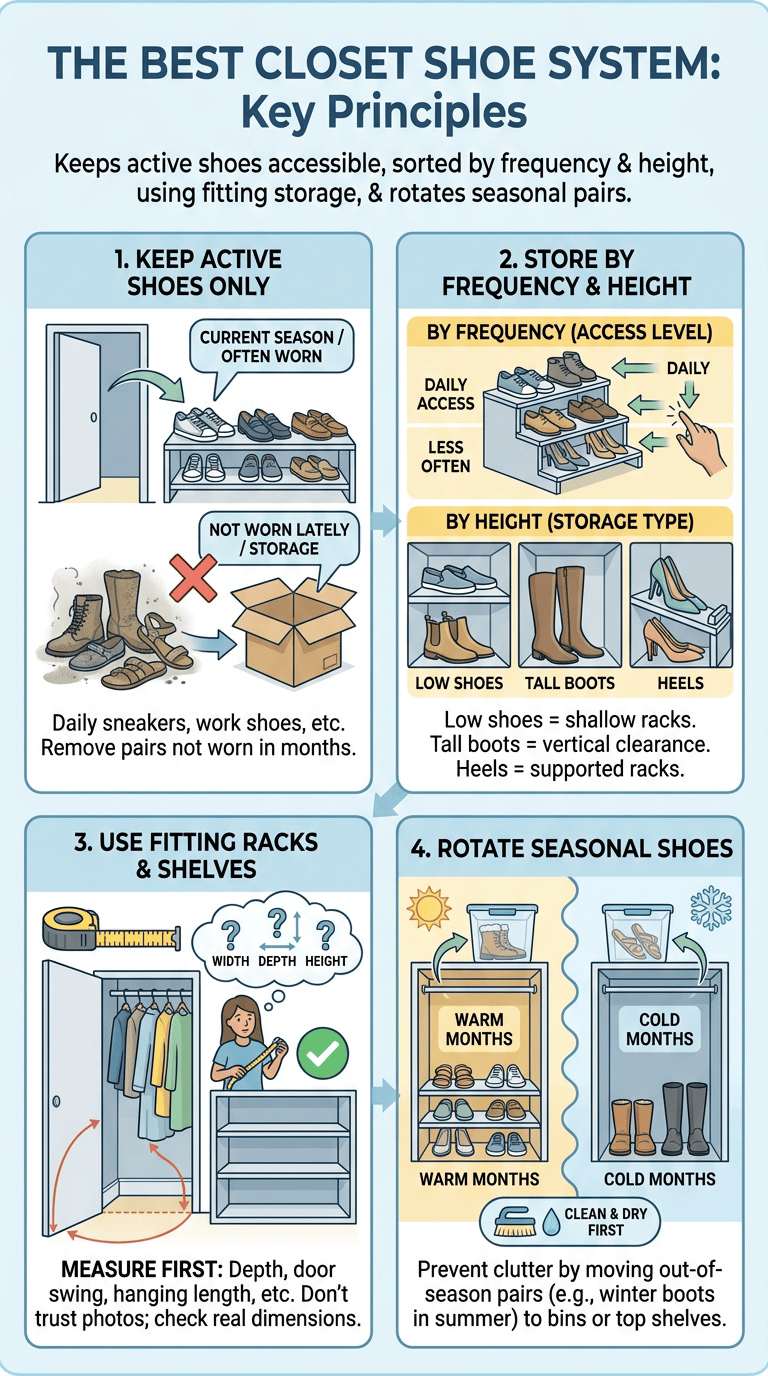
The best closet shoe system keeps active shoes in the closet, sorts pairs by frequency and height, uses racks or shelves that actually fit the closet depth, and moves seasonal or occasion pairs out of the daily access zone. A good test: you can choose, remove, and return one pair without lifting three others first.
Keep only active shoes in the closet
Active shoes are the pairs you wear during the current season or reach for often enough to justify prime space. This usually includes daily sneakers, work shoes, one or two dress pairs, exercise shoes, and weather-specific shoes that are currently in use. If a pair has not been worn in months and is not tied to a clear event, it should not sit in the main closet shoe zone.
Store by frequency and shoe height
Frequency decides access level. Height decides storage type. Low daily shoes can sit on shallow racks, low shelves, or a clear floor row. Tall boots need vertical clearance so shafts do not fold and crack. Heels often need a shelf or angled rack that supports the heel shape. Sorting by both factors prevents one tall pair from ruining an otherwise neat row.
Use racks or shelves that fit the closet depth
Measure before buying anything. Closet depth, door swing, hanging clothing length, baseboards, and sliding door tracks all affect whether a shoe rack will work. Product photos often show open space around the rack, but a real closet may be tighter. Check width, depth, height, weight limit, and assembly requirements before buying.
Rotate seasonal shoes out when needed
Seasonal rotation keeps the active shoe area from becoming storage for every climate and every vacation plan. In warm months, winter boots may move to a labeled bin or top shelf. In cold months, summer sandals can leave the floor zone. Rotate only clean, dry shoes, and avoid sealing damp footwear into closed containers.
Before You Buy a Shoe Rack: Audit the Shoes

A shoe audit prevents buying storage for pairs you do not want to keep. Put every closet shoe pair in one visible place, match left and right shoes, and sort by use before measuring.
Daily shoes
Daily shoes deserve the easiest reach. These are the pairs used for work, errands, school drop-off, exercise, or regular routines. Give them a front-row spot or the most accessible shelf. Keep the count tight enough that each pair can sit side by side. When daily shoes are stacked or hidden, the closet usually returns to a floor pile within a week.
work and dress shoes
Work and dress shoes need access, but not always daily access. Keep the pairs you use each week near the active zone. Occasion-only dress shoes can move higher, farther back, or into labeled backup storage. Check each pair for worn heel caps, scuffed toes, missing inserts, or uncomfortable fit before giving it a permanent spot.

boots
Boots are not just taller shoes. They need enough height to stand without pressure, and some materials need gentle support inside the shaft. Tall boots can use boot shapers, rolled clean fabric, or a dedicated boot rack. Short boots can sit on a lower shelf if the shelf height allows easy removal. Stop stacking boots sideways if the shape is already creasing.
seasonal shoes
Seasonal shoes include snow boots, rain boots, sandals, hiking shoes, vacation shoes, and specialty footwear tied to weather or activities. These pairs should not crowd the daily closet if they are not being used now. Keep them together so a future seasonal swap is fast. Labeling by season works better than spreading them across several boxes.
Seasonal footwear does not need to stay in your daily closet year-round. Store it with the same logic you use to store seasonal clothes, keeping only current shoes easy to reach.
damaged or uncomfortable shoes
Damaged shoes need a decision before they go back. Make a repair pile for pairs worth fixing, a donation pile for wearable pairs you no longer use, and a discard pile for shoes with broken soles, unsafe traction, or interior damage. If uncomfortable shoes hurt every time, they are stealing space from pairs you actually wear.

Choose the Right Closet Zone for Shoes
Shoes can live on the floor, on low shelves, along a side wall, on a door organizer, or on a high shelf for occasional pairs. The right zone depends on the closet structure, the way the door opens, and whether shoes interfere with hanging clothes.

Floor zone
The floor zone is the simplest choice for daily shoes, but it needs boundaries. Use one row, one rack, or one tray-size footprint. Do not let the floor become a loose holding area for every pair. Leave enough open space to vacuum, reach storage bins, or stand in front of the closet. If hanging clothes touch dirty soles, the floor zone is too crowded or too high.
low shelf zone
A low shelf works well when shoes need to stay visible but off the floor. Shelves make it easier to separate sneakers, heels, and dress shoes from dust. They also protect the closet floor from becoming a search zone. Check shelf height before assigning boots or high-top sneakers. A shelf that is too low can crush the shoe shape and make removal annoying.
side-wall zone
Side-wall storage can help in a walk-in closet or a wider reach-in closet. Narrow shelves, slim cubbies, or side-mounted racks can hold occasional shoes without blocking the main clothing rod. Measure the walking path and door clearance first. A side-wall rack that looks tidy when empty can become annoying if it narrows the closet too much.

door storage limits
Over-door organizers can be useful in rental closets and small spaces, but they have limits. They may prevent doors from closing smoothly, rub paint, strain hinges, or make a sliding door impossible to use. Lightweight sandals, flats, and soft shoes usually work better than heavy boots. Before using door storage, check the door type, hook thickness, and whether the organizer swings into clothing.
top shelf for occasional pairs
Top shelves are best for pairs used a few times a year, not shoes needed on rushed mornings. Store occasional pairs in labeled boxes, clear bins, or dust bags that are easy to identify from below. Keep heavy footwear lower when possible. If you need a stool every time you wear a pair, that pair should not be part of the daily shoe zone.
Shoe Storage Options by Closet Type
Closet type matters more than the style of shoe rack. A solution that works in a walk-in closet may block a reach-in closet, while an over-door organizer that helps a renter may be wrong for heavy boots or sliding doors.

Small reach-in closet
A small reach-in closet needs a tight shoe boundary. Choose a low rack under short hanging clothes, a narrow shelf, or a small row of clear boxes. Avoid deep cubbies that force shoes into two hidden rows. When space is tight, the closet should hold the current rotation only. Off-season pairs and special occasion shoes usually need a different location.
closet with shelves
Closets with shelves can store shoes neatly when shelf spacing matches shoe height. Put daily pairs on the easiest shelf, occasional pairs above, and boots where height is available. Use clear labels if boxes hide the shoe type. A shelf full of unworn shoes is just a neater version of clutter.
walk-in closet
A walk-in closet can handle more shoe zones, but extra space can hide excess. Create one active area, one dress or occasion area, and one seasonal area. Keep the floor path clear. If you add tall shelves or freestanding units, follow the product instructions and use stable furniture in a way that matches safety guidance.
Freestanding shoe towers, bookcase-style shelves, and tall storage units should not be treated as harmless just because shoes are light. The CPSC Anchor It guidance explains the importance of securing furniture and storage pieces that can tip, especially in homes with children.
shared closet
A shared closet needs visible boundaries by person and shoe type. Give each person a section, shelf, or rack level. Keep shared pairs, such as guest slippers or weather boots, in a separate zone so they do not get blamed on one person. A good shared system makes ownership obvious without requiring perfect habits from everyone in the household.
A shoe system only works if it is easy to maintain. The goal is to keep clothes organized and keep the closet floor from becoming the first messy zone again.
rental closet with no drilling
Rental closets often require no-drill storage. Look for freestanding racks, tension-based systems, shelf inserts, or over-door options that do not damage surfaces. Measure door clearance and floor trim before buying. Keep receipts until the rack is tested in the actual closet. Avoid heavy permanent systems if the lease or wall material does not support them.
Organize Shoes by Type and Access Frequency
After choosing the closet zone, sort the shoes by how often you wear them and what shape they need to keep. This makes the storage feel natural instead of forcing every pair into the same container.
Sneakers and daily shoes
Sneakers and daily shoes usually belong in the most visible spot. Keep them paired toe-to-heel or side by side, depending on shelf depth. If the pair is worn after workouts or in wet weather, let it dry before returning it to a closed area. A removable tray can help catch grit without making the whole closet look like an entryway.
heels and dress shoes
Heels and dress shoes need support that does not bend straps, crush toes, or hide delicate finishes. Shelves often work better than deep bins. Keep heel pairs together and leave a little space around shoes with embellishments or soft uppers. If a pair is only for events, place it higher or farther back than daily work shoes.
boots
Boots need vertical planning. Tall boots may need shapers or upright storage. Ankle boots need shelf height and enough front clearance to pull them out. Rain or snow boots should be clean and dry before entering the closet. If boots still carry grit, keep them on a washable mat until they are ready for storage.
sandals
Sandals can be easy to lose because many pairs are flat, flexible, and similar in color. Use a shallow bin, shelf section, or door pocket for active sandals. Keep the most-used pairs at the front. Avoid cramming thin straps into packed bins, because the pair you want will drag three others out with it.
special occasion shoes
Special occasion shoes should be protected but not over-prioritized. Dust bags, labeled boxes, or a high shelf can work well. Add a small note if the shoes need heel repair, new inserts, or cleaning before the next event. That note prevents last-minute surprises, especially for weddings, formal events, or shoes that match a specific outfit.
Keep Shoes from Taking Over Clothing Space
Shoes should support the closet, not consume it. Set limits before the storage is full, protect clothing from dirty soles, and decide which pairs belong somewhere else entirely.
Set a pair limit
A pair limit keeps the shoe zone honest. Count the space, not the fantasy version of the closet. If the rack holds twelve pairs comfortably, twelve is the active limit. Extra shoes must earn a spot by replacing another pair or moving to seasonal storage. The limit should match the closet, the household, and the real dressing routine.
protect hanging clothes from dirty soles
Hanging clothes and shoe soles need separation. Short hanging clothes can sit above a low shoe rack, but long dresses, coats, or pants should not brush the shoes. Use a lower shelf, a mat, or a different zone if fabric touches soles. Shoes worn outdoors should be dry and free of loose dirt before they return to a closet with clean clothing.
keep floor access clear
Clear floor access makes a closet safer and easier to maintain. You should be able to reach a shoe row, vacuum, and open bins without stepping on pairs. If shoes block hamper access, storage drawers, or sliding doors, the layout is not working. Move the least-used pairs first rather than squeezing the daily pairs tighter.
decide what belongs near the door instead
Some shoes do not belong in the bedroom closet. Muddy garden shoes, wet rain boots, kids school shoes, and quick errand shoes may work better near the door, mudroom, garage, or laundry area. Keep that decision separate from closet organization. The closet should hold clean or dry pairs that fit the clothing storage role.
Seasonal Shoe Rotation
A seasonal shoe rotation protects closet space and makes the active area easier to use. The goal is to keep the current season visible while storing other pairs in a clean, labeled, recoverable way.
Winter boots
Winter boots take more space than most footwear, so they should leave the daily area when the season ends. Clean off salt, grit, and soil according to the care instructions for the material. Let boots dry fully before storage. Damp closets and sealed damp footwear can create bigger indoor moisture problems, and the EPA mold and moisture guide emphasizes moisture control as a key home maintenance step.
summer sandals
Summer sandals are usually easier to store because they are flat, but they still need pairing and protection from being bent. Sort sandals by current use, vacation use, and worn-out condition. Keep the pairs you actually wear in a shallow bin or low shelf during warm months. Move extras out before the sandal bin becomes a tangled strap pile.
occasion shoes
Occasion shoes can rotate by event season instead of weather season. Wedding shoes, formal heels, polished dress shoes, and holiday shoes may only need easy access a few times a year. Store them clean, paired, and labeled. Keep any matching accessories nearby only if they do not turn the shoe box into a mixed storage bin.
labeled backup storage
Backup storage should be specific enough to be useful. Labels like winter boots, summer sandals, formal shoes, or hiking shoes work better than a vague label that says shoes. Use clear boxes, breathable bags, or bins that match the material and location. Leather and suede need more care than rubber sandals, so avoid sealing sensitive materials in plastic without checking care guidance.
Leather and suede can be sensitive to heat, humidity, and poor air circulation. Iowa State University Extension leather care guidance notes that leather should not be stored in plastic bags and should be kept in a cool, ventilated area, which helps when choosing between boxes, bags, and open shelves.
Mistakes to Avoid with Closet Shoe Storage
Most closet shoe mistakes happen before the shoes are placed. They come from skipping measurements, hiding too many pairs, returning damp shoes, or trying to keep every pair active at the same time.
Buying racks before measuring depth
A shoe rack can be the right product and still be wrong for the closet. Measure the inside width, depth, shelf height, rod clearance, and door movement. Include the shoes themselves in the measurement. Boots, large sneakers, and high heels may extend beyond the rack footprint. Product dimensions matter more than the number of pairs shown in a marketing photo, and Consumer Reports closet organizer testing is a useful reminder that closet systems can vary in assembly time, fit, and performance.
stacking shoes too deep
Deep stacks hide pairs and make the front row do all the work. If you must use boxes, choose visible labels or clear fronts. Avoid two or three rows of loose shoes on a shelf unless the back row is truly occasional. The more layers a pair sits behind, the less likely it is to be worn or returned correctly.
storing damp shoes with clothes
Damp shoes should not go straight into a closet with clean clothing. Let wet shoes air out in a suitable spot first, away from direct heat if the material can be damaged. Check care instructions before using cleaners, conditioners, or drying methods. A closet is a storage zone, not a drying station for footwear that still carries moisture.
keeping every pair in the active closet
Keeping every pair active makes the closet harder to use. Daily shoes, dress shoes, boots, sandals, hobby footwear, and old backup pairs start competing for one floor. Move specialty, seasonal, and uncertain pairs out of the main zone. If you miss a pair, you can rotate it back in. If you never miss it, the closet has given you useful information.
Maintenance Routine for Closet Shoes

A closet shoe system only stays organized when return habits are simple. Use a short weekly reset, a monthly condition check, a seasonal swap, and a clear repair or donation decision point.
Weekly pair reset
Once a week, match pairs, return shoes to their assigned row, and remove anything that belongs near the door, in the car, or in another room. Wipe loose grit from the floor or tray. This should take a few minutes. If it takes longer, the active shoe limit is too high or the storage location is too hard to use.
monthly wipe-down and condition check
Once a month, check the pairs you wear most. Look for worn soles, loose stitching, salt marks, broken straps, stretched backs, or damaged insoles. Wipe shelves and mats according to the material. When using cleaners, sprays, or conditioners, read product labels and shoe care instructions first. Do not use a cleaner just because it worked on a different shoe.
seasonal shoe swap
At the start of each season, bring forward the pairs you will use now and move the previous season out. This is the right time to check whether boots, sandals, or dress shoes still fit and still match your life. Seasonal swaps keep the closet from carrying a full year of footwear in the daily access zone.
donation and repair checkpoint
Keep one small repair or donation boundary. A bag, box, or shelf spot is enough. When a pair needs fixing, decide whether it is worth the cost and effort. When a pair is wearable but unused, move it to donation instead of letting it linger in the rack.

FAQ
These answers focus on shoes stored inside a bedroom or clothing closet, not entryway shoe drops or whole-closet clothing layouts.
What is the best way to organize shoes in a closet?
The best way is to keep only active shoes in the closet, sort them by type and frequency, give each pair a visible home, and rotate seasonal shoes out when they are not in use. Start with a shoe audit before buying racks. Then choose a floor, shelf, side-wall, or door solution that fits the closet dimensions and does not block clothing.
Should shoes go on the closet floor or shelves?
Either can work. The closet floor is fine for a small row of daily shoes when it stays clear and easy to clean. Shelves are better when you want visibility, separation from clothing, or space for dress shoes. Avoid loose floor piles, deep stacks, and shelves that crush tall shoes or hide the back row.
How do I organize shoes in a small closet?
Use the closet for current active pairs only, then pick one compact storage method. A low rack under short hanging clothes, a narrow shelf, or a small set of clear boxes can work. Move off-season shoes, rarely worn dress shoes, and specialty footwear elsewhere so the small closet does not become year-round shoe storage.
How should boots be stored in a closet?
Store boots upright when possible, with enough height so the shafts are not crushed. Use boot shapers, rolled clean fabric, or a boot rack for tall pairs. Keep wet, muddy, or salty boots out of the closet until they are cleaned and dry. Seasonal boots should move to labeled storage when they are not being used.
How many shoes should stay in an active closet?
The right number is the number your closet can hold without stacking, hiding, or blocking access. Count the rack, shelf, or floor space, then set that as the active limit. Many people do better with daily shoes, work shoes, exercise shoes, one or two dress pairs, and current weather shoes in the main zone, with extras stored elsewhere.
Final Thoughts
Closet shoe organization works best when it starts with the pairs, not the rack. Audit what you own, keep only active pairs in the main closet zone, measure before buying storage, and give boots, heels, sandals, sneakers, and occasion shoes the space their shape requires. Once the daily area is visible and limited, the routine becomes simple: return pairs weekly, check condition monthly, and rotate by season.

Ethan Carter is the Founder & Editor of HomeCleanSecrets. Based in the United States, he has 5 years of experience creating practical home cleaning, laundry care, stain removal, decluttering, and home organization content. His goal is to help everyday households clean smarter and build simple routines that are easier to maintain.
Read more about Ethan Carter on his author page: https://homecleansecrets.com/ethan-carter/