
A home cleaning schedule guide should make your home easier to manage, not turn cleaning into another job you dread. The most useful schedule is not the longest one. It is the one that separates small daily resets from weekly room care, monthly detail work, seasonal resets, and moving-specific cleaning. Once those layers are clear, you can stop asking, “What should I clean today?” and start following a simple rhythm that fits your home.

This guide gives you the framework for building that rhythm. You will learn how to sort tasks by frequency, choose the right schedule type, protect high-use rooms, avoid over-cleaning low-risk areas, and decide when a separate checklist makes more sense. Use it as the planning page for your whole cleaning routine. The goal is a home that feels maintained without expecting you to clean everything, every day.
Quick Answer: The Best Home Cleaning Schedule
The best home cleaning schedule has five layers: quick daily resets, weekly room cleaning, monthly detail work, seasonal deep resets, and move-in or move-out cleaning when the home is empty. A good schedule also has a minimum version for busy weeks, so one missed day does not collapse the whole routine.
The frequency framework: daily, weekly, monthly, seasonal, and moving
Think of cleaning frequency as a filter. Daily tasks stop mess from spreading. Weekly tasks keep rooms usable and comfortable. Monthly tasks catch dust, odor, grime, appliance residue, and storage drift that build slowly. Seasonal tasks reset the areas that are too big for normal maintenance. Moving tasks use empty-home access before furniture and boxes get in the way. An annual home cleaning calendar can spread seasonal and yearly jobs across twelve manageable months.
A useful test is to ask what happens if a task waits. If waiting one day creates odor, pests, stains, wet fabric, food residue, or blocked surfaces, it belongs in the daily layer. If waiting one week makes the room feel dirty but not damaged, it likely belongs in the weekly layer. If waiting one month only creates slow buildup, it is a monthly task. If a task needs open windows, moved furniture, or a full room reset, it probably belongs in seasonal cleaning.
The simplest schedule for most homes
Most homes can start with a simple structure: reset the kitchen and visible clutter daily, clean bathrooms and floors weekly, handle dust and appliance details monthly, and plan a seasonal reset two to four times a year. This is enough for many households because it puts the right work in the right place. You are not scrubbing baseboards every week, but you are also not leaving wet towels, dishes, and trash to become bigger problems.
For a related walkthrough, see our guide to move-out cleaning checklist.
For a related walkthrough, see our guide to move-in cleaning checklist.
Begin with a realistic base plan. Daily cleaning can be 10 to 20 minutes. Weekly cleaning can be divided across several short sessions or one longer block. Monthly cleaning can be split by week, such as appliances during week one, soft surfaces during week two, hidden dust during week three, and storage areas during week four. Seasonal cleaning can be planned by room so it does not take over your whole weekend.
What this guide covers and what the cluster articles cover
This guide helps you choose the right schedule and understand how the pieces fit together. It does not try to give every detailed checklist for every situation in one place. Daily, weekly, monthly, spring, move-in, and move-out cleaning each deserve their own focused plan because the order, time pressure, and priorities are different. For the broader order of work, supplies, room priorities, and safety limits, start with the complete home cleaning guide.
Use this page when you are setting up your overall routine or deciding which type of checklist you need next. Once you know your situation, a focused checklist can give you the exact task order. That keeps this guide practical without becoming a long list that mixes daily crumbs, seasonal windows, and moving-day cabinet cleaning into one overwhelming plan.
For a related walkthrough, see our guide to weekly cleaning schedule for busy people.
For a related walkthrough, see our guide to monthly home cleaning checklist.
For a related walkthrough, see our guide to daily cleaning checklist for a tidy home.
Start With Your Home, Not a Perfect Template
A copied schedule often fails because it assumes the same household size, floor type, pets, cooking habits, storage space, and free time. Before assigning tasks to days, look at how your home actually gets dirty. A small apartment with one person who cooks lightly needs a different rhythm from a family home with pets, school bags, sports gear, and heavy kitchen use.
Map your home zones
Write down the zones you maintain. Most homes have a kitchen, bathrooms, bedrooms, living areas, entryways, floors, laundry, storage areas, and outdoor-adjacent spots such as a mudroom, porch, or garage entry. Do not start with tasks yet. Start with zones because zones show where mess starts, where it spreads, and where cleaning time matters most.
Next to each zone, note whether it is high-use, medium-use, or low-use. The kitchen and main bathroom are usually high-use. Guest rooms, formal dining rooms, and storage closets may be low-use. A home office may be high-use even if it does not look messy because dust, cups, paper, and trash can build quietly. This simple map stops you from giving every room the same amount of attention. When the main problem is deciding what belongs in each space, use a room-by-room cleaning checklist.
Identify high-use rooms and high-risk messes
High-use rooms need more frequent resets because mess returns quickly. High-risk messes need faster attention because they can cause odor, stains, moisture issues, pests, or safety problems. Food crumbs, sticky spills, trash, damp towels, pet accidents, wet bath mats, greasy stove areas, and cluttered walkways should not wait for a monthly plan.
Check the signs instead of guessing. A kitchen that smells stale in the morning needs a stronger evening reset. A bathroom with damp corners needs better ventilation and faster towel management. An entryway with shoes and bags in the walking path needs a daily drop-zone habit. When the same mess keeps returning, the schedule should change before you blame yourself for not cleaning enough.
Separate maintenance cleaning from deep cleaning
Maintenance cleaning keeps the home functioning. It includes washing dishes, wiping food-contact areas, taking out trash, refreshing bathroom surfaces, vacuuming traffic paths, and putting everyday items back where they belong. Deep cleaning handles the slower work, such as washing windows, moving furniture, cleaning vents, wiping cabinet fronts, washing curtains, or addressing neglected corners.
Mixing these two categories is one of the fastest ways to make a schedule feel impossible. If your daily list includes baseboards, windows, oven interiors, grout detail, and every floor in the home, it will fail on normal days. Keep daily work small, weekly work steady, and deeper work planned. The schedule should protect your energy as much as it protects the home.
Create a minimum version and a full version
Every cleaning schedule needs two versions. The full version is what you do when the week is normal. The minimum version is what you do when work runs late, someone gets sick, guests leave, travel interrupts the routine, or your energy is low. A minimum version might be dishes, trash, counters, bathroom touchpoints, one laundry load, and clear walking paths.
The minimum version matters because it prevents restart friction. A schedule that only works on perfect weeks is not a real system. A good test is this: if you had only 15 minutes tonight, which tasks would keep tomorrow from feeling worse? Those tasks are your minimum plan. Everything else can return when the week settles.
Cleaning Schedule Decision Tree
Choosing the right schedule is easier when you start with the problem you are trying to solve. A home cleaning routine for busy weekdays should not look like a spring reset. A move-in clean should not look like a regular weekly clean. Use the decision points below to choose the right starting place.
If your home gets messy during busy weekdays
Choose a weekly schedule with short task blocks. Split work by room or task type so you are not saving everything for one exhausting day. One night can handle bathrooms, another can handle floors, another can handle laundry and bedrooms. The purpose is not to clean constantly. It is to stop the week from building into a weekend marathon.
The best check is how your home feels by Thursday. If dishes, laundry, and clutter are already out of control by then, your weekly plan needs smaller midweek resets. Add one short kitchen reset, one laundry checkpoint, and one floor-path cleanup before the weekend arrives.
If you need a quick daily reset
Choose a daily checklist when the home looks messy every evening even though you cleaned recently. Daily cleaning should focus on visible and fast-spreading mess: dishes, counters, trash, damp towels, clutter piles, pet areas, and the main walking paths. It should not include every room detail.
A good daily reset ends with the home easier to use tomorrow morning. You should be able to make breakfast, use the bathroom, find the sofa, walk through the entry, and avoid stale odors. If the list takes more than 20 minutes most days, move some tasks into the weekly layer.
If dust, odor, or buildup keeps returning
Choose a monthly cleaning checklist when the problem is not daily mess but slow buildup. This includes dusty vents, stale soft furnishings, sticky appliance edges, neglected trash cans, buildup around cabinet pulls, dusty baseboards, under-sink clutter, and storage areas that quietly drift out of order.
Look for repeat signs. Dust returns quickly after surface wiping. A room smells closed up even after trash is removed. Floors feel gritty along edges, not just in traffic paths. Appliance handles feel sticky. These are monthly signals, not daily failures. Assign them to a rotating monthly plan so they stop surprising you.
If you are preparing for a seasonal reset
Choose a seasonal or spring cleaning plan when the work needs more access, more time, or a room-by-room reset. Seasonal work often includes windows, textiles, hidden dust, storage reviews, furniture movement, high shelves, and areas affected by winter moisture or closed-window months. Trying to fit all of this into a weekly plan usually makes the weekly plan too heavy.
Start seasonal cleaning with decluttering and access. You cannot clean the back of a closet, the area behind furniture, or the top of storage shelves efficiently if everything is still packed in front of it. Work room by room and finish floors last.
If you are moving in or moving out
Choose a move-in checklist before unpacking and a move-out checklist after belongings are removed. These schedules are different because the home is either empty or becoming empty. Empty rooms give you access to cabinets, closets, baseboards, floors, appliance spaces, and hidden corners that are harder to reach later.
Stop and document concerns before heavy cleaning if you see stains, damage, leaks, pest signs, or strong odors in a rental or newly purchased home. Cleaning can remove clues you may need for a landlord, property manager, seller, or repair professional. Once documentation is handled, clean fixed surfaces, food-storage areas, bathrooms, floors, and touchpoints in a clear order.
Cleaning Tasks by Frequency
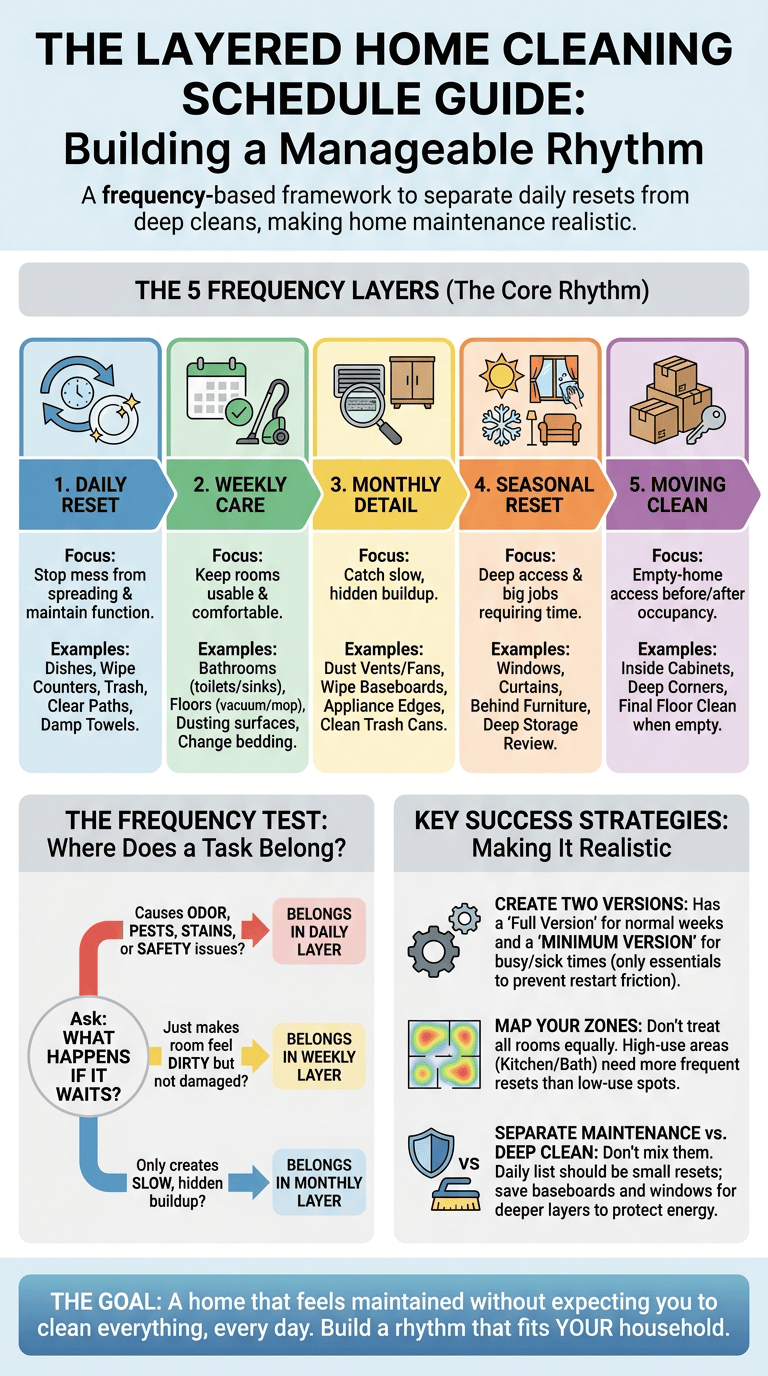
A frequency-based schedule keeps tasks from competing with each other. You do not need to decide from scratch every day. You only need to know which tasks belong to today’s level of cleaning.
Daily reset tasks that prevent bigger messes
Daily tasks should be small, visible, and high-impact. Wash or load dishes, wipe food residue from counters, clear the sink, take out trash when needed, hang towels so they dry, pick up visible clutter, deal with spills, and reset the main walking paths. These tasks prevent odor, sticky surfaces, moisture, and frustration.
Cleaning and disinfecting are not the same thing. Cleaning removes dirt and many germs from surfaces, while disinfecting uses products designed to kill germs when label directions are followed. The CDC guidance on cleaning and disinfecting at home is a useful reference when you are deciding whether a normal clean is enough or whether a surface needs disinfecting after illness, raw food handling, or body-fluid contact.
Weekly room cleaning that keeps the home usable
Weekly cleaning handles the rooms that collect normal use. Bathrooms usually need toilets, sinks, mirrors, counters, showers or tubs, and floors. Kitchens need appliance fronts, stove areas, sink edges, cabinet touchpoints, and floors. Living areas and bedrooms need dusting, vacuuming or sweeping, trash removal, laundry movement, and clutter resets.
Weekly work can be organized by day, by room, or by task type. Room-based plans feel satisfying because one space looks done. Task-based plans can be faster because you vacuum multiple rooms at once or wipe all mirrors in one pass. Choose the style that lowers resistance. The best schedule is the one you can restart after a bad week.
Monthly detail cleaning that catches slow buildup
Monthly cleaning protects the areas that are easy to ignore. Clean trash cans, wipe cabinet fronts, dust vents and ceiling fan blades, vacuum upholstery, check under sinks, clean appliance edges, wipe baseboards in high-traffic rooms, refresh storage areas, and look for moisture clues around plumbing and windows.
Split monthly work across the month instead of turning it into one large event. One week can focus on kitchen details, the next on bathrooms and laundry, the next on soft surfaces and dust, and the final week on storage and entry areas. This keeps monthly cleaning realistic while still giving slow-buildup tasks a place to live.
Seasonal and spring cleaning for deeper resets
Seasonal cleaning is the reset layer. It is the time to wash curtains if the fabric care label allows it, clean window tracks, declutter storage, move furniture safely, wash or vacuum less-used textiles, clean behind large items, review expired products, and open up closed or stale rooms. Spring cleaning is the most common seasonal reset, but the same idea can work before winter, after allergy-heavy months, or before hosting season.
Do not make seasonal cleaning vague. Pick a room order and define what finished means. A finished bedroom might include decluttered surfaces, washed bedding, dusted high areas, vacuumed mattress edges, cleared closet floor, wiped baseboards, and clean floors. A finished kitchen might include cabinet fronts, appliance fronts, pantry review, sink details, and floors after all higher work is done.
Move-in and move-out cleaning for empty-home access
Moving schedules are not normal maintenance schedules. Move-in cleaning happens before unpacking, so cabinets, closets, floors, bathrooms, and appliance spaces are open. Move-out cleaning happens after belongings are removed, so fixed surfaces, trash, appliance interiors, bathrooms, floors, and storage spaces can be inspected for handoff.
Use empty access wisely. Clean high surfaces before floors. Clean cabinets before adding dishes or food. Clean bathroom surfaces before placing toiletries. Finish floors after dust, crumbs, and packing debris have fallen. If time is limited, prioritize food storage, bathrooms, sleeping spaces, trash removal, and safe walking paths first.
Room-by-Room Scheduling Framework

Frequency tells you when to clean. Rooms tell you where to focus. Combining both gives you a schedule that is flexible without becoming vague. Use the room notes below to assign tasks to daily, weekly, monthly, and seasonal layers.
Kitchen priorities by frequency
The kitchen usually needs daily attention because food residue spreads quickly. Daily work should cover dishes, counters, sink, obvious crumbs, spills, trash, and any raw-food cleanup. Weekly work can include stove surfaces, microwave splatter, appliance fronts, cabinet touchpoints, floors, and refrigerator spot checks. Monthly work can include deeper appliance edges, trash can cleaning, pantry review, cabinet fronts, and dust along less-visible edges.
Seasonal kitchen work is about access and reset. Pull out expired pantry items, clean higher shelves, review small appliances, wipe less-used storage, and clean the areas that require more time. Stop if you find moisture under the sink, swelling cabinet material, repeated odor, or signs of pests. Those are not just cleaning problems.
Bathroom priorities by frequency
Bathrooms need a moisture-aware schedule. Daily attention can be as simple as hanging towels, letting surfaces dry, removing wet items from the floor, and wiping obvious toothpaste or soap residue. Weekly cleaning should cover toilets, sinks, counters, mirrors, tubs or showers, and floors. Monthly cleaning can include vents, cabinet interiors, grout review, shower curtain or liner checks, and under-sink organization.
Moisture should move up the schedule when it repeats. The EPA mold and moisture guidance explains why controlling moisture matters in the home. In practical terms, do not let damp towels, wet bath mats, leaking fixtures, or closed-up bathrooms sit unchanged just because the calendar says the bathroom is not due until the weekend.
Bedroom and living area priorities
Bedrooms and living areas usually need more clutter and dust management than sanitation work. Daily work can be simple: laundry into a hamper, cups returned to the kitchen, trash removed, and surfaces cleared enough to use. Weekly work can include dusting, vacuuming, bedding changes, pet-hair removal, and clearing visible piles.
Monthly work should look for the slow problems: dust along baseboards, under-bed debris, neglected upholstery, lampshades, curtains, ceiling fans, remote controls, and storage bins that have become drop zones. Seasonal work can include closet edits, textile refreshes, furniture movement, and a more complete dust reset.
Floors, entryways, laundry, and storage areas
Floors and entryways show whether the schedule is working. Daily work may only mean clearing tripping hazards and dealing with tracked-in dirt. Weekly work can include vacuuming, sweeping, mopping high-use areas, and resetting shoes, bags, mail, and pet items. Monthly work can include edges, mats, baseboards, and less-used corners.
Laundry needs a rhythm more than a deep clean. A small load cycle several times a week may work better than a full laundry day. Storage areas need less frequent but more intentional attention. Check them monthly or seasonally for moisture, pests, expired supplies, blocked access, and items that no longer belong there.
How the Cluster Checklists Fit Together
A complete home cleaning system works best when each schedule has a job. The daily layer keeps the home from sliding. The weekly layer restores rooms. The monthly layer catches slow buildup. The seasonal layer resets neglected areas. Moving checklists handle the unusual access and pressure of relocation.
When to use the daily cleaning checklist
Use a daily cleaning checklist when your main problem is everyday mess that returns fast. It should help you close the kitchen, prevent damp items from sitting, clear visible clutter, and make the next morning easier. It is not the place for long bathroom detail, full floor cleaning, window washing, or storage resets.
When to use the weekly schedule for busy people
Use a weekly schedule when the home needs steady upkeep but your weekdays are crowded. A strong weekly plan gives you options: a few small weekday blocks, a weekend reset, or a minimum version during stressful weeks. It protects bathrooms, floors, laundry, kitchen touchpoints, and clutter without pretending you have unlimited time.
When monthly cleaning deserves its own checklist
Use monthly cleaning when the problem is hidden or slow. If dust collects on vents, trash cans smell even when emptied, cabinet fronts feel sticky, upholstery smells stale, or storage areas drift out of control, daily and weekly tasks are not enough. Monthly detail work gives those tasks a predictable home.
When spring cleaning should become a room-by-room reset
Use a room-by-room spring cleaning plan when the home needs a broader reset. Seasonal cleaning works best when you declutter, clean high to low, handle textiles and storage, then finish floors. It should feel different from monthly cleaning because it uses more access, more time, and more complete room attention.
When move-in and move-out checklists are different
Move-in and move-out checklists should stay separate because the goal changes. Move-in cleaning prepares a space before daily life begins. Move-out cleaning prepares a space for handoff, inspection, listing, or key return. Both use empty-room access, but the order and priorities are not identical.
How Annual and Situation-Based Plans Fit the System
Annual and situation-based plans sit above the daily, weekly, monthly, and seasonal schedule. They help you decide when larger jobs belong on the calendar, but they should not become another routine layer that competes with everyday resets. The goal is to distribute heavier work so the regular schedule stays realistic. These plans are most useful when they clarify scope: what belongs in the normal rhythm, what belongs in a seasonal review, and what only matters because the home, lease, or life stage has changed.
Use an Annual Calendar to Distribute Seasonal Work
An annual calendar is a planning view for seasonal, quarterly, and once-a-year tasks. It can hold work such as window care, storage resets, appliance maintenance, entryway changes, filter checks, and low-use area reviews. It is not a replacement for daily or weekly cleaning. It simply gives bigger tasks a place to land before they turn into one overwhelming catch-up weekend. Keep it broad enough to guide timing without becoming a month-by-month cleaning manual.
Use an Apartment Checklist for Small-Space and Rental Constraints
An apartment checklist adapts the same cleaning rhythm to a smaller footprint. The workflow often centers on shared surfaces, compact storage, faster odor buildup, limited ventilation, and careful product use around neighbors or shared building systems. Renters also need surface-safe methods that respect lease terms, appliance instructions, flooring limits, and building rules. That makes the apartment version more about constraints and sequence than a full whole-house schedule. Product labels, surface-care instructions, and quiet shared-area habits matter more when rooms are close together.
Use a New Homeowner Checklist for the First 30 to 90 Days
A new homeowner checklist is broader than a move-in checklist. Move-in cleaning focuses on the window before unpacking, when cabinets, floors, bathrooms, and appliances are easiest to reach. A first 30 to 90 day homeowner plan extends into appliance condition, filters, vents, moisture clues, maintenance records, supply storage, and the routines that will keep the home manageable after the first busy weeks. It should help the owner notice what needs monitoring, not promise to uncover every hidden problem.
Safety, Moisture, and Product-Label Limits

A cleaning schedule should include limits, not just tasks. Some jobs need more ventilation. Some products should not be mixed. Some surfaces can be damaged by the wrong cleaner. Some moisture problems need repair, not another wipe-down.
Cleaning versus disinfecting in a schedule
Routine cleaning does not always require disinfecting. Most daily and weekly home tasks are about removing dirt, crumbs, dust, soap residue, and normal buildup. Disinfecting is more targeted and should follow product directions, especially around illness, body fluids, raw meat contact, or high-touch surfaces during certain situations.
Do not add disinfectant to every task just to make the schedule feel stronger. Overuse can waste product, damage surfaces, irritate skin or lungs, and create extra steps you will not maintain. Clean first when surfaces are visibly dirty. Disinfect only when there is a clear reason and the product label fits the surface and situation.
Moisture and ventilation tasks that should not wait
Moisture problems should outrank the calendar. A damp bath mat, wet towel pile, leaking under-sink area, condensation-heavy window, or musty closet should be handled when noticed. Waiting until the scheduled cleaning day can give odor and moisture more time to settle into materials.
Ventilation also belongs in your schedule. The EPA guidance on improving indoor air quality at home includes practical ideas such as source control and ventilation. For a cleaning routine, that means opening windows when conditions allow, using exhaust fans, reducing dust reservoirs, and not masking odors before checking what caused them.
Product labels, surface limits, and when not to improvise
Before adding a product to your schedule, check the label, the surface, and the room conditions. Stone, wood, stainless steel, painted surfaces, grout, fabric, and laminate can all react differently. A cleaner that works on a bathroom sink may be wrong for a natural stone counter or a wood floor.
Stop if a surface changes color, feels tacky, gets cloudy, or shows damage. Stop if a smell becomes harsh, if you feel irritation, or if you are unsure whether two products have been used close together. Do not mix cleaning products. If mold covers a large area, moisture keeps returning, pests are active, or a leak is suspected, the schedule should shift from cleaning to repair, inspection, or professional help.
Common Cleaning Schedule Mistakes

Most cleaning schedules fail for predictable reasons. They are too ambitious, too vague, too disconnected from the home, or too focused on appearances while ignoring moisture, odor, and access. Fixing the schedule is usually easier than trying harder.
Making every task daily
A daily list should protect the next day, not reset the whole house. When every task becomes daily, the schedule turns into punishment. Move slower tasks into weekly, monthly, or seasonal layers. Keep daily work focused on dishes, trash, spills, damp items, visible clutter, and safety paths.
Saving everything for one exhausting day
A single cleaning day can work for some households, but it often fails when the list gets too long. If the weekend clean regularly takes over the day or gets skipped because it feels too big, split the work. One bathroom session, one floor session, one laundry session, and one kitchen detail session can be easier than a full-house sprint.
Copying a schedule that does not fit your household
A schedule for a pet-free apartment will not fit a busy family home with muddy shoes, cooking, toys, and multiple bathrooms. A schedule for someone who works from home may not fit someone who travels. Copy the structure if it helps, but adjust the frequency and workload based on your real mess patterns.
Ignoring drying time, clutter, and access
Cleaning takes longer when surfaces are blocked. A good schedule includes quick clutter resets before wiping, vacuuming, or mopping. It also respects drying time. Bathrooms, floors, and textiles need air movement and time to dry. If you mop the floor before clearing crumbs or clean closets before removing excess items, you create more work than necessary.
Frequently Asked Questions
These answers help you adjust the framework without rebuilding your whole routine. Use them when you are deciding where a task belongs or why your current schedule feels too heavy.
What is a good home cleaning schedule for most homes?
A good home cleaning schedule uses daily resets for dishes, trash, spills, damp items, and visible clutter; weekly cleaning for bathrooms, floors, kitchen touchpoints, dusting, and laundry; monthly cleaning for slow buildup; and seasonal cleaning for deeper room resets. The exact days matter less than keeping each task in the right frequency layer.
How do I decide what to clean daily, weekly, or monthly?
Ask what happens if the task waits. If waiting creates odor, stains, pests, moisture, blocked surfaces, or safety issues, treat it as daily or immediate. If waiting makes a room feel dirty but not damaged, it is usually weekly. If the buildup is slow and hidden, schedule it monthly.
Should a cleaning schedule be room-based or frequency-based?
Use both. Frequency tells you how often a task needs attention. Room planning tells you where the task happens. A frequency-based plan prevents over-cleaning, while a room-based view helps you avoid missing bathrooms, entryways, storage spaces, or high-use kitchen areas.
How do I make a cleaning schedule for a busy household?
Build a minimum version first. Choose the few tasks that prevent tomorrow from feeling worse, such as dishes, trash, counters, damp towels, laundry movement, and clear walkways. Then add short weekly blocks for bathrooms, floors, bedrooms, and kitchen details. Avoid a plan that depends on one long perfect cleaning day.
What tasks belong in seasonal cleaning instead of weekly cleaning?
Seasonal cleaning is best for tasks that need extra time, moved furniture, open storage, window access, textile care, or a full room reset. Examples include window tracks, high dusting, curtains, closets, deep storage review, behind-furniture cleaning, and larger decluttering sessions. When slow buildup has moved beyond normal maintenance, switch to a deep cleaning checklist rather than overloading the weekly plan.
How often should I revise my cleaning schedule?
Review your schedule whenever your home life changes or every one to three months if the routine keeps slipping. Change the plan when work hours, school schedules, pets, guests, mobility, health needs, or room use changes. A cleaning schedule should fit the home you actually live in now.
Final Thoughts
A home cleaning schedule works best when it gives every task the right place. Daily resets protect tomorrow. Weekly cleaning keeps rooms usable. Monthly cleaning catches slow buildup. Seasonal cleaning creates a deeper reset. Moving checklists handle empty-home access and handoff needs. Start with the smallest version that keeps your home comfortable, then build only as much structure as your household can actually maintain.

Ethan Carter is the Founder & Editor of HomeCleanSecrets. Based in the United States, he has 5 years of experience creating practical home cleaning, laundry care, stain removal, decluttering, and home organization content. His goal is to help everyday households clean smarter and build simple routines that are easier to maintain.
Read more about Ethan Carter on his author page: https://homecleansecrets.com/ethan-carter/