
If you want to clean kitchen countertops by material without damaging surfaces or creating food-prep risks, start with a clear order. This guide walks through quartz, granite, marble, laminate, butcher block, tile, and stainless steel with a practical, safety-first method for readers who want the job done properly.

The advice below avoids unsupported shortcuts and keeps claims conservative. Where food safety, disinfecting, or cleaner choice matters, use product labels and trusted food-safety guidance as the final reference.
Quick Answer: The Best Way to Clean Kitchen Countertops
The best way to clean kitchen countertops by material is to follow a steady order instead of jumping between tasks. For kitchen countertops, focus on quartz, granite, marble, laminate, butcher block, tile, and stainless steel, then finish by drying or resetting the area so grime does not return right away.
Use this guide as a practical checklist. It follows the approved outline, keeps safety language conservative, and uses trusted outbound sources when the topic touches surface damage, cross-contamination, water at seams, acidic cleaner damage, and food-contact residue.
The safe method for most counters
For the safe method for most counters, keep the process simple: remove loose soil, apply the right cleaner sparingly, give it time to work, wipe or scrub gently, and dry the area before moving on.
Remove crumbs
Remove crumbs is a detail step. Use light pressure, keep the cloth or brush clean, and dry the area before moving on.
Clean with surface-safe product
Clean with surface-safe product is a detail step. Use light pressure, keep the cloth or brush clean, and dry the area before moving on.
Rinse if label requires
Rinse if label requires is a detail step. Use light pressure, keep the cloth or brush clean, and dry the area before moving on.
Dry completely
Dry completely is a detail step. Use light pressure, keep the cloth or brush clean, and dry the area before moving on.
What changes by material
The practical answer is to clean kitchen countertops in stages: remove loose mess, use a surface-safe cleaner, rinse or wipe away residue when required, dry fully, and repeat maintenance before buildup becomes stubborn.
Stone needs pH-neutral care
Stone needs pH-neutral care is a detail step. Use light pressure, keep the cloth or brush clean, and dry the area before moving on.
Wood needs moisture control
Wood needs moisture control is a detail step. Use light pressure, keep the cloth or brush clean, and dry the area before moving on.
Laminate needs seam protection
Laminate needs seam protection is a detail step. Use light pressure, keep the cloth or brush clean, and dry the area before moving on.
Stainless steel needs grain-aware wiping
Stainless steel needs grain-aware wiping is a detail step. Use light pressure, keep the cloth or brush clean, and dry the area before moving on.
What to avoid
The biggest mistakes usually come from rushing: using the wrong cleaner, skipping dry prep, letting residue sit, or cleaning in an order that creates more work. With kitchen countertops, patience protects both the surface and the result.
If you are unsure whether a cleaner, scraper, soak, or disinfectant is safe, check the product label and the appliance or surface manual. A careful pause is better than damaging a finish or leaving residue near food.
Vinegar on natural stone
Vinegar on natural stone is a detail step. Use light pressure, keep the cloth or brush clean, and dry the area before moving on.
Harsh abrasives
Harsh abrasives is a detail step. Use light pressure, keep the cloth or brush clean, and dry the area before moving on.
Excess water at seams
Excess water at seams is a detail step. Use light pressure, keep the cloth or brush clean, and dry the area before moving on.
Kitchen Countertop Safety Rules
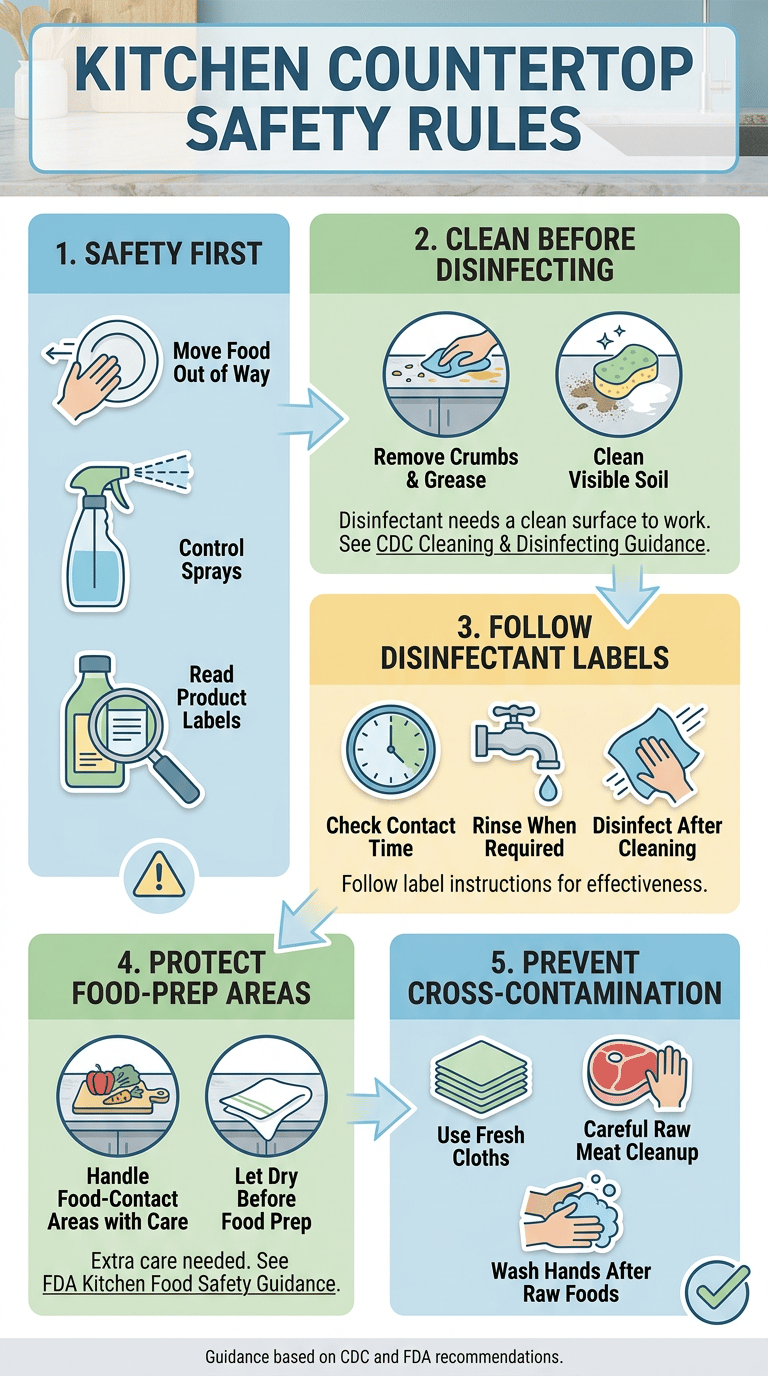
Safety comes first because kitchen countertops cleaning often happens near food, heat, water, electricity, or cleaners. Move food out of the way, keep sprays controlled, and read product labels before applying anything to a surface.
For a related walkthrough, see our guide to how to clean kitchen sink.
For a related walkthrough, see our guide to how to clean a refrigerator.
For a related walkthrough, see our guide to how to clean tile grout in kitchen.
For a related walkthrough, see our guide to how to clean a kitchen.
For food-prep and high-touch areas, clean visible soil before disinfecting. The CDC explains the difference between cleaning and disinfecting in its cleaning and disinfecting guidance, and food-contact areas should be handled with extra care.
Clean before disinfecting
Countertops need a clean-first mindset. Remove crumbs, grease, and spills before using disinfectant, then follow the label for contact time and rinsing. The CDC’s food safety basics and the FDA kitchen food safety guidance are helpful for food-prep safety.
Remove crumbs and grease first
Remove crumbs and grease first is a detail step. Use light pressure, keep the cloth or brush clean, and dry the area before moving on.
Disinfectant works on clean surfaces
Countertops need a clean-first mindset. Remove crumbs, grease, and spills before using disinfectant, then follow the label for contact time and rinsing. The CDC’s food safety basics and the FDA kitchen food safety guidance are helpful for food-prep safety.
Protect food-contact areas
Countertops need a clean-first mindset. Remove crumbs, grease, and spills before using disinfectant, then follow the label for contact time and rinsing. The CDC’s food safety basics and the FDA kitchen food safety guidance are helpful for food-prep safety.
Use products labeled for the surface
Use products labeled for the surface is a detail step. Use light pressure, keep the cloth or brush clean, and dry the area before moving on.
Rinse when required
Rinse when required is a detail step. Use light pressure, keep the cloth or brush clean, and dry the area before moving on.
Let counters dry before food prep
Countertops need a clean-first mindset. Remove crumbs, grease, and spills before using disinfectant, then follow the label for contact time and rinsing. The CDC’s food safety basics and the FDA kitchen food safety guidance are helpful for food-prep safety.
Prevent cross-contamination
Countertops need a clean-first mindset. Remove crumbs, grease, and spills before using disinfectant, then follow the label for contact time and rinsing. The CDC’s food safety basics and the FDA kitchen food safety guidance are helpful for food-prep safety.
Raw meat cleanup
Raw meat cleanup is a detail step. Use light pressure, keep the cloth or brush clean, and dry the area before moving on.
Fresh cloths
Fresh cloths is a detail step. Use light pressure, keep the cloth or brush clean, and dry the area before moving on.
Wash hands after handling raw foods
Countertops need a clean-first mindset. Remove crumbs, grease, and spills before using disinfectant, then follow the label for contact time and rinsing. The CDC’s food safety basics and the FDA kitchen food safety guidance are helpful for food-prep safety.
Supplies You Need
You do not need a complicated kit for kitchen countertops. Start with clean microfiber cloths, a non-scratch sponge or brush, dish soap, a dry towel, and a cleaner that is safe for the material you are working on.
When choosing products, avoid the habit of using one harsh cleaner everywhere. The EPA’s safer product guidance can help readers think about safer product choices, especially for routine home cleaning.
Basic tools
For basic tools, keep the process simple: remove loose soil, apply the right cleaner sparingly, give it time to work, wipe or scrub gently, and dry the area before moving on.
Microfiber cloths
Microfiber cloths is a detail step. Use light pressure, keep the cloth or brush clean, and dry the area before moving on.
Non-scratch sponge
Non-scratch sponge is a detail step. Use light pressure, keep the cloth or brush clean, and dry the area before moving on.
Soft brush for seams
Soft brush for seams is a detail step. Use light pressure, keep the cloth or brush clean, and dry the area before moving on.
Dry towel
Dry towel is a detail step. Use light pressure, keep the cloth or brush clean, and dry the area before moving on.
Cleaner options
For cleaner options, keep the process simple: remove loose soil, apply the right cleaner sparingly, give it time to work, wipe or scrub gently, and dry the area before moving on.
Dish soap
Dish soap is a detail step. Use light pressure, keep the cloth or brush clean, and dry the area before moving on.
pH-neutral cleaner
pH-neutral cleaner is a detail step. Use light pressure, keep the cloth or brush clean, and dry the area before moving on.
Stone cleaner
Stone cleaner is a detail step. Use light pressure, keep the cloth or brush clean, and dry the area before moving on.
Food-contact-safe disinfectant when needed
Countertops need a clean-first mindset. Remove crumbs, grease, and spills before using disinfectant, then follow the label for contact time and rinsing. The CDC’s food safety basics and the FDA kitchen food safety guidance are helpful for food-prep safety.
What not to use broadly
The practical answer is to clean kitchen countertops in stages: remove loose mess, use a surface-safe cleaner, rinse or wipe away residue when required, dry fully, and repeat maintenance before buildup becomes stubborn.
Bleach on every material
Bleach on every material is a detail step. Use light pressure, keep the cloth or brush clean, and dry the area before moving on.
Abrasive powders
Abrasive powders is a detail step. Use light pressure, keep the cloth or brush clean, and dry the area before moving on.
Acidic cleaners on stone
Acidic cleaners on stone is a detail step. Use light pressure, keep the cloth or brush clean, and dry the area before moving on.
How to Clean Quartz Countertops
The practical answer is to clean kitchen countertops in stages: remove loose mess, use a surface-safe cleaner, rinse or wipe away residue when required, dry fully, and repeat maintenance before buildup becomes stubborn.
Routine cleaning
For routine cleaning, keep the process simple: remove loose soil, apply the right cleaner sparingly, give it time to work, wipe or scrub gently, and dry the area before moving on.
Mild soap and water
Mild soap and water is a detail step. Use light pressure, keep the cloth or brush clean, and dry the area before moving on.
Wipe spills quickly
Wipe spills quickly is a detail step. Use light pressure, keep the cloth or brush clean, and dry the area before moving on.
Dry for shine
Dry for shine is a detail step. Use light pressure, keep the cloth or brush clean, and dry the area before moving on.
Stains and residue
For stains and residue, keep the process simple: remove loose soil, apply the right cleaner sparingly, give it time to work, wipe or scrub gently, and dry the area before moving on.
Sticky spots
Sticky spots is a detail step. Use light pressure, keep the cloth or brush clean, and dry the area before moving on.
Grease film
Grease film is a detail step. Use light pressure, keep the cloth or brush clean, and dry the area before moving on.
Avoid harsh scraping
The biggest mistakes usually come from rushing: using the wrong cleaner, skipping dry prep, letting residue sit, or cleaning in an order that creates more work. With kitchen countertops, patience protects both the surface and the result.
If you are unsure whether a cleaner, scraper, soak, or disinfectant is safe, check the product label and the appliance or surface manual. A careful pause is better than damaging a finish or leaving residue near food.
What to avoid
The biggest mistakes usually come from rushing: using the wrong cleaner, skipping dry prep, letting residue sit, or cleaning in an order that creates more work. With kitchen countertops, patience protects both the surface and the result.
If you are unsure whether a cleaner, scraper, soak, or disinfectant is safe, check the product label and the appliance or surface manual. A careful pause is better than damaging a finish or leaving residue near food.
High heat
High heat is a detail step. Use light pressure, keep the cloth or brush clean, and dry the area before moving on.
Abrasive pads
Abrasive pads is a detail step. Use light pressure, keep the cloth or brush clean, and dry the area before moving on.
Strong solvents
Strong solvents is a detail step. Use light pressure, keep the cloth or brush clean, and dry the area before moving on.
How to Clean Granite Countertops

The practical answer is to clean kitchen countertops in stages: remove loose mess, use a surface-safe cleaner, rinse or wipe away residue when required, dry fully, and repeat maintenance before buildup becomes stubborn.
Routine cleaning
For routine cleaning, keep the process simple: remove loose soil, apply the right cleaner sparingly, give it time to work, wipe or scrub gently, and dry the area before moving on.
pH-neutral cleaner
pH-neutral cleaner is a detail step. Use light pressure, keep the cloth or brush clean, and dry the area before moving on.
Soft cloth
Soft cloth is a detail step. Use light pressure, keep the cloth or brush clean, and dry the area before moving on.
Dry after wiping
Dry after wiping is a detail step. Use light pressure, keep the cloth or brush clean, and dry the area before moving on.
Stains and sealant
For stains and sealant, keep the process simple: remove loose soil, apply the right cleaner sparingly, give it time to work, wipe or scrub gently, and dry the area before moving on.
Oil stains
Oil stains is a detail step. Use light pressure, keep the cloth or brush clean, and dry the area before moving on.
Water marks
Water marks is a detail step. Use light pressure, keep the cloth or brush clean, and dry the area before moving on.
When resealing may be needed
When resealing may be needed is a detail step. Use light pressure, keep the cloth or brush clean, and dry the area before moving on.
What to avoid
The biggest mistakes usually come from rushing: using the wrong cleaner, skipping dry prep, letting residue sit, or cleaning in an order that creates more work. With kitchen countertops, patience protects both the surface and the result.
If you are unsure whether a cleaner, scraper, soak, or disinfectant is safe, check the product label and the appliance or surface manual. A careful pause is better than damaging a finish or leaving residue near food.
Vinegar
Vinegar is a detail step. Use light pressure, keep the cloth or brush clean, and dry the area before moving on.
Lemon juice
Lemon juice is a detail step. Use light pressure, keep the cloth or brush clean, and dry the area before moving on.
Harsh abrasives
Harsh abrasives is a detail step. Use light pressure, keep the cloth or brush clean, and dry the area before moving on.
How to Clean Marble Countertops
The practical answer is to clean kitchen countertops in stages: remove loose mess, use a surface-safe cleaner, rinse or wipe away residue when required, dry fully, and repeat maintenance before buildup becomes stubborn.
Gentle routine cleaning
For gentle routine cleaning, keep the process simple: remove loose soil, apply the right cleaner sparingly, give it time to work, wipe or scrub gently, and dry the area before moving on.
pH-neutral cleaner
pH-neutral cleaner is a detail step. Use light pressure, keep the cloth or brush clean, and dry the area before moving on.
Immediate spill wiping
Immediate spill wiping is a detail step. Use light pressure, keep the cloth or brush clean, and dry the area before moving on.
Dry buffing
Dry buffing is a detail step. Use light pressure, keep the cloth or brush clean, and dry the area before moving on.
Etching versus staining
For etching versus staining, keep the process simple: remove loose soil, apply the right cleaner sparingly, give it time to work, wipe or scrub gently, and dry the area before moving on.
Dull spots
Dull spots is a detail step. Use light pressure, keep the cloth or brush clean, and dry the area before moving on.
Acid damage
Acid damage is a detail step. Use light pressure, keep the cloth or brush clean, and dry the area before moving on.
When cleaning will not fix etching
When cleaning will not fix etching is a detail step. Use light pressure, keep the cloth or brush clean, and dry the area before moving on.
What to avoid
The biggest mistakes usually come from rushing: using the wrong cleaner, skipping dry prep, letting residue sit, or cleaning in an order that creates more work. With kitchen countertops, patience protects both the surface and the result.
If you are unsure whether a cleaner, scraper, soak, or disinfectant is safe, check the product label and the appliance or surface manual. A careful pause is better than damaging a finish or leaving residue near food.
Vinegar
Vinegar is a detail step. Use light pressure, keep the cloth or brush clean, and dry the area before moving on.
Citrus cleaners
Citrus cleaners is a detail step. Use light pressure, keep the cloth or brush clean, and dry the area before moving on.
Abrasive scrubbing
Abrasive scrubbing is a detail step. Use light pressure, keep the cloth or brush clean, and dry the area before moving on.
How to Clean Laminate Countertops
The practical answer is to clean kitchen countertops in stages: remove loose mess, use a surface-safe cleaner, rinse or wipe away residue when required, dry fully, and repeat maintenance before buildup becomes stubborn.
Daily cleaning
For daily cleaning, keep the process simple: remove loose soil, apply the right cleaner sparingly, give it time to work, wipe or scrub gently, and dry the area before moving on.
Mild soap
Mild soap is a detail step. Use light pressure, keep the cloth or brush clean, and dry the area before moving on.
Damp cloth
Damp cloth is a detail step. Use light pressure, keep the cloth or brush clean, and dry the area before moving on.
Dry seams
Dry seams is a detail step. Use light pressure, keep the cloth or brush clean, and dry the area before moving on.
Stain removal
For stain removal, keep the process simple: remove loose soil, apply the right cleaner sparingly, give it time to work, wipe or scrub gently, and dry the area before moving on.
Gentle paste if suitable
Gentle paste if suitable is a detail step. Use light pressure, keep the cloth or brush clean, and dry the area before moving on.
Short contact time
Short contact time is a detail step. Use light pressure, keep the cloth or brush clean, and dry the area before moving on.
Rinse residue
Rinse residue is a detail step. Use light pressure, keep the cloth or brush clean, and dry the area before moving on.
What to avoid
The biggest mistakes usually come from rushing: using the wrong cleaner, skipping dry prep, letting residue sit, or cleaning in an order that creates more work. With kitchen countertops, patience protects both the surface and the result.
If you are unsure whether a cleaner, scraper, soak, or disinfectant is safe, check the product label and the appliance or surface manual. A careful pause is better than damaging a finish or leaving residue near food.
Standing water at seams
Standing water at seams is a detail step. Use light pressure, keep the cloth or brush clean, and dry the area before moving on.
Hot pans
Hot pans is a detail step. Use light pressure, keep the cloth or brush clean, and dry the area before moving on.
Harsh abrasives
Harsh abrasives is a detail step. Use light pressure, keep the cloth or brush clean, and dry the area before moving on.
How to Clean Butcher Block Countertops

The practical answer is to clean kitchen countertops in stages: remove loose mess, use a surface-safe cleaner, rinse or wipe away residue when required, dry fully, and repeat maintenance before buildup becomes stubborn.
Routine cleaning
For routine cleaning, keep the process simple: remove loose soil, apply the right cleaner sparingly, give it time to work, wipe or scrub gently, and dry the area before moving on.
Scrape crumbs gently
Scrape crumbs gently is a detail step. Use light pressure, keep the cloth or brush clean, and dry the area before moving on.
Wipe with mild soap
Wipe with mild soap is a detail step. Use light pressure, keep the cloth or brush clean, and dry the area before moving on.
Dry immediately
Dry immediately is a detail step. Use light pressure, keep the cloth or brush clean, and dry the area before moving on.
Odor and stain care
For odor and stain care, keep the process simple: remove loose soil, apply the right cleaner sparingly, give it time to work, wipe or scrub gently, and dry the area before moving on.
Clean spills fast
Clean spills fast is a detail step. Use light pressure, keep the cloth or brush clean, and dry the area before moving on.
Avoid soaking wood
The biggest mistakes usually come from rushing: using the wrong cleaner, skipping dry prep, letting residue sit, or cleaning in an order that creates more work. With kitchen countertops, patience protects both the surface and the result.
If you are unsure whether a cleaner, scraper, soak, or disinfectant is safe, check the product label and the appliance or surface manual. A careful pause is better than damaging a finish or leaving residue near food.
Maintain finish as needed
Maintain finish as needed is a detail step. Use light pressure, keep the cloth or brush clean, and dry the area before moving on.
What to avoid
The biggest mistakes usually come from rushing: using the wrong cleaner, skipping dry prep, letting residue sit, or cleaning in an order that creates more work. With kitchen countertops, patience protects both the surface and the result.
If you are unsure whether a cleaner, scraper, soak, or disinfectant is safe, check the product label and the appliance or surface manual. A careful pause is better than damaging a finish or leaving residue near food.
Excess water
Excess water is a detail step. Use light pressure, keep the cloth or brush clean, and dry the area before moving on.
Dishwasher-like soaking
Dishwasher-like soaking is a detail step. Use light pressure, keep the cloth or brush clean, and dry the area before moving on.
Strong chemicals without guidance
Strong chemicals without guidance is a detail step. Use light pressure, keep the cloth or brush clean, and dry the area before moving on.
How to Clean Tile and Stainless Steel Countertops
The practical answer is to clean kitchen countertops in stages: remove loose mess, use a surface-safe cleaner, rinse or wipe away residue when required, dry fully, and repeat maintenance before buildup becomes stubborn.
Tile countertops
For tile countertops, keep the process simple: remove loose soil, apply the right cleaner sparingly, give it time to work, wipe or scrub gently, and dry the area before moving on.
Clean tile surface
Clean tile surface is a detail step. Use light pressure, keep the cloth or brush clean, and dry the area before moving on.
Scrub grout lightly
Scrub grout lightly is a detail step. Use light pressure, keep the cloth or brush clean, and dry the area before moving on.
Rinse residue
Rinse residue is a detail step. Use light pressure, keep the cloth or brush clean, and dry the area before moving on.
Stainless steel countertops
For stainless steel countertops, keep the process simple: remove loose soil, apply the right cleaner sparingly, give it time to work, wipe or scrub gently, and dry the area before moving on.
Wipe with the grain
Wipe with the grain is a detail step. Use light pressure, keep the cloth or brush clean, and dry the area before moving on.
Remove fingerprints
Remove fingerprints is a detail step. Use light pressure, keep the cloth or brush clean, and dry the area before moving on.
Dry to prevent spots
Dry to prevent spots is a detail step. Use light pressure, keep the cloth or brush clean, and dry the area before moving on.
Special cautions
For special cautions, keep the process simple: remove loose soil, apply the right cleaner sparingly, give it time to work, wipe or scrub gently, and dry the area before moving on.
Avoid scratching steel
The biggest mistakes usually come from rushing: using the wrong cleaner, skipping dry prep, letting residue sit, or cleaning in an order that creates more work. With kitchen countertops, patience protects both the surface and the result.
If you are unsure whether a cleaner, scraper, soak, or disinfectant is safe, check the product label and the appliance or surface manual. A careful pause is better than damaging a finish or leaving residue near food.
Avoid damaging grout sealant
The biggest mistakes usually come from rushing: using the wrong cleaner, skipping dry prep, letting residue sit, or cleaning in an order that creates more work. With kitchen countertops, patience protects both the surface and the result.
If you are unsure whether a cleaner, scraper, soak, or disinfectant is safe, check the product label and the appliance or surface manual. A careful pause is better than damaging a finish or leaving residue near food.
Countertop Cleaning Mistakes to Avoid
The biggest mistakes usually come from rushing: using the wrong cleaner, skipping dry prep, letting residue sit, or cleaning in an order that creates more work. With kitchen countertops, patience protects both the surface and the result.
If you are unsure whether a cleaner, scraper, soak, or disinfectant is safe, check the product label and the appliance or surface manual. A careful pause is better than damaging a finish or leaving residue near food.
Treating every counter the same
For treating every counter the same, keep the process simple: remove loose soil, apply the right cleaner sparingly, give it time to work, wipe or scrub gently, and dry the area before moving on.
Stone differs from laminate
Stone differs from laminate is a detail step. Use light pressure, keep the cloth or brush clean, and dry the area before moving on.
Wood differs from quartz
Wood differs from quartz is a detail step. Use light pressure, keep the cloth or brush clean, and dry the area before moving on.
Letting water sit
For letting water sit, keep the process simple: remove loose soil, apply the right cleaner sparingly, give it time to work, wipe or scrub gently, and dry the area before moving on.
Seams
Seams is a detail step. Use light pressure, keep the cloth or brush clean, and dry the area before moving on.
Wood grain
Wood grain is a detail step. Use light pressure, keep the cloth or brush clean, and dry the area before moving on.
Grout lines
Grout lines is a detail step. Use light pressure, keep the cloth or brush clean, and dry the area before moving on.
Using disinfectant incorrectly
Countertops need a clean-first mindset. Remove crumbs, grease, and spills before using disinfectant, then follow the label for contact time and rinsing. The CDC’s food safety basics and the FDA kitchen food safety guidance are helpful for food-prep safety.
Label contact time
Label contact time is a detail step. Use light pressure, keep the cloth or brush clean, and dry the area before moving on.
Food-contact rinse rules
Countertops need a clean-first mindset. Remove crumbs, grease, and spills before using disinfectant, then follow the label for contact time and rinsing. The CDC’s food safety basics and the FDA kitchen food safety guidance are helpful for food-prep safety.
Cutting directly on counters
For cutting directly on counters, keep the process simple: remove loose soil, apply the right cleaner sparingly, give it time to work, wipe or scrub gently, and dry the area before moving on.
Scratch risk
Scratch risk is a detail step. Use light pressure, keep the cloth or brush clean, and dry the area before moving on.
Food safety concern
Safety comes first because kitchen countertops cleaning often happens near food, heat, water, electricity, or cleaners. Move food out of the way, keep sprays controlled, and read product labels before applying anything to a surface.
For food-prep and high-touch areas, clean visible soil before disinfecting. The CDC explains the difference between cleaning and disinfecting in its cleaning and disinfecting guidance, and food-contact areas should be handled with extra care.
Frequently Asked Questions

These quick answers cover the questions readers usually have before they start cleaning kitchen countertops. Keep answers practical, but follow the more detailed sections above when the surface is delicate or the mess is heavy.
What is the safest cleaner for kitchen countertops?
The safest cleaner is the mildest product that is labeled for the surface. For many routine jobs, dish soap and water work well; for disinfecting or specialty surfaces, follow the product label and the surface manufacturer.
Can I use vinegar on kitchen countertops?
Vinegar can help with some light mineral or odor jobs, but it is not a universal cleaner and should be avoided on natural stone and other acid-sensitive surfaces.
How do I disinfect countertops safely?
Clean first, then disinfect only when needed with a product that is appropriate for the surface. Follow the label for contact time, ventilation, and whether rinsing is required before food prep.
How do I clean quartz countertops?
The practical answer is to clean kitchen countertops in stages: remove loose mess, use a surface-safe cleaner, rinse or wipe away residue when required, dry fully, and repeat maintenance before buildup becomes stubborn.
How do I clean granite without damaging it?
The practical answer is to clean kitchen countertops in stages: remove loose mess, use a surface-safe cleaner, rinse or wipe away residue when required, dry fully, and repeat maintenance before buildup becomes stubborn.
How often should I clean kitchen counters?
Clean kitchen countertops lightly whenever spills or grease appear, then schedule a deeper reset monthly or as needed based on cooking volume, odor, visible buildup, and manufacturer guidance.
Final Thoughts
Cleaning kitchen countertops is easier when the job has a clear order. Remove loose mess first, use the mildest effective cleaner, protect food-contact areas, dry the surface, and repeat small maintenance steps before buildup becomes difficult.
For important safety questions, rely on product labels, appliance manuals, and trusted public-health or government guidance rather than shortcuts that sound dramatic but are hard to verify.

Ethan Carter is the Founder & Editor of HomeCleanSecrets. Based in the United States, he has 5 years of experience creating practical home cleaning, laundry care, stain removal, decluttering, and home organization content. His goal is to help everyday households clean smarter and build simple routines that are easier to maintain.
Read more about Ethan Carter on his author page: https://homecleansecrets.com/ethan-carter/