
Quick Answer: The Best Way to Clean a Dishwasher Filter
The best way to clean a dishwasher filter is a careful, step-by-step process that focuses only on the filter: locate it, remove the bottom rack to access it, unlock and remove the filter assembly, rinse away loose debris with warm water, gently scrub grease and trapped particles with a soft brush and mild detergent, then reinstall the filter so it seals correctly. If you encounter visible mold, strong odors that do not respond to basic cleaning, or if the filter is damaged, stop and follow safety guidance or contact a qualified technician.
What to do first
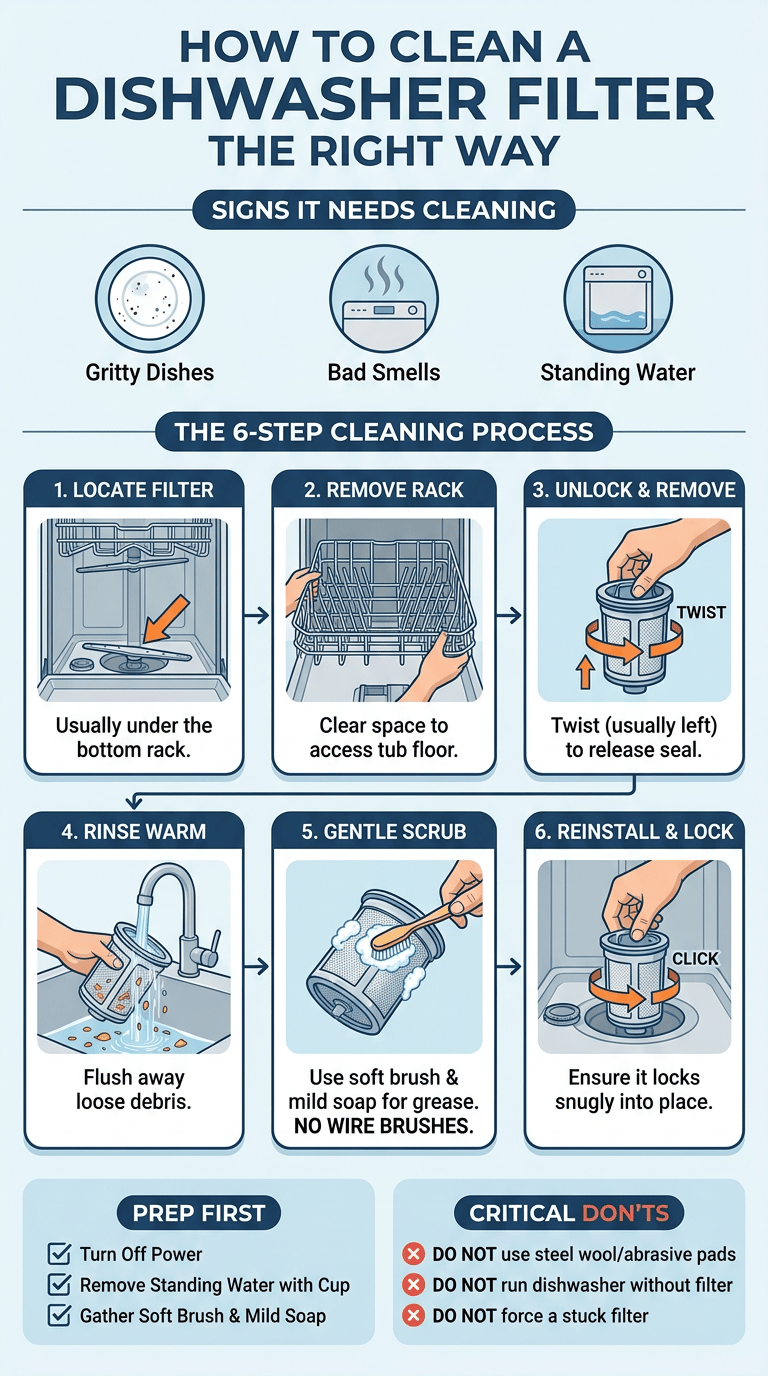
- Turn the dishwasher off and unplug it or switch off the circuit breaker if you cannot shut it off at the control panel.
- Remove any standing water from the bottom with a towel or a small cup to make handling the filter easier and safer.
- Gather simple supplies: rubber gloves, a soft-bristled brush or an old toothbrush, mild dish soap or a cleaning product approved for dishwashers, and a bowl of warm water for rinsing.
- Check the manufacturer’s manual for any model-specific instructions before you begin.
What to avoid
- Do not use wire brushes, steel wool, or abrasive pads on mesh or plastic parts; these can create holes or scratches where grime will collect.
- Do not run the dishwasher with the filter removed; the filter protects the pump and wash system from debris.
- Avoid pouring concentrated cleaners directly into the filter housing without diluting or following product directions. If you plan to disinfect because of mold or heavy contamination, follow official guidance and product labels carefully.
- If you notice damaged filter parts, electrical issues, or a persistent smell that cleaning does not fix, stop and seek professional service to avoid further damage or health risks.
Why the Dishwasher Filter Gets Dirty
Food scraps collect in the filter
Dishwashers trap food particles to prevent them from recirculating with the wash water. Small scraps can settle into a fine mesh or a basket filter at the bottom of the tub, where they build up over time and reduce flow and performance. Regular removal of trapped food prevents blockages and reduces odor.
Grease sticks to the mesh
Oils and grease from cookware and plates can cling to the filter surface and to crevices in the filter assembly. Grease does not always rinse away during a normal cycle, so it accumulates and can attract more debris and bacteria. A warm-water scrub with a degreasing dish soap loosens and removes oily buildup more effectively than cold water.
Poor rinsing habits make buildup worse
Rinsing dishes lightly before loading helps remove large food scraps, but very heavy soiling or sticking items left on plates leads to faster clogging of the filter. Likewise, overloading or blocking the spray arms can reduce circulation and leave more residue to collect in the filter. Improving loading and pre-rinse habits helps the filter stay cleaner longer.
Signs Your Dishwasher Filter Needs Cleaning
Dishes feel gritty
If plates, glasses, or utensils have a gritty texture after a normal cycle, tiny particles may be bypassing the filter or the filter may be clogged and not letting water drain properly. A quick filter check and cleaning often returns wash quality.
The dishwasher smells bad
A persistent sour or rotten odor coming from the dishwasher often comes from trapped food and grease in the filter and surrounding areas. Removing and cleaning the filter usually reduces or eliminates the smell. If odor persists after a thorough cleaning, consider inspecting seals, the door gasket, and the drain hose, and consult guidance before using disinfectants.
Water pools at the bottom
Standing water in the tub after a cycle can indicate a clogged filter or a blocked drain path. Clean the filter and then run a short cycle to check drainage. If water still pools, the problem could be deeper in the drain system and may need professional attention.
Food particles remain after a cycle
Visible food left on dishes after washing is a sign the filter, pump, or spray arms are not working properly. Begin by cleaning the filter: remove trapped particles, rinse, and reinstall. If the issue continues, inspect spray arm holes for clogs and consult the manual or a technician.
Step 1: Find the Dishwasher Filter
Where most filters are located
Most dishwasher filters sit on the bottom of the tub under the lower rack. They are typically in front of or under the spray arm and can be a cylindrical basket, a flat mesh screen, or a combination of both. Some models place the filter behind a cover near the back of the tub floor. If you cannot see a filter immediately, look for a circular access plate or a perforated cover at the bottom center.
How to identify removable filters
Removable filters usually have a visible handle, a twist-lock ring, or a plastic rim with tabs you can lift. Flat filters often slide out or lift up from one edge once any retaining clip is released. If the piece looks firmly bolted or has metal screws, it may still be removable but will require tools and careful attention to the manual.
When to check the manual
If you are uncertain about the filter type or how it detaches, consult your dishwasher manual before you proceed. The manual shows the exact location, the removal method, and any parts that must remain attached during cleaning. If you do not have a paper manual, the manufacturer’s website often provides downloadable guides. Checking the manual reduces the risk of causing damage or voiding a warranty.
For a related walkthrough, see our guide to how to clean toaster.
For a related walkthrough, see our guide to how to clean cutting board.
For a related walkthrough, see our guide to how to clean oven.
Step 2: Remove the Bottom Rack
How to create space
Slide out and lift the lower rack to its stop, then tilt or lift it out of the tub according to your model’s design. Clearing the rack gives you room to reach the filter and reduces the chance of catching clothing or dishes while working. If your rack has a sliding stop clip, release it first so you can fully slide the rack out.
What to inspect before removing the filter
Look for loose items like silverware or broken glass that could interfere with removal or fall into the pump area. Remove any such debris by hand. Also note the position of spray arms and any small parts so you can return them to the same orientation after reassembly.
How to avoid damaging parts
Lift the rack straight up and out; do not pry it out on an angle that could stress the rails or rollers. Keep the rack level to avoid bending the metal wires. Place the rack on a towel or mat to prevent scratching the floor or the rack itself while you work on the filter.
Step 3: Unlock and Remove the Filter
How twist-lock filters work
Many models use a twist-and-lift mechanism. Grasp the filter rim or handle, turn it counterclockwise until it releases, then lift straight up. Some designs require a short turn while others need a full rotation. If the filter has an arrow or a mark showing unlock and lock positions, align those marks before turning.
How to remove flat filters
Flat screen filters usually sit under a plastic frame. Release any tabs or clips, then lift the screen up from one edge and slide it out. For two-part systems, you may first lift a perforated inner basket and then remove the flat mesh beneath. Keep track of both pieces so you can reassemble them correctly.
What to do if the filter feels stuck
If the filter resists turning or lifting, do not force it hard. Apply steady, even pressure and try a small back-and-forth twist to break any seal from dried debris. Running warm water over the filter housing and letting it sit briefly can soften gummed-on grease. If the filter still will not budge, consult the manual or call the manufacturer or a technician to avoid breaking the filter or housing.
Step 4: Rinse the Filter Under Warm Water
How to remove loose food
Hold the filter under a steady stream of warm water and use your hand or a soft brush to dislodge loose particles. Warm water helps loosen stuck food and makes it easier to rinse away than cold water. Clear any visible debris from the bottom of the filter housing as well; rinsing these out into the sink prevents them from returning to the dishwasher later.
Why warm water helps
Warm water softens fats and dried food particles, making them easier to remove without aggressive scrubbing. It also helps dissolve mild grease so that a gentle brush and a few drops of dish soap can lift oily buildup safely.
When rinsing is not enough
If grease or grime remains after rinsing, move to a gentle scrubbing step with a soft-bristled brush and a mild detergent. For sticky or greasy deposits, soak the filter parts briefly in warm, soapy water before scrubbing. If you see mold or heavy biofilm that does not respond to normal cleaning, follow guidance for cleaning and disinfecting surfaces from public health authorities, and consider professional help for extensive contamination.
For official cleaning and disinfecting recommendations, see the CDC cleaning and disinfecting guidance.
Step 5: Scrub the Filter Gently
Best brush to use
Use a soft-bristled brush such as a dish brush or an old toothbrush to work debris out of the mesh and crevices. The bristles should be firm enough to dislodge grime but soft enough to avoid tearing mesh or scratching plastic parts. Nylon brushes are a good choice.
How to remove greasy buildup
Apply a few drops of mild dish soap or a product labeled safe for dishwasher parts to the brush, then scrub the filter under warm running water. For stubborn grease, soak the filter in warm, soapy water with a small amount of baking soda or white vinegar added to help break down oils. After scrubbing, rinse thoroughly to remove any soap residue.
If you choose commercial cleaners, prefer products recommended for dishwasher components and consider safer alternatives identified by the EPA SaferChoice program when selecting household cleaning products.
What not to scrub with
Do not use metal scouring pads, steel wool, or abrasive cleansers. These materials can damage the filter mesh and plastic, creating holes and rough surfaces that trap debris and accelerate future buildup. Also avoid harsh chemical cleaners unless the product label states safe use on dishwasher parts and you follow exposure and disposal instructions carefully. If you have concerns about exposure to cleaners, consult safety guidance from Poison Control before use.
Step 6: Reinstall the Filter Correctly
How to lock it back in place
Align the filter with the housing so any tabs or guide marks match. For twist-lock filters, set the filter in position and rotate clockwise until it clicks or reaches the lock position indicated by the mark. For flat filters, slide or press the screen back under the frame until any retaining clips snap in place. Make sure both inner and outer parts are assembled in the correct order if your model uses multiple pieces.
Why proper placement matters
A correctly installed filter prevents solids from reaching the pump and ensures proper water circulation. A misaligned filter can let food particles bypass the screen, cause a clog, or damage the dishwasher pump. It can also lead to poor wash performance and odors. Confirm the filter sits flush and seals evenly around its rim.
How to test if it is secure
Gently tug the filter to confirm it is seated and does not lift or rotate. Replace the lower rack, add a small load or a few glasses, and run a short rinse cycle to check for leaks, noise, or unusual vibration. If you hear scraping sounds or see water leaking into areas it should not, stop the cycle and recheck the filter placement.
Dishwasher Filter Cleaning Mistakes to Avoid
Running the dishwasher without the filter
Running a dishwasher with the filter removed exposes the pump and spray system to debris that can cause damage. Always reinstall the filter before operating the machine.
Using harsh tools
Abrasive tools can puncture or deform filter components. Replace damaged filters immediately; a compromised filter cannot protect internal parts and will cause performance and sanitation issues.
Forgetting to reinstall it tightly
A loosely seated filter can leak food and grit into the circulation system. Make sure you hear any lock clicks and that the filter is flush. A final test run helps confirm the filter remains secure under operating conditions.
Waiting until the dishwasher smells
Waiting for a foul odor before cleaning allows buildup to become established and harder to remove. Regular quick checks prevent the need for time-consuming deep cleaning.
Dishwasher Filter Maintenance Checklist
Regular quick check
- Visually inspect the filter area after heavy use and remove large pieces of food or packaging debris.
- Wipe any visible residue from the filter rim and tub floor.
- Run a short rinse if you notice residue or smell to flush loose debris.
Periodic cleaning
- Remove the bottom rack and take out the filter. Rinse and gently scrub it under warm water with a soft brush and mild soap, then reinstall.
- Check spray arm holes for blockages and clear them with a soft brush or toothpick as needed.
Deep cleaning when needed
- For greasy buildup or persistent odors, soak the filter parts in warm, soapy water and scrub thoroughly before rinsing.
- If you find mold or heavy organic contamination, follow cleaning and disinfecting recommendations from public health authorities and consider professional service if contamination is extensive. The CDC cleaning and disinfecting guidance explains disinfecting steps for household surfaces and when additional precautions are appropriate.
- Replace the filter according to the manufacturer’s recommended schedule or immediately if it is cracked, torn, or excessively worn.
Frequently Asked Questions
How often should I clean my dishwasher filter?
Check the filter regularly and after heavy, food-heavy loads, and perform a full cleaning periodically. If you use the dishwasher infrequently, clean the filter before a period of extended storage and again before regular use resumes. Adjust frequency based on odors, grit on dishes, or drainage problems.
Can I put the dishwasher filter in the dishwasher?
Some filter parts are dishwasher-safe; others are not. Check your manual. If the manufacturer allows it, place the filter on the top rack and avoid high-heat sanitizing cycles that could warp plastic. In many cases, hand-washing under warm running water with a soft brush is the safest and most effective method.
Why is my dishwasher filter slimy?
Sliminess results from a combination of grease, organic matter, and microbial growth. Regular cleaning with warm, soapy water removes the film. If the sliminess is heavy or accompanied by visible mold, take extra precautions: remove and clean the filter, then consider disinfecting surfaces according to public health guidance if warranted. For general household disinfecting steps, see the CDC cleaning and disinfecting guidance. If you are unsure about handling strong cleaners or bleach, check safety information from Poison Control.
What happens if I do not clean the filter?
Neglecting the filter leads to reduced washing performance, gritty dishes, trapped food that produces odors, and possible drainage problems. Over time, debris can reach the pump and cause damage that requires repair. Regular cleaning helps avoid these problems and extends the appliance life.
Do all dishwashers have removable filters?
Most modern dishwashers have removable filters, but some budget or older models may use a disposable or fixed filter screen. Check your manual or the interior tub for visible filter components. If the filter appears nonremovable and you are experiencing problems, follow the manufacturer recommendations or consult a service technician rather than attempting forceful removal.
Final Thoughts
Keeping the dishwasher filter clean is a targeted, high-impact step to improve wash quality, reduce odors, and help prevent drainage and pump problems. With basic supplies, a few minutes of careful work, and regular attention, the filter will perform well and reduce the need for repairs. Use warm water and a soft brush for routine cleaning, follow manufacturer instructions for removal and reinstallation, and choose safer cleaning products when possible. When you encounter mold, heavy contamination, chemical exposure concerns, or a filter that will not come out, follow public health and safety guidance or call a qualified technician to avoid risk.
If you experience chemical exposure, ingestion, or an adverse reaction while cleaning, contact Poison Control or local emergency services immediately.
For guidance on selecting safer cleaning products, consult the EPA SaferChoice program. For household cleaning and disinfecting guidance, see the CDC cleaning and disinfecting guidance.

Ethan Carter is the Founder & Editor of HomeCleanSecrets. Based in the United States, he has 5 years of experience creating practical home cleaning, laundry care, stain removal, decluttering, and home organization content. His goal is to help everyday households clean smarter and build simple routines that are easier to maintain.
Read more about Ethan Carter on his author page: https://homecleansecrets.com/ethan-carter/