
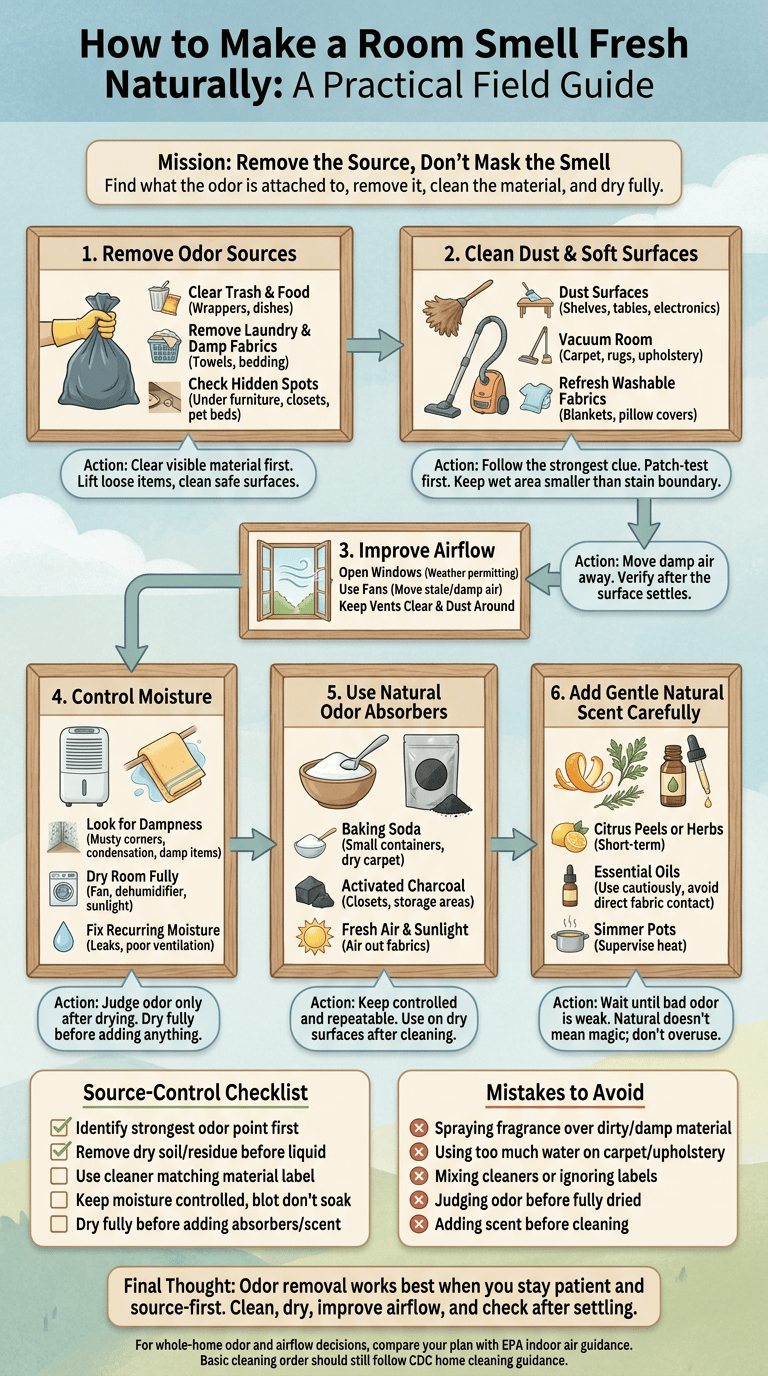
A naturally fresh room does not start with essential oils or a bowl of citrus peels. It starts with removing what is making the room stale: trash, dust, damp fabric, dirty soft surfaces, closed-up air, or moisture. Natural scent can be pleasant at the end, but it should not be asked to hide a room that still needs cleaning.
Freshness is partly cleaning and partly air movement. When you are deciding whether to open windows, run fans, or manage moisture, EPA indoor air guidance is a better reference than fragrance tips.
Quick Answer
- Remove trash, dishes, food wrappers, laundry, and damp fabric.
- Dust surfaces and vacuum carpet, rugs, upholstery, and under furniture.
- Air out the room briefly when outdoor air and weather are suitable.
- Control moisture in musty corners, window areas, closets, and rugs.
- Use baking soda, charcoal, citrus, herbs, or essential oils only after cleaning and with caution.
| What you notice | Likely cause | Best next move |
|---|---|---|
| Room smells stale after being closed | Poor airflow plus dust or soft-surface odor | Ventilate briefly and clean fabrics |
| Room smells musty | Moisture, damp fabric, or hidden condensation | Find damp areas before adding scent |
| Room smells fine only with candles | Scent is masking the source | Remove trash, laundry, dust, and fabric odor |
| Odor returns overnight | Source remains in bedding, rugs, bins, or closet | Check soft surfaces and storage spots |
Step 1: Remove Odor Sources
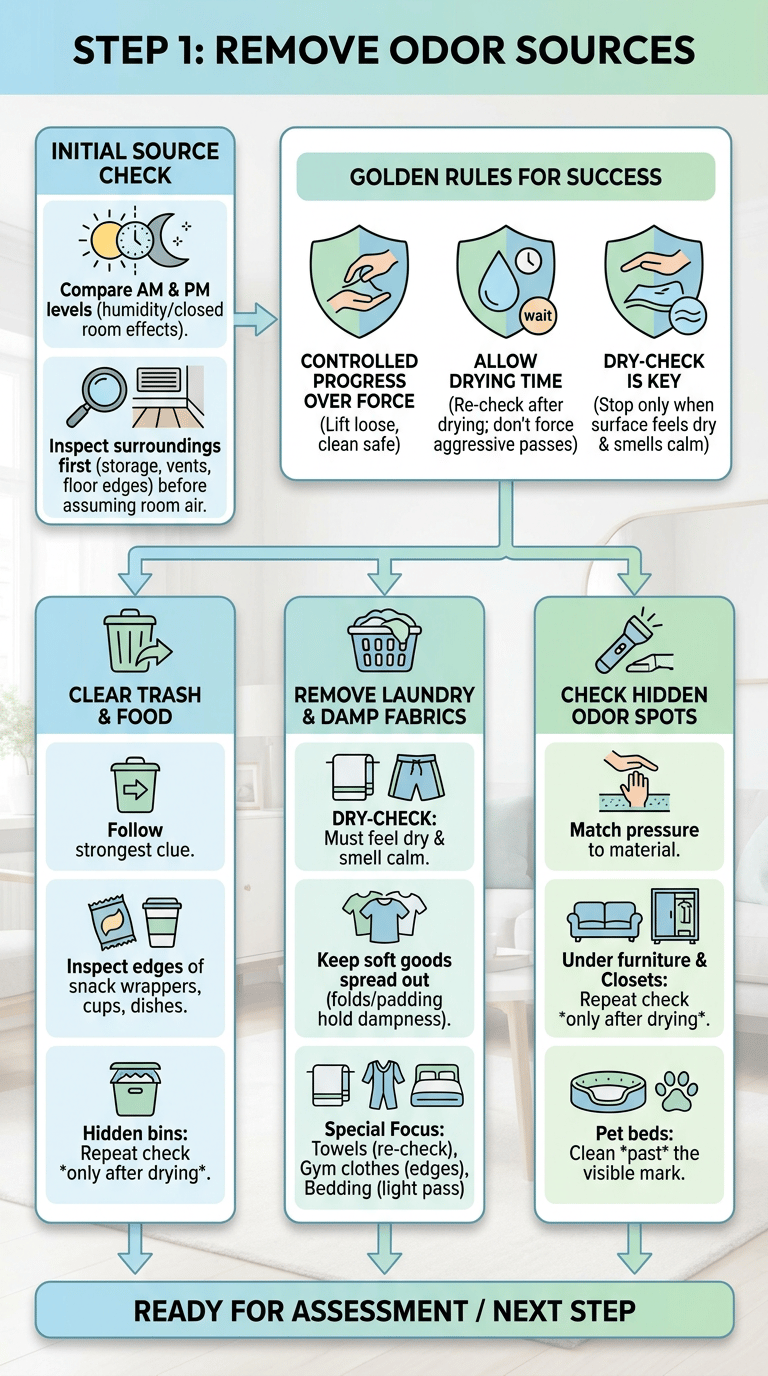
Do a fast source sweep before cleaning. Take out trash, cups, dishes, snack wrappers, pet items, gym clothes, damp towels, and laundry piles. Check under furniture, behind doors, inside bins, and in closets.
Soft items matter most. Bedding, throw blankets, pillow covers, curtains, pet beds, and rugs can hold stale smell even when hard surfaces look clean. Wash what is washable and air out what is not.
Step 2: Clean Dust and Soft Surfaces
Dust shelves, tables, electronics areas, baseboards, and vent faces with a clean cloth. Dust can hold odor and make a room smell stale when air moves through it.
Vacuum slowly, especially rugs, carpet edges, upholstery, and under furniture. If a room has fabric furniture, do not forget seams and cushion gaps. A clean floor with a dusty sofa can still smell old.
For routine cleaning order, CDC home cleaning guidance is a useful reference. Clean first, then decide whether anything needs disinfecting or deodorizing.
Step 3: Improve Airflow
Open windows briefly when weather and outdoor air are suitable. A short ventilation burst can clear stale air without making the room damp or dusty. Fans help most when they move air across fabric and toward an exit rather than just stirring the same air.
Keep vents clear. Move furniture away from blocked vents, dust around grilles, and check whether the stale smell is strongest when the HVAC starts. If it is, the issue may not be the room alone.
Step 4: Control Moisture
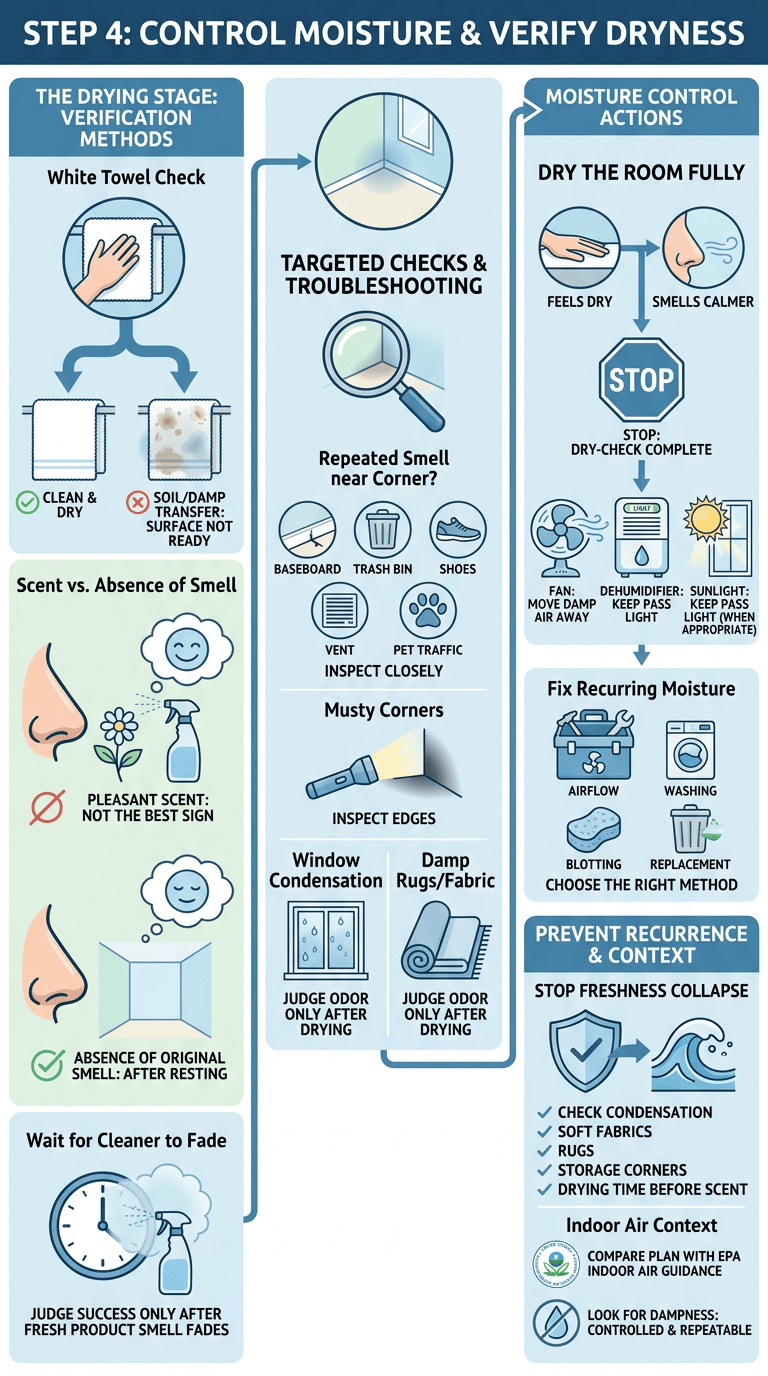
Musty corners, window condensation, damp rugs, and humid closets need moisture control before scent. If the odor is earthy or keeps returning, compare it with EPA mold odor guidance and look for damp material.
Use a fan, sunlight when appropriate, or a dehumidifier if the room needs it. Do not store damp towels, wet shoes, or recently washed fabrics in closed closets. A fresh room becomes stale quickly when moisture is trapped.
Step 5: Use Natural Odor Absorbers and Scent Carefully
Baking soda can help in a small open container or on dry carpet if you vacuum it thoroughly. Activated charcoal is useful in closets, storage areas, and small rooms. Neither option replaces cleaning.
Citrus peels, herbs, and simmer pots give short-term scent, but they need supervision and cleanup. Remove peels before they decay. Do not leave simmer pots unattended.
Essential oils should be used cautiously. Avoid direct fabric contact, heavy use, and use around pets or sensitive people without checking safety first. Natural does not automatically mean harmless.
For a related walkthrough, see our guide to odor removal guide.
Natural Fresh-Room Routine
- Daily: remove trash, cups, dishes, damp towels, and laundry.
- Weekly: dust, vacuum, wash soft items as needed, and air out the room briefly.
- Monthly: clean under furniture, refresh curtains if washable, and check closet airflow.
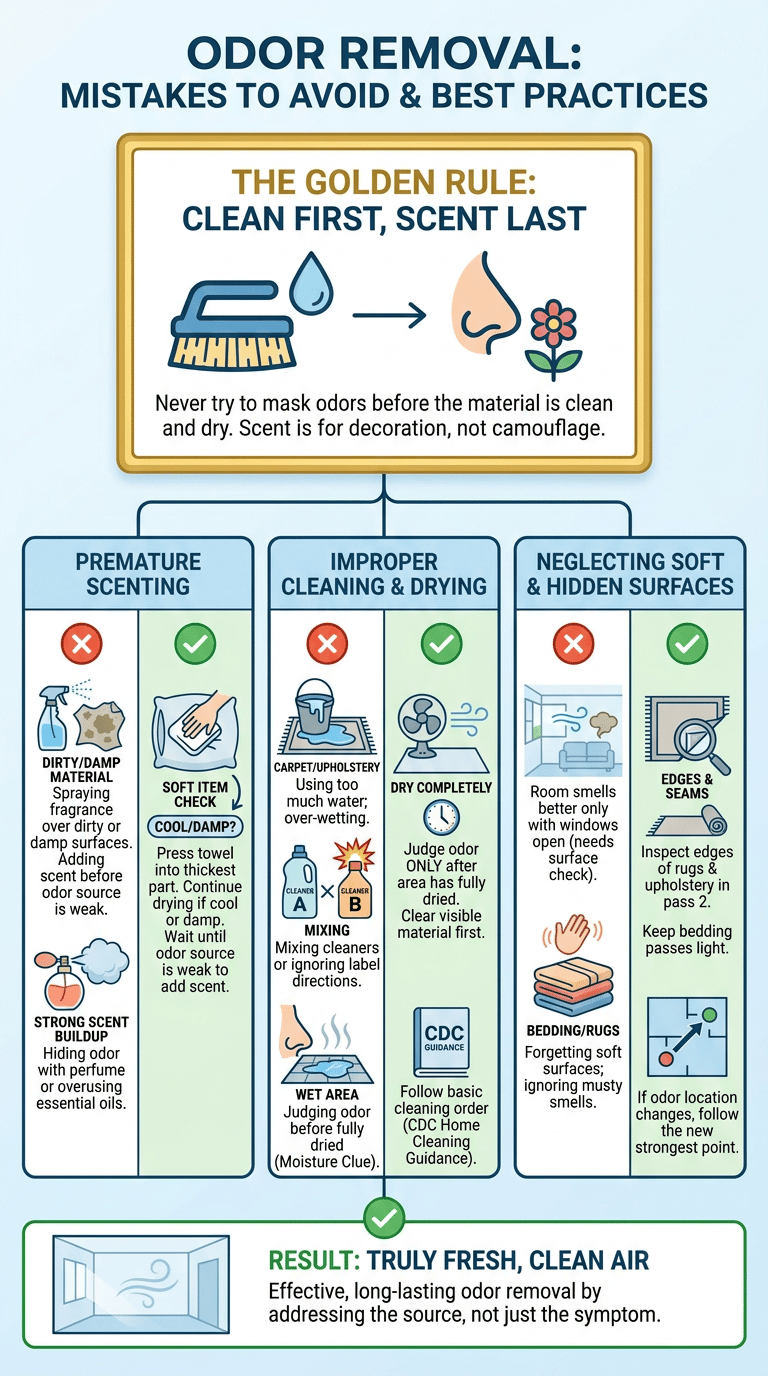
- Any time the room smells musty: stop adding scent and look for dampness.
10-Minute Natural Freshening Reset
Start with the obvious sources. Take out trash, remove dishes, collect laundry, pick up damp towels, and move pet bedding or gym clothes out of the room. This step changes the room faster than any scent.
Open a window briefly if outdoor air and weather are suitable. If not, use a fan to move air toward a hallway or exhaust point. The goal is to exchange stale air, not chill the room or bring in humidity.
Shake or straighten fabrics only after checking for odor. A blanket that smells stale should go to the laundry, not back onto the chair. A rug that smells musty needs drying and vacuuming before scent.
Weekly Routine for a Fresher Room
Dust high-touch and dust-catching areas: shelves, bedside tables, electronics, baseboards, vent faces, and window sills. Dust can make a room smell old when air starts moving.
Vacuum slowly. Spend extra time on rug edges, upholstery, under the bed, under furniture, and pet routes. These areas collect hair, skin cells, crumbs, and dust that can feed stale odor.
Wash soft items on a rotation. Bedding, pillow covers, throws, curtains, pet blankets, and washable rug pads do not all need washing every week, but ignoring them for months makes natural freshening harder.
Natural Scent Without Masking Odor
Use natural scent lightly and temporarily. Citrus peels, herbs, and simmer pots can make a clean room feel pleasant, but they can also become a new odor source if left too long.
Essential oils require caution. Avoid direct contact with fabric and be careful around pets, children, and sensitive people. A strong scent is not proof that the room is clean.
Activated charcoal works best in closets, small rooms, and storage areas. Baking soda can help with mild dry odor, but it should not be used as a substitute for washing bedding, vacuuming rugs, or fixing dampness.
If a room smells stale every morning, look at overnight sources: closed windows, bedding, laundry, pet sleeping spots, humid corners, and blocked vents. The pattern tells you more than a one-time room spray.
Real-World Natural Freshening Scenarios Worth Checking
A bedroom smells stale every morning. Start with bedding, laundry, closed windows, and humidity. Wash pillow covers and sheets on a steady schedule, keep damp towels out of the room, and let the bed air briefly before making it if the room tends to hold moisture overnight.
A guest room smells closed-up after several days. Freshen it before guests arrive, not with a last-minute spray. Open windows briefly when outdoor air is suitable, dust surfaces, vacuum the floor, and air out spare blankets. A closed room often smells stale because fabric and dust have been sitting without airflow.
A living room smells fine until the couch is used. The couch may be the source. Vacuum cushion seams, wash throws, check pet blankets, and smell the upholstery after someone sits down. If pressure releases odor, surface fragrance will not last because the smell is coming from soft material.
A closet smells musty when the door opens. Remove shoes, bins, laundry, and stored fabric. Check the back wall, floor, and anything packed tightly against the wall. Use charcoal only after the closet is dry and clean; otherwise, it becomes a small absorber sitting beside an active moisture or storage problem.
The room smells better only while a candle is burning. That is masking, not freshness. Blow the candle out, wait, and notice what smell returns first. Trash, dusty textiles, pet bedding, damp rugs, and dirty upholstery should be handled before adding any natural scent.
Bedding smells clean but the room still feels stale. Look at rugs, curtains, upholstered chairs, hampers, and vents. A room can smell old even with clean sheets if the surrounding fabric has not been vacuumed, washed, or aired out. Rotate soft-surface cleaning instead of relying on one weekly laundry task.
Essential oils feel too strong. Use less or stop using them in that room. Essential oils add scent; they do not remove trash odor, mustiness, pet smell, or dusty fabric odor. Avoid direct fabric contact and be cautious around pets or sensitive people.
A small room smells stale after humid weather. Moisture control matters more than scent. Check window condensation, damp rugs, closet corners, and laundry. Use airflow or a dehumidifier if needed, and wait until the room feels dry before using charcoal, baking soda, herbs, or citrus for a finishing touch.
Natural Freshness Starts With Less Hidden Residue
A room often smells stale because small sources add up. One trash liner, one damp towel, one dusty rug edge, one pet blanket, and one closed closet can create a room that feels unfresh even when nothing looks obviously dirty. Natural freshening works best after those small sources are removed or cleaned. Otherwise herbs, citrus, charcoal, or essential oils are only competing with the room.
Use a source sweep before adding anything fragrant. Look under furniture, inside bins, near laundry, behind doors, around pet spots, and beside vents. Smell soft items separately. If a blanket, pillow, rug, or chair releases odor when moved, treat that item first. A clean hard surface routine will not make a fabric-heavy room smell fresh if the fabric is carrying the stale note.
Use Natural Scent as a Finish, Not a Cover
Citrus, herbs, simmer pots, and essential oils can make a clean room feel more pleasant, but they are not odor removal by themselves. Keep them light and temporary. Remove citrus peels before they decay, do not leave simmer pots unattended, avoid direct oil contact with fabrics, and use extra caution around pets, children, and sensitive people.
Absorbers are quieter but still have limits. Charcoal can help in a closet or small room after the space is dry. Baking soda can help mild dry odor, but it does not wash a blanket, clean a trash bin, or dry a damp rug. If you need a stronger scent every day, the room is asking for a better cleaning or moisture routine.
A Maintenance Rhythm That Feels Natural
Freshness lasts longer when the routine matches how the room is used. Bedrooms need bedding, laundry, and closet checks. Living rooms need upholstery, rugs, pet textiles, and snack areas. Guest rooms need airflow and dusting before they are used. Small rooms need moisture control because one damp item can dominate the space quickly.
Keep the routine simple enough to repeat. Remove odor sources daily, clean dust and soft surfaces weekly, and check hidden corners monthly. When the room smells off, pause before reaching for scent. The useful question is, “What changed here?” Maybe the weather turned humid, the pet bed needs washing, the trash leaked, the rug stayed damp, or the vent is dusty. That answer is what makes the room smell naturally fresh again.
Field Notes That Improve Results
Use timing as a clue. A smell that appears after drying, after a room is closed, or after a surface is touched is giving different information than a smell that is constant. For this stale-room odor problem, keep the next step narrow and wash or air out the soft item closest to the strongest odor. The useful check afterward is simple: a blocked vent can make a clean room feel stale. If that check fails, change the diagnosis before adding another product.
Look for the material that changed, not only the place where the odor is easiest to smell. Fabric, padding, storage corners, filters, and soft seams can release odor after the visible surface looks fine. In this situation, open windows briefly only when outdoor air and humidity are suitable. Then give the area enough quiet time to see whether the original smell weakens without help from fragrance.
A good cleanup leaves the surface closer to neutral. If the area smells heavily like cleaner, feels damp, looks dull, or leaves residue on a white cloth, the job is not ready for a final deodorizing step. For this part of the process, check condensation and damp fabric before adding fragrance. Keep the follow-up practical: a fresh room should still smell neutral after the scent fades.
Do not let one successful step turn into a routine you repeat everywhere. The next spot may need drying, washing, vacuuming, airflow, or professional help instead of the same cleaner. With stale-room odor, the safer move is to test the smallest reasonable area, watch how the material responds, and remove trash, dishes, laundry, damp towels, and hidden bins first.
Prevention should match the source you actually found. If the odor came from damp fabric, improve drying. If it came from residue, clean sooner. If it came from pets, protect the favorite resting area. If it came from smoke or moisture, treat the room conditions too. The final check is still grounded in the material: humidity can undo an otherwise good cleaning routine.
When the smell improves but does not disappear, treat that as progress with unfinished diagnosis. Compare nearby surfaces, check hidden edges, and let soft materials air out before deciding the result. For this stale-room odor case, keep natural scent light and temporary. A slower second pass is usually safer than a stronger first guess.
Use timing as a clue. A smell that appears after drying, after a room is closed, or after a surface is touched is giving different information than a smell that is constant. For this stale-room odor problem, keep the next step narrow and treat stale air and dirty fabric as separate problems. The useful check afterward is simple: essential oils add scent but do not clean the room. If that check fails, change the diagnosis before adding another product.
Look for the material that changed, not only the place where the odor is easiest to smell. Fabric, padding, storage corners, filters, and soft seams can release odor after the visible surface looks fine. In this situation, vacuum rug edges, under furniture, upholstery, and pet routes. Then give the area enough quiet time to see whether the original smell weakens without help from fragrance.
A good cleanup leaves the surface closer to neutral. If the area smells heavily like cleaner, feels damp, looks dull, or leaves residue on a white cloth, the job is not ready for a final deodorizing step. For this part of the process, use charcoal in closets or storage spots after cleaning. Keep the follow-up practical: baking soda and charcoal work best after the source is removed.
Do not let one successful step turn into a routine you repeat everywhere. The next spot may need drying, washing, vacuuming, airflow, or professional help instead of the same cleaner. With stale-room odor, the safer move is to test the smallest reasonable area, watch how the material responds, and rotate washable fabrics so odor does not build for months.
Prevention should match the source you actually found. If the odor came from damp fabric, improve drying. If it came from residue, clean sooner. If it came from pets, protect the favorite resting area. If it came from smoke or moisture, treat the room conditions too. The final check is still grounded in the material: a blocked vent can make a clean room feel stale.
When the smell improves but does not disappear, treat that as progress with unfinished diagnosis. Compare nearby surfaces, check hidden edges, and let soft materials air out before deciding the result. For this stale-room odor case, open windows briefly only when outdoor air and humidity are suitable. A slower second pass is usually safer than a stronger first guess.
Use timing as a clue. A smell that appears after drying, after a room is closed, or after a surface is touched is giving different information than a smell that is constant. For this stale-room odor problem, keep the next step narrow and check condensation and damp fabric before adding fragrance. The useful check afterward is simple: a fresh room should still smell neutral after the scent fades. If that check fails, change the diagnosis before adding another product.
Look for the material that changed, not only the place where the odor is easiest to smell. Fabric, padding, storage corners, filters, and soft seams can release odor after the visible surface looks fine. In this situation, remove trash, dishes, laundry, damp towels, and hidden bins first. Then give the area enough quiet time to see whether the original smell weakens without help from fragrance.
A good cleanup leaves the surface closer to neutral. If the area smells heavily like cleaner, feels damp, looks dull, or leaves residue on a white cloth, the job is not ready for a final deodorizing step. For this part of the process, dust vent faces, shelves, electronics, and baseboards. Keep the follow-up practical: humidity can undo an otherwise good cleaning routine.
Do not let one successful step turn into a routine you repeat everywhere. The next spot may need drying, washing, vacuuming, airflow, or professional help instead of the same cleaner. With stale-room odor, the safer move is to test the smallest reasonable area, watch how the material responds, and keep natural scent light and temporary.
Frequently Asked Questions
How can I make my room smell fresh naturally?
Remove odor sources, clean dust and soft surfaces, improve airflow, control moisture, then add light natural scent only if you still want it.
What absorbs bad smells in a room?
Activated charcoal and baking soda can help with mild dry odors, but they work best after trash, laundry, dust, and damp fabric are handled.
Why does my room smell stale?
Common causes include closed-up air, dusty surfaces, dirty fabrics, hidden trash, damp laundry, pet bedding, or moisture in a closet or rug.
Are essential oils safe for room freshening?
Use them cautiously, avoid direct contact with fabric, and consider pets and sensitive people. They add scent; they do not remove the source of odor.
Final Thoughts
A fresh room is a maintained room. Clean the sources, keep soft surfaces from holding odor, move air when conditions are right, and treat natural scent as a finishing touch instead of the main fix.

Ethan Carter is the Founder & Editor of HomeCleanSecrets. Based in the United States, he has 5 years of experience creating practical home cleaning, laundry care, stain removal, decluttering, and home organization content. His goal is to help everyday households clean smarter and build simple routines that are easier to maintain.
Read more about Ethan Carter on his author page: https://homecleansecrets.com/ethan-carter/