
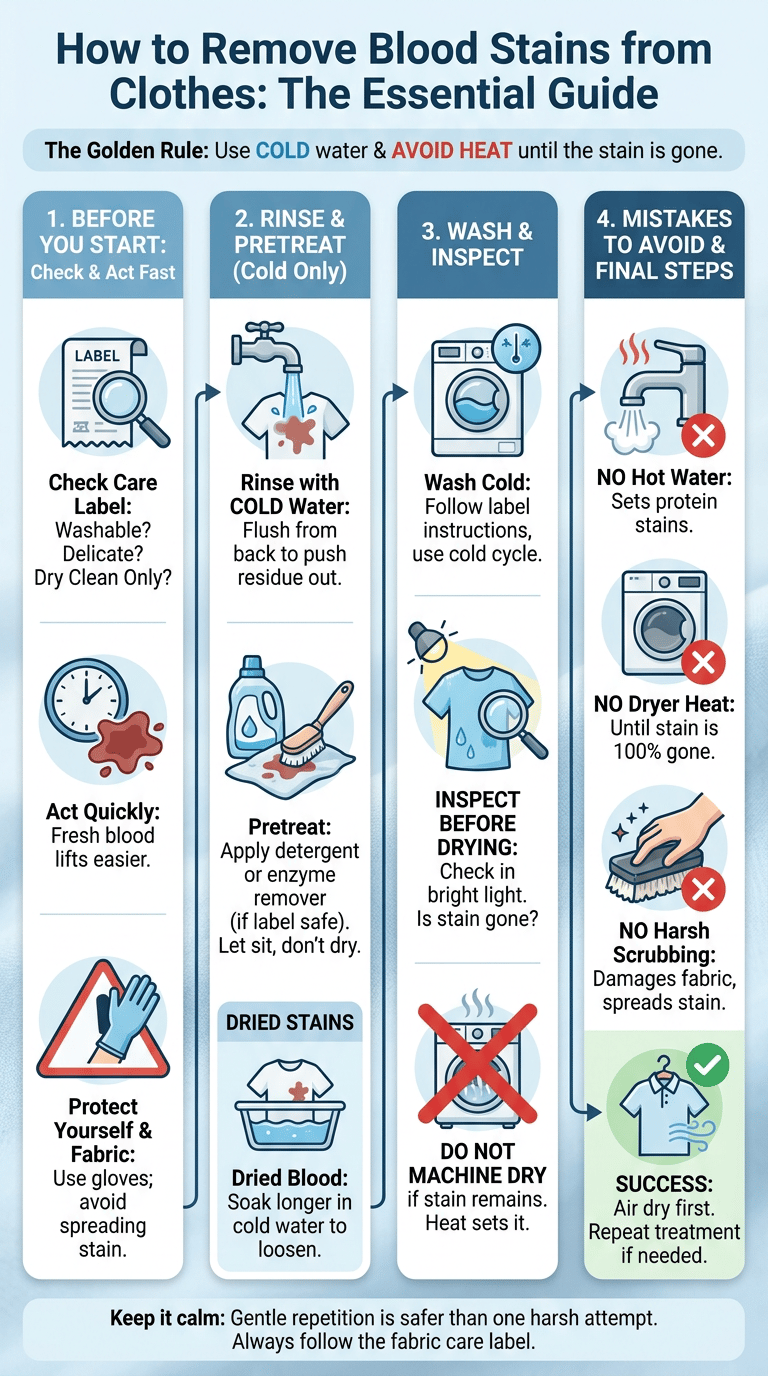
A reliable how to remove blood stains from clothes starts before the washer runs. Read the stain, protect the fabric, and keep heat away until the mark is gone.

This guide is for Reader dealing with fresh or dried blood on clothing who wants to remove it safely without setting the stain or damaging fabric. Use it as a calm decision tree for fabric labels, stain type, pretreatment, washing, and dryer checks.
Quick Answer: The Best Way to Remove Blood Stains from Clothes
The best way to handle how to remove blood stains from clothes is to identify the mark, remove excess residue, pretreat before washing, and check before drying. This keeps the work practical and reduces the chance you will set blood with heat.
For messy laundry situations, CDC household cleaning guidance is a helpful safety reference for cleaning basics.
The basic method
The basic method is simple: start with cold water, keep residue from spreading, pretreat, wash, and inspect before heat.
Rinse with cold water
Rinse with cold water helps move residue out. Start cool for unknown marks and protein stains.
Blot or flush from the back
Blot or flush from the back controls spread. Use light pressure and stop if the fabric pills, fuzzes, or transfers dye.
Pretreat with detergent or enzyme remover
Pretreat with detergent or enzyme remover should match the stain and fabric. Apply a small amount and follow label dwell time.
Wash according to label
Wash according to label protects the garment. Follow care instructions before using water, enzymes, bleach, or extended soaking.
Check before drying
Check before drying matters because heat can set residue. Keep the garment out of the dryer until the stain is gone.
Why cold water matters
Use cold water for blood, unknown stains, and many fresh marks. Warm water belongs only where both the stain type and fabric label allow it.
Blood is a protein stain
Blood is a protein stain is a checkpoint. Keep tools clean and inspect before moving to the next step.
Heat can set the stain
Heat can set the stain matters because heat can set residue. Keep the garment out of the dryer until the stain is gone.
What to avoid
Remove excess residue, pretreat the blood stain, wash by the care label, and check in bright light before drying.
Hot water
Hot water matters because heat can set residue. Keep the garment out of the dryer until the stain is gone.
Machine drying too soon
Machine drying too soon matters because heat can set residue. Keep the garment out of the dryer until the stain is gone.
Harsh scrubbing on delicate fabric
Harsh scrubbing on delicate fabric controls spread. Use light pressure and stop if the fabric pills, fuzzes, or transfers dye.
Use the stain as feedback. If a white cloth keeps picking up residue, continue gently; if nothing transfers and the fabric looks stressed, rinse and stop.
Before You Start
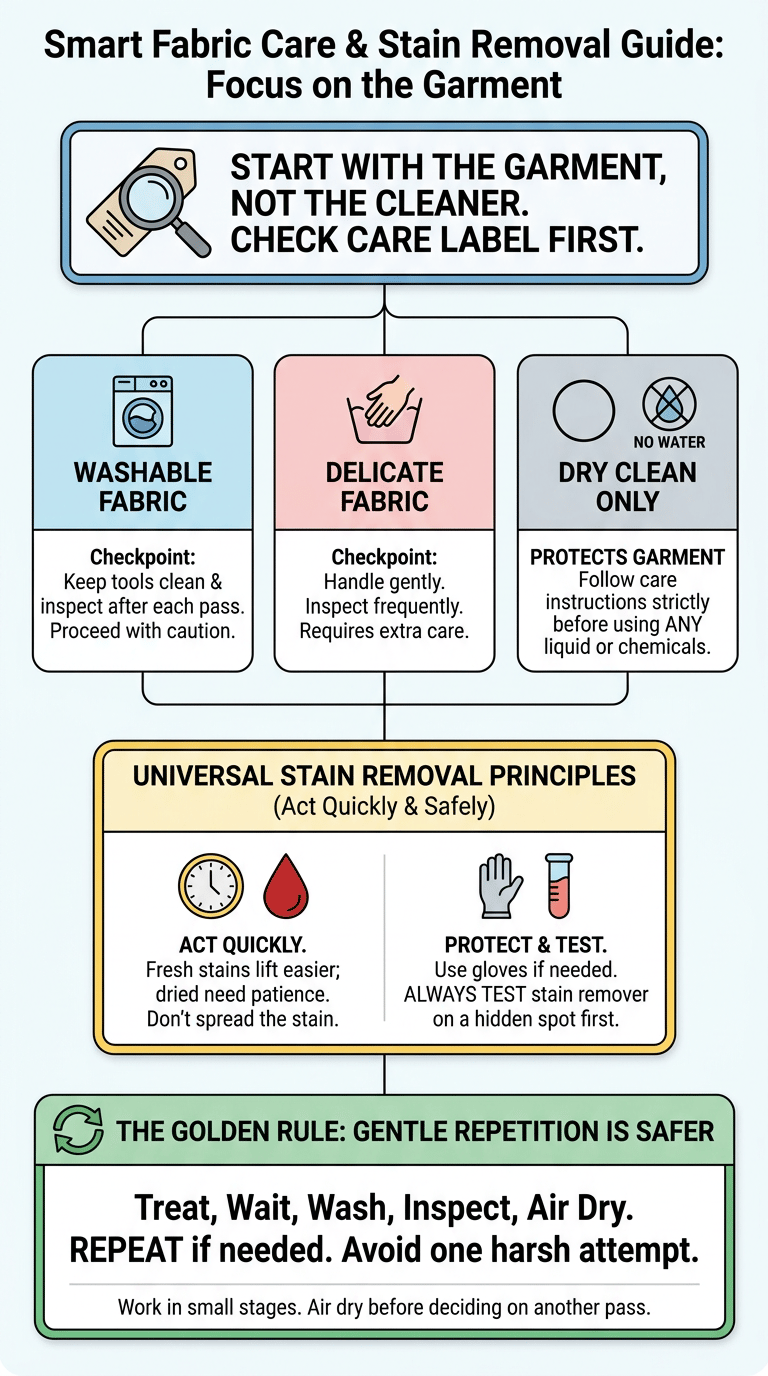
Start with the garment, not the cleaner. Care labels, fiber type, dye stability, trims, and dry-clean-only warnings decide how much treatment the fabric can safely handle.
For choosing routine products, the EPA Safer Choice program gives useful product-selection context.
Check the clothing label
For check the clothing label, work in small stages and check the fabric after each pass.
Washable fabric
Washable fabric is a checkpoint. Keep tools clean and inspect before moving to the next step.
Delicate fabric
Delicate fabric is a checkpoint. Keep tools clean and inspect before moving to the next step.
Dry clean only
Dry clean only protects the garment. Follow care instructions before using water, enzymes, bleach, or extended soaking.
Act quickly if possible
For act quickly if possible, work in small stages and check the fabric after each pass.
Fresh blood lifts easier
Fresh blood lifts easier is a checkpoint. Keep tools clean and inspect before moving to the next step.
Dried blood needs more patience
Dried blood needs more patience is a checkpoint. Keep tools clean and inspect before moving to the next step.
Protect yourself and the fabric
For protect yourself and the fabric, work in small stages and check the fabric after each pass.
Use gloves if needed
Use gloves if needed is a checkpoint. Keep tools clean and inspect before moving to the next step.
Avoid spreading the stain
Avoid spreading the stain is a checkpoint. Keep tools clean and inspect before moving to the next step.
Test stain remover first
Test stain remover first should match the stain and fabric. Apply a small amount and follow label dwell time.
Gentle repetition is safer than one harsh attempt. Treat, wait, wash, inspect, and air dry before deciding whether another pass is needed.
Supplies You Need
A small kit is enough: white cloths, a dull scraper, a soft brush, a basin, liquid detergent, and a stain remover that fits the fabric label.
Basic tools
The basic method is simple: start with cold water, keep residue from spreading, pretreat, wash, and inspect before heat.
Cold water
Cold water helps move residue out. Start cool for unknown marks and protein stains.
White cloth
White cloth is a checkpoint. Keep tools clean and inspect before moving to the next step.
Soft brush
Soft brush controls spread. Use light pressure and stop if the fabric pills, fuzzes, or transfers dye.
Basin or sink
Basin or sink is a checkpoint. Keep tools clean and inspect before moving to the next step.
Cleaner options
For cleaner options, work in small stages and check the fabric after each pass.
Liquid laundry detergent
Liquid laundry detergent should match the stain and fabric. Apply a small amount and follow label dwell time.
Enzyme stain remover if fabric-safe
Enzyme stain remover if fabric-safe should match the stain and fabric. Apply a small amount and follow label dwell time.
Oxygen bleach for suitable fabrics
Oxygen bleach for suitable fabrics needs caution. Use one product at a time, rinse between methods, and avoid unsafe cleaner combinations.
What not to use first
Remove excess residue, pretreat the blood stain, wash by the care label, and check in bright light before drying.
Hot water
Hot water matters because heat can set residue. Keep the garment out of the dryer until the stain is gone.
Chlorine bleach on delicate or colored fabric
Chlorine bleach on delicate or colored fabric needs caution. Use one product at a time, rinse between methods, and avoid unsafe cleaner combinations.
Heat from dryer or iron
Heat from dryer or iron matters because heat can set residue. Keep the garment out of the dryer until the stain is gone.
Keep the stained area separate from clean fabric when possible. A backing towel, small basin, or focused pretreatment prevents transfer.
Step 1: Rinse with Cold Water
This section treats step 1: rinse with cold water as a decision point. Match the method to the protein stain, keep moisture controlled, and let the care label set the boundary.
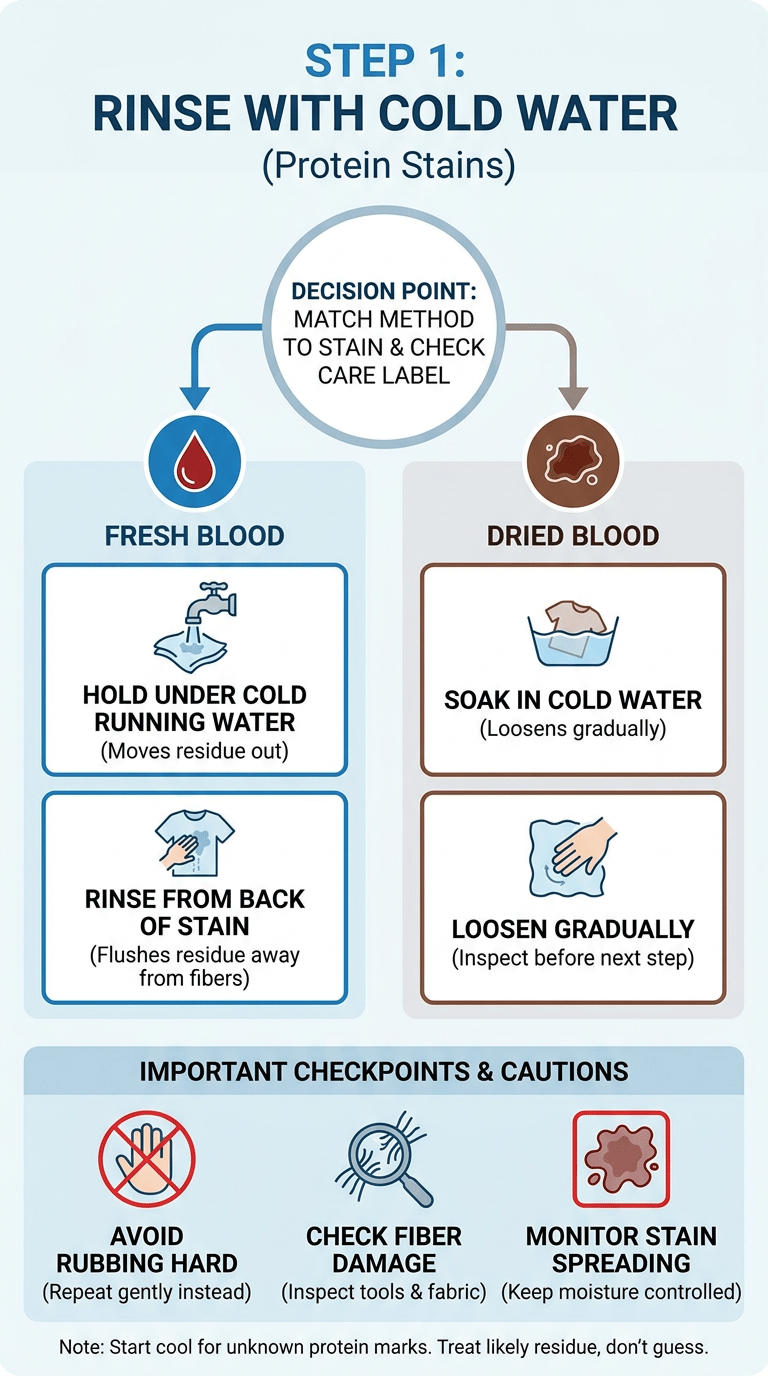
For fresh blood
For for fresh blood, work in small stages and check the fabric after each pass.
Hold fabric under cold running water
Hold fabric under cold running water helps move residue out. Start cool for unknown marks and protein stains.
Rinse from the back of the stain
Rinse from the back of the stain helps move residue out. Start cool for unknown marks and protein stains.
For dried blood
For for dried blood, work in small stages and check the fabric after each pass.
Soak in cold water
Soak in cold water helps move residue out. Start cool for unknown marks and protein stains.
Loosen gradually
Loosen gradually is a checkpoint. Keep tools clean and inspect before moving to the next step.
Avoid rubbing hard
When a treatment is not working, repeat gently instead of adding more force, heat, or stronger products.
Fiber damage
Fiber damage is a checkpoint. Keep tools clean and inspect before moving to the next step.
Stain spreading
Stain spreading is a checkpoint. Keep tools clean and inspect before moving to the next step.
The visible mark may include oil, dye, protein, tannin, wax, or product film. Treat the likely residue rather than guessing wildly.
Step 2: Pretreat the Stain
This section treats step 2: pretreat the stain as a decision point. Match the method to the protein stain, keep moisture controlled, and let the care label set the boundary.
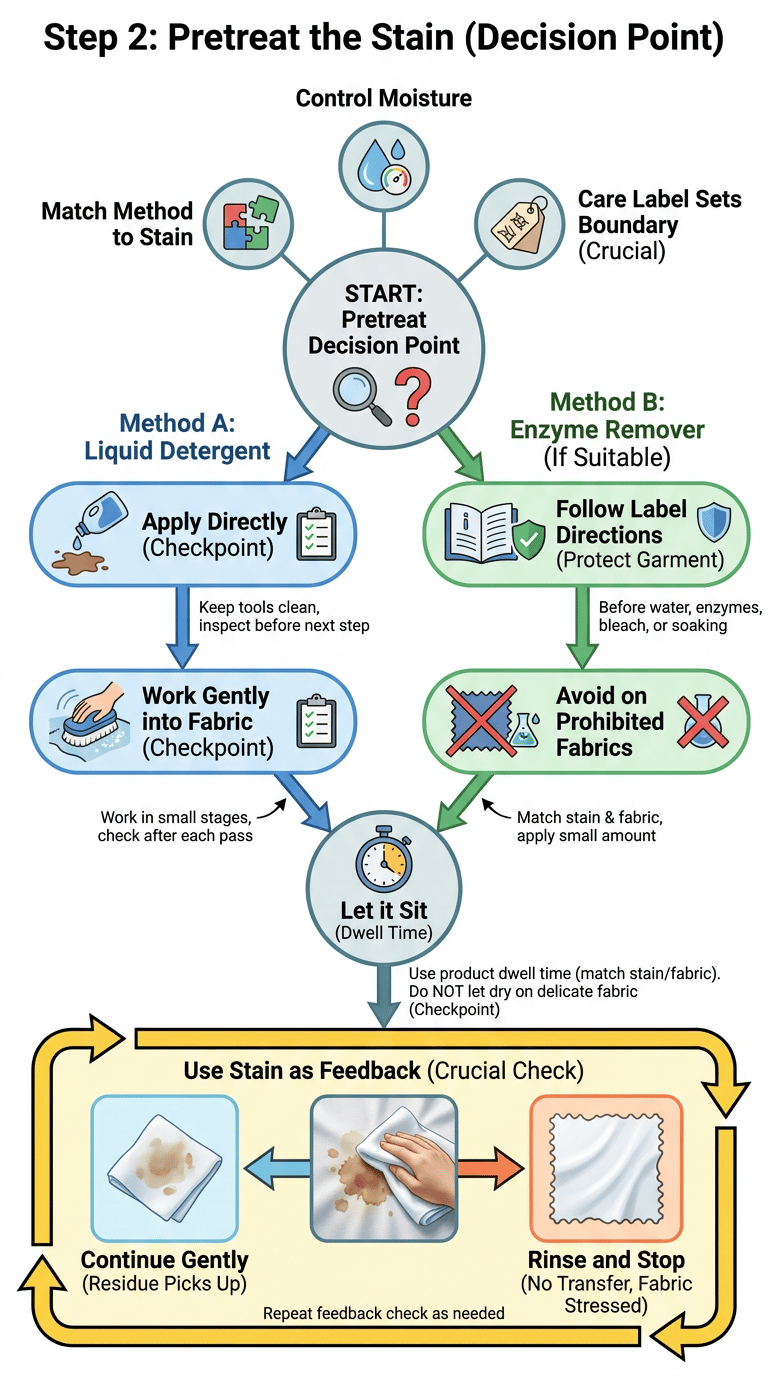
Use liquid detergent
For use liquid detergent, work in small stages and check the fabric after each pass.
Apply directly
Apply directly is a checkpoint. Keep tools clean and inspect before moving to the next step.
Work gently into fabric
Work gently into fabric is a checkpoint. Keep tools clean and inspect before moving to the next step.
Use enzyme remover if suitable
For use enzyme remover if suitable, work in small stages and check the fabric after each pass.
Follow label directions
Follow label directions protects the garment. Follow care instructions before using water, enzymes, bleach, or extended soaking.
Avoid enzyme products on fabrics that prohibit them
Avoid enzyme products on fabrics that prohibit them should match the stain and fabric. Apply a small amount and follow label dwell time.
Let it sit
For let it sit, work in small stages and check the fabric after each pass.
Use product dwell time
Use product dwell time should match the stain and fabric. Apply a small amount and follow label dwell time.
Do not let pretreatment dry on delicate fabric
Do not let pretreatment dry on delicate fabric is a checkpoint. Keep tools clean and inspect before moving to the next step.
Use the stain as feedback. If a white cloth keeps picking up residue, continue gently; if nothing transfers and the fabric looks stressed, rinse and stop.
Step 3: Wash and Inspect
This section treats step 3: wash and inspect as a decision point. Match the method to the protein stain, keep moisture controlled, and let the care label set the boundary.
Wash according to the label
For wash according to the label, work in small stages and check the fabric after each pass.
Cold water setting
Cold water setting helps move residue out. Start cool for unknown marks and protein stains.
Regular detergent
Regular detergent should match the stain and fabric. Apply a small amount and follow label dwell time.
Check before drying
For check before drying, work in small stages and check the fabric after each pass.
Look in bright light
Look in bright light is a checkpoint. Keep tools clean and inspect before moving to the next step.
Repeat treatment if stain remains
Repeat treatment if stain remains is a checkpoint. Keep tools clean and inspect before moving to the next step.
Air dry first
For air dry first, work in small stages and check the fabric after each pass.
Avoid setting stain with heat
Avoid setting stain with heat matters because heat can set residue. Keep the garment out of the dryer until the stain is gone.
Confirm stain is gone
Confirm stain is gone is a checkpoint. Keep tools clean and inspect before moving to the next step.
Gentle repetition is safer than one harsh attempt. Treat, wait, wash, inspect, and air dry before deciding whether another pass is needed.
How to Remove Dried Blood Stains
This section treats how to remove dried blood stains as a decision point. Match the method to the protein stain, keep moisture controlled, and let the care label set the boundary.
Soak longer
For soak longer, work in small stages and check the fabric after each pass.
Cold water soak
Cold water soak helps move residue out. Start cool for unknown marks and protein stains.
Change water if needed
Change water if needed helps move residue out. Start cool for unknown marks and protein stains.
Repeat pretreatment
For repeat pretreatment, work in small stages and check the fabric after each pass.
Enzyme product if allowed
Enzyme product if allowed should match the stain and fabric. Apply a small amount and follow label dwell time.
Gentle brushing
Gentle brushing controls spread. Use light pressure and stop if the fabric pills, fuzzes, or transfers dye.
Know when the stain is set
For know when the stain is set, work in small stages and check the fabric after each pass.
Old heat-set stains
Old heat-set stains matters because heat can set residue. Keep the garment out of the dryer until the stain is gone.
Delicate fabric limits
Delicate fabric limits is a checkpoint. Keep tools clean and inspect before moving to the next step.
Keep the stained area separate from clean fabric when possible. A backing towel, small basin, or focused pretreatment prevents transfer.
Blood Stain Mistakes to Avoid
Most mistakes come from rushing, rubbing, using heat too soon, or changing products without rinsing. If fumes, irritation, or accidental mixing happens, use Poison Control cleaning product advice for guidance.
Using hot water first
For using hot water first, work in small stages and check the fabric after each pass.
Protein setting risk
Protein setting risk is a checkpoint. Keep tools clean and inspect before moving to the next step.
Harder removal
Harder removal is a checkpoint. Keep tools clean and inspect before moving to the next step.
Putting stained clothing in the dryer
For putting stained clothing in the dryer, work in small stages and check the fabric after each pass.
Heat setting
Heat setting matters because heat can set residue. Keep the garment out of the dryer until the stain is gone.
Repeat treatment first
Repeat treatment first is a checkpoint. Keep tools clean and inspect before moving to the next step.
Scrubbing aggressively
For scrubbing aggressively, work in small stages and check the fabric after each pass.
Fabric wear
Fabric wear is a checkpoint. Keep tools clean and inspect before moving to the next step.
Larger stain area
Larger stain area is a checkpoint. Keep tools clean and inspect before moving to the next step.
Ignoring care labels
For ignoring care labels, work in small stages and check the fabric after each pass.
Wool and silk caution
Wool and silk caution is a checkpoint. Keep tools clean and inspect before moving to the next step.
Dry-clean-only garments
Dry-clean-only garments is a checkpoint. Keep tools clean and inspect before moving to the next step.
The visible mark may include oil, dye, protein, tannin, wax, or product film. Treat the likely residue rather than guessing wildly.
Frequently Asked Questions
These answers cover the common sink-side decisions. For delicate, expensive, lined, or dry-clean-only garments, choose the gentlest limit.
Does cold water remove blood stains?
Use cold water for blood, unknown stains, and many fresh marks. Warm water belongs only where both the stain type and fabric label allow it.
Can dried blood stains come out of clothes?
A dried stain can sometimes improve, but heat-set residue is harder. Pretreat again, air dry, and inspect before trying more dryer heat.
Should I use hydrogen peroxide on blood stains?
Hydrogen peroxide can lighten dyes, so test first. For many washable garments, cold water plus detergent or an enzyme product is the safer first choice.
Can I use bleach on blood stains?
Bleach is not a default answer. Oxygen bleach can help suitable fabrics, while chlorine bleach can remove color, weaken fibers, and become unsafe if mixed.
Why did the blood stain turn brown?
Stains come back when oil, product film, or color remains below the surface. They can look gone while wet and reappear after drying.
Can I remove blood after the clothes went through the dryer?
A dried stain can sometimes improve, but heat-set residue is harder. Pretreat again, air dry, and inspect before trying more dryer heat.
Final Thoughts
A calm stain routine protects clothes: remove excess, pretreat the blood stain, wash by the label, inspect, and air dry until the mark is gone.

Ethan Carter is the Founder & Editor of HomeCleanSecrets. Based in the United States, he has 5 years of experience creating practical home cleaning, laundry care, stain removal, decluttering, and home organization content. His goal is to help everyday households clean smarter and build simple routines that are easier to maintain.
Read more about Ethan Carter on his author page: https://homecleansecrets.com/ethan-carter/