
A laundry room can look organized on Sunday and feel messy again by Wednesday. The room handles dirty clothes, clean clothes, damp towels, detergent, lint, baskets, hangers, pet bedding, sports gear, and random household items that seem to land there when no one knows where else to put them.
The goal is not to deep clean the whole room every time you wash clothes. The goal is to build a small reset routine that keeps surfaces open, baskets moving, supplies limited, and damp or dusty spots checked before they turn into bigger chores. This guide shows how to keep a laundry room clean and organized after the first setup is already in place.
Use it as a maintenance checklist for a real home, not a showroom. A good system should survive busy weeks, unfinished loads, small rooms, shared laundry areas, and family members who do not remember where every bin belongs.

Quick Answer: Reset the Room at the End of Each Laundry Cycle
This routine is easier after you have a basic laundry room organization plan, because every product, basket, and load needs a place to return.
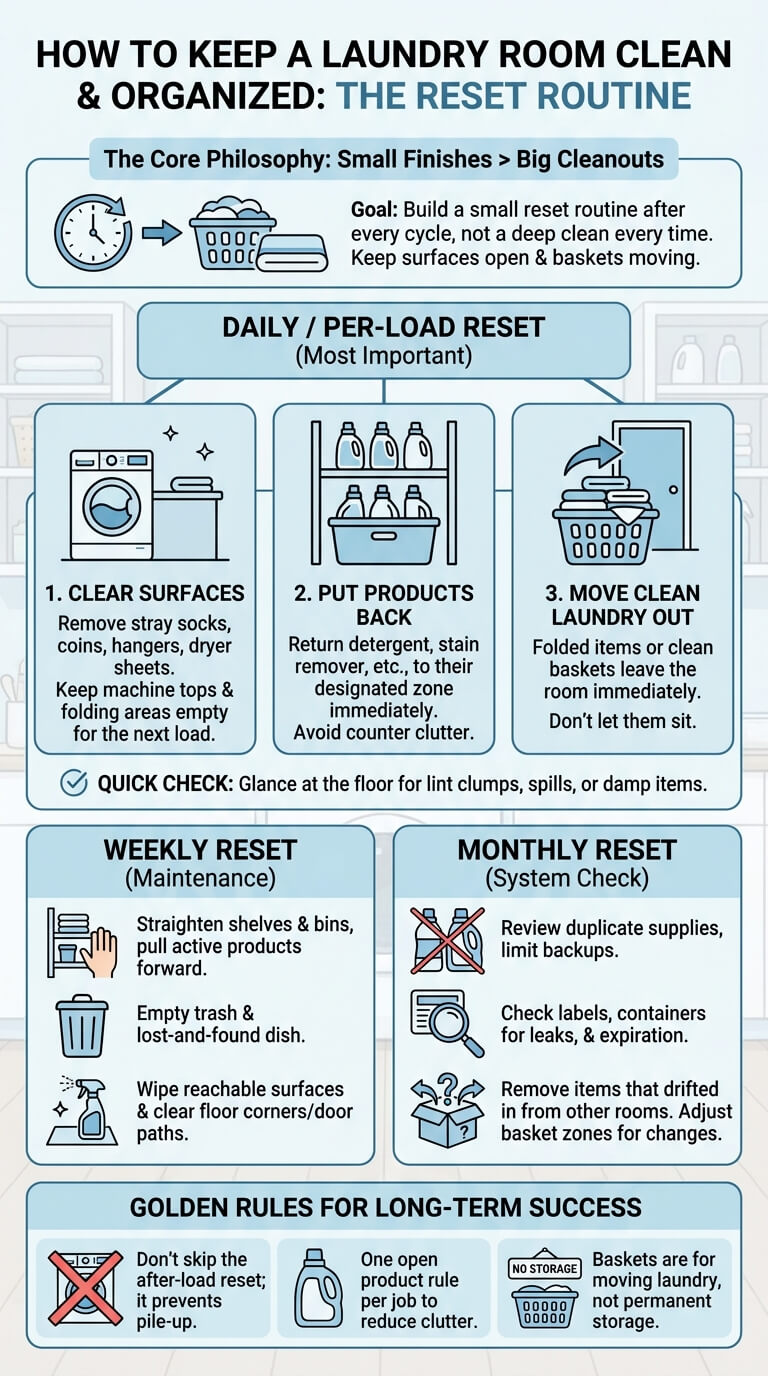
The easiest way to keep a laundry room organized is to finish each cycle with a three-minute reset: clear the machines and folding surface, put products back, move baskets to their next room, and check the floor for lint, spills, or damp items. The reset works best when it happens before the next load starts, not after piles have already spread across the room.
Clear surfaces
Machine tops, counters, and folding boards should not become long-term storage. Remove stray socks, dryer sheets, coins, receipts, hangers, and folded piles before they blend into the background. A clear surface also makes it easier to notice detergent drips, lint, or a towel that was left damp.
Return supplies
Put detergent, stain products, scent boosters, bleach, brushes, mesh bags, and cleaning cloths back into the same zone after each use. If a bottle does not have a home, it will live on the washer until the surface is crowded again. Keep the most-used products at hand level and backups higher, lower, or farther back.
Move baskets out
Empty baskets should return to their parking spot. Clean laundry baskets should leave the laundry room as soon as the load is folded or ready to put away. When clean clothes sit in baskets for several days, the room may look messy even if every shelf is technically organized.
Check the floor and moisture-prone spots
Look around the washer, utility sink, door threshold, and corners where towels or clothing can fall. Pick up lint clumps, wipe small spills, and remove anything damp that is touching the floor. For damp areas that keep returning, the issue may need a different cleaning or repair plan rather than another organizing bin.
Why Laundry Rooms Get Messy Again
When the room has no working layout, start by learning how to organize the laundry room before expecting a maintenance routine to hold.
Laundry rooms usually slide back into clutter because the work is repetitive. Every load brings new items into the space, and every unfinished step leaves something behind. Before buying more containers, identify the habit that is breaking down.
Unfinished loads
A load that stops halfway creates clutter in two places at once. Wet clothes wait in the machine, dry clothes wait in a basket, and the next dirty load has nowhere to go. A practical fix is to define the load as finished only when clothes leave the laundry room, not when the dryer stops.
Supplies without limits
Laundry products multiply quickly: one open detergent, one nearly empty bottle, a new scent product, a specialty cleaner, extra dryer sheets, and several small stain products. The American Cleaning Institute laundry guidance is a useful reminder that laundry care depends on using products correctly, which is easier when you can see what you own and read the label before using it.
Basket buildup
Baskets become clutter when they do not have a job. One basket might collect dirty clothes, clean clothes, returns, towels, and items that need repair. If the basket is always full, ask whether it is a sorting problem, a put-away problem, or a storage problem in another room.
Dust, lint, and moisture
Laundry areas collect lint, fine dust, detergent residue, and occasional drips. Damp towels, wet swimwear, and cleaning cloths can also sit in corners longer than intended. These are not reasons to panic, but they are reasons to keep the room visible and easy to inspect.
No owner for the reset
When everyone uses the laundry room but no one owns the reset, the room slowly turns into a shared holding zone. Assign the reset to the person who finishes the load, or make a short family rule: the load is not done until the basket leaves the room and the products are back in place.
Daily or Per-Load Reset Checklist
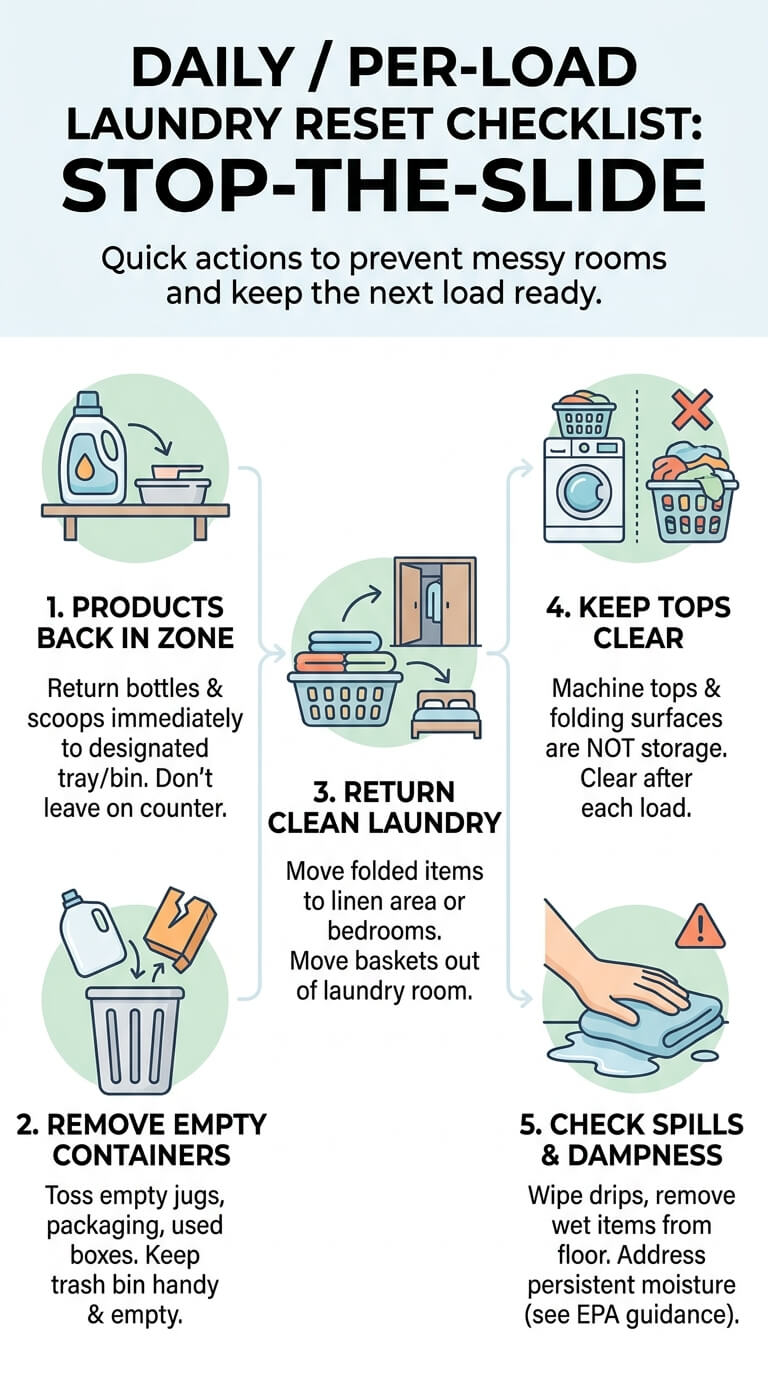
The daily routine should be small enough to do when you are tired. It is not a full cleaning session. It is a stop-the-slide reset that keeps the next load from starting in a messy room.
Put products back in the same zone
After adding detergent or fabric care products, return the bottle immediately. Keep one small tray, bin, or shelf section for active products so the counter does not become the default storage area. If the product has a measuring cup, scoop, or cap, put that piece back with the product instead of leaving it near the machine.
Remove empty containers and packaging
Throw away empty jugs, torn packaging, used dryer sheet boxes, broken clips, and plastic wrap from new products. Empty containers make it harder to see what you actually have. A small trash can in the laundry area helps, but only if it is emptied before it overflows.
Return clean laundry to its next room
Folded towels should go to the linen area, clothes should go to bedrooms, and cleaning cloths should go back to their storage spot. If you cannot put everything away right away, move the basket to the room where the items belong. This keeps the laundry room from becoming a second closet.
Keep machine tops and folding areas clear
Machine tops are tempting drop zones because they are flat and convenient. Leave only items used during the current load. If your folding area is a counter, table, or wall-mounted shelf, clear it after each load so the next load does not start with someone moving old piles first.
Look for spills or damp items without making mold claims
Wipe obvious detergent drips and remove damp towels, mop heads, or clothing from the floor. If you repeatedly find wet spots, musty smells, swollen trim, or moisture that does not dry, follow moisture guidance and consider whether the issue is beyond routine tidying. The EPA moisture and mold cleanup guidance explains why household moisture problems should be addressed instead of covered with storage or fragrance.
Weekly Laundry Room Reset
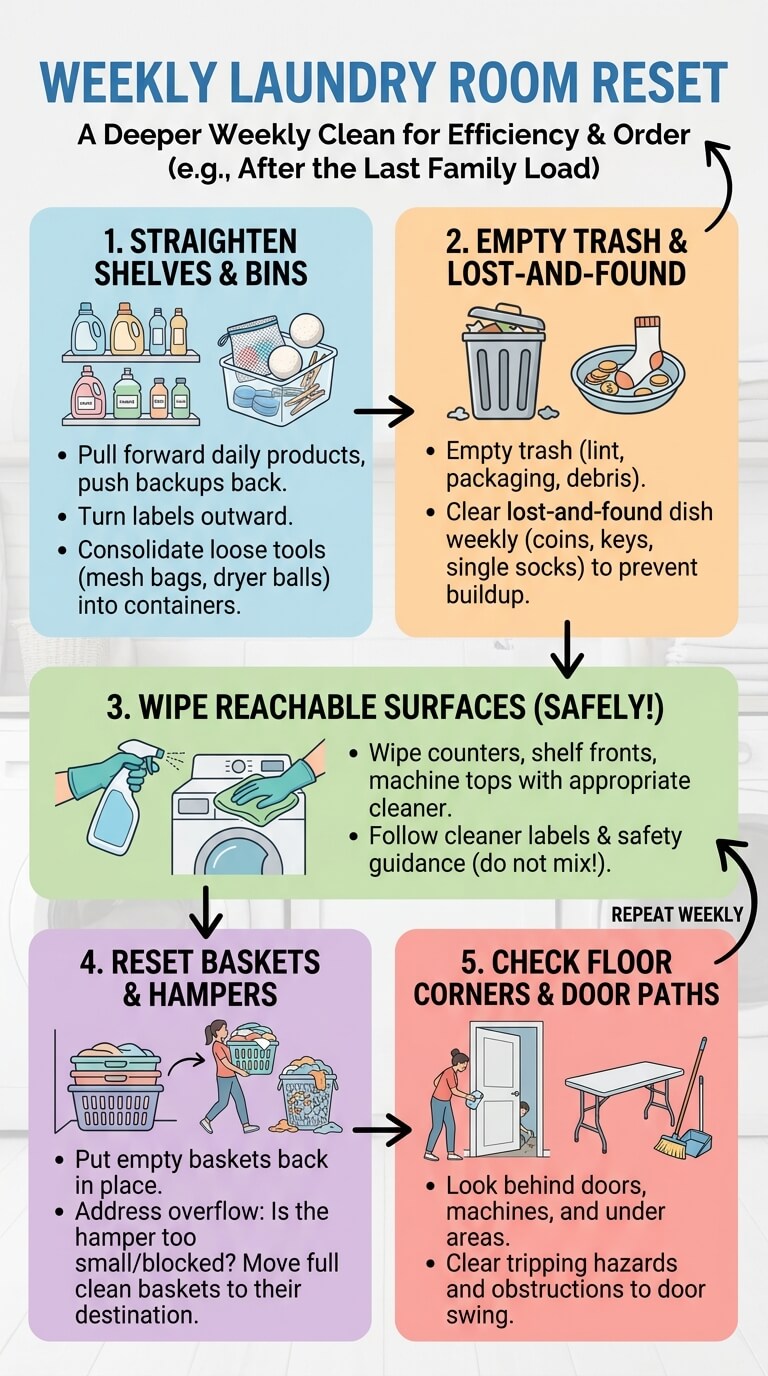
Once a week, give the room a slightly deeper reset. This is the time to straighten storage, clear the floor, and catch small problems that daily resets miss. Choose a day tied to your laundry pattern, such as after the last family load of the week.
Straighten shelves and bins
Pull forward the products you use most and push backups into their assigned backup zone. Turn labels outward so you can identify products quickly. Put loose mesh bags, dryer balls, garment bags, clothespins, and stain tools back into their container instead of letting them spread across the shelf.
Empty trash and lost-and-found items
Trash in a laundry room can include lint, packaging, pocket debris, tags, tissues, and broken hangers. Lost-and-found items need a limit too. Put coins, keys, hair ties, receipts, toys, and single socks into one small dish or bin, then empty it weekly so it does not become a permanent museum.
Wipe reachable surfaces according to product labels
Wipe counters, shelf fronts, machine tops, and the outside of bins with a product that is appropriate for the surface. Read the cleaner label and avoid mixing products. For general cleaner safety, Poison Control household cleaner guidance is a good reminder to use products as directed and store them carefully.
Reset baskets and hampers
Put empty baskets back where they belong. If dirty clothes are sitting beside a hamper, the hamper may be too small, blocked, or in the wrong room. If clean baskets are full, the real task is not more basket storage. It is getting the folded items to their destination.
Check floor corners and door paths
Look behind the door, beside the machines, under the folding area, and near the closet track if you have one. Clear anything that blocks the door swing or creates a tripping spot. In tiny laundry spaces, the floor path matters as much as the shelves because every extra basket changes how the room works.
Monthly Organization Maintenance
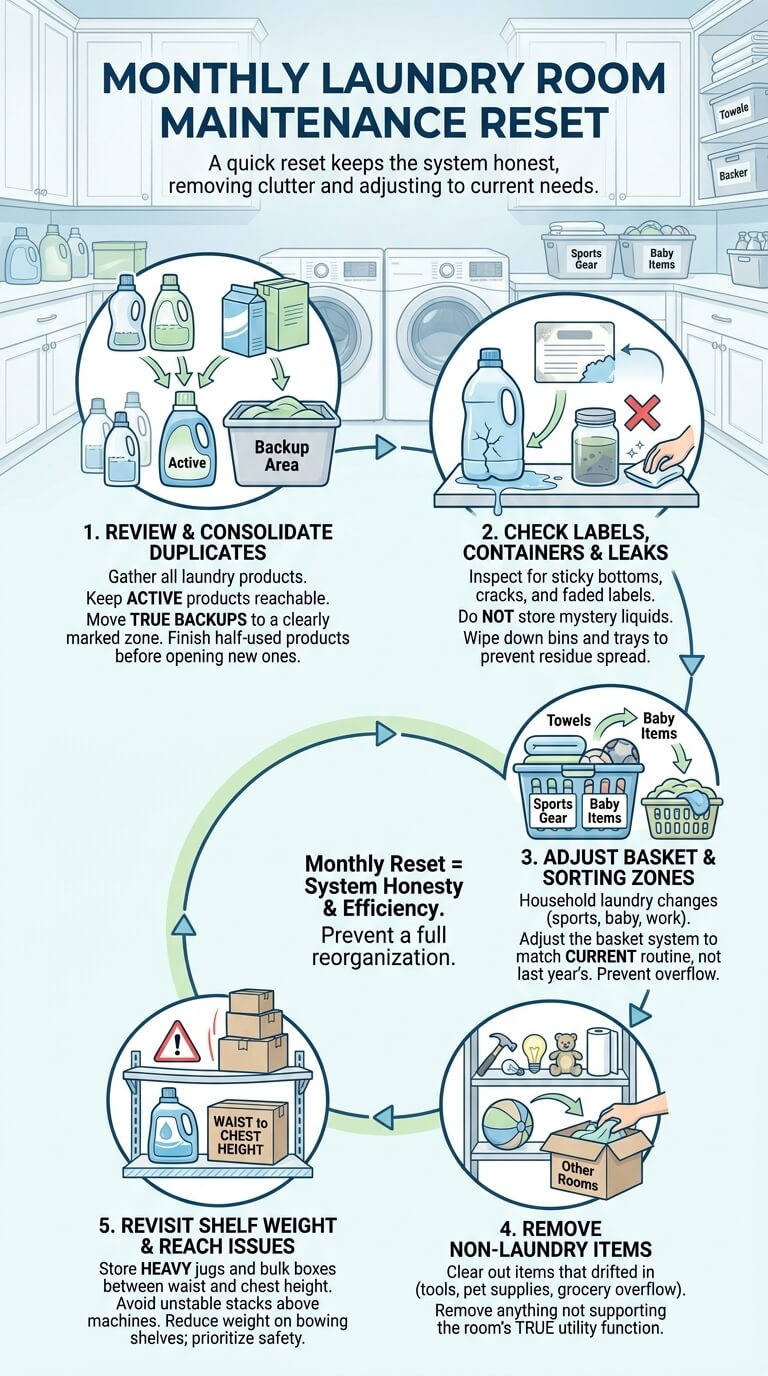
A monthly reset keeps the system honest. It gives you a chance to remove duplicate products, adjust labels, and fix storage habits before the room needs a full reorganization.
Review duplicate supplies
Gather all laundry products in one view. Keep the active product easy to reach and move true backups into a clearly marked backup area. If you have several half-used products that do the same job, finish one before opening another unless the label or fabric care need requires a specific product.
Check labels, containers, and leaks
Look for sticky bottle bottoms, cracked containers, faded labels, and products that have been decanted without clear identification. Do not store mystery liquids. If you use bins or trays, wipe them out monthly so residue does not spread to the shelf.
Adjust basket and sorting zones
Household laundry changes over time. A sports season may need a towel bin, a baby may create more small items, or a work uniform may need a separate holding spot. Adjust the basket system before overflow becomes normal. The system should match current laundry, not last year’s routine.
Remove items that drifted in from other rooms
Laundry rooms often collect batteries, tools, lightbulbs, pet supplies, paper goods, grocery overflow, and cleaning products that belong elsewhere. Remove anything that does not support laundry or the room’s true utility function. A small home may need shared storage, but shared storage still needs clear limits.
Revisit shelf weight and reach issues
Heavy detergent jugs, bulk boxes, and stacked bins should be stored where you can lift them safely. Move heavy items between waist and chest height when possible, and avoid unstable stacks above the machines. If a shelf bows, shifts, or feels overloaded, reduce the weight instead of trusting another basket to hold it together.
Seasonal or Busy-Household Adjustments
Some laundry rooms stay organized most of the year but fall apart during predictable busy periods. Plan for those periods with temporary zones rather than letting temporary piles become permanent clutter.
Back-to-school and sports laundry
Sports uniforms, gym clothes, towels, and school clothes can overwhelm a normal hamper system. Add one labeled holding bin for active sports laundry during the season. Empty it on a schedule, and remove the bin when the season ends so it does not become general storage.
Guest bedding seasons
Guest sheets, spare blankets, and extra towels can crowd a laundry room after holidays or family visits. Create a short-term landing area only while those items are being washed. Once they are clean and dry, return them to the linen closet, guest room, or under-bed storage instead of leaving them near the machines.
Pet laundry periods
Pet towels, washable crate pads, couch covers, and bedding can add bulk and hair to the room. Keep a dedicated washable bag or basket for pet laundry if it happens often. Do not let pet items cover the folding area where clean household clothing needs to go.
Apartment or shared laundry changes
Shared laundry rooms need portable routines. Keep supplies in a caddy, carry only what you need, and return the caddy to a closet or shelf after each trip. If you share machines with neighbors, the organization goal is fast movement in and out, not storing a full laundry setup in the shared area.
Cleaning Boundaries: What This Routine Covers and What It Does Not
This routine covers light cleaning and organization maintenance. It is not a repair guide, appliance cleaning guide, dryer vent guide, mold remediation plan, or stain removal guide. Clear boundaries keep the checklist useful and prevent you from ignoring issues that need a different response.
Light dust, lint, spills, and shelf resets
Routine upkeep includes wiping reachable surfaces, clearing lint from visible areas, picking up floor debris, straightening bins, and cleaning small detergent spills. It also includes removing clutter before cleaning, because wiping around piles usually leaves the room looking busy again within a day.
When to follow appliance manuals
For washer filters, dryer lint systems, machine interiors, error messages, hoses, and venting, use the appliance manual. Do not guess with parts you do not understand. A tidy room is helpful, but appliance care needs model-specific instructions and safe access.
When moisture, electrical, or appliance problems need a different guide or professional help
Stop treating the issue as normal clutter if you notice repeated wet flooring, burning smells, sparks, hot outlets, machine movement, damaged cords, or a dryer that seems unsafe. Keep the area around appliances clear and take lint seriously. The NFPA clothes dryer and washing machine safety guidance gives useful context for why laundry areas should stay clear and why lint-related maintenance should not be ignored.
Keep Supplies Organized Over Time
Duplicate products are easier to prevent when you organize laundry supplies by daily use, occasional use, and backup stock.
Laundry supplies are easy to organize once and hard to maintain if every sale, backup bottle, and specialty product enters the room without a limit. The best long-term system makes the active products visible and keeps extras from taking over.
One open product rule
Keep one open product for each regular job when possible: one everyday detergent, one fabric softener if you use it, one oxygen product if appropriate, and one set of dryer items. Specialty products can exist, but they need a specific reason and a visible label. This rule reduces half-used bottles and mystery products.
Backup product limits
Choose a backup limit that fits the room. A large laundry room might hold one extra detergent and one extra box of dryer sheets. A closet might hold no backups at all. Buying in bulk only helps if the room can store the product safely without blocking shelves, doors, or floor space.
Label refresh
Labels do not need to be fancy. They need to be clear enough that another person can put things back. Refresh bin labels when your routine changes, when children start helping, or when products move to a new shelf. Remove labels that no longer match what is inside the container.
Safe storage checks for children and pets
Store laundry products where children and pets cannot easily reach them. Keep products in original containers when the label is needed for directions and safety details. If you use a caddy, do not leave it on the floor after a load. A tidy system should make risky access less likely, not easier.
Keep Baskets and Sorting Under Control
To stop baskets from becoming permanent storage, give each one a specific job and a return spot so you can store laundry baskets consistently.
Baskets and sorting zones are the moving parts of the laundry room. They help only when they keep laundry flowing. Once they become permanent holding areas, the room starts to feel cluttered even if the shelves are neat.
Empty clean baskets quickly
A clean basket should be temporary. If folded clothes stay in it for days, move the basket to the room where the clothes belong or make the basket smaller so it cannot hold several loads. In family homes, assign delivery by room instead of leaving everyone to search one mixed basket.
Reset sorting bins before they overflow
When sorting bins overflow before laundry day, simplify the system and create a laundry sorting system that matches your actual routine.
Sorting bins should show what needs washing next, not hide laundry until the floor fills up. When a bin is almost full, schedule that category into the next load. If every bin is always full, the system may have too many categories or not enough wash frequency.
Stop baskets from becoming permanent storage
Do not use laundry baskets for outgrown clothes, donation piles, returns, toys, tools, or linens waiting for a decision. Those items need their own destination. A basket used for every undecided item will eventually make the laundry room feel unfinished all the time.
Adjust the system when household habits change
Change the basket setup when the household changes. A new work schedule, baby, school sport, pet, guest routine, or smaller apartment laundry area can all change the best system. Keep the principle steady: dirty laundry should collect clearly, clean laundry should leave quickly, and empty baskets should have a home.
Mistakes That Undo Laundry Room Organization
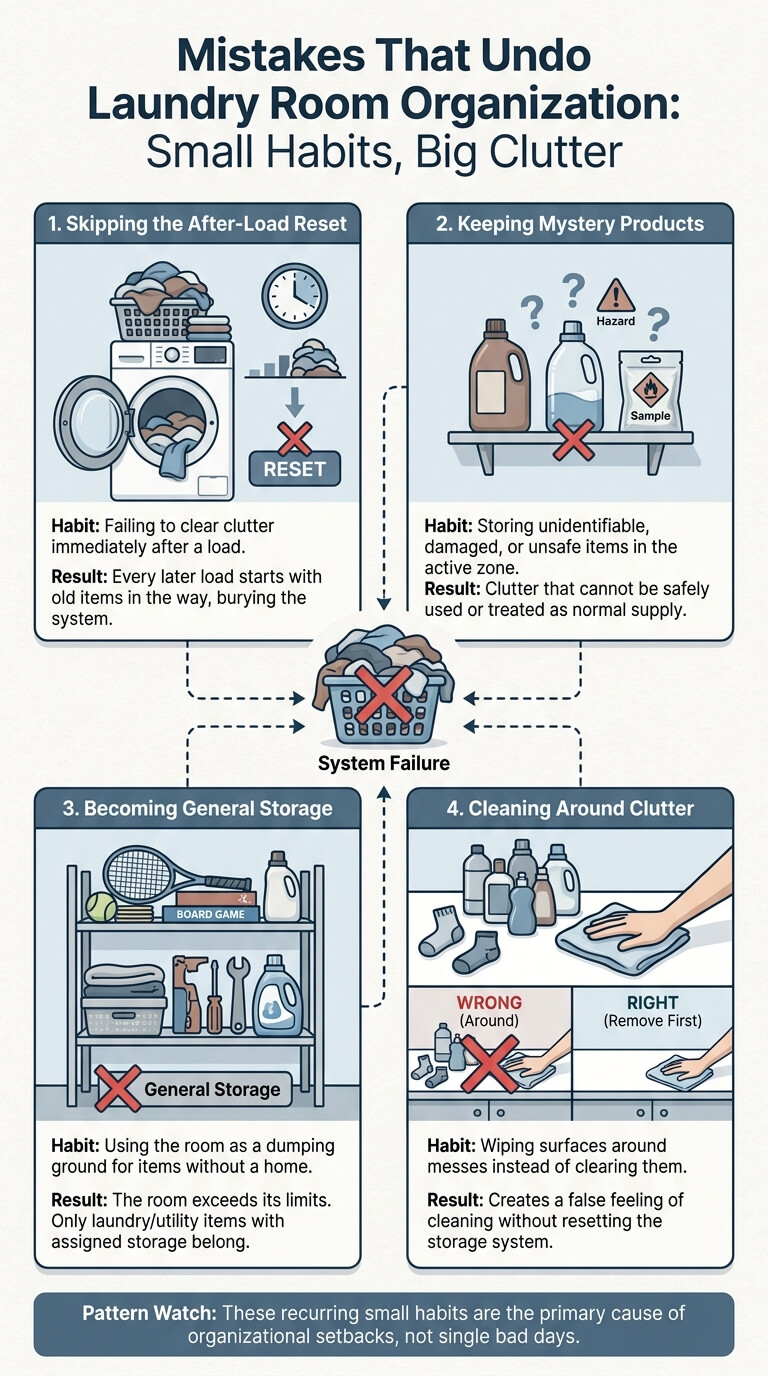
Most laundry room setbacks are not caused by one bad day. They come from small habits that repeat until the original system is buried under new piles. Watch for these patterns.
Skipping the after-load reset
The after-load reset is the most important maintenance habit because it happens at the exact moment clutter is created. Skipping it once is normal. Skipping it all week means every later load starts with old items in the way.
Keeping mystery products
Unlabeled bottles, old samples, half-used products with missing caps, and containers you cannot identify should not stay in the active laundry zone. If you cannot tell what it is or how to use it safely, do not treat it as a normal supply.
Letting the laundry room become a general storage room
The laundry room can share storage if the home is small, but it should not become the place for everything without a home. Set a clear limit: laundry items, light cleaning items used in that area, and any true utility items that have assigned storage. Everything else needs review.
Cleaning around clutter instead of removing it first
Wiping a counter around bottles, baskets, and loose items creates the feeling of cleaning without solving the mess. Clear the surface first, then wipe. The room will stay cleaner because you are resetting the storage system and the surface at the same time.
FAQ
These answers focus on maintenance after the room already has a basic setup. They are meant to help you choose a realistic reset rhythm and notice when clutter is pointing to a deeper storage, product, moisture, or appliance issue.
How often should you organize a laundry room?
Do a small reset after each laundry cycle, a shelf and basket reset weekly, and a deeper organization check monthly. The room should not need a full reorganization often if products, baskets, and clean laundry are returned to their proper places.
What should I do after every load to keep the room tidy?
Move clean laundry to its next room, return products to the same zone, clear the machine tops and folding area, empty obvious trash, and check the floor for lint, spills, or damp items. This should take only a few minutes when the system is simple.
How do I stop laundry supplies from piling up again?
Keep only active products within easy reach, limit backups to what the room can actually hold, and remove empty or mystery containers. Before buying another product, check the shelf first and finish duplicates when it is safe and appropriate to do so.
How do I keep a small laundry room clean and organized?
A small room usually needs a tighter reset because the floor fills quickly, so pair this routine with small laundry room organization ideas that protect the walking path.
Use the same reset routine, but be stricter about floor space. Keep baskets collapsible, narrow, stacked, or stored in one assigned spot. Avoid bulk products if they block shelves or doors. In a small room, the best system is the one that keeps the walking path and folding surface open.
When is a laundry room problem more than normal clutter?
It may be more than clutter when moisture keeps returning, a smell does not improve after normal cleaning, appliances show warning signs, shelves feel unsafe, or products are stored where children or pets can reach them. At that point, stop adding storage and address the underlying safety, moisture, or appliance issue.
Final Thoughts
A clean and organized laundry room is maintained through small finishes, not occasional dramatic cleanouts. Clear the surface after a load, move baskets along, put supplies back, and check the spots where lint, spills, and damp items usually hide. When those habits are easy, the room stays ready for the next load instead of becoming another project.
Keep the routine flexible. A tiny closet, a busy family laundry room, and a shared apartment setup will not use the same baskets or shelves. They can still use the same rule: every item needs a job, every basket needs a next step, and every load should leave the room a little more reset than it was before.

Ethan Carter is the Founder & Editor of HomeCleanSecrets. Based in the United States, he has 5 years of experience creating practical home cleaning, laundry care, stain removal, decluttering, and home organization content. His goal is to help everyday households clean smarter and build simple routines that are easier to maintain.
Read more about Ethan Carter on his author page: https://homecleansecrets.com/ethan-carter/