
Laundry baskets are supposed to move clothes, not become permanent furniture in every doorway. When a basket has no clear job or parking spot, it turns into a pile with handles: dirty towels in the hallway, clean clothes sitting unfolded, and empty baskets blocking the washer.
This guide explains how to store laundry baskets by job, room, basket type, and household routine. The goal is not to hide every basket. The goal is to keep baskets easy to grab, easy to return, and out of the way of doors, machines, closets, stairs, and daily traffic.

Quick Answer: Give Each Basket a Job and a Parking Spot
Basket storage is one piece of a larger laundry room organization plan, because baskets affect the walking path, sorting flow, and clean laundry return.
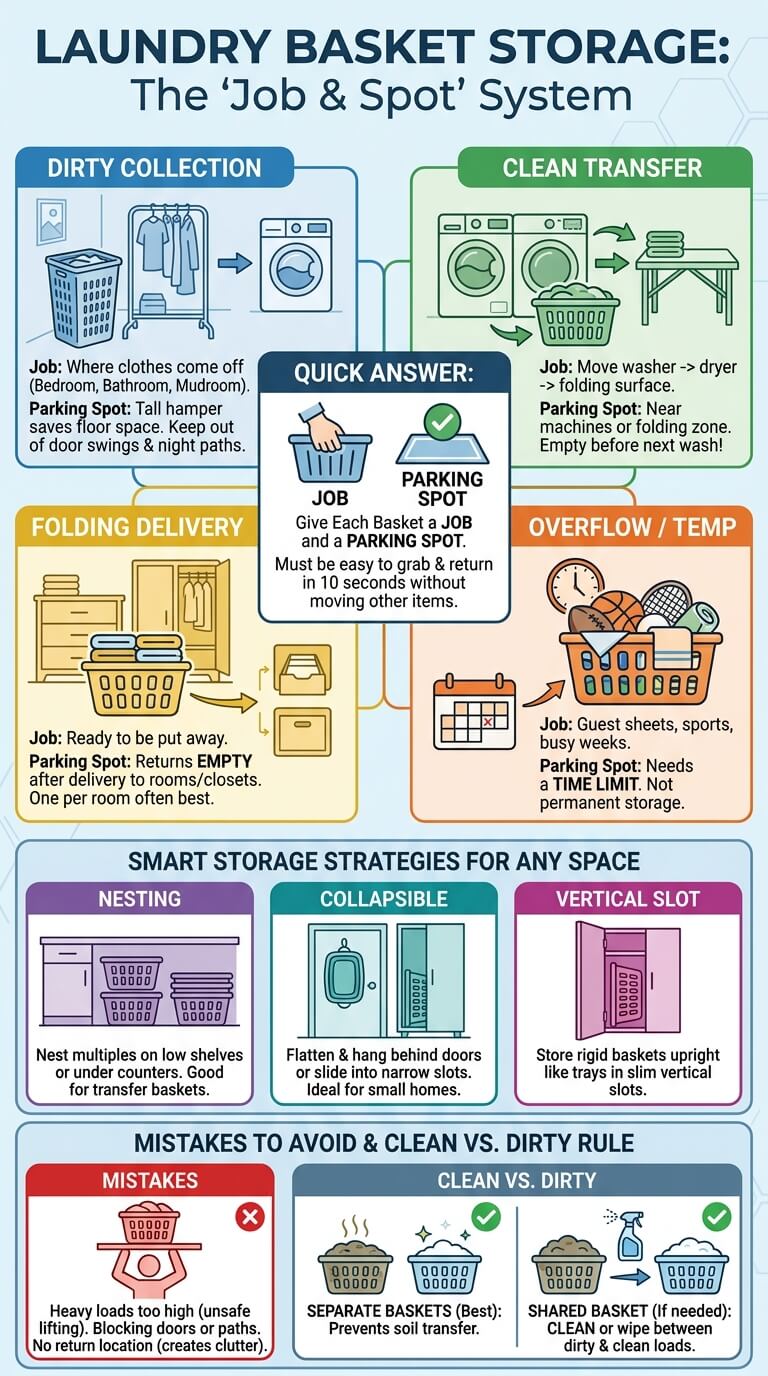
The simplest system is one clear role for each basket: dirty collection, clean transfer, folding delivery, or temporary overflow. A good test is whether someone can return the basket in ten seconds without moving another item first.
Start by walking the route from the bedroom to the washer, then from the dryer to the folding spot, then from folded piles back to storage. Any place where a basket is set down for more than a few minutes needs either a real parking spot or a rule that moves the basket along. This small walkthrough often shows why baskets collect in the wrong place.
Dirty laundry baskets
Dirty laundry baskets belong where clothes come off: bedrooms, bathrooms, dressing areas, mudrooms, or kids’ rooms. A tall hamper usually works better than a wide basket because it takes less floor space. Keep it reachable, but not in a door swing, stair landing, or path used at night.
Clean transfer baskets
A clean transfer basket moves laundry from washer to dryer, dryer to folding surface, or folding surface to rooms. Store it near the machines or folding zone, not under a pile of dirty clothes. If clean laundry often sits in it for days, the basket needs a smaller size or a firmer reset rule.
Folding baskets
A folding basket holds items that are ready to be put away. It should return empty after clothes reach their drawers, shelves, or linen closet. In family homes, one basket per room often works better than one basket per person because the delivery path is clearer.
Overflow or temporary baskets
An overflow basket can hold guest sheets, sports laundry, pet towels, or an unusually busy laundry week. It needs a time limit. When overflow becomes normal storage, it hides a bigger problem: too many clothes, not enough drawer space, or no reliable laundry day reset.
Why Laundry Baskets Create Clutter
Laundry basket clutter usually comes from the system around the basket. Before buying another container, check whether you have too many baskets, no return location, clean laundry living in baskets, or basket sizes that do not fit the room.
Too many baskets for the space
More baskets can help a busy home, but only if each one has a job. A one-person home may need one dirty hamper and one transfer basket. A family may need more, but extra baskets should solve a real task such as sorting, carrying, folding, or separating pet and sports laundry.
No return location
A basket without a return location will land wherever the last person stopped using it. Create a parking spot that is easier than the bad habit: a shelf slot, under-counter space, closet corner, or wall hook for an empty collapsible basket. The spot should fit without shoving or tilting.
Baskets used as long-term clean laundry storage
If clean clothes stay in baskets for days, the issue may be drawer space, closet crowding, or a folding routine that ends too far from storage. A basket should move clean laundry to its home, not become the home. Empty clean baskets before starting another wash cycle whenever possible.
Basket size does not match the room
A wide plastic basket may work in an open laundry room and fail in a hallway closet. Measure door swings, cabinet fronts, washer doors, dryer doors, and walking paths before deciding where a basket lives. In tight spaces, collapsible, nesting, vertical, or narrow designs usually beat oversized bins.
Choose the Right Basket Type for Storage
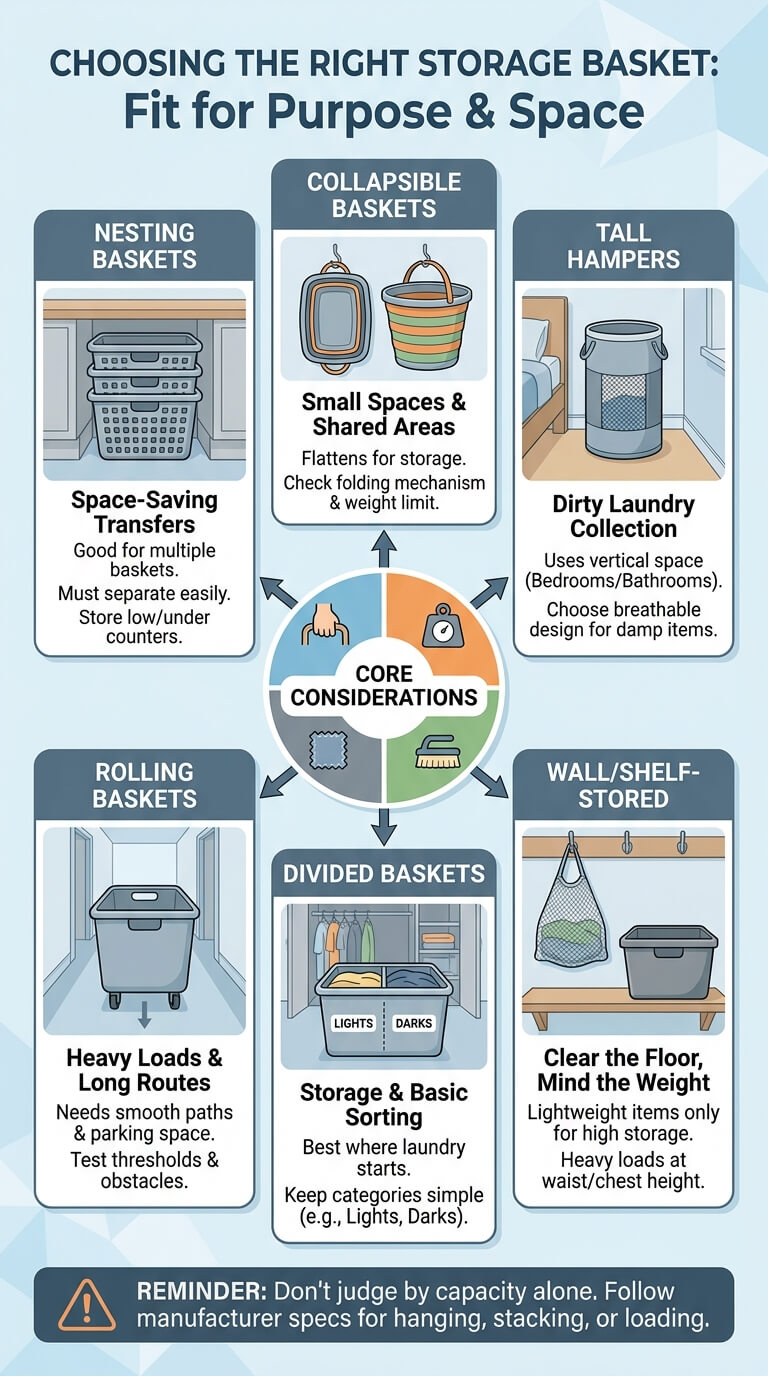
The right basket fits the room when it is empty and when it is full. Handles, height, material, weight rating, and cleaning instructions matter. Check manufacturer specifications before hanging, stacking, folding, or loading a basket in a way the design may not support.
Do not judge the basket only by capacity. A large basket can reduce trips, but it can also become too heavy, too wide for a doorway, or too tempting to leave full. A smaller basket that empties quickly may keep the system cleaner than a deep hamper that hides two weeks of laundry.
Nesting baskets
Nesting baskets are useful when you need more than one transfer basket but cannot spare multiple floor spots. Store them on a low shelf, under a counter, or in a closet. Pick baskets that separate easily; if they stick together, people will leave them out instead of returning them.
Collapsible baskets
Collapsible baskets work well in apartments, laundry closets, and homes with shared laundry rooms. They flatten between loads and can slide beside a cabinet or hang empty on a hook. Check the folding mechanism and weight limit, especially if you often carry towels, jeans, or bedding.
Tall hampers
Tall hampers are best for dirty laundry collection because they use vertical space and keep clothing contained. They belong in bedrooms, bathrooms, or closets where laundry starts. Choose a breathable design if damp towels or workout clothes land there, and keep it away from splash zones and blocked vents.
Rolling baskets
Rolling baskets help with heavy loads or long routes from bedrooms to machines. They need smooth paths and a real parking space. Test thresholds, hallway turns, rugs, and stairs before relying on wheels. A rolling basket that blocks a narrow hall is not storage; it is a movable obstacle.
Divided baskets
Divided baskets combine storage and basic sorting. They work best where dirty laundry starts, not in a cramped laundry room that already needs machine access. Keep categories simple, such as lights, darks, towels, or wash soon. Too many sections can make people ignore the system.
Wall-mounted or shelf-stored baskets
Wall and shelf storage can clear the floor, but weight matters. Empty collapsible baskets, mesh bags, and lightweight bins are better candidates than loaded towel baskets. Store heavy loads at waist or chest height, never overhead. If hardware bends, pulls, or rubs the door, stop using that setup.
Best Places to Store Laundry Baskets
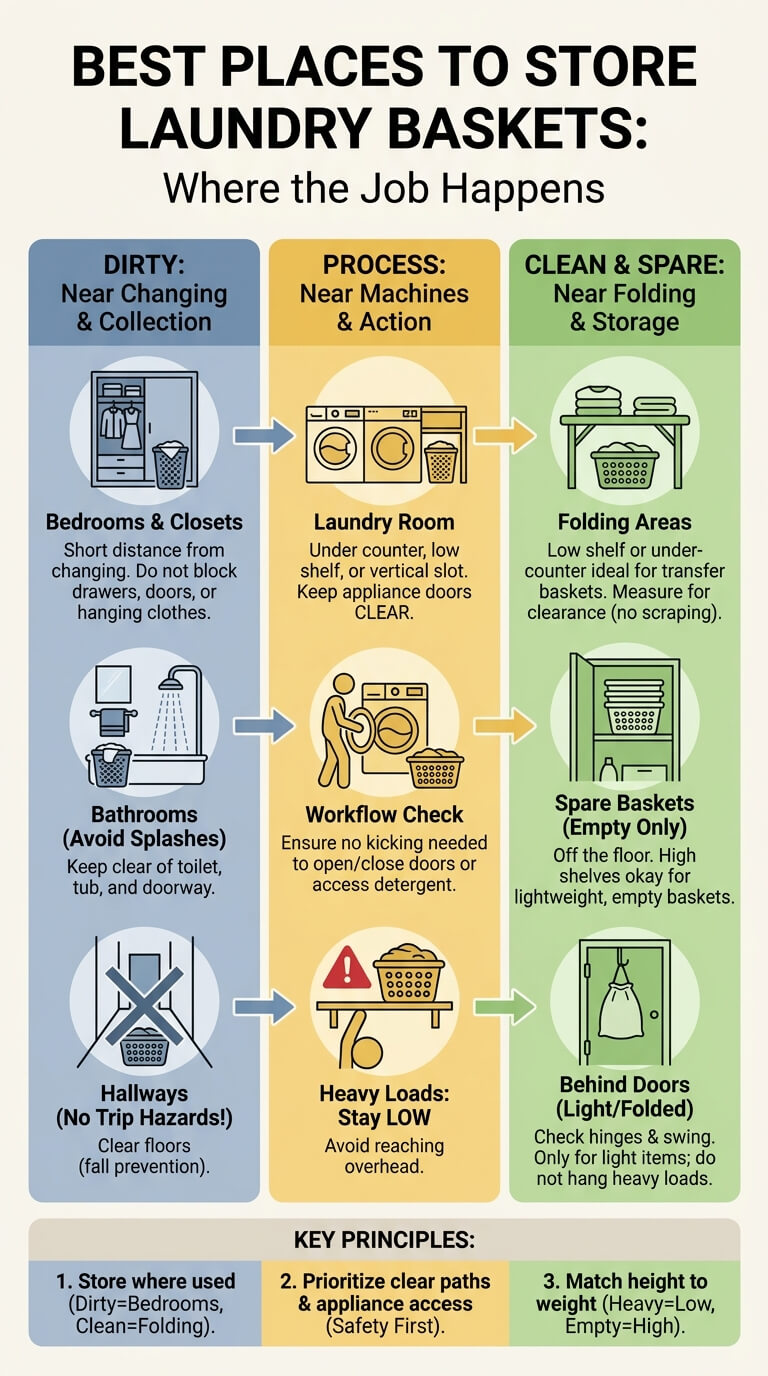
Store the basket where its job happens. Dirty hampers belong near clothing changes. Clean baskets belong near machines or folding. Spare baskets belong off the floor. Walk through a normal laundry day and notice where baskets naturally pause.
Also check what the basket blocks when the room is being used. Open the washer, open the dryer, pull out the detergent, turn around with a load, and close the door. If the basket has to be kicked aside during any of those actions, the storage spot is not working.
In the laundry room
A laundry room can store a basket under a counter, on a low shelf, beside a cabinet, or in a vertical slot. Keep washer and dryer doors clear. Do not let basket storage compete with safe product storage or appliance access. The American Cleaning Institute laundry basics guidance is a useful reminder that baskets should support sorting, product use, and fabric care rather than only hide clutter.
In bedrooms or closets
Bedrooms are often the best place for dirty hampers because they shorten the distance between changing clothes and dropping clothes in the right place. In closets, make sure the basket does not block drawers, hanging clothes, shoes, or sliding doors. If the closet is already crowded, keep the hamper outside it.
In bathrooms or hallway zones
Bathrooms collect towels and clothes before showers, but baskets should not sit where they catch splashes or block the toilet, tub, or doorway. Hallway baskets need extra caution. The National Institute on Aging recommends keeping floors clear of clothes and other objects in its room-by-room fall prevention guidance, which applies directly to baskets parked in walking paths.
On shelves or under counters
Low shelves and under-counter spaces are ideal for empty transfer baskets. Measure the basket including handles, because a basket that scrapes every time will not be returned. High shelves are better for empty baskets only. Loaded baskets should stay low enough to lift without reaching overhead.
Behind doors without blocking movement
Behind-door storage works for light laundry bags or folded baskets, but it can make a door hard to open. Check the swing, hinges, wall stop, and handle clearance. Do not hang loaded baskets unless the door hardware, hook, and basket instructions all support that weight.
Small-Space Laundry Basket Storage Ideas
In a tight room, basket storage should follow the same space-saving rules used for small laundry room organization ideas.
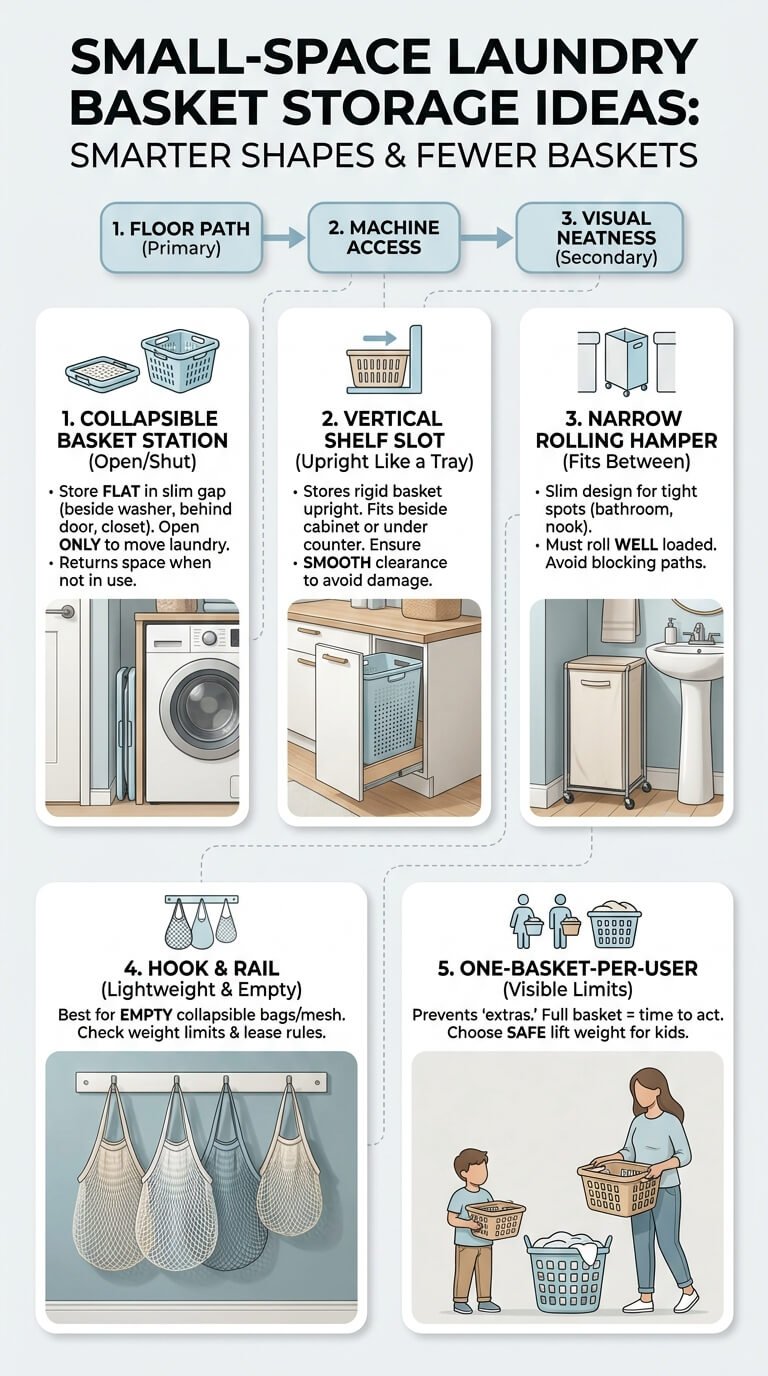
Small spaces need fewer baskets and smarter shapes. A compact system should protect the floor path first, then machine access, then visual neatness. A pretty basket that blocks a door is still the wrong basket.
Use the smallest number of baskets that can finish a normal laundry cycle without creating piles. In a tiny home, that may mean dirty clothes live in bedrooms, one transfer basket comes out on laundry day, and folded items go away immediately because there is no spare floor for a waiting zone.
Collapsible basket station
Keep one collapsible basket in a slim station beside the washer, behind a bedroom door, or inside a shallow closet. Open it only when laundry is moving. Return it flat after folding or delivery so the room works on non-laundry days too.
Vertical shelf slot
A vertical slot stores a rigid basket upright like a tray. It can fit beside a cabinet, at the end of a shelf, or under a folding counter. Leave enough clearance so the basket slides out smoothly and does not scratch paint, trim, or appliance sides.
Narrow rolling hamper
A narrow rolling hamper can fit between fixtures or along a wall when a regular basket is too wide. It is useful for bathrooms, bedrooms, and laundry nooks. Make sure wheels roll smoothly when loaded, and do not park it where people have to step around it.
Hook or rail storage where weight allows
Hooks and rails are best for empty collapsible baskets, mesh bags, or lightweight fabric hampers. Follow the product instructions and wall hardware limits. If you rent, choose hardware that matches your lease rules and the expected load, not just what looks convenient.
One-basket-per-user limits
One basket per user can stop small spaces from filling with extras. The rule also makes responsibility visible. When a person’s basket is full, laundry needs to move rather than spill into a second pile. For kids, choose a basket they can lift safely.
Laundry Closet Basket Storage
A closet laundry area needs stricter basket rules, especially around doors and machines, so use a separate plan to organize a laundry closet.
Laundry closets are harder than full rooms because baskets, machines, doors, shelves, and supplies all compete for the same space. A basket should never make the closet harder to use.
When baskets should stay outside the closet
Keep baskets outside the closet if they block appliance doors, detergent shelves, shutoff valves, outlets, or door tracks. Dirty laundry often belongs in bedrooms instead. The closet may only have room for one clean transfer basket or one collapsible basket on laundry day.
Transfer basket rules for stacked machines
Stacked machines can force awkward lifting. Keep the transfer basket close, but not high. A low shelf, rolling cart, or nearby bench can act as a landing spot. Avoid balancing baskets on open appliance doors or lifting heavy wet loads above shoulder height.
How to avoid blocking bifold or sliding doors
Bifold and sliding doors need clear tracks and swing space. Test the basket with the door fully open and closed. Do not store baskets on door tracks, even temporarily. Repeated rubbing can damage the door system and make laundry day more annoying.
Where to put baskets on laundry day only
Some closets cannot store baskets every day. Create a laundry-day parking spot instead: a mat beside the closet, a nearby bench, or a folding table in the hall. When the load is put away, the basket collapses, nests, or returns to its off-duty spot.
Basket Rules for Clean vs Dirty Laundry
When baskets are part of the sorting process, it helps to create a laundry sorting system so each basket has a clear job.
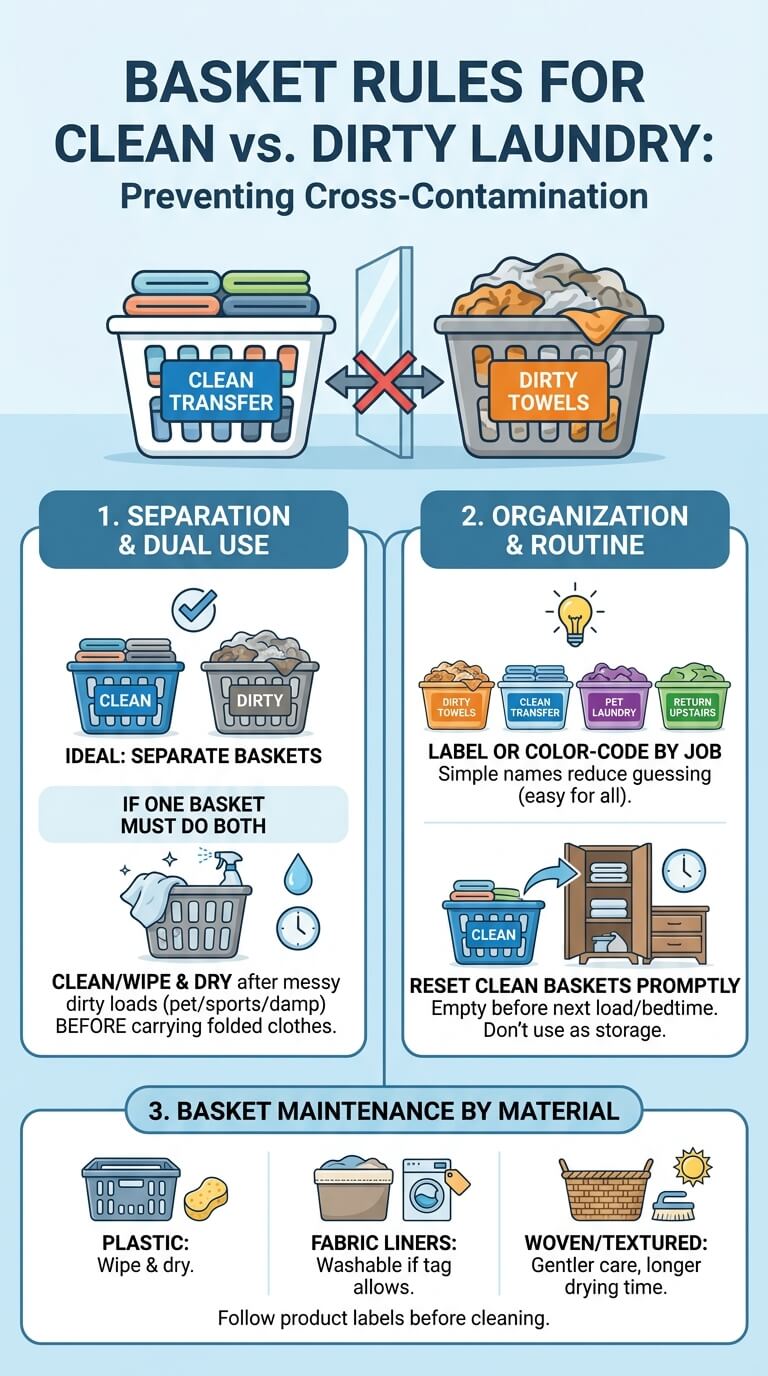
Clean and dirty laundry can pass through the same room, but the basket jobs should stay clear. This keeps the routine easier and prevents damp, muddy, hairy, or heavily soiled items from mixing with folded clothing.
Avoid mixing clean and dirty baskets
Separate clean and dirty baskets if space allows. If one basket must do both jobs, clean or wipe it according to the basket material after messy dirty loads and let it dry before carrying folded clothes. Pay extra attention after pet towels, sports gear, or damp bath items.
Label or color-code by job
Labels and colors reduce guessing. Try simple job names such as dirty towels, clean transfer, return upstairs, pet laundry, or kids’ rooms. Keep the system obvious enough that a child, guest, or roommate can use it without asking where laundry belongs.
Reset clean baskets after folding
The system works better when clean baskets are reset after folding, which is one of the habits that helps keep the laundry room clean and organized.
The clean basket should not become a dresser. Empty it before the next load starts, before bedtime, or before the weekend ends. Deliver clothes by destination: towels to the linen closet, kitchen cloths to the kitchen, and bedroom laundry to the right room.
When to wash or wipe basket interiors according to material limits
Plastic baskets may be wiped and dried. Fabric liners may be washable if the care tag allows it. Woven or textured baskets may need gentler care and more drying time. Follow product labels and material instructions before soaking, spraying, or laundering any basket part.
Basket Storage Systems by Household Type
The best basket setup depends on who uses it. Match the number, size, and location of baskets to the real household, not to an ideal photo of a laundry room.
One-person home
One person usually needs one dirty hamper and one clean transfer basket. Store the transfer basket nested, collapsed, or on a shelf when empty. Skip extra baskets unless they solve a recurring issue such as laundromat trips, towels, or work uniforms.
Family with kids
Families need visible, repeatable basket rules. A hamper in each bedroom plus a shared transfer basket may work better than many baskets in the laundry room. Choose sizes children can carry safely. The CPSC home safety checklist offers a useful safety mindset for keeping household areas clear of clutter and avoidable hazards.
Shared rental
Shared rentals need ownership boundaries. Personal baskets should usually live in bedrooms, while the laundry area stays clear for whoever uses it next. If a shared basket keeps disappearing, each person needs a labeled collapsible basket instead of one communal container.
Pet laundry or sports laundry
Pet and sports laundry often needs a separate temporary container because items may be hairy, muddy, damp, or heavily soiled. Use a washable bag, ventilated basket, or labeled hamper. Do not leave wet items sealed for days, and keep these baskets away from food prep and play areas.
No dedicated laundry room
Homes without a laundry room need mobile storage. A bedroom hamper, a collapsible transfer basket, and a folding spot on a bed or table may be enough. If you use a laundromat or shared building machines, choose a basket or bag that fits stairs, elevators, parking, and weather.
Mistakes to Avoid
If basket clutter is only one part of a larger room problem, it may be better to organize the whole laundry room instead of only moving the baskets.
The most common basket mistakes come from copying a setup without checking space, weight, door movement, or daily habits. Storage should make laundry safer and easier, not just more styled.
Before changing the setup, watch one real laundry session. Notice where baskets are carried with two hands, where they scrape walls, where clean laundry waits, and where dirty items miss the hamper. Those small friction points are usually more useful than a product photo or a perfectly staged shelf.
Storing heavy loaded baskets too high
Heavy baskets should not live overhead. Towels, jeans, bedding, and wet laundry can become awkward fast. Keep loaded baskets low enough to lift without twisting or reaching above shoulder height. Use high shelves for empty baskets, not full ones.
Keeping broken baskets because they still hold laundry
Cracked baskets, broken handles, and sharp edges can snag fabric, scratch walls, pinch fingers, or fail while carried. Repurpose only if the basket is still safe for a lighter job. Replace baskets that make laundry harder or less stable.
Buying decorative hampers that do not fit the workflow
A decorative hamper is only useful if people actually use it. Check the opening, liner, cleaning instructions, capacity, weight, and placement. A lidded hamper that is annoying to open often creates laundry on the floor beside it.
Letting every basket become a holding zone
Every basket needs an end point. Dirty baskets lead to washing, clean baskets lead to putting away, and overflow baskets need a deadline. HUD’s healthy homes work focuses on safer, healthier housing, and the HUD Office of Lead Hazard Control and Healthy Homes is a good reminder that clutter control is part of a safer home mindset, not just a visual preference.
FAQ
These answers focus only on basket storage and everyday use. They do not replace appliance manuals, product labels, lease rules, or care tags when those instructions are more specific.
Where should laundry baskets be stored?
Dirty baskets should be stored where clothes are removed, such as bedrooms, bathrooms, or dressing areas. Clean transfer baskets should stay near the washer, dryer, or folding surface. Spare baskets can be nested, collapsed, stored under a counter, or placed on a low shelf.
How many laundry baskets does a home need?
Most homes need one dirty hamper per main dressing area and one clean transfer basket. Add baskets only when they solve a specific problem, such as kids’ rooms, shared rentals, pet laundry, sports gear, or laundromat trips. Extra baskets without jobs usually become extra piles.
Are collapsible laundry baskets worth it?
Collapsible baskets are worth it when floor space is limited or laundry happens on certain days rather than daily. They store flat and work well in closets, apartments, and shared laundry setups. They may not be ideal for very heavy loads unless the product is rated for that use.
How do I store laundry baskets in a small laundry room?
Keep only the active basket in the room. Store extras nested on a shelf, upright in a vertical slot, under a counter, or collapsed behind a door where weight allows. Keep the washer door, dryer door, cabinet fronts, and walking path clear.
Should clean and dirty laundry use separate baskets?
Separate baskets are better when space allows because the jobs stay clear. If one basket must serve both clean and dirty laundry, clean or wipe it according to its material after messy loads and let it dry fully before using it for folded clothing.
Final Thoughts
The best laundry basket storage system is simple enough to repeat on a busy day. Give each basket one job, choose a shape that fits the room, keep loaded baskets at a safe height, and reset clean baskets after clothes are put away. When baskets have both a purpose and a parking spot, the laundry room, closet, hallway, and bedroom all stay easier to use.

Ethan Carter is the Founder & Editor of HomeCleanSecrets. Based in the United States, he has 5 years of experience creating practical home cleaning, laundry care, stain removal, decluttering, and home organization content. His goal is to help everyday households clean smarter and build simple routines that are easier to maintain.
Read more about Ethan Carter on his author page: https://homecleansecrets.com/ethan-carter/