
A good laundry sorting system is not just a row of baskets. It is a simple decision path that tells everyone where dirty items go, when a load is ready, and what should wait for a different cycle. If your laundry piles start in bedrooms, bathrooms, hallways, or a shared closet, the system has to work before clothes ever reach the washer.
The easiest way to build one is to sort by the choices you actually make on laundry day: color, fabric weight, care level, person, cycle, or urgency. Most homes do not need every category. They need a few clear bins, labels that make sense at a glance, and a rule for what happens when a bin fills up.
This guide focuses on the workflow side of laundry day. It will help you decide how to sort laundry, where to place laundry sorting bins, and how to keep the setup usable for a family, roommate home, apartment, or small laundry closet. It does not cover stain removal techniques or washer cleaning. When an item has a special care tag, unusual fabric, heavy soil, or a product warning, check the label before adding it to a regular load.

Quick Answer: Sort by the Decisions You Actually Make Before Washing
A sorting system works best when it supports the larger laundry room organization system, not when it adds more bins than the room can handle.
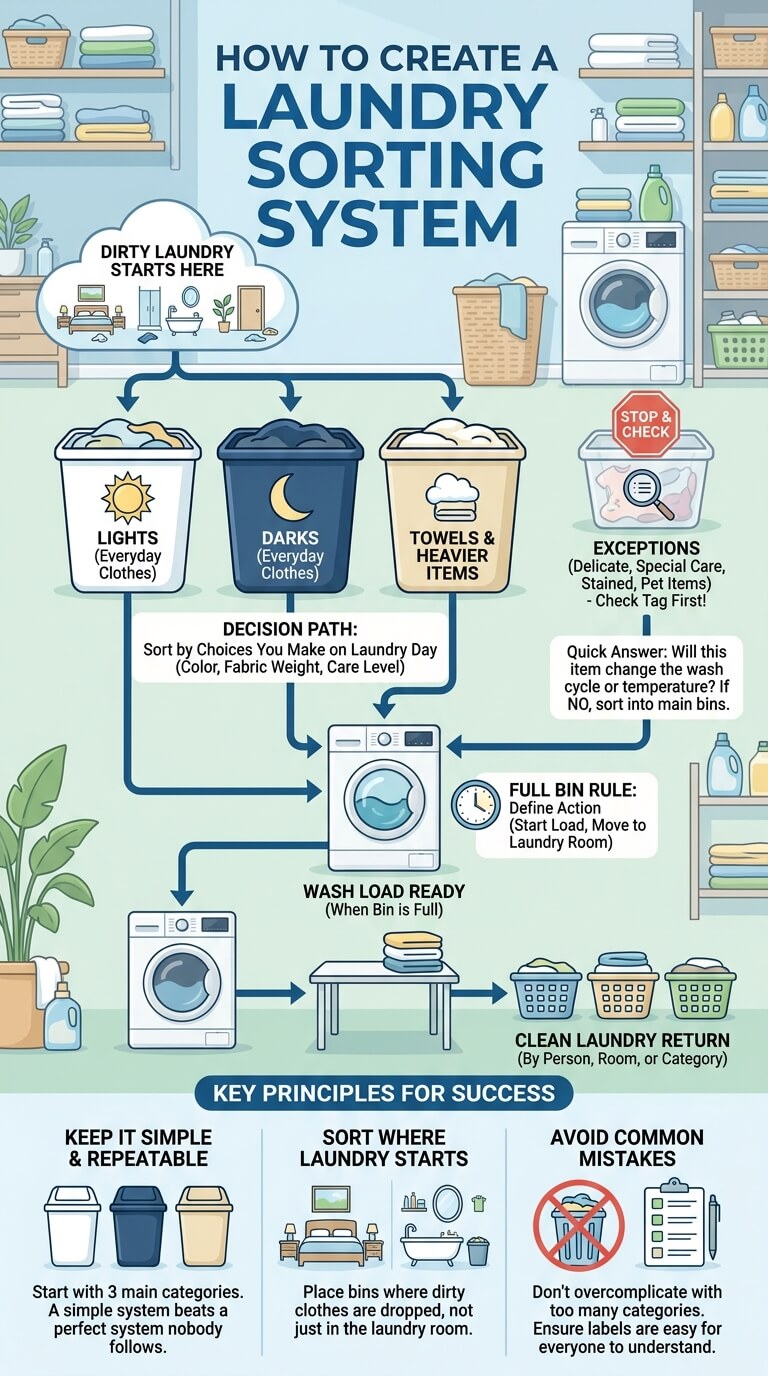
Start with three questions: will this item change the wash cycle, will it change the water temperature, and will it create a problem if mixed with the rest of the load? If the answer is no, the item probably does not need its own bin. A simple system beats a perfect system that nobody follows.
Keep the system simple enough to repeat
Most households can start with three categories: light everyday clothes, dark everyday clothes, and towels or heavier items. Add a delicate or special-care container only if those items appear often enough to justify the space. A good test is to watch one normal week of laundry. If a category stays almost empty for days, it may work better as a small mesh bag or shelf basket instead of a full hamper.
Separate only what changes the next action
Every sorting category should tell you what happens next. “Towels” means a heavier load. “Delicates” means a gentler cycle or a care tag check. “Uniforms” may mean priority before work or school. Vague categories such as “miscellaneous” or “later” usually become hiding places for items nobody wants to handle.
Why Laundry Sorting Systems Fail
Sorting fails when the setup looks organized but does not match the way laundry enters the house. The containers may be attractive, but if they sit too far from bedrooms, have confusing labels, or fill before anyone knows what to do, floor piles come back quickly.
Too many categories
Five or six categories can work in a large household, but too many bins slow down the moment when clothes are removed. If someone has to think hard about whether leggings are “dark,” “athletic,” “synthetic,” or “delicate,” the item often lands on the floor. Combine categories when the wash action is the same. Dark workout clothes and dark casual clothes may share a bin if you wash them on the same cycle and do not have odor or fabric concerns that require a separate process.
Bins in the wrong location
A laundry sorting system should live where dirty clothes are actually dropped. In many homes, that means bedrooms and bathrooms, not the laundry room. If the main sorter is downstairs but the family changes clothes upstairs, keep small collection hampers upstairs and move full categories to the laundry area on a set day. In a closet setup, shallow front-facing bins may work better than a deep hamper that hides the load level.
No rule for full baskets
A full bin needs a rule. Without one, a sorting hamper becomes storage for dirty clothes. Decide whether a full bin means “start a load today,” “move to the laundry room,” or “combine with the matching overflow basket.” The rule should be visible enough that another adult or older child can follow it without asking.
Family members do not understand the labels
Labels should match household language, not laundry expert language. “Cold lights,” “school uniforms,” and “towels” are easier than technical fabric terms for many homes. For kids, roommates, or guests, visual labels can help: a white shirt icon, a dark shirt icon, a towel icon, or a small color swatch. Keep labels large enough to read from standing height.
Choose Your Sorting Method
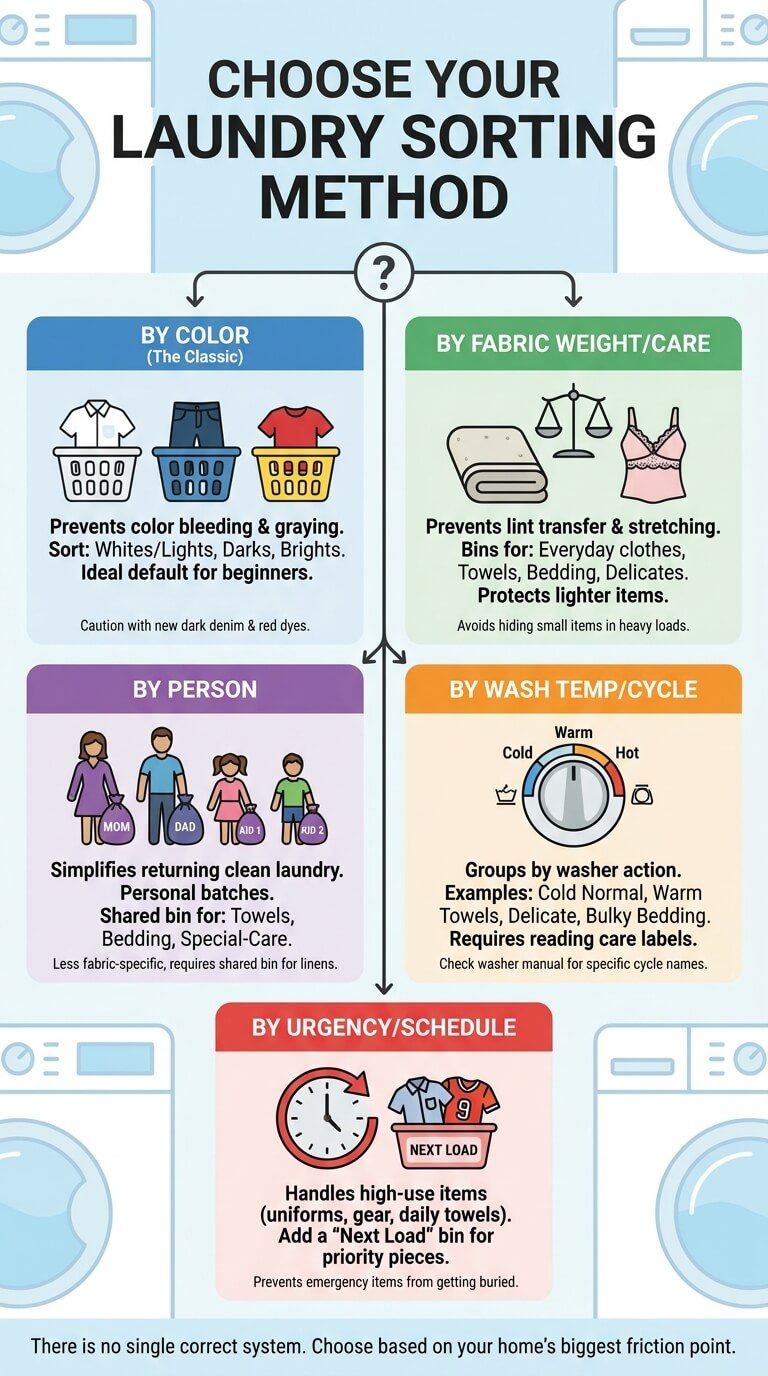
There is no single correct laundry sorting system. The right method depends on what causes the most friction in your home. If colors bleed or whites turn gray, sort by color. If clothes come out linty or stretched, sort by fabric weight. If nobody knows whose load is whose, sort by person.
By color
Color sorting is the classic starting point: whites or lights, darks, and bright colors. The American Cleaning Institute laundry basics guidance recommends sorting by color and fabric care instructions before washing, which makes this a practical default for beginners. Keep the system simple unless your household regularly has new dark denim, red garments, or items with strong dyes. Those pieces may need extra caution based on their care tags.
By fabric weight or care level
Fabric weight matters when heavy items rub against lighter ones or when towels leave lint on smoother clothes. A weight-based setup might have bins for everyday clothes, towels, bedding, and delicates. This is useful for homes with athletic wear, school uniforms, sweaters, or baby items. It also helps prevent one heavy towel load from hiding small socks and lightweight shirts.
By person
Sorting by person works when the main problem is returning clean laundry to the right room. Each family member gets a hamper or bag, and laundry is washed in personal batches when possible. This method is not always the most fabric-specific, so keep one shared bin for towels, bedding, and special-care items that should not be mixed into regular clothing.
By wash temperature or cycle
A cycle-based system groups laundry by what the washer will do: cold normal, warm towels, delicate, bulky bedding, or quick priority load. This works well for people who already read garment care labels and washer settings. Since cycles vary by machine, check your washer manual before creating labels around cycle names. A label such as “gentle or care tag check” is safer than assuming every delicate item belongs in the same wash.
By urgency or schedule
Urgency sorting is useful for uniforms, work clothes, sports gear, cloth napkins, and towels used every day. Add one small “next load” bin rather than turning the whole system into a priority board. This prevents emergency items from getting buried without forcing every piece of laundry into a strict schedule.
Decision Tree: Which Sorting System Fits Your Home
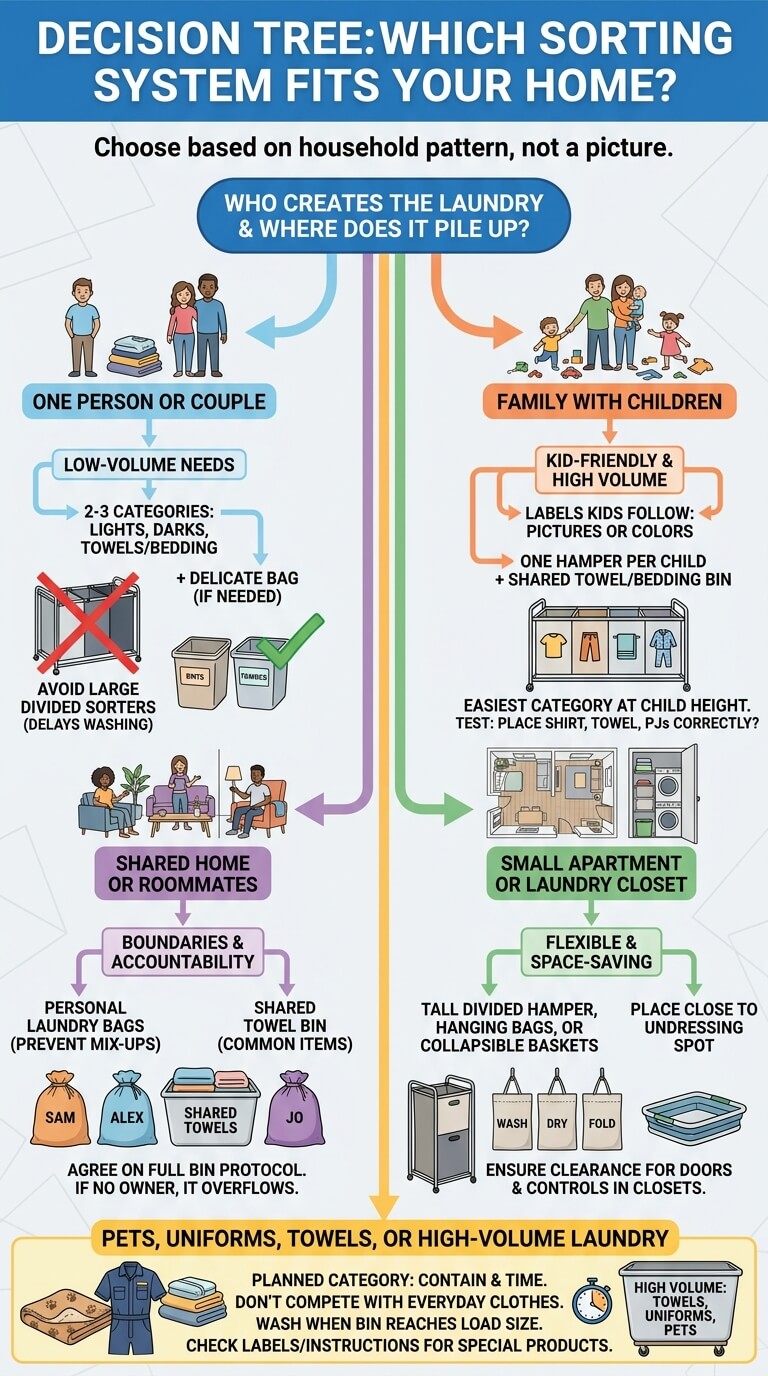
Choose the system by your household pattern, not by a picture of someone else’s laundry room. The best decision tree starts with who creates the laundry, where it piles up, and what mistake costs you the most time.
One person or couple
A one-person home or couple can usually use two to three categories. Start with lights, darks, and towels or bedding. Add a small delicate bag if needed. Do not buy a large divided sorter unless you have enough weekly laundry to fill the sections. In a low-volume home, oversized bins delay washing and make laundry day feel bigger than it is.
Family with children
Families often need labels that kids can follow quickly. Try one hamper per child plus shared bins for towels and bedding, or create a central sorter with clear pictures. Put the easiest category at child height. A good test is whether a child can place a shirt, towel, and pajamas correctly without opening multiple lids.
Shared home or roommates
Roommate homes need boundaries more than detailed fabric rules. Personal laundry bags prevent mix-ups, while a shared towel bin keeps common items from landing in bedrooms. Agree on what happens when a shared bin is full. If nobody owns the next step, the shared bin will overflow first.
Small apartment or laundry closet
For tight rooms, use small laundry room organization ideas that let sorting happen outside the main walking path.
Small spaces need flexible sorting. A tall divided hamper, hooks with labeled hanging bags, or collapsible baskets can replace a wide sorting station. Place the sorter close to the spot where clothes come off, even if that is a bedroom corner. If the washer is in a closet, leave enough clearance to open doors, reach controls, and move a basket without blocking the hallway.
Pets, uniforms, towels, or high-volume laundry
High-volume items deserve a planned category because they fill bins quickly. Towels, pet blankets, work uniforms, and sports clothes should not compete with everyday clothing for space. Avoid making fabric or odor claims. The practical goal is containment and timing: keep those items together, wash them when the bin reaches your chosen load size, and check labels or product instructions before using special laundry products.
Pick the Right Sorting Containers
Containers only work when they have a return spot, so plan how to store laundry baskets before assigning every load a separate bin.
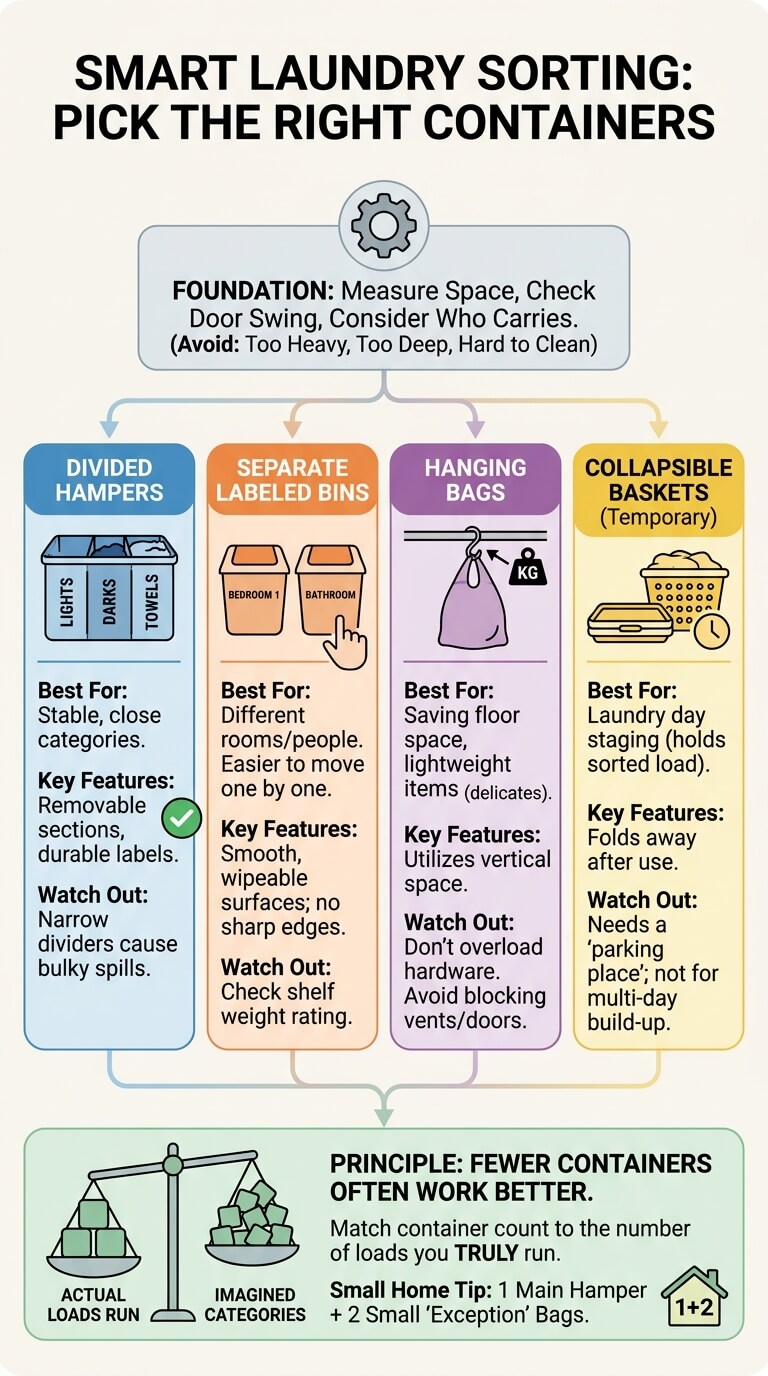
Containers should support the sorting decision, not create a new storage problem. Before buying, measure the space, check door swing, and think about who carries the laundry. A container that is too heavy, too deep, or hard to clean often fails even if it looks tidy.
Divided hampers
A divided hamper is useful when categories are stable and close together, such as lights, darks, and towels. Look for sections that can be removed or carried separately. If the divider is too narrow, bulky towels may spill into the next section. In a family home, choose labels that stay attached after repeated handling.
Separate labeled bins
Separate bins work well when laundry starts in different rooms or belongs to different people. They are also easier to move one at a time. Choose smooth surfaces that can be wiped when needed, and avoid sharp edges that can snag fabric. If bins sit on shelving, make sure the shelf is rated for the weight and does not wobble when a full bin is pulled out.
Hanging bags
Hanging bags save floor space in closets, bathrooms, and behind doors. They work best for lightweight clothing, delicates, or a small priority category. Do not overload hooks, rods, or doors beyond the hardware rating. If a hanging bag blocks ventilation, a door latch, or a walkway, move it to a safer spot.
Collapsible baskets for temporary sorting
Collapsible baskets are helpful for laundry day staging. They can hold a sorted load while the washer is occupied, then fold away afterward. They are not ideal as the only dirty laundry storage if your household lets laundry build for several days. A temporary basket should have a parking place, or it will become another floor pile.
When fewer containers work better
More containers do not always mean better sorting. If a small home struggles with space, use one main hamper and add two small sorting bags for the exceptions: delicates and towels, or lights and darks. The container count should match the number of loads you truly run, not the number of categories you could imagine.
Place Sorting Where Laundry Starts
If the entire laundry area has no clear path for incoming and outgoing clothes, first organize the whole laundry room around the way laundry moves.
Placement decides whether the system gets used. Dirty laundry usually starts where people change clothes, shower, exercise, or unpack bags. A sorter in the laundry room helps only if laundry actually reaches that room before it becomes clutter elsewhere.
Bedroom and bathroom sorting
Bedrooms are often the best place for personal clothing hampers. Bathrooms need caution because humidity can make piles unpleasant and may affect certain materials. Keep wet towels separate from dry clothing when possible, and avoid closed containers for damp items. The goal is not to solve every laundry issue in the bathroom. It is to prevent damp items from disappearing under dry clothes.
Laundry room sorting station
A laundry room sorting station works when the room has enough floor or shelf space to receive items without blocking the washer. Keep the most used bins closest to the machine. Place special-care items in a smaller, visible spot so they are checked before washing. If supplies sit nearby, keep them separate from dirty laundry so spills and product residue do not get on fabric.
Closet or hallway sorting
Closet and hallway sorting should be slim, labeled, and easy to move. Avoid setups that force people to step over baskets. If the sorter lives in a hallway, choose containers with flat sides and no loose handles sticking into the walking path. A narrow rolling sorter can work, but only if it has a home position where it does not block doors.
How to handle homes with no laundry room floor space
No-floor-space homes need vertical or portable sorting. Try labeled bags on sturdy hooks, a slim hamper in a bedroom, or a folding basket used only on laundry day. Keep the final sorting step near the washer, even if it is just a small mat or counter area for checking pockets and care tags. A clear transfer routine matters more than a large station.
Create Simple Labels and Rules
Labels turn a personal habit into a household system. Rules explain what each label means when someone is in a hurry. Keep both short. A label should name the load, and a rule should explain the one action that prevents confusion.
Labels by load type
Load-type labels might read lights, darks, towels, bedding, delicates, and uniforms. Add a short rule under any label that could be misunderstood. “Delicates: check tag before washing” is clearer than “special.” “Towels: do not add clothes” helps prevent lint transfer in homes where towels are a constant issue.
Labels by person
Person labels are simple for families and roommates. Use names, initials, or room names. The limitation is that personal loads may still contain mixed fabrics and colors. Add one shared exception bin for items that should not be washed with regular clothes. This keeps personal sorting from becoming an excuse to ignore care tags.
Visual labels for kids or guests
Visual labels reduce explanation. Use a light shirt, dark shirt, towel, or laundry bag icon. Color-coded labels can help, but do not rely on color alone if a guest or child may not understand the system. Place labels on the front of containers, not only on lids, because lids are often left open or removed.
Rules for delicates, towels, bedding, and pet items
Delicates need a care tag check, towels need enough space to move in the washer, bedding may require a bulky cycle, and pet items may need their own containment until laundry day. The FTC explains that care instructions are required on many textile wearing apparel items through its Care Labeling Rule business guidance, so those tags are a useful decision point. Do not turn the sorting system into a detailed stain or odor treatment guide. The rule can simply be “keep separate and check instructions first.”
Build a Laundry Day Flow Around Sorting
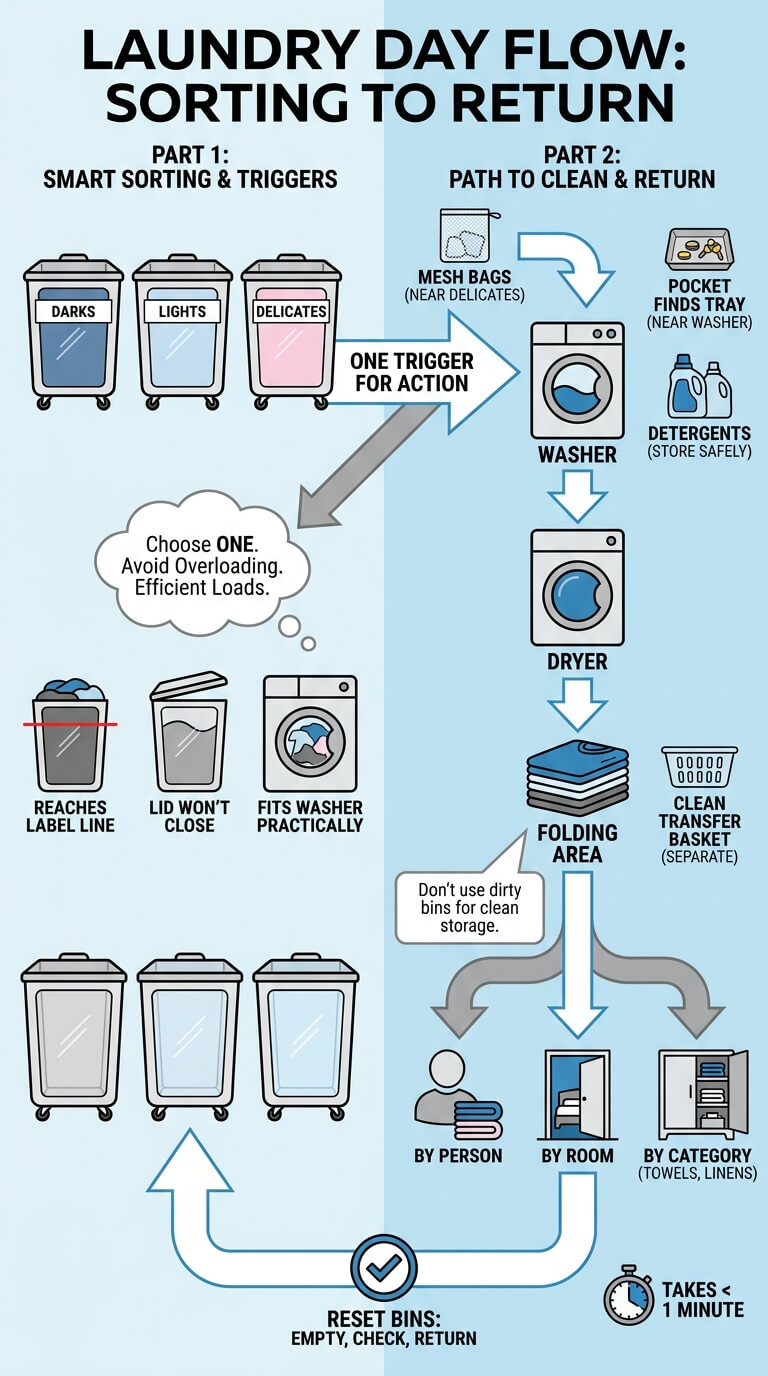
Sorting is only the first half of the system. The second half is the path from full bin to washer, dryer, folding area, and return. If clean laundry has no return path, dirty sorting will eventually break down because baskets stay occupied.
What happens when a bin is full
Choose one trigger for action. A bin can be full when it reaches the label line, when the lid no longer closes easily, or when the load fits your washer without packing tightly. The Department of Energy laundry tips note that full loads are efficient, but small loads should use an appropriate water-level setting when the machine offers one through its Energy Saver laundry guidance. Your sorting system should help you reach practical loads without encouraging overloading.
Where clean laundry returns
Decide whether clean items return by person, by room, or by category. A basket used for dirty towels should not become the permanent home for clean towels. If baskets are limited, assign a clean transfer basket and keep it separate from dirty collection bins. This one habit prevents confusion on busy laundry days.
How supplies support the sorting system
Sorting also makes product choices easier when you organize laundry supplies by the loads you actually wash.
Supplies should sit where they support the next step. Mesh bags belong near delicates. A small tray for pocket finds belongs near the washer. Labels, clothespins, or marker clips belong near the sorter if categories change. Keep detergents and additives stored according to product instructions and away from children or pets. The supply area should support decisions, not invite people to treat every item with extra products.
How to reset bins after each load
After the system is set up, a simple reset helps you keep the laundry room clean and organized without letting bins overflow.
Reset means emptying the bin, checking for stray items, and returning the container to its labeled spot. This takes less than a minute when the system is small. If a bin stays in the laundry room after washing, the bedroom pile will restart. Build the reset into the moment when clean laundry leaves the machine area.
Mistakes to Avoid With Laundry Sorting
The common mistakes are usually not about laundry knowledge. They are about making the system too hard, letting containers serve too many roles, or expecting people to remember rules that are not visible.
Sorting categories nobody uses
A category that nobody uses should be removed or renamed. If “athletic wear” stays empty because everyone drops gym clothes into darks, decide whether that matters. If it does, move the athletic bin closer to where gym bags are emptied. If it does not, combine it with the regular category and keep one exception bag for items with care concerns.
Letting baskets become permanent storage
Baskets are tools, not closets. When clean or dirty items stay in them for days, the system loses capacity. Set a time boundary, such as “clean baskets emptied before bedtime” or “dirty towels washed when the towel bin is full.” A household rule is easier to follow than a general wish to stay organized.
Mixing clean and dirty transfer baskets
Clean and dirty baskets should have different jobs. If you must use the same physical basket, wipe or shake it out as appropriate and avoid setting clean clothes into a basket that just held damp towels or heavily soiled items. A different color, label, or storage spot can prevent mistakes.
Creating rules that require stain expertise
A sorting system should not expect everyone to diagnose stains. Instead of labels such as “protein stains” or “oil stains,” create a small “check before washing” container. That label tells the household to pause without requiring stain-removal knowledge. The actual treatment step can happen separately, following garment and product instructions.
Edge Cases
Some homes need a modified system because of space, kids, roommates, bulky items, or high-volume laundry. Adjust the number of categories before buying more containers.
No space for multiple hampers
Use a single main hamper and sort on laundry day with two collapsible baskets. Keep one small bag for items that should not be washed with the regular load. Mark a temporary sorting surface, such as the top of a closed hamper or a clean floor mat, so sorting does not spread across the room.
Kids who ignore labels
Make the easiest correct choice the closest choice. Put the child’s main hamper where clothes are dropped, then use one simple picture label. If towels are the problem, place a towel bin closer to the bathroom door. Praise the specific action, such as “towel in the towel bin,” instead of repeating a long laundry rule.
Roommates with different routines
Separate personal laundry from shared laundry. Each roommate can own a bag or bin, while towels and cleaning cloths have one shared location. Add a simple full-bin agreement. The person who fills the shared bin starts the load, moves it to the laundry area, or follows whatever rule the household chooses.
Bulky bedding and towels
Bulky items need space and timing. Bedding should not be stuffed into a small regular-clothes bin because it hides the load level and can block air around damp fabric. Give bulky items a larger basket, a scheduled wash day, or a temporary staging spot. Check the washer manual for bulky cycle and load guidance before washing large items.
Pet laundry and odor-prone items without making stain or odor claims
Pet blankets, washable crate pads, and similar items benefit from a separate holding spot so they do not mix with everyday clothing. Keep claims modest: the sorting system contains and separates the items, but it does not guarantee odor removal or fabric restoration. Check care tags, product labels, and pet safety considerations before choosing detergents or additives.
FAQ
What is the simplest laundry sorting system?
The simplest system is lights, darks, and towels or heavier items. Add a small “check care tag” bag for delicates, uniforms, or anything you do not want washed automatically. This keeps the system easy while still catching the items most likely to need a different decision.
How many laundry sorting bins do I need?
Most homes need two to four bins. One or two people may only need lights, darks, and towels. A family may need personal hampers plus shared bins for towels and bedding. If a bin does not fill often enough to create a real load, use a smaller bag or combine that category with another load that uses the same wash decision.
Should I sort laundry in the bedroom or laundry room?
Sort where dirty laundry starts, then transfer it to the laundry room when a bin is ready. Bedrooms are better for personal clothing, bathrooms are better for towels if damp items are not trapped, and the laundry room is best for the final check before washing. A split system often works better than one central sorter nobody uses.
How do I get family members to follow a laundry sorting system?
Reduce the number of choices, use plain labels, and place bins where clothes are already dropped. Kids and guests do better with picture labels or color cues. Adults do better when the full-bin rule is clear. The system should take less effort than leaving clothes on the floor.
What should not go into a regular sorting bin?
Keep damp towels, items with special care tags, heavily soiled items, pet laundry, delicate fabrics, and anything with a product warning out of a regular mixed bin until checked. Store tall or heavy laundry furniture carefully, especially around children. CPSC tip-over safety information for clothing storage units is a useful reminder to keep storage stable through its tip-over safety education center.
Final Thoughts
A laundry sorting system works when it removes decisions from the busiest moments of the week. Choose the few categories that change your next action, place containers where laundry begins, and make the full-bin rule obvious. Start with a small setup, watch how your household uses it for one week, then adjust labels and containers based on real behavior.
The best system is not the most detailed one. It is the one that keeps dirty items contained, helps loads start on time, and gives clean laundry a path back out of the basket. When special fabrics, care tags, washer limits, or product instructions are involved, pause and check before washing rather than forcing every item into the regular routine.

Ethan Carter is the Founder & Editor of HomeCleanSecrets. Based in the United States, he has 5 years of experience creating practical home cleaning, laundry care, stain removal, decluttering, and home organization content. His goal is to help everyday households clean smarter and build simple routines that are easier to maintain.
Read more about Ethan Carter on his author page: https://homecleansecrets.com/ethan-carter/