
Introduction
Why lack of motivation is often overwhelm
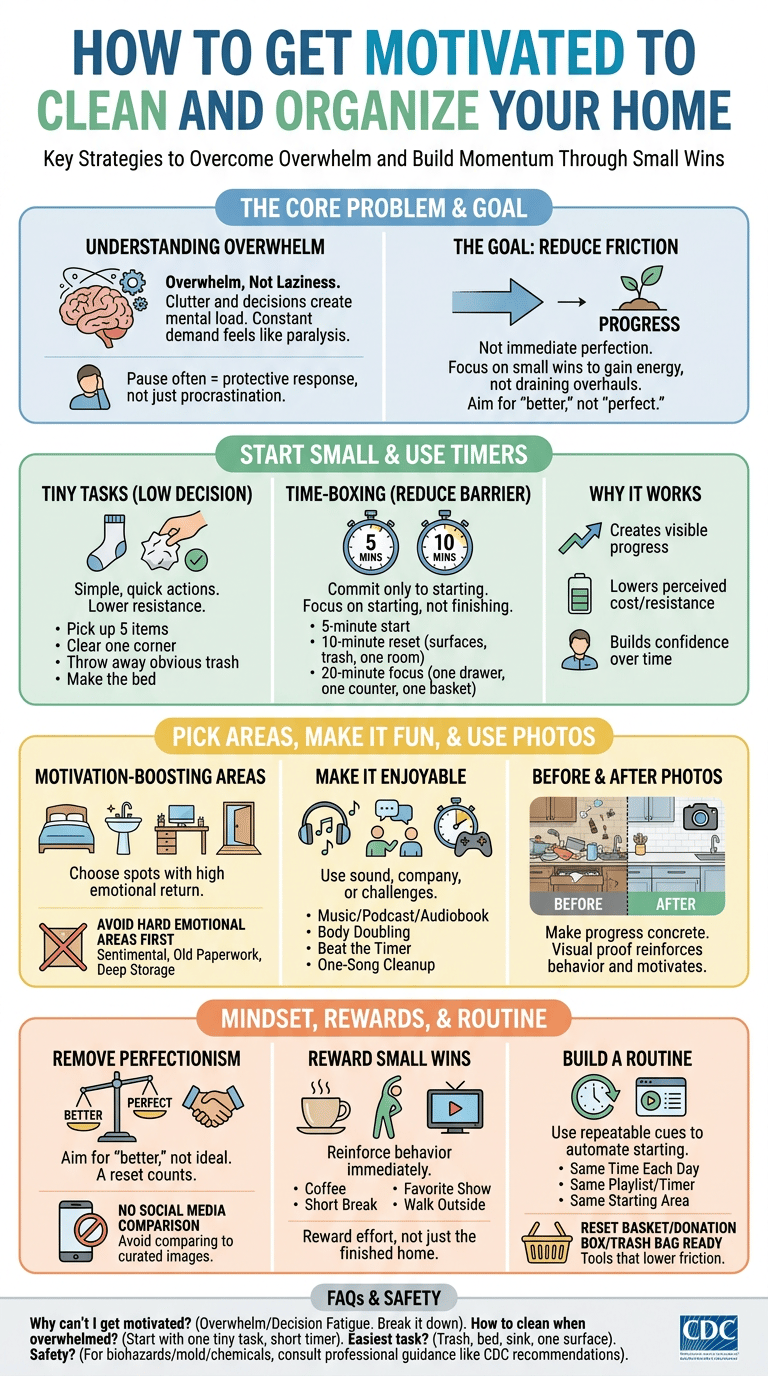
When a home feels messy or disorganized, the feeling is usually less about laziness and more about overwhelm. Clutter and long to-do lists create a mental load: every item and decision asks for attention. That constant demand can make even small tasks feel disproportionately difficult, and the thought of starting can trigger avoidance.
The problem is not always laziness
Labeling yourself as lazy makes it harder to start. Often people are tired, mentally spent, or facing competing priorities like work, caregiving, or health issues. Recognizing that low motivation is a normal reaction to too many demands reduces shame and makes practical steps more likely to work.
Too many decisions can freeze action
Too many choices can stall progress. Choosing whether to keep, donate, store, or toss dozens of items in one session is tiring, and people often pause instead of acting. That pause can look like procrastination but may be a protective response. The solution is to lower the number of choices at any one time so you can act without getting stuck.
For a related walkthrough, see our guide to how to get started organizing your home.
For a related walkthrough, see our guide to how to get your home organized.
For a related walkthrough, see our guide to how to start organizing your home.
For a related walkthrough, see our guide to how to organize your home.
The goal
The aim is not to create a perfect, magazine-ready home overnight. The goal is to reduce friction so you can start, feel progress, and keep going. Focus on small wins that increase your energy rather than on complete overhauls that drain it.
Start small: choose one tiny step you can finish in minutes. Create momentum by using short, consistent sessions to expand those wins. Avoid perfectionism and accept “better” instead of waiting for “perfect.”
Start With a Task So Small It Feels Easy
Choose a tiny task
Tiny tasks are simple, low-decision actions that produce visible improvement quickly. They lower resistance because they require little planning and little energy. Keep a short list of these go-to items so you can pick one without thinking.
Pick up 5 items
Set a small and specific target: pick up five items and return them to where they belong or put them in a donation or discard pile. The specificity reduces uncertainty and makes success feel immediate.
Clear one corner
Choose a corner of a counter, a nightstand, or a kitchen surface. Put anything that does not belong in a box or basket. The goal is a clear corner, not a perfect styling job.
Throw away obvious trash
Grab a trash bag and walk one circuit of a room to toss food wrappers, receipts, and other clear trash. Removing visible trash yields instant satisfaction and reduces visual stress for many people.
Make the bed
Making the bed takes a few minutes and changes how the entire room feels. It is a powerful, low-effort win that often sparks more activity.
Why small tasks work
Small tasks change the psychology of doing. They lower the perceived cost of starting and create quick visible progress, which can feel rewarding and increases the chance you will do the next small step.
Reduce resistance
A tiny task feels doable even when energy is low. The smaller the first step, the less your brain has to argue about whether the effort is worth it.
Create visible progress
Seeing a clear surface, an emptied trash bag, or a made bed gives a signal that effort pays off. That visible change can reduce stress and make the next action less intimidating.
Build confidence
Completing tiny tasks builds confidence over time. A sequence of small wins restores a sense of control and makes larger projects feel more manageable.
For simple decluttering methods that keep decisions minimal, consider approaches that limit touching every item in a space; these techniques help keep the focus on immediate visible wins rather than deep sorting or long evaluations. Read about a no-contact decluttering approach for easier starting.
Try a no-contact decluttering approach.
Use a Timer Instead of a Big To-Do List
Try a 5-minute start
When motivation is low, commit only to beginning. Set a five-minute timer and do the first thing you can. The emphasis is on starting, not finishing. A five-minute window removes the mental barrier that comes from imagining a long, undefined task.
Commit only to starting
Promise yourself you will stop when the timer ends. Often, once you are moving you will continue past five minutes. If you stop, that is still a success because you began and reduced inertia.
Try a 10-minute reset
A 10-minute session is long enough to make a visible difference but short enough to feel achievable most days. Use structured goals so the time is used efficiently.
Visible surfaces
Spend ten minutes clearing countertops, tabletops, or the dining table. Put misplaced items in a temporary basket to sort later. The cleared surface will make the room feel calmer immediately.
Trash
Take a trash bag and move quickly through one room or two, picking up obvious trash. This is the fastest way to improve how a space feels with minimal mental load.
One room
Use ten minutes to do a quick tidy in one small room. Focus on restoring function: clear pathways, put items where they belong, and remove anything that interferes with using the space.
Try a 20-minute focus session
Twenty minutes allows for deeper but still bounded work. Break the time into intense focus and a short break, and pick a single target so decisions are limited.
One drawer
Pick a drawer and empty it into a clear space. Quickly decide what belongs, what goes to donate, and what should be tossed. Place items in labeled piles to keep momentum.
One counter
Clear an entire counter or surface. Remove everything, wipe if needed, and return only essential items. The visible transformation reinforces the value of the session.
One basket
Work through one basket or bin. Keep the goal to reduce its contents by deciding quickly: keep, donate, or trash. Avoid long contemplation about each item.
Stop before burnout
Short, repeated wins beat infrequent marathon sessions. Stop while you still have energy so the next session feels doable and not like a punishment.
Leave energy for tomorrow
Finish a session knowing you have enough energy left to handle daily life. If you wipe out your reserves, you make the next start harder.
Build consistency
Progress comes from steady repetition. A routine of short sessions is more sustainable than irregular deep cleans, and consistency helps reinforce the habit of starting.
When cleaning involves heavy soiling, chemical disinfectants, or potential biohazards, follow safety guidance about ventilation and appropriate product use to protect yourself. For trusted household cleaning and disinfecting guidance, consult official recommendations from the CDC.
Read CDC guidance on cleaning and disinfecting for safe practices.
Pick the Area That Will Make You Feel Better Fast
Best motivation-boosting areas
Choose spots where a quick tidy yields a disproportionate emotional return. These areas are usually high-visibility or high-use and affect daily mood and function.
Bed
A made bed makes the whole bedroom feel cared for. For many people, this single action reduces stress and creates an immediate sense of order.
Sink
A clean sink and clear countertops in the kitchen or bathroom signal that food prep and self-care are easier to do. Washing a few dishes or loading the dishwasher can transform how the room feels.
Entryway
The entryway sets the tone for coming and going. Clearing shoes, mail, and coats from the entry reduces the sense of clutter that greets you and your guests.
Desk
A tidy workspace makes starting tasks less intimidating. Clearing papers and setting up a single place for current projects can reduce mental friction.
Bathroom counter
Clearing the bathroom counter of excess products and trash improves morning routines and reduces sensory overload.
Avoid hard emotional areas first
Some spaces require emotional energy because they involve decisions about sentimental items, finances, or long-term storage. Avoid these until you have momentum and clear decision rules.
Sentimental items
Sorting keepsakes can be emotionally draining and invite long reflection. Save this for a focused session when you have time and emotional space.
Old paperwork
Piles of documents often trigger anxiety about missing something important. Tackle a small, clearly defined subset such as a single folder or stack rather than the whole pile at once.
Storage boxes
Boxes in basements, attics, or closets can hide years of choices. Open and sort only one box at a time, and use a simple rule to speed decisions, such as considering donation for items you have not used in a long time.
Make the Task More Enjoyable
Use sound and company
Adding pleasant elements transforms chores from drudgery into manageable activities. Music and companionship can elevate mood and increase focus.
Music
Create a playlist that energizes you. Upbeat songs help keep a fast pace, while calming music helps reduce stress during slower tasks. Match the tempo to the energy you want.
Podcast
Listening to a favorite podcast can make time fly. Reserve certain episodes for cleaning sessions so you associate starting with a treat.
Audiobook
Save an audiobook you enjoy for tidy-up time. The narrative pull can keep you moving as you listen, and finishing a chapter becomes a reward for sustained effort.
Body doubling
Work alongside someone else, either in the same space or virtually. The presence of another person reduces isolation and increases accountability. A short call where both people work in silence for a set time can be effective.
Turn it into a challenge
Games and small competitions can improve focus and make tasks more fun. Keep the stakes low and the challenges short so they reduce avoidance rather than create pressure.
Beat the timer
Challenge yourself to finish a task before the timer ends. The sense of urgency increases speed and reduces second-guessing.
One-song cleanup
Pick a song and clean through a room before it ends. Many people find this mini-race clears enough visual clutter to feel better quickly.
Before-and-after photo
Take a quick photo before you start and one after you finish. Seeing the contrast can be a powerful motivator to repeat the activity and to share your progress with friends or a group.
Use Before and After Photos
Why photos help
Photographs make progress concrete. They capture small wins that you might otherwise forget and provide evidence that effort works. Reviewing these images when motivation wanes can restore confidence.
They show progress
Photos reveal how far you have come, even if daily changes feel incremental. When you look back, small sessions add up into clear improvement.
They create motivation
Visual proof of change reinforces the behavior that created it. A library of before-and-after images becomes a personal record of the habits that work for you.
They make small wins visible
Some wins are subtle but meaningful. A before-and-after captures those micro-improvements and prevents discounting them as insignificant.
Best areas to photograph
Choose small, focused areas that are easy to return to and improve repeatedly. Keep the framing consistent so changes are obvious.
Countertop
Kitchen and bathroom counters show daily use. Clearing and photographing the space highlights progress frequently.
Desk
Work areas change with projects. Photograph a section of your desk to track improvements in clarity and focus.
Drawer
A single drawer before-and-after shows the effect of small sorting sessions and can be a quick morale booster.
Closet section
Rather than photographing an entire closet, capture a shelf or section. Incremental improvements are easier to manage and show progress faster.
Remove Perfectionism From the Process
Aim for better, not perfect
Perfectionism keeps projects on hold until conditions feel ideal, which rarely happens. Reframe the goal to “better” and accept steps that improve daily life even if they are imperfect.
A reset counts
A reset is any action that improves function or reduces stress. It can be as simple as clearing a surface or creating a holding spot for items to sort later. These resets are legitimate and valuable.
Done is better than ideal
Completing a reasonable tidy is more useful than endlessly tweaking for an unattainable standard. Prioritize actions that allow you to use your space rather than showcase it.
Avoid comparison
Social media often shows curated outcomes that hide the process, time, and resources behind them. Comparing your everyday home to a staged image can undermine progress and increase perfectionist pressure.
Do not compare to social media
Remember that many before-and-after images skip the imperfect middle steps. Their creators may have staged, edited, or completed tasks over weeks. Your aim is sustainable improvement that fits your life.
Function matters first
Choose solutions that help you live better day to day. If storage or styling would add complexity, delay those steps until the habit of regular resets is established.
Reward Small Wins
Choose simple rewards
Rewards reinforce behavior. Pick small, immediate rewards that feel pleasant and are easy to access. They should not undermine your effort, so avoid treating progress with heavy spending or overly indulgent activities that leave you drained afterwards.
- Coffee: enjoy a favorite cup after a session.
- Short break: sit quietly for a few minutes or stretch.
- Favorite show: watch an episode after a productive block.
- Walk outside: a quick walk refreshes your mind and body after work sessions.
Reward effort
Aim to reward the attempt, not only the finished home. Celebrating consistent effort reinforces the habit even when the whole project is still in progress.
Do not wait for the entire home to be done
Until you reach a steady routine, distribute rewards frequently to keep motivation high. Small, reliable reinforcement is more effective than delayed gratification that may never arrive.
Build a Motivation Routine
Use repeatable cues
Routines reduce decision-making. When you pair the same cue with the same action, starting becomes more automatic over time.
Same time each day
Pick a regular moment for a quick tidy: 10 minutes after breakfast, a five-minute clear before dinner, or a nightly two-song pickup. Consistency helps the brain form a habit.
Same playlist or timer
Create an auditory cue like a playlist or a specific timer sound that signals cleaning time. The auditory trigger can prompt action without conscious decision.
Same starting area
Begin with the same corner or surface each session so you form a predictable routine that requires less planning.
Use tools that lower friction
Keep a small set of supplies handy so you can start quickly without hunting for items. The easier it is to begin, the more likely you will follow through.
Reset basket
Keep a basket to gather misplaced items quickly, then sort the basket during a dedicated quick session. This prevents repeated surface clutter and reduces decision-making on first pass.
Donation box
Have a visible box for donations so you can quickly remove items from your living areas. When it fills, schedule a drop-off or pick-up to keep momentum moving.
Trash bag ready
Keep a bag available for quick trash runs so you can remove obvious rubbish without a separate trip. Reducing small friction points makes starting easier.
FAQs
Why can’t I get motivated to clean?
Often it is not lack of willpower but overwhelm and decision fatigue. When a space demands many choices, starting feels risky because each decision consumes energy. Breaking the work into smaller, low-decision steps reduces mental load and makes action possible.
How do I clean when overwhelmed?
Start with one tiny visible task. Use a short timer, and focus on creating a small clear area. The goal is to build momentum through repeated, brief efforts rather than to finish everything at once.
What is the easiest task to start with?
Pick one of these quick starters: trash, making the bed, clearing the sink, or cleaning one tabletop. These tasks are visible, low-decision, and create immediate improvement in how the space feels.
When should I avoid DIY cleanup?
If a cleanup involves mold, hazardous chemicals, large volumes of bodily fluids, or structural damage, professional help is safer. When in doubt about health risks or proper handling, consult a qualified service. For general household cleaning and disinfecting safety practices, follow trusted guidance to protect your health and ventilation.
See CDC recommendations for safe cleaning and disinfecting.
Making cleaning and organizing manageable is primarily a matter of lowering emotional resistance, reducing decisions, and celebrating small wins. Use tiny actions, timers, pleasant cues, and consistent routines to build momentum. Over time, those small choices add up to lasting change without the pressure of perfection.

Ethan Carter is the Founder & Editor of HomeCleanSecrets. Based in the United States, he has 5 years of experience creating practical home cleaning, laundry care, stain removal, decluttering, and home organization content. His goal is to help everyday households clean smarter and build simple routines that are easier to maintain.
Read more about Ethan Carter on his author page: https://homecleansecrets.com/ethan-carter/