
Introduction
Why homes get messy again after organizing
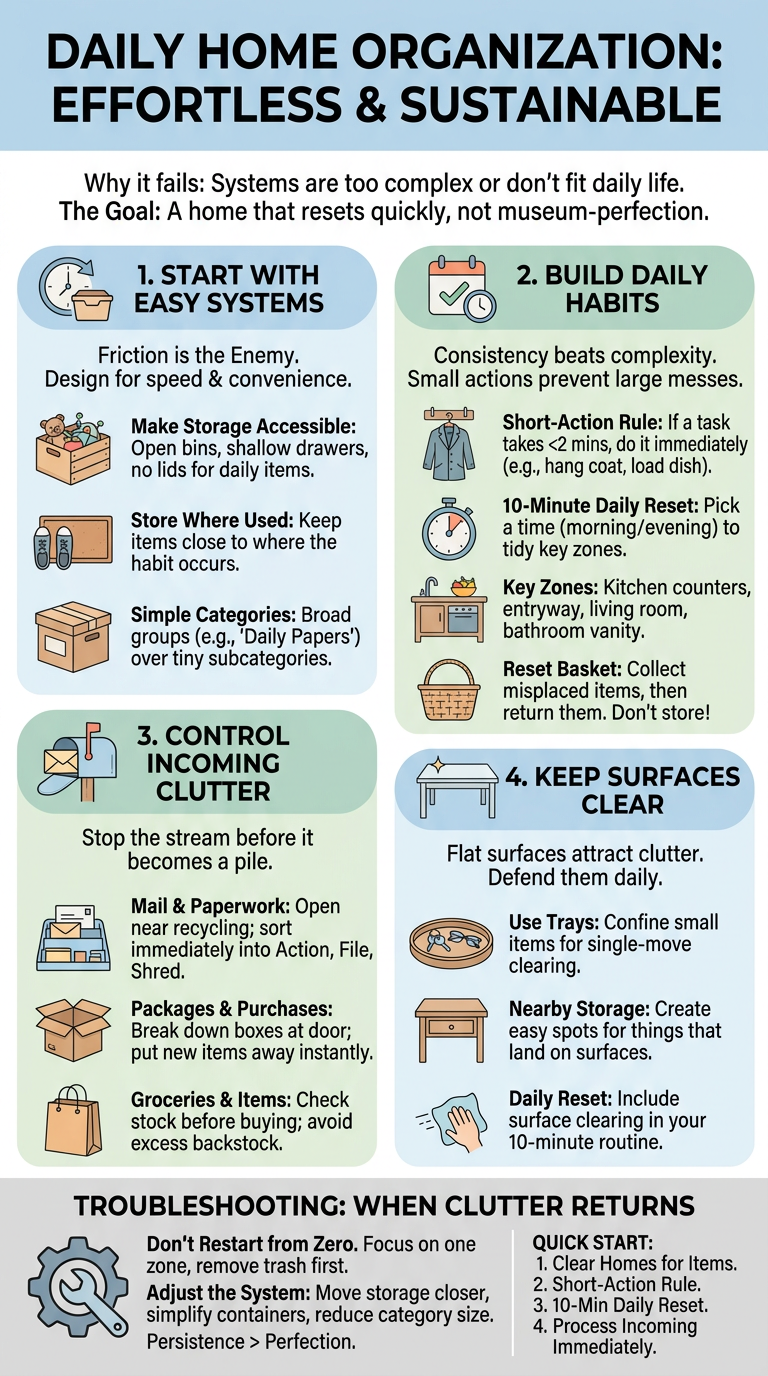
It is common to spend a weekend getting drawers tidy and shelves labeled and then find the house slipping back into clutter within days. The issue is not that people are untidy. It is usually that systems were designed for a perfect routine, not for real life. Two common reasons organization fails are practical barriers to returning items to their homes and a steady stream of new stuff entering the house.

Organization fails without maintenance
- Systems require upkeep: Organized zones need small, regular actions to stay that way. Without a short daily or weekly maintenance habit, small piles become large ones.
- Complex systems break down: If putting something away takes many steps, people will skip it until a later time that may never come.
Daily life creates new clutter
- Incoming items: Mail, packages, grocery bags, and new purchases create ongoing work.
- Daily use: Items used every day naturally move from their storage zones and need to be returned.
Systems must be easy to use
- Friction is the enemy: The more steps, lids, or decisions required, the less likely items will be returned.
- Design for speed: Simple containers and obvious placements reduce resistance to putting things away.
The real goal
The aim is not a perfect museum house. The aim is a home that can be returned to order quickly and with minimal thought, which helps the home feel more manageable and functional.
Easy maintenance
Focus on routines you can actually keep. A short daily reset is more powerful than a complex weekly overhaul you rarely do.
Less decision fatigue
Simpler systems reduce daily choices and can make routines easier to follow.
A home that can reset quickly
Design the space so a few small actions restore order. That makes daily life smoother and prevents accumulation of clutter.
Start With Systems That Are Easy to Maintain
Make storage easy to access
When storage is quick to reach and simple to use, putting things away becomes automatic. Small design choices can make a big difference.
- Avoid lids for daily items: Open containers or trays are faster than boxes with lids for things you use every day.
- Avoid deep stacks: Tall piles or deep bins hide items. Shallow, visible storage reduces searching and abandoned items.
- Keep frequent items close to where used: Store items in the room or part of the room where they are used most. That reduces the temptation to leave them out.
Use simple categories
Complicated subcategories sound precise but are harder to maintain. Broad groups are easier for everyone in the household to follow.
- Broad categories work better: Use categories like “daily papers,” “chargers,” and “keys” rather than many tiny subgroups.
- Everyone should understand the system: A system that only one person remembers will fail when that person is busy or away.
- Avoid over-labeling tiny groups: Labels can be helpful, but too many labels create more rules and friction.
Give Every Item a Clear Home
Fix common homeless items
Some items never have a natural place and end up in catchall piles. Give these items obvious and accessible homes.
- Keys: A shallow bowl, wall hook, or key tray by the door makes keys easy to drop in and find.
- Mail: A mail tray or slot near the entry catches mail before it spreads across counters.
- Shoes: A small bench with cubbies or a shoe tray near the entry encourages shoes to be removed and stored immediately.
- Bags: Hooks for backpacks and purses keep them off chairs and tables.
- Chargers: A charging station or labeled pouch for each device family prevents loose cords and lost adapters.
Create homes based on habits
Place storage where the natural habit occurs; this reduces the steps required to put items away.
- Store shoes where people remove them: If people take shoes off at the hallway, put storage there rather than in a distant closet.
- Place mail tray where mail enters: Catch mail at the door so it can be sorted immediately.
- Keep cleaning supplies near cleaning zones: Store wipes or a small spray near the kitchen sink and bathroom so quick touch-ups are easy.
Make it easy to put items away
Choose storage types that reduce friction and make returning items nearly effortless.
- Open bins: For frequently used things, open containers remove the barrier of lids.
- Hooks: Vertical storage uses small spaces and is faster than stacking items.
- Trays: Trays on counters gather small things and give a single move to clear surfaces.
- Shallow drawers: Shallow drawers keep items visible and reachable, unlike deep drawers where things hide.
- If storing an item requires an extra walk or carrying a box upstairs, consider creating a home closer to where it is used most often.
Use a Short-Action Rule
What the rule means
If a task is quick, do it immediately. Small actions prevent many tiny tasks from accumulating.
Tasks to do immediately
- Hang coats: Place coat hooks by the entry so hanging takes seconds.
- Put shoes away: Drop shoes in their designated spot instead of near the door.
- Throw away packaging: Toss boxes and wrappers near recycling instead of letting them sit on counters.
- Put dishes in the dishwasher: Rinse and load small items right away to avoid a sink backlog.
Why it works
Small tasks expand into larger ones when ignored. Doing quick tasks immediately stops that growth and reduces the time spent on end-of-day cleanup.
- Stops small messes becoming large piles: Short actions interrupt the cascade of clutter.
- Reduces end-of-day cleanup: By handling small tasks throughout the day, the evening routine becomes faster and calmer.
Create a 10-Minute Daily Reset
Choose a reset time
Pick a consistent time that fits your routine and family schedule. Short, predictable resets are easier to keep than long, irregular ones.
- Morning: A quick tidy before starting the day sets a calm tone.
- After dinner: Clearing after a meal prevents the kitchen from becoming the night mess center.
- Before bed: A final sweep avoids waking to a chaotic morning and relieves morning pressure.
What to reset daily
Target the high-use zones that reveal clutter quickly.
- Kitchen counters: Put away dishes, clear packaging, and wipe surfaces.
- Entryway: Return keys, hang bags, and remove shoes that do not belong.
- Living room: Fold blankets, stack magazines, and return misplaced items to the reset basket.
- Bathroom vanity: Put away toothbrushes, cosmetics, and medication to clear surfaces.
Use a reset basket
A reset basket makes collecting out-of-place items efficient. Spend the reset time collecting into the basket and then return items to their proper homes.
- Collect misplaced items: Use the basket to gather items that belong in other rooms.
- Return by room: Take a quick walk with the basket and sort items back to their homes.
- Do not let it become permanent storage: Empty the basket as part of the reset so it does not become a clutter catcher itself.
Control Incoming Clutter
Mail and paperwork
Paperwork can build up quickly. A simple processing habit prevents paper piles from taking over surfaces. Open mail near a trash or recycling bin so it is easy to discard junk immediately. Sort remaining mail into action, file, or shred piles and deal with them during a weekly paper reset.
For practical decluttering and decision rules when processing items, see practical decluttering advice from Martha Stewart: Practical decluttering advice from Martha Stewart
Packages
- Break down boxes immediately: Flatten cardboard at the door and place it in the recycling so it does not linger.
- Put purchases away: Avoid keeping new items on counters or tables; returning them to their home prevents duplication of storage work.
Groceries and household items
- Check storage before shopping: A quick glance prevents buying unnecessary duplicates.
- Avoid duplicate backstock: Store only what fits your space and use patterns; excess stock often becomes clutter.
Keep Flat Surfaces Clear
Why surfaces attract clutter
Flat surfaces are convenient landing spots, and items placed there are easy to forget. When surfaces collect belongings, rooms look messy quickly even if most things are technically organized.
- They are convenient landing spots: People set things down on tables and counters when they are in a hurry.
- They make rooms look messy quickly: A few items on a table erode the visual calm of a space.
Problem surfaces to watch
- Kitchen counter: High traffic area that shows daily use.
- Dining table: Often becomes a work or storage surface if not claimed for meals.
- Coffee table: Mail, remotes, and cups accumulate here.
- Desk: Paperwork and chargers can spread fast.
- Nightstand: Small items collect by the bed and can overflow.
How to protect surfaces
- Use trays: Trays confine small items so clearing a surface is a single move.
- Create nearby storage: Place a basket or drawer near problem surfaces to make putting things away quick.
- Reset daily: Include surface clearing in your daily reset to maintain visual calm.
Build Weekly Maintenance Habits
Weekly paper reset
A weekly habit to process paperwork keeps small papers from becoming a major headache.
- Open mail: Schedule a short weekly session to clear the mail pile.
- File important papers: Keep a simple filing system for essentials so they do not sit on surfaces.
- Shred sensitive papers: Securely destroy documents with personal data to reduce risk and clutter.
Weekly donation box check
Keep a donation box in a closet or garage but move items out of the house regularly so the box does not become passive storage.
- Remove donation items from the home: Schedule a weekly drop-off or plan a monthly run to donation centers.
Weekly pantry and laundry reset
Weekly checks prevent overbuying and unfinished chores from stacking up.
- Check duplicates: Look for duplicate groceries and move items into easy reach if you plan to use them soon.
- Put backstock where it belongs: Label or designate a clear area for overflow so it does not migrate to counters.
- Finish laundry cycles: Start and finish loads so clean clothes do not pile up in baskets or on chairs.
What to Do When Your Home Gets Messy Again
Do not restart from zero
When clutter returns, avoid large all-day cleanups unless necessary. Smaller, focused actions are faster and less overwhelming.
- Choose one zone: Pick a single room or area and focus on that rather than attempting the whole house.
- Remove trash first: Clearing obvious trash restores immediate visual order and reduces the work load.
- Return items to homes: Use the one-zone approach and your reset basket to return items to their proper places.
Adjust the system
If clutter recurs in the same spot, the storage system needs to change. Small tweaks can dramatically improve long-term results.
- Move storage closer: If items keep ending up on a counter, create a storage solution right next to that counter.
- Reduce category size: Too many items in one category invites overflow. Shrink the category to what the space can realistically hold.
- Use simpler containers: Replace complex bins with open trays or hooks to make returning items quicker.
Common Reasons Organization Does Not Last
Too many items
When storage is overloaded, items spill out and systems fail. Regularly declutter to keep possessions within the capacity of available storage.
Storage is inconvenient
If putting items away requires many steps or a long trip, people will often leave things out. Make storage one or two easy actions away from the point of use.
No daily reset routine
Without a daily reset, small piles form and become daunting. A short, consistent reset prevents daily messes from turning into weekly chaos.
For a related walkthrough, see our guide to how to organize your home.
FAQs
Why can’t I keep my house organized?
The most common causes are mismatched systems and daily life pressures. If storage is overloaded, inconvenient, or too complicated, people will choose the easier option of leaving items out. Also, if new items continually arrive without a plan to process them, clutter will return. Focus on simplifying categories, making storage easier to use, and adding a short daily reset to stop small messes from growing.
What should I do daily to stay organized?
Keep a short daily checklist that takes about 10 minutes. A practical daily reset list includes:
- Clear kitchen counters and load the dishwasher or wash dishes.
- Return items from the reset basket to their homes.
- Hang coats and store shoes at the entry.
- Wipe obvious spills and put away toiletries from bathroom counters.
- Quickly sort mail into action/file/shred piles.
How do I stop clutter from coming back?
Control incoming items and simplify homes. Use these habits:
- Process mail and packages immediately.
- Put purchases away the day you bring them home.
- Limit the number of similar items you keep in easy-reach locations to avoid overflow.
- Keep donation and discard routines regular so items do not linger in the home.
Safety and Cleaner Guidance
When cleaning surfaces or handling spills, follow safe cleaning practices. For guidance on household cleaning and disinfecting, especially when illness or contaminants are a concern, follow the CDC cleaning and disinfecting guidance to choose appropriate methods and products: CDC guidance on cleaning and disinfecting.
For information on safer cleaning product choices, see the EPA Safer Choice program: EPA Safer Choice. If you encounter mold, significant water damage, or hazardous material, do not attempt major remediation yourself; these situations may require professional assessment and remediation to protect health and property.
Closing Practical Tips
Keeping a home organized every day is less about heroic full-scale projects and more about designing low-friction systems, using short daily and weekly routines, and controlling what enters the house. Start small: pick one zone, simplify storage, and add a short daily reset. Over time these small habits build a resilient home that stays organized with minimal effort.
Quick start checklist: 1) Give common items a clear, easy-to-reach home. 2) Use a short-action rule for quick tasks. 3) Do a short daily reset. 4) Process incoming items immediately.

Ethan Carter is the Founder & Editor of HomeCleanSecrets. Based in the United States, he has 5 years of experience creating practical home cleaning, laundry care, stain removal, decluttering, and home organization content. His goal is to help everyday households clean smarter and build simple routines that are easier to maintain.
Read more about Ethan Carter on his author page: https://homecleansecrets.com/ethan-carter/