
Quick answer: the best way to clean a dishwasher
Treat the dishwasher as a system. Remove dishes and debris, clean the filter and drain area, wipe the door, gasket, and edges, clear spray arm holes, and run a targeted cleaning cycle. Finish with a deodorizing rinse and adopt simple habits that prevent buildup. Use mild cleaners and provide ventilation when needed, and avoid mixing household chemicals.

What to clean first
Begin at the bottom: remove dishes and the bottom rack, then check and clean the filter and drain area. This removes sources of odors and visible debris that interfere with spray and drainage. After the filter, wipe the door and gasket, then move on to the spray arms and the interior walls before running a cleaning cycle.
What to avoid
Avoid pouring harsh solvents or concentrated bleach directly into the dishwasher tub. Do not mix cleaners such as bleach and ammonia. Avoid using wire brushes or sharp objects on seals and interiors that can damage finishes or the gasket. If you see mold growth that covers large areas or the dishwasher is leaking, stop and consult a professional.
Why dishwashers get dirty even though they clean dishes
Food particles build up over time
Small bits of food can collect in the filter, drain, and crevices. Over time trapped food breaks down and contributes to odor, attracts pests, or blocks spray patterns.
Grease and soap residue collect inside
Grease from pans and fatty foods can cling to interior surfaces. Soap and detergent residue can form a filmy layer that traps particles, reduces cleaning performance, and contributes to dull or cloudy film on dishes.
Hard water can leave mineral deposits
Mineral deposits from hard water collect on spray arms, heating elements, and interior surfaces. These deposits can clog spray holes and reduce water flow, leaving dishes with spots or cloudy film. Regular descaling and targeted cleaning help prevent mineral buildup.
Signs your dishwasher needs cleaning
Bad smells after a cycle
A sour, musty, or rotten smell after a wash cycle usually indicates trapped food, standing water in the drain, or organic buildup in a drain line or sump area. Address the source to remove the odor rather than masking it.
For a related walkthrough, see our guide to how to clean cutting board.
For a related walkthrough, see our guide to how to clean oven.
For a related walkthrough, see our guide to how to clean microwave.
Dishes come out cloudy or gritty
Cloudy glassware or a gritty residue on plates suggests mineral buildup, insufficient detergent action, blocked spray arms, or a dirty filter that is recirculating soil onto dishes.
Water drains slowly
Slow draining can indicate a clogged filter or drain, or food and grease blocking the pump area. Clearing visible debris and checking the filter often restores proper drainage.
Food particles are left behind
Visible food on dishes after washing usually means the filter is not catching debris or spray arms are blocked. Cleaning those parts generally restores performance.
Step 1: Empty the dishwasher completely
Remove dishes and utensils
Clear the machine of all plates, pots, glasses, and cutlery. This prevents accidental damage during cleaning and gives you full access to the interior, racks, and spray arms.
Take out the bottom rack
Slide out the bottom rack to access the filter, drain, and spray arms. Removing racks makes it easier to inspect the tub floor and to remove trapped food particles.
Check for loose food debris
Look in corners, under the lower spray arm, and around the drain for loose food. Remove large pieces by hand and rinse them down the sink or discard them. Small debris can be picked up with a damp cloth.
Step 2: Clean the dishwasher filter
Where the filter is usually located
Most filters are located on the bottom of the dishwasher near the drain opening. There are generally two parts: a coarse mesh or screen and a finer cylinder filter. Consult your manual if you are unsure where the filter sits.
How to remove it safely
Turn off the dishwasher and remove the bottom rack. The filter may twist out or lift straight out. Use gentle pressure and follow any alignment marks. If it resists, consult the manufacturer guide rather than forcing it.
How to rinse and scrub the filter
Rinse the filter under warm running water. Use a soft brush or old toothbrush and dish soap to remove grease and trapped debris. Avoid wire brushes that can damage the mesh. Once clean, reassemble and secure the filter so it seals correctly.
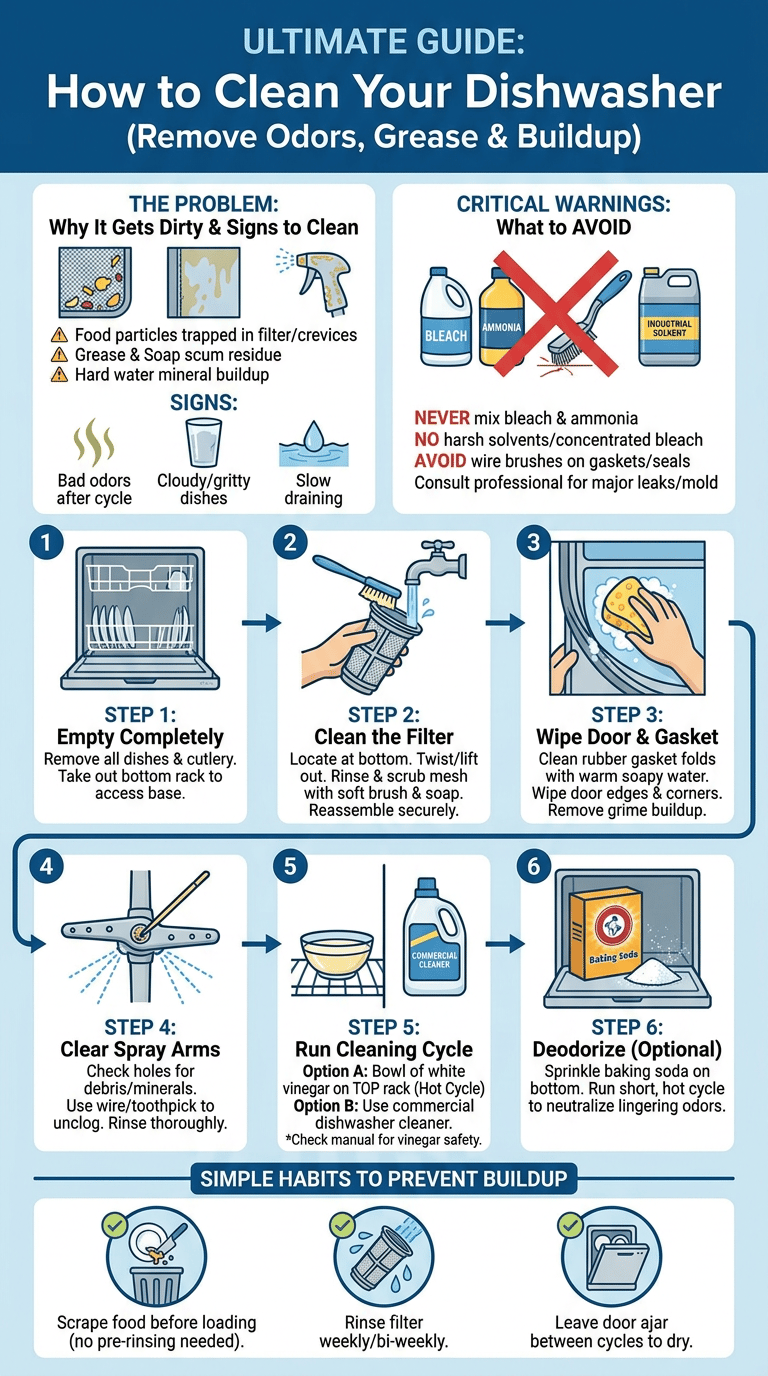
Step 3: Wipe the door, gasket, and edges
Why the door seal gets dirty
The gasket and door edges collect moisture, soap scum, and food particles. Because they sit at the front of the tub they are exposed to every wash cycle and can harbor mold or mildew in cracks and folds.
How to clean around the gasket
Use a soft cloth or sponge with warm water and mild dish soap to clean the rubber gasket. Pull the gasket back gently to reach inner folds. Rinse with a damp cloth and dry thoroughly. If you spot stubborn grime, a cloth dampened with a water and white vinegar solution can help remove buildup. If you have concerns about vinegar on seals or coatings, consult the dishwasher manufacturer.
How to remove grime from corners
For tight corners, use an old toothbrush or a soft nylon brush. Work along seams and the door edge where debris collects. Wipe away loosened grime with a clean damp cloth and leave the door open briefly to air dry and prevent moisture buildup.
Step 4: Clean the spray arms
How to check the spray holes
Inspect top and bottom spray arms for food particles or mineral buildup blocking the small spray holes. Use a flashlight if needed. Blocked holes reduce water coverage and cleaning performance.
How to remove trapped debris
Some spray arms pull off easily; others require removing a cap or clip. Once removed, flush the arms under warm water and use a thin piece of wire or a toothpick to clear holes carefully. Rinse thoroughly and spin the arm by hand to ensure it moves freely before reinstalling.
When spray arms may need deeper cleaning
If spray arm holes are calcified with mineral deposits, soak the arms in warm water with white vinegar for a short time, then brush and rinse. If deposits are heavy and soaking does not restore full flow, consider replacing the spray arm following the manufacturer instructions.
Step 5: Run a cleaning cycle
Using vinegar safely
Distilled white vinegar helps break down grease and light mineral deposits. Place vinegar in a dishwasher-safe container on the top rack and run a normal hot water cycle with the dishwasher empty. Do not pour vinegar directly into the bottom of the tub because concentrated liquid can reach mechanical parts directly.
Consult the dishwasher manufacturer if you have concerns about the use of acidic cleaners on rubber seals or coatings. For general household cleaning and disinfecting principles, see the CDC’s guidance on cleaning and disinfecting.
CDC guidance on cleaning and disinfecting
Using a dishwasher cleaner
Commercial dishwasher cleaners are formulated to remove grease and limescale without harming machine components. Follow the product directions, placing the cleaner in the indicated slot or on the bottom of the tub. Use cleaners that are compatible with your machine and consider products recognized for safer ingredients when available.
EPA Safer Choice information can help you select cleaning products with lower-risk ingredients.
When to avoid vinegar
Avoid using vinegar when your dishwasher manufacturer explicitly warns against acidic cleaners. Also avoid combining vinegar with bleach or other household cleaners. If you are unsure about a product or mixture, do not use it and consult manufacturer recommendations.
Step 6: Deodorize and freshen the dishwasher
Baking soda rinse method
After running a vinegar cycle or a commercial cleaner cycle, sprinkle baking soda across the bottom of the empty dishwasher and run a short hot water cycle. Baking soda helps neutralize odors and leaves the tub smelling fresher.
How to reduce lingering smells
- Clean the filter regularly and remove visible food debris after each load with large particles.
- Leave the door slightly ajar between cycles to allow the interior to dry and reduce musty odors.
- Run hot water at the sink before starting a load to help hot inlet water reach the dishwasher quickly.
- Use the right detergent dose for water hardness and load size to minimize residue.
What smells may signal a bigger problem
A persistent sewage odor, strong mildew smell, or chemical burning smell may indicate plumbing issues, mold growth beyond the dishwasher interior, or electrical problems. If odors persist after thorough cleaning, consider professional inspection. Visible mold growth or persistent mildew smells that cover large areas may require guidance beyond routine cleaning; see EPA guidance on mold for more information.
Dishwasher cleaning mistakes to avoid
Ignoring the filter
Skipping filter cleaning is a common mistake. A clogged filter can recirculate food and prevent proper drainage and normal cleaning action.
Using too much detergent
Excess detergent creates suds and residue that can coat dishes and the interior. Follow the detergent manufacturer instructions and adjust for water hardness and load soil level.
Forgetting the door gasket
The gasket can trap moisture and debris and is a common site for mold and mildew. Regularly inspect, clean, and dry the gasket area to prevent odors and damage.
Mixing cleaning chemicals
Never mix bleach with ammonia or acidic cleaners. Mixing household chemicals can create dangerous fumes or reactions. If you experience exposure to cleaning products, contact your local poison control center for instructions.
Poison Control guidance on household cleaner exposure
Dishwasher maintenance checklist
Regular tasks
- Remove food scraps from the filter and wipe down the door edge and gasket after loads.
- Quickly inspect spray arms for obvious blockages and remove any visible debris.
- Leave the door slightly open after cycles to dry the interior and prevent musty odors.
Periodic tasks
- Remove and clean the filter thoroughly under warm water with a soft brush.
- Wipe interior walls, racks, and the door with a cloth dampened with warm soapy water or a water-and-vinegar mix if compatible with your machine.
- Check and clean the spray arms more carefully, unclogging holes as needed.
Deep-cleaning tasks
- Run an empty cycle with a dishwasher cleaner or vinegar on the top rack followed by a baking soda rinse to freshen the tub.
- Inspect under the dishwasher and around the base for leaks, standing water, or mold growth. If you find mold beyond minor surface patches, follow authoritative mold guidance or hire a professional.
- Consider replacing worn or cracked gaskets, spray arms, or filters per the manufacturer recommendations.
Frequently asked questions
How often should I clean my dishwasher?
Keep a simple routine: empty and check for food debris after each load, clean the filter regularly depending on use, and run a targeted cleaning cycle periodically. Adjust frequency if you notice odors, poor cleaning performance, or slow drainage.
Can I use vinegar to clean my dishwasher?
Yes, distilled white vinegar can help break down grease and light mineral buildup when placed in a dishwasher-safe container on the top rack and run through a hot cycle. Do not mix vinegar with bleach or other cleaners. If your dishwasher manual warns against acidic cleaners, follow the manufacturer instructions instead. For general household cleaning and disinfecting recommendations, see CDC guidance on cleaning and disinfecting.
CDC guidance on cleaning and disinfecting
Why does my dishwasher smell bad?
Bad smells are usually caused by trapped food, a clogged filter, standing water in the drain, or buildup on the gasket and interior surfaces. Regular cleaning of the filter, wiping the door and gasket, and running occasional deodorizing cycles usually removes odors.
How often should I clean the dishwasher filter?
Cleaning frequency depends on how often you run the dishwasher and how soiled your loads are. For many households, cleaning the filter periodically keeps performance steady. Heavily used machines or those that process lots of large food particles may need filter cleaning more often.
Why are my dishes still dirty after washing?
Common causes include a clogged filter, blocked spray arms, insufficient detergent, incorrect loading that blocks spray, or water temperature that is too low. Clean the filter and spray arms, check water temperature, and follow recommended loading patterns to improve results.
Final thoughts
Treat your dishwasher as a system and give attention to parts that collect debris: the filter, gasket, spray arms, and drain area. Regular, gentle maintenance helps keep odors and buildup under control and extends the life of the appliance. Use manufacturer guidance when available and choose cleaners thoughtfully. If you encounter persistent mold, persistent sewage odors, leaks, or electrical issues, stop and seek professional help.
For help selecting safer cleaning products or for more information on safer ingredient choices, review information from programs that evaluate product ingredients and consult authoritative health guidance to keep household cleaning both effective and safe.

Ethan Carter is the Founder & Editor of HomeCleanSecrets. Based in the United States, he has 5 years of experience creating practical home cleaning, laundry care, stain removal, decluttering, and home organization content. His goal is to help everyday households clean smarter and build simple routines that are easier to maintain.
Read more about Ethan Carter on his author page: https://homecleansecrets.com/ethan-carter/