
A bedroom reset is a short maintenance routine that restores items to homes you have already chosen. It is not a decluttering session, deep clean, laundry project, or room redesign. The goal is to return clothing, bedside items, papers, personal belongings, and shared-room objects to their assigned zones so the bed, walking path, and main surfaces are usable again.

If the room already has workable storage, a quick reset can often be done in five to fifteen minutes. If the same piles return because drawers are overfilled, the nightstand has no capacity, or under-bed bins are packed beyond use, the problem has moved beyond maintenance. That is when you stop resetting the symptom and reassess the affected category.
Quick answer: restore the existing bedroom system instead of reorganizing it
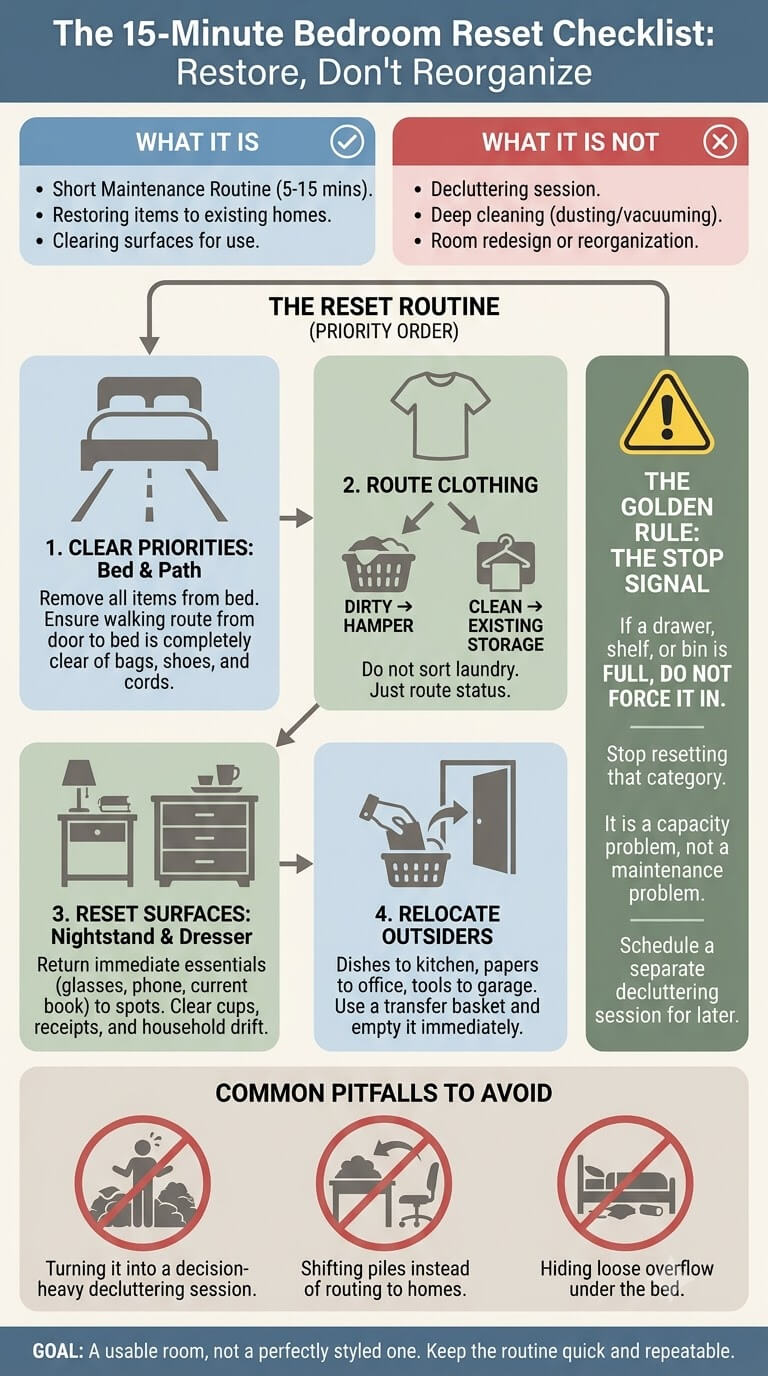
Return approved items to their assigned homes
Start with belongings that already have a clear destination. Put the book back on the nightstand, return jewelry to its tray, move clean clothing to its existing storage, and place dirty clothing in the hamper. Do not pause to redesign each zone.
Relocate items that belong outside the bedroom
Dishes go to the kitchen, receipts and mail go to the household paper area, bathroom products return to their normal storage, and kids’ toys return to the system that handles them. Use one small transfer basket if several items need to leave the room, then empty it before the reset is finished.
Clear the bed, walking path, and main surfaces
Prioritize the places that affect daily use. The bed should be accessible, the path from the door should be clear, and the nightstand or dresser top should perform its intended function without loose piles covering them.
Stop if the reset reveals a capacity problem
If an item has nowhere to return because its drawer, shelf, rack, or container is full, do not force it in. Set that category aside for a separate decluttering or storage decision and finish the rest of the reset.
A simple way to prevent one problem from taking over the routine is to create a small “review later” spot outside the walking path. Use it only for items whose normal home is genuinely over capacity, not for anything you do not feel like putting away. Empty that spot during the next decluttering or organizing session.
What a bedroom reset is and what it is not
A reset restores placement
The basic action is return, contain, relocate, clear, and restore. You are moving known items back to known places. This keeps the routine quick and repeatable.
Decluttering changes what you keep
If you are deciding whether to donate clothing, discard old products, reduce books, or remove household overflow, you have moved into decluttering. That may be necessary, but it should not make every daily reset into a long decision session.
Cleaning removes dust, dirt, stains, and other soil
Vacuuming, dusting furniture, cleaning mirrors, washing bedding, and wiping surfaces are cleaning tasks. A reset may make those jobs easier later, but it does not need to include them.
Reorganization changes the storage setup
Moving furniture, buying bins, changing drawer categories, measuring for shelves, or rebuilding a no-closet system belongs in a separate organizing session. A maintenance routine should use the setup that already exists.
The five-minute bedroom reset
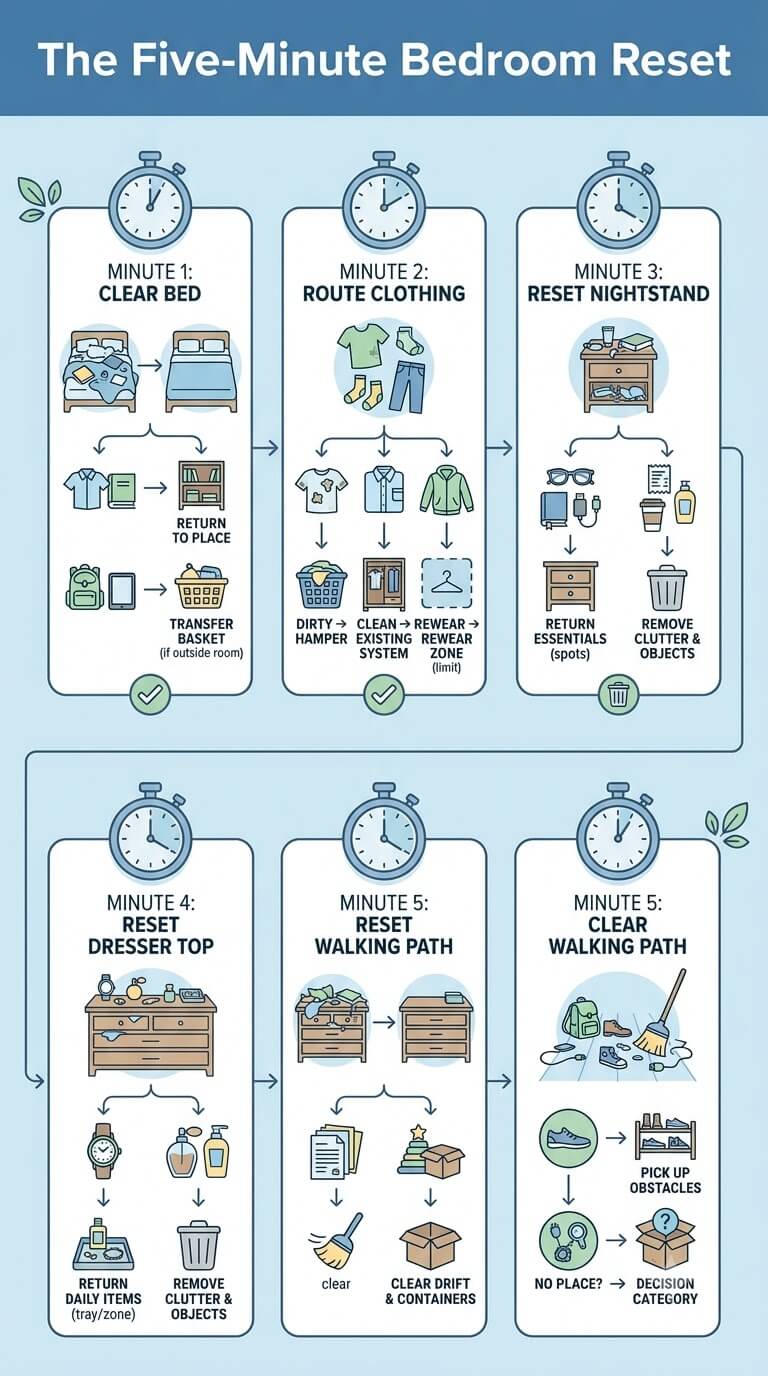
Minute 1: clear obvious items from the bed
Remove clothing, bags, books, electronics, and other loose belongings from the bed. Return each item to its normal destination or place it in the transfer basket if it belongs outside the room.
Minute 2: route clothing
Dirty clothing goes to the hamper. Clean clothing returns to the existing clothing system. If your household uses a defined rewear zone, place eligible items there and keep the zone within its normal limit.
Minute 3: reset the nightstand
Return glasses, the current book, charger, tissues, or other immediate bedside essentials to their assigned spots. Remove receipts, cups, product backups, and unrelated objects.
Minute 4: reset the dresser top
Return daily jewelry, a watch, fragrance, or small getting-ready items to their tray or zone. Move folded clothing, papers, empty containers, and household drift off the surface.
Minute 5: clear the main walking path
Pick up bags, shoes, baskets, cords, or loose items that have moved into the path. If an object has no place to return, do not leave it in the walkway. Put it with the category that needs a later decision.
The 10-to-15-minute bedroom reset

Start with the bed and floor
Clear the bed first so it is not used as a staging surface for the rest of the routine. Then pick up loose floor items and route them by category. Avoid creating a new pile on a chair or dresser top.
Route clothing by status
Use a simple flow: dirty to hamper, clean to clothing storage, rewear to one defined temporary zone if you use one, and repair or donation items to their downstream container. Do not start sorting laundry by wash cycle.
Restore the nightstand and dresser top
Keep each surface focused on its established job. The nightstand serves bedside access; the dresser top handles limited standing-use personal items. Move anything that does not match those functions.
Return items from the floor and chair
A chair should return to being a chair if that is its intended use. Bags, shoes, folded clothes, blankets, and boxes should go to their normal storage rather than being shifted to another flat surface.
Move papers and dishes out
Collect mail, receipts, bills, cups, plates, and other items that belong to household systems outside the bedroom. Empty the transfer basket before the routine ends so it does not become hallway clutter.
Do a final path and surface check
Stand at the doorway and scan the bed access, primary path, nightstand, and dresser top. These four areas reveal quickly whether the room has returned to its normal usable state.
Then test one or two actions you perform every day. Open the dresser drawer you use most, reach the bedside surface, and walk from the door to the bed without stepping around anything. If those actions work normally, the reset has restored function even if the room is not styled perfectly.
Reset clothing without turning the routine into a wardrobe project
Dirty clothing goes directly to the hamper
Do not leave clearly dirty clothing on the floor, dresser, or chair while waiting for laundry day. The reset only needs to place it in the collection point.
Clean clothing goes back to its existing storage
Return folded or hanging clothing promptly. If clean items no longer fit, note the category for a later clothing-storage review rather than compressing drawers beyond practical use.
Rewear items stay in one defined temporary zone
If you keep clothing that may be worn again before washing, use one controlled location. A hook, short rail section, or small designated area works better than allowing a chair to become a mixed clothing pile.
Repair and donation items leave active bedroom space
Put repair items in the household repair route and donation items in the outgoing donation container. A reset should not leave these categories staged indefinitely beside the dresser.
Reset the nightstand
Return immediate bedside essentials
Keep the few items used from bed easy to reach. A phone, glasses, tissues, lamp, one current book, or another established essential should return to the same place each time.
Remove cups, receipts, duplicate chargers, and backups
Temporary objects should leave before they become new nightstand categories. Move cups out, papers to the household paper area, and duplicate or inactive charging equipment to appropriate storage.
Check charging cables without expanding into an electrical project
Make sure cords are not stretched across the walking path, trapped under furniture, or obviously damaged. The CPSC electrical safety guidance advises replacing worn or damaged cords and avoiding overloaded power connections. Stop using damaged equipment instead of hiding it behind the nightstand.
Restore the surface to its normal capacity
If every item fits its assigned place and the surface is usable, the reset is complete. If the drawer will not close or essentials no longer fit, schedule a separate nightstand review.
Do not use the reset to add a second tray, basket, or drawer organizer simply because one new object appeared. Let the established bedside limit remain visible. That makes repeated overflow easier to diagnose instead of slowly expanding the nightstand system every few days.
Reset the dresser top
Return getting-ready items to one zone
Put jewelry, a watch, hair accessories, fragrance, or other established daily items back into their tray or assigned area. Keep the surface focused on standing-use routines.
Move clothing off the surface
Clean clothing goes to storage and dirty clothing goes to the hamper. Do not let a folded stack become permanent overflow simply because it looks neat.
Move papers and pocket contents
Receipts, bills, forms, and mail go to the household paper area. Wallets, keys, or coins should return to the household’s established landing place if that is not the dresser.
Remove empty containers and unrelated objects
Finished packaging, empty product bottles, tools, loose hardware, and household items should leave the surface. If the same unrelated object returns every day, improve its normal destination later.
Reset the floor and protect access
Clear the route from the door to the bed
Move bags, shoes, boxes, and baskets out of the main path. A bedroom reset should restore easy movement before it focuses on small visual details.
Restore the space needed to open drawers and doors
Check that a hamper, basket, or bag is not blocking dresser drawers, a closet door, or the bedroom door. Storage that has migrated into operating space needs to return to its assigned footprint.
Keep needed windows, vents, and outlets usable
Do not push reset items into front of vents or needed windows simply to clear the middle of the floor. A clear-looking room is not restored if room systems or access points are obstructed.
Check for cords and snag points
Route loose charging cords and device cables away from obvious foot traffic. If a cord repeatedly falls into the path, correct the cable setup separately rather than stepping over it every day.
Reset under-bed storage only at maintenance level
Return the correct container to its assigned position
If an under-bed bin was used, close it properly, confirm the label faces the accessible side, and slide it back without forcing it against supports, vents, cords, or moving components.
Do not push loose overflow underneath the bed
A reset is not permission to hide bags, shoes, clothing, or unsorted boxes under the bed. Only established under-bed categories should return there.
Stop when a bin no longer closes or slides easily
Overfilled containers indicate a capacity problem. Remove the new overflow and schedule a separate review rather than forcing the lid shut or making the bin too heavy to retrieve.
Leave detailed container review for the scheduled check
You do not need to inventory every under-bed bin during a nightly reset. A quick visual and access check is enough unless you notice moisture, damage, obstruction, or a container that no longer functions correctly.
Route bedroom paperwork out promptly
Collect receipts, mail, bills, and forms
Gather loose papers from the nightstand, dresser top, bed, bags, and floor. Keep active reading or a small personal notebook only if it genuinely belongs in the room.
Move important papers to the household paper system
Do not create a bedroom file pile during the reset. Transfer papers to the inbox, filing location, bill-paying area, or other established household system.
Discard or recycle obvious paper waste appropriately
Empty envelopes, obsolete notes, and packaging can leave promptly when you are confident they are no longer needed. Do not make document-retention decisions in the middle of a quick reset if you are unsure.
Reset personal-care items and electronics
Return bathroom or vanity products
Skincare, hair products, cosmetics, and grooming tools should return to the place where they are normally used unless the bedroom setup intentionally handles that activity.
Keep current-use bedroom items contained
A limited number of daily products may stay on the dresser if that is their established zone. Backups should return to appropriate storage rather than expanding the surface.
Return inactive electronics and extra cables elsewhere
Remove devices that no longer need bedside or dresser access. Keep only current charging equipment and follow the device manufacturer’s instructions.
Reset a shared bedroom
Each person restores personal zones
Return clothing, bedside items, bags, books, and accessories to the correct person’s assigned storage. This keeps ownership clear instead of creating one mixed reset pile.
Clear genuinely shared surfaces
Reset a shared dresser top, hamper area, charging point, or other common zone according to its established function. Unclaimed miscellaneous objects should be identified and routed rather than left in the middle.
Protect shared walking paths
Personal storage should not expand into the route both people use. If one person’s items repeatedly spill into common circulation, that category needs a capacity review.
Use a simple responsibility rule
Each person can restore personal areas while one person or a rotating assignment handles genuinely shared zones. Keep the rule simple enough that it can be completed without a meeting every night.
The weekend bedroom reset
Empty temporary relocation containers
Check baskets, tote bags, donation bags, and any temporary holding zones created during the week. Complete the next action instead of allowing them to become permanent furniture.
Check the hamper and clean-clothing return route
The bedroom side of laundry maintenance is simple: dirty items should reach the hamper and clean items should return from laundry to their clothing storage. If clean baskets remain for days, note the storage or routine problem.
Also check whether the hamper itself is positioned where clothing is actually removed. If clothes consistently land two feet away, a modest placement change may help later. Keep that decision separate from the reset unless the hamper has simply drifted out of its normal spot.
Review the nightstand and dresser top for drift
Look for categories that appeared during the week: receipts, duplicate chargers, product backups, clothing stacks, coins, or household items. Route them before they become accepted parts of the surface.
Check under-bed and hidden zones visually
Confirm bins are closed, labels still face outward, and nothing loose has been pushed underneath. You do not need a full inventory unless the area shows overflow or another problem.
Check furniture stability without changing installation casually
Notice loosened hardware, an anchor that appears displaced, or a storage piece that has begun to lean. The CPSC Anchor It! guidance emphasizes following manufacturer instructions for securing dressers and other top-heavy furniture. Do not remove or bypass required anchoring just to make a reset easier.
Diagnose repeated clutter instead of resetting the same failure forever

Repeated clothing piles point to a routing or capacity issue
If the same chair fills with clothes every two days, check whether the hamper is conveniently located, clean clothing storage is overfilled, or the rewear zone is undefined. Fix the specific handoff later.
Repeated surface clutter points to unclear surface purpose
If receipts, products, books, and chargers keep returning to one surface, the categories may not have reliable destinations. A tray will not solve the problem if the surface is carrying several unrelated jobs.
Repeated floor overflow points to insufficient room capacity
When bags and bins return to the walking path after each reset, ask whether the bedroom contains too much inventory or too much furniture for its footprint.
Track the category that lands there first. A travel bag may need a hook or different storage location, while a rotating group of unrelated boxes suggests broader household overflow. The repeated object tells you more than the fact that the floor looks messy.
Repeated hidden overflow points to postponed decisions
If under-bed bins, baskets, or closed drawers absorb random items every week, stop using them as concealment. Schedule a decluttering session for the affected categories.
Decision guide: reset, declutter, reorganize, or clean?
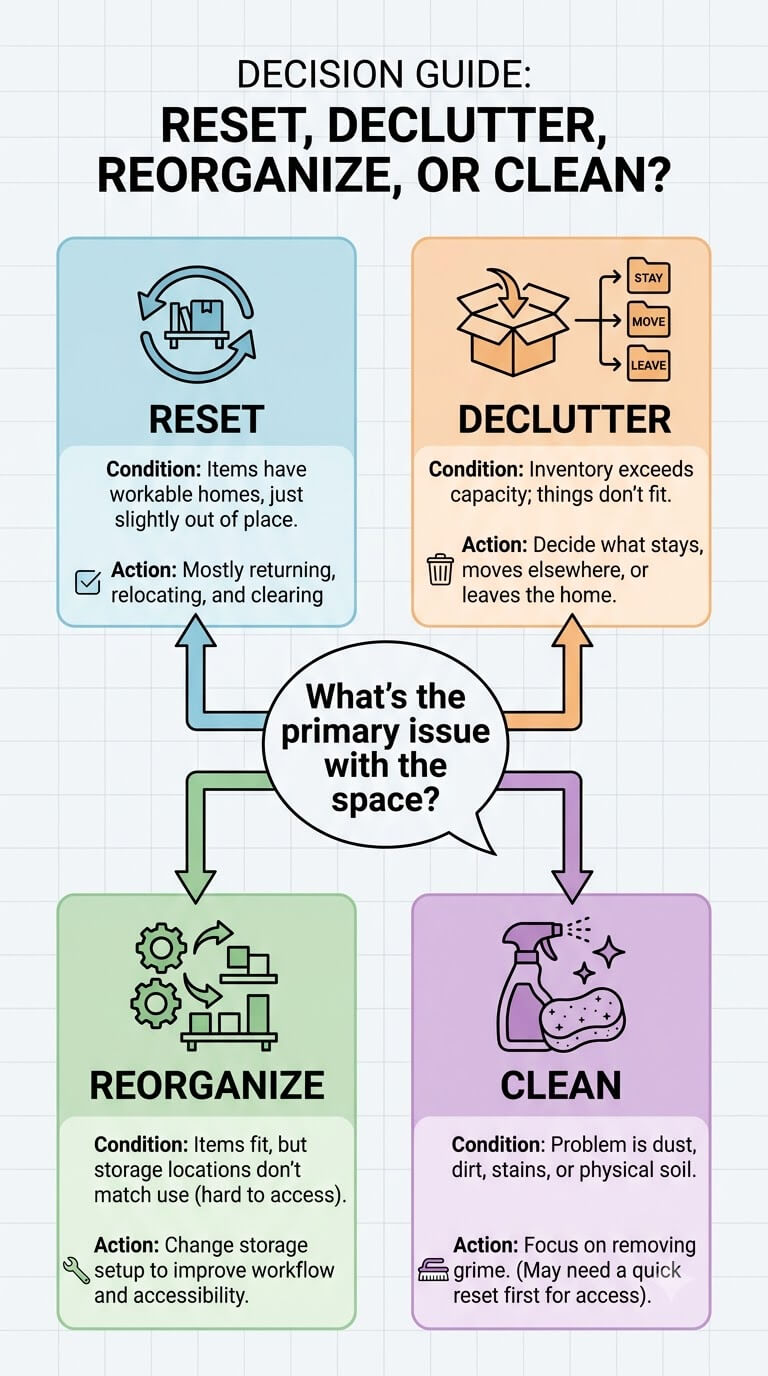
Reset when items already have workable homes
Choose a reset when the room is simply used and slightly out of place. The routine should be mostly returning, relocating, and clearing.
Declutter when inventory exceeds capacity
If belongings cannot fit into their existing zones even after everything is returned correctly, decide what stays, moves elsewhere, or leaves the home.
Reorganize when storage locations no longer match use
If retained items fit in the room but the layout makes them hard to retrieve or return, change the storage setup in a separate organizing session. If the room needs new zones rather than simple maintenance, return to the broader bedroom organization system.
Examples include a hamper on the wrong side of the room, a bedside drawer blocked by furniture, or daily clothing stored in the least accessible part of a no-closet setup. These are placement problems, not reasons to make the reset longer.
Clean when the problem is dust, dirt, stains, or other soil
Choose cleaning when the room is physically dirty rather than misplaced. You may reset first so surfaces and floors are accessible, but keep the jobs distinct.
Common bedroom reset mistakes
Turning every reset into a decluttering session
Daily maintenance becomes unsustainable when every object triggers a keep-or-discard decision. Put obvious items away and schedule harder decisions separately.
Moving piles instead of routing categories
Clearing the bed by placing clothing on the dresser and papers on the nightstand does not restore the room. Every pile should move toward the system that owns it.
Hiding loose objects under the bed
Concealment can make a room look reset while increasing hidden overflow. Only approved under-bed categories should return there.
Adding organizers because the reset feels slow
More containers are not always the answer. Utah State University Extension’s decluttering guidance cautions against buying more storage before reducing belongings. If the same category repeatedly exceeds its assigned space, review the inventory first.
Expanding the reset into deep cleaning
A short maintenance routine should not become vacuuming, dusting, washing bedding, cleaning mirrors, and wiping furniture every time. Finish the placement reset, then clean on the household’s normal schedule.
FAQ for a bedroom reset
How long should a bedroom reset take?
If the room already has workable storage, a quick reset may take about five to fifteen minutes depending on how much has drifted out of place. A much longer routine can signal unresolved inventory or storage problems.
What should I reset first?
Start with the bed and main walking path, then route clothing, reset the nightstand and dresser top, and remove items that belong outside the bedroom. This restores function before small visual details.
Is a bedroom reset the same as cleaning?
No. A reset returns belongings to assigned homes and clears access. Cleaning removes dust, dirt, stains, and other soil. Resetting first can make cleaning easier, but the two tasks have different purposes.
What should I do if clean clothes never get put away?
Check whether the existing clothing storage has usable capacity and whether the return route is convenient. If drawers or hanging space are overfilled, address the clothing system rather than accepting a permanent clean-laundry basket.
What if the same clutter returns every day?
Identify the first category that comes back. Repeated clothing, paper, product, or bag overflow usually points to a specific routing, capacity, or ownership problem that needs more than another reset.
How often should I do a bedroom reset?
Use the frequency that prevents ordinary drift from becoming a large project. Some rooms benefit from a short daily reset and a more deliberate weekend check, while lower-use rooms may need less frequent maintenance.
Final thoughts: a reset should restore the room, not rebuild it
A useful bedroom reset is short because the hard decisions were made earlier. Return clothing to its route, restore the nightstand and dresser top, clear the bed and floor, move paperwork and household items out, and keep shared zones within their assigned boundaries. When something no longer fits, do not force the reset to absorb the problem. Mark that category for decluttering or reorganization and keep the maintenance routine moving. Over time, the easiest rooms to reset are the ones where belongings have clear homes, surfaces have narrow purposes, and recurring overflow is treated as information rather than something to hide.

Ethan Carter is the Founder & Editor of HomeCleanSecrets. Based in the United States, he has 5 years of experience creating practical home cleaning, laundry care, stain removal, decluttering, and home organization content. His goal is to help everyday households clean smarter and build simple routines that are easier to maintain.
Read more about Ethan Carter on his author page: https://homecleansecrets.com/ethan-carter/
1 thought on “Bedroom Reset Checklist | Home Clean Secrets”