
Coffee tables and side tables work best when they support what people are doing right now without becoming permanent storage for everything that passes through the living room. The goal is not to keep every surface empty. It is to give each table a clear job, keep only a small amount of active-use inventory nearby, and make it obvious where everything goes when the activity ends.
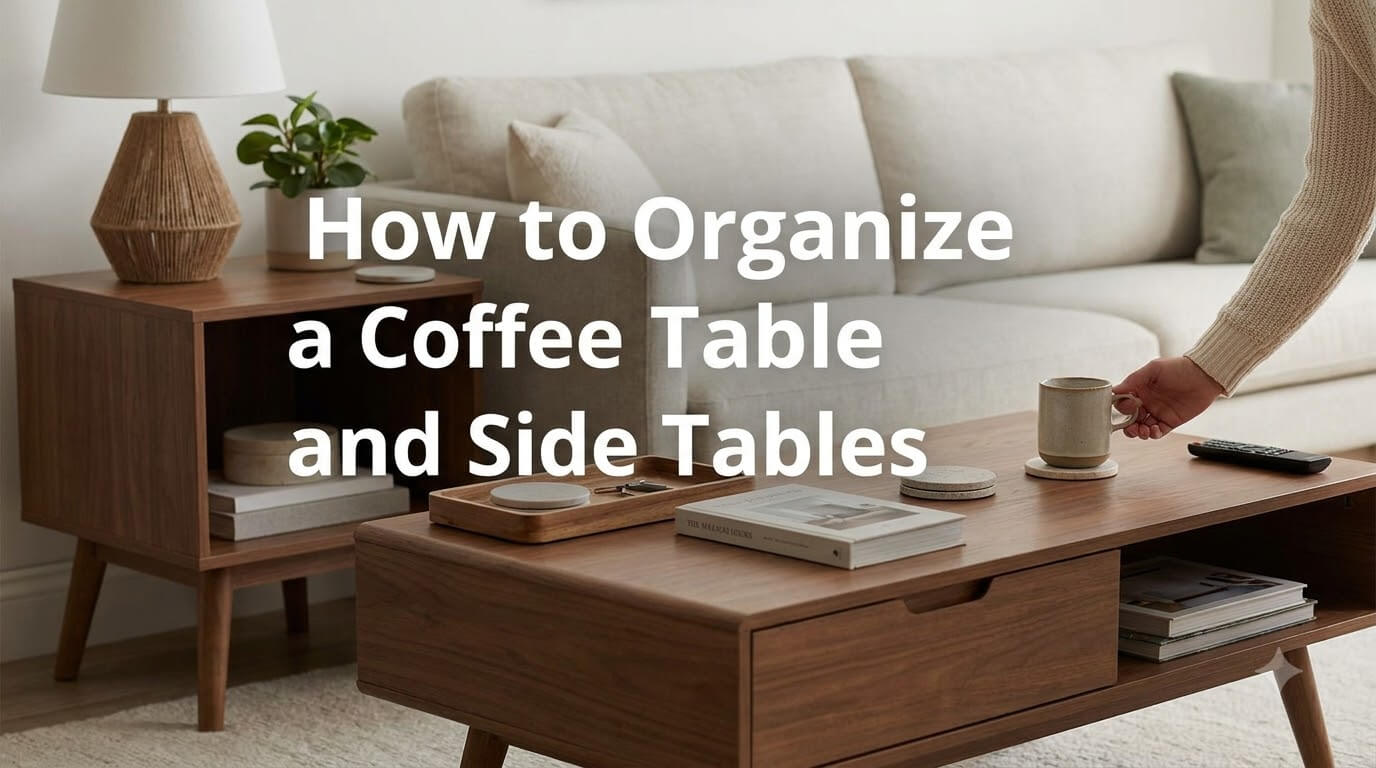
The key distinction is temporary placement versus permanent storage. A remote can sit on the table during viewing and return to the media area afterward; current reading can stay near a chair while the wider collection stays on shelves.
Quick Answer: Give Each Table a Job and Limit It to Active-Use Items

Start with function before containers. Decide what the table needs to support, remove anything that does not belong there, then add only enough storage to contain the few categories that genuinely need to stay close to seating.
Define what the coffee table supports
A coffee table is a shared central surface, so keep enough room for the activities that actually happen there, such as drinks, current reading, crafts, homework, or a family game. A useful test is whether someone can use the table without first clearing a pile.
Define what each side table supports
A side table can be more personal because it serves one seat. Keep only the few items that make that seat easier to use, such as a lamp, coaster, tissues, current reading, or a controlled charging setup. Wallets, mail, hobby supplies, work gear, and other personal overflow need another home.
Move category storage away from surfaces
When a table starts holding full categories rather than current-use items, relocate the category. A stack of eight books belongs on a shelf. Extra cables belong with electronics accessories. Incoming mail belongs in the household paper routine. Children’s toys belong in their intended play zone or home room unless the family deliberately keeps one small living-room container.
This is often more effective than buying a larger tray, because a larger tray can simply make room for more unrelated items.
When This Guide Fits the Problem
Surface clutter can be a stand-alone problem, but sometimes it is only a symptom of a broader room issue. Before reorganizing the tables, identify which pattern you are actually dealing with.
Surfaces refill after every tidy-up
If the same objects return within a day or two, look at why. They may lack a nearby home, the current storage may be inconvenient, or the living room may be acting as a landing zone for belongings from other rooms. Repeat offenders usually reveal the missing decision.
Drawers and trays have become junk zones
Hidden clutter is still clutter when nobody can find what they need. Empty a table drawer or tray and group what is inside. If it contains batteries, loose screws, receipts, spare keys, old chargers, pens, coupons, toy pieces, and unidentified hardware, it has stopped serving a defined purpose.
Assign the container one or two specific jobs. A side-table drawer might hold a remote and reading glasses. A coffee-table tray might hold coasters and one remote during use. Move everything else to a more appropriate category home.
When the real problem is whole-room decluttering
If every table, chair, shelf, and corner is overloaded, reorganizing one tabletop will not hold for long. The room may contain too many unrelated categories, abandoned belongings, duplicates, or items that should leave the living room completely.
In that case, reduce and relocate inventory before fine-tuning the surfaces. Utah State University Extension also recommends beginning clutter reduction by assessing what still has value or purpose rather than simply finding more places to put things, which is a useful principle for an overloaded shared room. Its practical clutter guidance is especially relevant when containers keep filling again.
Separate Coffee Table and Side Table Functions

The central table and the tables beside seating do not need identical rules. Giving them different jobs reduces duplication and makes it easier for everyone to know where an item belongs.
Shared central surface
Reserve the coffee table for items that support multiple people or a shared activity. Coasters, a small tissue box, a current game, or temporary remotes can make sense. Personal mail, one person’s work notes, spare electronics, cosmetics, and a large private reading stack usually do not.
Individual seating-side surface
A side table can support the person who uses that seat most often, but its size sets the limit. A lamp and coaster may already use much of a small top. If there is a drawer, give it one narrow purpose such as reading glasses or a remote, and move personal overflow elsewhere.
Temporary placement versus permanent home
Many objects need a place during use and a different place after use. That is normal. The mistake is letting the temporary spot become permanent by default.
A cup belongs on a coaster during a movie and in the kitchen afterward. A remote may sit beside you while watching television and return to the media area at the end. A borrowed book may rest by a chair for a few days but should not join an indefinite pile. Build the system around these transitions.
Decide What Can Stay on the Surface

Keep surface inventory small enough that the table still works. The right list depends on how the household uses the room, but every item should earn its place through frequent use or a clear shared function.
Coasters and tissues
Coasters are easy to justify when drinks are common in the room. Keep only the number that is routinely needed plus a small spare margin. A tissue box may also stay if it is used often and has a stable location where it does not crowd lamps, drinks, or electronics.
Do not use these basics as the start of a larger convenience station unless the surface can actually support it.
Current book or magazine
Keep only current reading near seating. When an item is finished, return it to its shelf, library-return area, or another established home instead of letting it become the base of a growing stack.
Remotes during active use
Keeping a remote on the coffee table during viewing is practical. Keeping every remote, controller, spare battery, charging lead, and streaming accessory there permanently is not. Use the surface as the use-time location and maintain a separate permanent home for the entertainment accessories.
Small personal items only when intentionally contained
A pair of reading glasses or another small daily-use item may deserve a consistent spot. Keep the allowance specific: a tiny dish or drawer section needs a named purpose. If it starts collecting unrelated small objects, empty it and narrow the purpose again.
Set a Surface-Capacity Limit Without Using Arbitrary Percentages
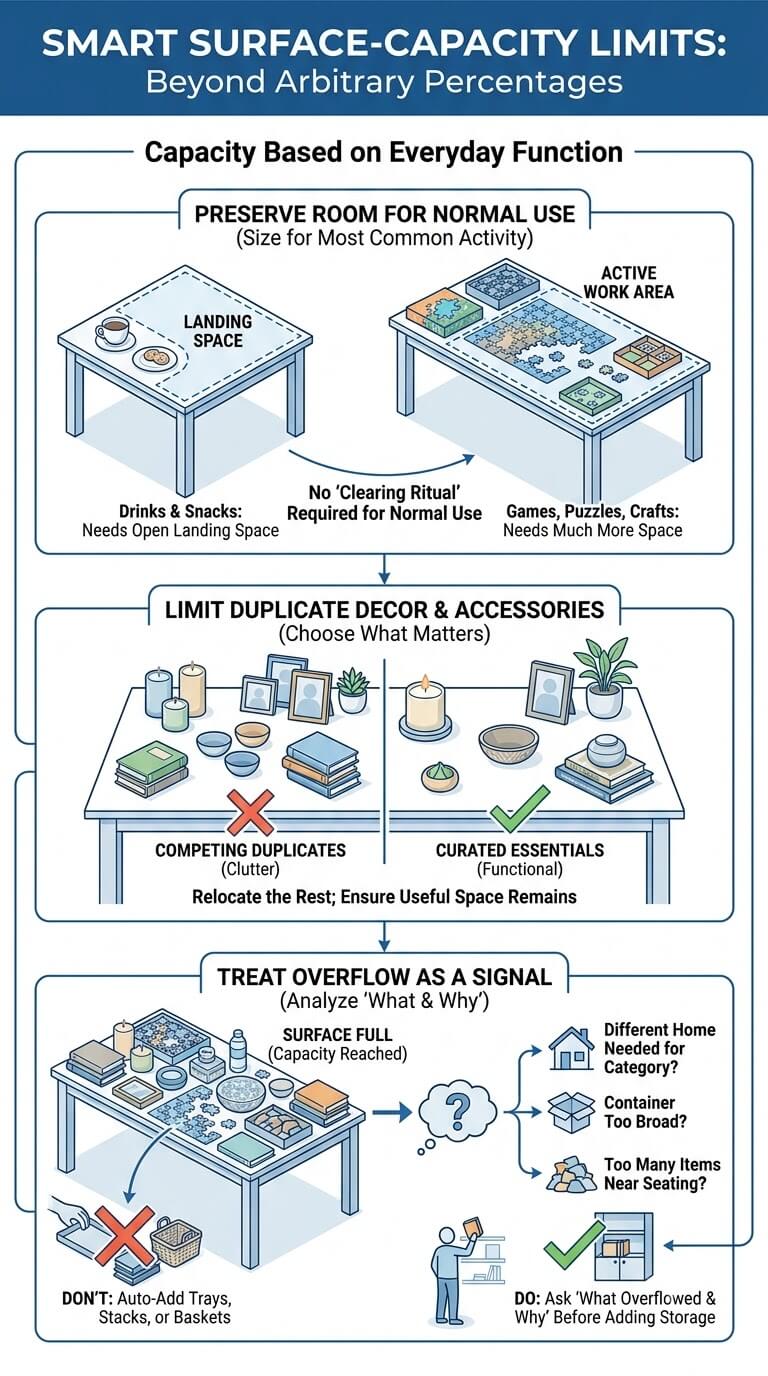
You do not need a rule such as keeping a certain percentage of the tabletop empty. Capacity should be based on what the table must physically do in everyday life.
Preserve room for normal use
Size capacity around the most common activity. A table used for drinks and snacks needs open landing space; one used for games, puzzles, or crafts needs much more. The table should not require a clearing ritual before normal use.
Limit duplicate decor and accessories
Decor is not the enemy, but duplicate decorative objects can compete with the table’s practical job. If several candles, bowls, books, sculptures, frames, and plants leave no useful space, choose the pieces that matter most and relocate the rest.
Treat overflow as a signal to relocate items
When a surface is full, do not automatically add a second tray, a taller stack, or a basket beside the leg. Full capacity is information. It may mean the category needs a different home, the container is too broad, or too many items are being kept near the seating area.
Ask what has overflowed and why before adding storage.
Use Trays, Drawers, Baskets, and Lower Shelves Carefully

Containers can make surfaces easier to reset, but only when each one has a defined job. The container should reduce decisions, not hide them.
Tray for a few defined items
A tray can group coasters, a small tissue packet, or one remote while keeping them from spreading across the table. Keep the tray small enough that it does not consume the entire surface. If an item would not deserve to stay on the table without the tray, question whether the tray is simply disguising clutter.
Drawer dividers for small categories
Dividers are useful when a drawer contains two or three small categories that are used at that seat. For example, one section might hold reading glasses and another a remote. Avoid creating ten tiny compartments for objects that do not actually belong in the living room.
Lower shelf for a controlled category
A lower shelf can hold one useful category such as a small basket of current magazines or one game in progress. Keep the category visible enough that it does not turn into layered storage. Deep piles on a low shelf are easy to ignore and difficult to reset.
Avoid a miscellaneous container with no rules
A temporary catch-all works only with an exit rule. If you use a basket for items that belong elsewhere, empty it on a predictable schedule and keep it separate from permanent table storage.
Manage Remotes Between the Table and Media Console
Remotes are one of the few categories that naturally move between a central table and the media area. A two-location system works when each location has a different purpose.
Temporary use-time placement
During viewing, keep the remote in one predictable spot instead of letting it disappear under magazines, blankets, or cushions.
Permanent media-console home
At the end of use, return remotes to one permanent storage spot near the television or media console. That location might be a shallow drawer, a small open bin, or a dedicated section of a cabinet. Controllers, charging accessories, spare cables, and device-specific parts belong with that media setup rather than on the coffee table.
End-of-use return routine
Return the remote when you remove cups and put away reading material. If people consistently skip this step, check whether its permanent home is too hidden, overfilled, or inconvenient.
Manage Current Reading Without Building Book Piles
Reading material deserves easy access, but a living-room table is not a substitute for a bookshelf.
One or a few active items near seating
Keep only what someone is actively reading. In a shared household, that may be several items, but they should still fit in a defined space such as one shelf section or a small basket beside the seating area. Avoid building a vertical stack that must be moved to reach the table.
Return the wider collection to shelves
Finished books, reference books, and titles that are not in current rotation should go back to the main living-room shelf or another room where the collection is managed. This keeps the coffee table focused on active use rather than long-term storage.
Library or borrowed books need a defined holding spot elsewhere if the table cannot support them
Keep borrowed books in a defined spot where they will not disappear into a larger household pile. If the table is crowded, use a small shelf section elsewhere.
Keep Paperwork and Mail From Becoming Table Storage
Paper spreads quickly because it arrives a little at a time and often feels unfinished. A living-room table should not become the place where every undecided paper waits. The table system should support the broader living-room organization plan rather than become a second storage hub.
Identify incoming papers quickly
When paper lands on the table, decide whether it is trash or recycling, requires action, needs filing, belongs to another household member, or is current reading. You do not need to process the entire household paper system at the coffee table. You only need to route the item correctly.
Route them to the household paper system
Move bills, receipts, forms, school papers, medical paperwork, and action items to the place where the household normally handles them. The living room may have a temporary intake point if that is intentional, but it should be small and emptied regularly.
Do not create a mini filing system in the living room
A few folders in a coffee-table drawer often expand into a second paper system that competes with the real one. Keep only reading material that genuinely belongs near seating. Route records and action papers out of the room.
Handle Chargers and Small Personal Items
Chargers and personal belongings become surface clutter when convenience wins over a permanent home. Keep convenience, but reduce the number of objects involved.
Keep only controlled daily-use charging items
If someone charges a phone from the same seat every day, one suitable charging cable may belong nearby. Keep the setup simple, avoid excess slack across a walking route, and follow the charger and furniture instructions for use and placement.
If charging requires cords across a path or a crowded power setup, choose another location rather than building the table arrangement around a trip hazard.
Avoid tangled mixed cables
Do not store unknown charging leads, spare adapters, old earbuds, and unrelated electronics in the same drawer just because they are small. Identify what is still used, keep the active item accessible, and move backups to the main electronics storage area.
Return personal belongings to their home rooms
Wallets, jewelry, hair accessories, medication, hobby tools, work supplies, and children’s belongings often land on side tables because they were used nearby. Unless the living room is their deliberate permanent home, return them to the room or system that owns the category.
What to Do When the Table Has No Storage
A table without drawers or shelves can still work well. In fact, the lack of hidden storage can make it easier to keep the rules clear.
Keep the surface lighter
Choose only the items required for the table’s primary job. A coaster, lamp, and current book may be enough for a side table. A coffee table may need only coasters and a temporary remote during use. Do not compensate for missing drawers by building piles on top.
Use nearby furniture-adjacent storage only when it has a defined category
A small basket beside a sofa, a nearby low cabinet, or one shelf can take pressure off the table when it has a named function. For example, a basket can hold current reading or active throws, but it should not become a mixed household dump zone.
If you add a freestanding storage piece, check its stability and follow the manufacturer’s anchoring and load instructions. The U.S. Consumer Product Safety Commission recommends securing furniture that can tip, especially in homes where children may climb or pull on it. CPSC’s Anchor It guidance explains the risk and basic anchoring approach.
Do not add unstable stacks beside seating
Stacks of books, nested boxes, tall baskets, or loose objects beside a chair can be awkward to reach and easy to knock over. If the nearby storage cannot hold the category in a stable, accessible way, reduce the amount or move it elsewhere.
What to Do When Several People Share Side Tables
Shared households need rules that are easy to understand without assigning every inch to a different person.
Shared baseline items
Agree on the items that always belong there, such as a lamp, coasters, tissues, or one remote. Keeping the baseline small leaves room for the person currently using the seat.
Small personal allowance only when intentional
If one person regularly needs reading glasses, a hearing-device case, or another daily-use item at that seat, give it a small defined location. Avoid expanding that allowance into permanent storage for everything the person carries through the room.
Return-to-room routine for everything else
At the end of the day, personal items should go back to their home rooms or category storage. In families with children, a small temporary return basket can help collect wandering belongings, but empty it rather than leaving it beside the sofa indefinitely.
Nightly Surface Reset

A short reset protects the system better than an occasional major clear-off. It should restore the table to its working baseline, not turn into a full-room cleaning session.
Remove dishes and trash
Take cups, plates, wrappers, and obvious trash out first. This clears the largest visual distractions and prevents yesterday’s use from taking up tomorrow’s surface space.
Return remotes, books, papers, and chargers
Put each category back in its actual home. Remotes return to the media area, finished reading returns to shelves, papers go to the household paper system, and personal chargers or devices return to their assigned location unless they are intentionally kept at that seat.
Clear space for the next use
Finish by looking at the table as a working surface. Can someone set down a drink, read, play a game, or use the seat without moving unrelated objects first? If yes, stop. There is no need to make the table look staged.
Weekly Drawer and Tray Check
Hidden containers need a slightly deeper check because migrated items can build up without being obvious.
Remove migrated items
Open drawers and lift the tray to find objects that migrated there during the week. Return those items before the container becomes long-term holding space.
Check whether containers are hiding clutter
If a tray is always full or a drawer is hard to close, remove everything and ask whether each item belongs to the defined category. A container should make return easier. If it mainly allows more possessions to remain near the sofa, it is working against the system.
Adjust capacity when one category repeatedly overflows
Repeated overflow can mean the storage is too small, but it can also mean too much inventory is being kept there. Decide which is true. A larger remote bin may be reasonable if the household genuinely uses several devices. A larger paper drawer is usually not the right answer if paperwork should leave the room.
Common Coffee and Side Table Organization Mistakes
Surface problems usually come from unclear ownership, too many permanent items, or no distinction between active use and long-term storage.
Using trays as junk drawers
A tray works only when it has a narrow purpose. If it collects everything people do not want to put away, it becomes visible clutter with a border around it. Empty it, rename its job, and keep only the items that match.
Leaving permanent reading piles
A growing stack may look convenient, but it reduces surface access and makes it harder to tell what anyone is actually reading. Keep active items nearby and return the rest to shelves or another defined holding area.
Storing paperwork on shared surfaces
Paperwork mixes personal, financial, school, medical, and action items in a place where drinks, food, children, and guests may also be present. Route it to the household paper system instead of creating a second filing area around seating.
Overcrowding surfaces for styling rather than function
If decorative arrangements have to be moved every time the table is used, they are competing with the furniture’s everyday job. Keep the pieces you enjoy most and leave enough usable space for normal household activity.
Also pay attention to stability when adding baskets, pedestal tables, narrow cabinets, or other furniture near active seating. In homes with young children, the CPSC childproofing guidance includes furniture and TV tip-over precautions worth reviewing alongside the manufacturer’s instructions.
FAQ for Coffee and Side Table Organization
These questions focus on the decisions that usually determine whether a surface stays useful after the first tidy-up.
What should stay on a coffee table every day?
Keep only items that support frequent shared use and still leave room for the table’s normal activities. That might include coasters, a small tissue box, or one defined tray. Remotes and current reading can stay during active use, but they should have clear homes when the activity ends.
Where should remotes live permanently?
A permanent remote home usually works best near the television or media console, where the rest of the entertainment accessories are managed. The coffee table can be the temporary use-time location. Returning remotes to one consistent spot reduces searching without turning the table into electronics storage.
How do you organize a coffee table with no drawers?
Keep the top lighter rather than trying to recreate hidden storage on the surface. Choose a few active-use items, use one small tray only if it has a defined purpose, and move larger categories to nearby shelves, a low cabinet, or another appropriate home. Avoid stacks and baskets that crowd walking or seating areas.
How do you stop a shared side table from becoming one person’s storage area?
Set a small shared baseline, then allow only a limited personal item if it is used frequently at that seat. Everything else should return to the person’s room or category storage during the daily reset. If one person needs more permanent storage, give that category a separate home instead of expanding across the shared table.
Final Thoughts
An organized coffee table or side table does not need to look empty. It needs to stay available for the people using the room. Give each table a clear function, keep only active-use items close to seating, define permanent homes for remotes and personal belongings, and treat overflow as a reason to relocate rather than add more containers.
The best test is everyday use. If people can sit down, set down a drink, find the remote, and reset the surface quickly, the system is working. When the same category keeps returning, fix that category’s home instead of clearing the same pile again.

Ethan Carter is the Founder & Editor of HomeCleanSecrets. Based in the United States, he has 5 years of experience creating practical home cleaning, laundry care, stain removal, decluttering, and home organization content. His goal is to help everyday households clean smarter and build simple routines that are easier to maintain.
Read more about Ethan Carter on his author page: https://homecleansecrets.com/ethan-carter/