
Introduction
Organized homes are built on repeatable habits
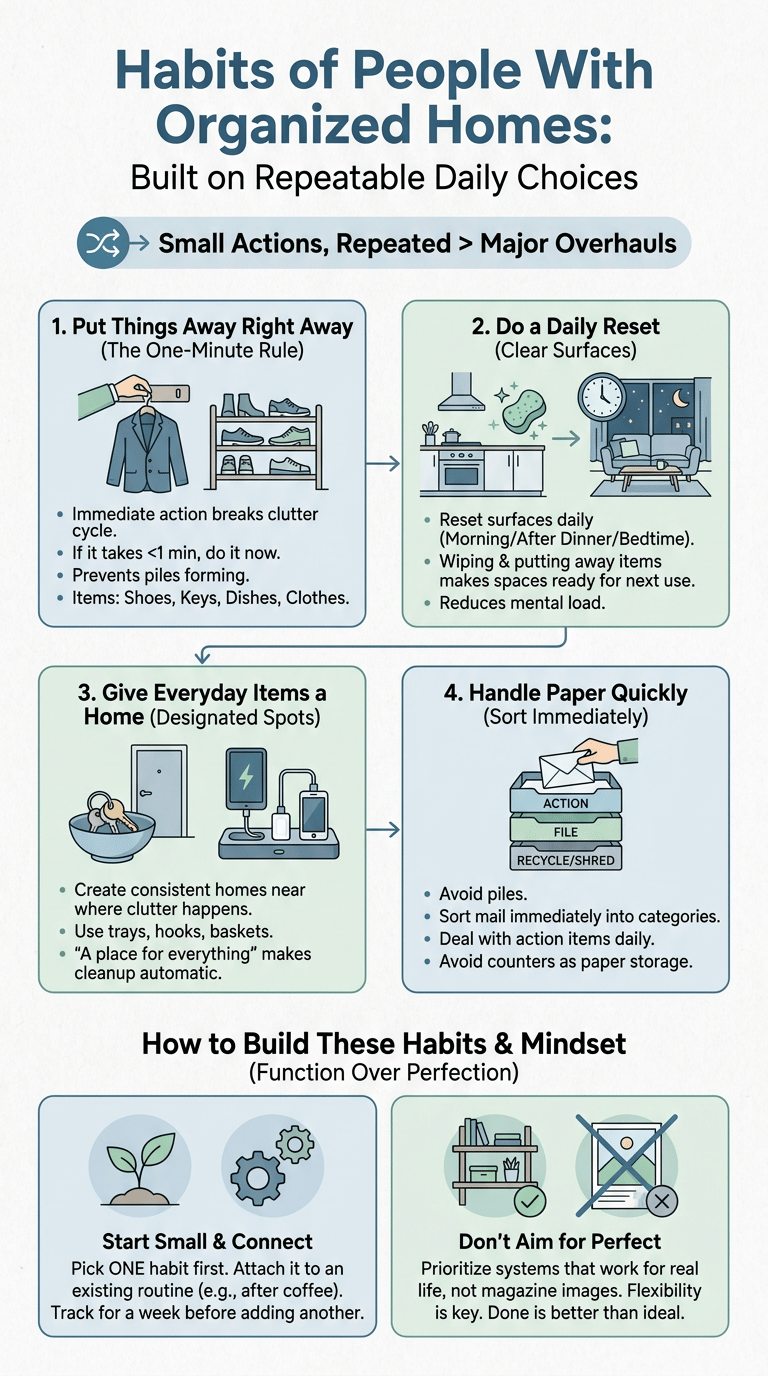
Organized homes rarely come from single, dramatic overhauls. Instead they come from daily choices repeated until they become normal. People who keep tidy, functional spaces focus on small, repeatable behaviors that reduce friction, limit decisions, and prevent clutter from accumulating.

This article lists practical habits you can copy. Each entry explains why the habit works, the specific items it helps, and simple ways to start. The goal is to give realistic, behavior-focused ideas you can adopt without a full renovation.
For a related walkthrough, see our guide to how to be more organized in your home.
For a related walkthrough, see our guide to how to organize your home.
Small actions matter more than major overhauls
Major cleanouts can feel satisfying, but long-term order depends on what you do day to day. Small actions that take one minute or less lower the chance of piles forming, reduce stress, and make maintenance predictable.
How to use this list
Pick one habit first
Choose a single habit that feels easiest to implement. Master it for a week before adding another. That prevents overwhelm and helps the new behavior stick.
Attach it to an existing routine
Pair a habit with something you already do, like brushing your teeth or making coffee. Linking new actions to established routines increases the odds you will remember them.
Keep it realistic
Don’t try to be perfect. Aim for consistent, repeatable actions that are easy to maintain. Systems that demand a lot of time or willpower rarely last.
Habit 1: They Put Things Away Right Away
Why this prevents clutter buildup
Putting items back immediately breaks the cycle of clutter. When things have a designated location each time they are used, surfaces stay clear and you spend less time searching later.
Small actions stop piles from forming
Doing a quick, immediate action—like hanging a coat or returning a book—prevents a pile from turning into a persistent project. These micro-actions add up across the day.
Items this habit works best for
Shoes
- Keep a shoe tray or rack at each entry to encourage immediate placement.
- If shoes come off in multiple places, place a second small mat so returning them is easy.
Keys
- Choose one visible spot like a hook or small bowl by the door so keys are always easy to drop and find.
Dishes
- Rinse and load or run a quick wash instead of letting cups sit on counters.
Clothes
- Keep a hamper in bathrooms and bedrooms so worn clothes go straight to laundry.
How to start
Use the one-minute rule
If putting something away takes less than a minute, do it immediately. For items that require a longer process, designate a temporary staging spot and schedule a short time to finish the task the same day.
Habit 2: They Do a Daily Reset
What a daily reset includes
Clear surfaces
- Wipe or put away items on counters and tables so the room looks and feels ready for the next use.
Return misplaced items
- Quickly move any out-of-place objects back to their homes.
Reset kitchen
- Load the dishwasher or wash essentials, put away food, and clear the sink so the kitchen starts each day functional.
Best reset times
Morning
- A short morning reset makes it easier to start the day with clarity. Open curtains, clear counters, and make beds as part of a gentle morning routine.
After dinner
- Resetting after dinner prevents kitchen messes from lingering and reduces the morning workload.
Before bed
- Evening resets, like putting away mail and prepping for the next day, help you wake to a calmer environment.
Habit 3: They Do Not Keep Too Many Duplicates
Common duplicates
Mugs
- Keep only the number you use regularly. Excess mugs gather dust and take cupboard space.
Towels
- Store a practical number for laundry cycles rather than every possible backup.
Kitchen tools
- Limit duplicate gadgets so drawers are easier to sift through when cooking.
Cleaning products
- Consolidate cleaners and avoid keeping multiple near-identical bottles unless each serves a distinct function.
Why fewer duplicates help
Less storage pressure
Fewer items reduce the need for extra furniture and make storage simpler.
Easier choices
When you own fewer similar items, it’s faster to pick the right one and put it away afterwards.
Faster cleanup
Less to handle means daily maintenance takes less time, which improves habit adherence.
Habit 4: They Give Everyday Items a Home
Common daily items
Keys
- A hook or bowl by the door keeps keys visible and prevents searches when leaving.
Bags
- Create a dedicated corner for purses and backpacks so they are ready to grab and go.
Chargers
- Keep charging stations where devices are most often used so cords and devices are not scattered.
- Have a drop spot for incoming mail that encourages quick sorting rather than leaving envelopes on the counter.
How to create homes
Place storage where clutter happens
Make it easy to do the right thing. If shoes pile by the door, add a bench with cubbies. If chargers end up in the living room, move a power strip and basket there so they have a consistent place.
Use trays, hooks, and baskets
- Trays contain loose items on countertops and make it easy to carry a group to its place.
- Hooks keep bags and keys off surfaces and visible.
- Baskets corral frequently used but smaller objects so they are easy to return.
Habit 5: They Handle Paper Quickly
Paper habits
Sort mail immediately
- Open mail over a table with three piles: action, file, and recycle/shred. Deal with the action pile the same day when possible.
Use action/file/shred categories
- Keep a small desktop organizer or labeled folders for quick sorting and reduce the temptation to leave paper on counters.
Avoid counters as paper storage
- Designate a single landing spot for incoming papers. Empty it weekly to prevent it becoming a permanent clutter zone.
Habit 6: They Keep Flat Surfaces Clear
Why surfaces matter
They attract clutter
Flat surfaces are natural collection points for items you touch or carry. Keeping them clear reduces the visual feel of clutter and lowers mental load.
They shape how rooms feel
A clear countertop or table makes a room feel larger and calmer. That perceived order encourages more organized behaviors.
Surfaces to reset daily
Kitchen counter
- Keep only daily-use appliances out and store other items to keep counters functional.
Dining table
- Return mail and other items to their homes so the table remains ready for meals.
Desk
- File or act on papers and stash pens in a holder to avoid pens and notes spreading across the workspace.
Bathroom vanity
- Keep only nightly essentials on the vanity; store backups in drawers or a cabinet.
Habit 7: They Declutter Regularly
Small decluttering routines
Donation box
- Keep a lightweight box or bag in a closet for items you no longer use. When it fills, drop it off or schedule a pickup so the box does not linger.
Monthly drawer check
- Open one drawer each month and remove things you do not use. Small, frequent checks are less daunting than large purges.
Seasonal closet review
- At the start of each season, review clothing for fit and utility. If an item has not been worn in the past season, consider donating it.
For practical decluttering strategies and simple methods to make decisions about items, see Better Homes & Gardens’ decluttering tips.
Habit 8: They Make Storage Easy to Use
Easy storage choices
Open bins for daily items
- Open containers make it obvious where things belong and reduce the friction of returning items.
Labels for shared areas
- Label shelves or baskets in shared zones so everyone knows where items belong, reducing disputes and drift.
Avoid hard-to-reach daily storage
- Store items you use frequently at eye level or lower so returning them is quick. Reserve high shelves for seasonal or rarely used things.
Habit 9: They Reset Before Bed
Why evening resets work
Morning feels calmer
Putting a few minutes into tidying before bed makes mornings less rushed and reduces stress when starting the day.
Kitchen does not start behind
If dishes are handled and counters are clear before sleep, you remove a common source of morning friction.
What to reset
Kitchen sink
- Load or rinse dishes and wipe the sink area. For guidance on household cleaning and disinfecting, see CDC’s household cleaning and disinfecting guidance.
Living room
- Fold throws, stash remotes in a tray, and return stray items to their places so the room is welcoming the next morning.
Entryway
- Put shoes away, hang jackets, and clear the landing spot so leaving the house is simple.
Habit 10: They Do Not Aim for Perfect
Function over perfection
Done is better than ideal
Organized people prioritize systems that work for their life, not a magazine image. A countertop with a practical tray and a rarely used decorative item is fine if the system keeps daily use tidy.
Systems can be adjusted
Expect the approach to evolve. If a storage method is not convenient, change it. Flexibility keeps habits sustainable.
How to Build These Habits
Start small
Choose one habit
- Picking a single habit—like putting keys away or a nightly five-minute reset—creates a visible win that motivates additional changes.
Track it for one week
- Note when you succeed and when you don’t. Short tracking helps identify barriers and patterns that prevent consistency.
Add another only when easy
- After one habit feels automatic, add a second. Layering habits slowly avoids burnout and creates reliable routines.
When a habit touches cleaning chemicals, ventilation, or disinfecting practices, choose methods and products that reduce risk and follow authoritative guidance. For information on safer cleaning product choices, see EPA’s Safer Choice guidance on product selection.
Do not attempt heavy mold removal or biohazard cleanup yourself. Call trained professionals for large mold growth, sewage, or blood-borne exposures. For routine household cleaning, use appropriate ventilation, follow label instructions, and store chemicals safely away from children and pets.
FAQs
What do organized people do every day?
Reset, return items, and prevent incoming clutter
Daily habits include quick resets of surfaces, returning items to designated homes, and handling incoming objects like mail or bags immediately so they do not become long-term clutter.
How do I become more organized at home?
Build one simple habit at a time
Start with an easy habit, attach it to a routine you already have, and repeat it until it becomes automatic. Use small boxes, bins, and trays to reduce decision fatigue and create clear landing spots for everyday items.
Why do organized homes stay organized?
They use maintainable systems
Organized homes rely on simple, sustainable systems and small daily actions rather than occasional deep cleans. Those systems are flexible, visible, and low-friction so the household can maintain order with regular effort.

Ethan Carter is the Founder & Editor of HomeCleanSecrets. Based in the United States, he has 5 years of experience creating practical home cleaning, laundry care, stain removal, decluttering, and home organization content. His goal is to help everyday households clean smarter and build simple routines that are easier to maintain.
Read more about Ethan Carter on his author page: https://homecleansecrets.com/ethan-carter/