
A good home moisture control products guide should help you decide what to buy before you spend money on the wrong tool. A damp basement, a musty closet, sweating windows, or a humid laundry room may all feel like the same problem, but they do not always need the same product. Some homes need a room dehumidifier. Some need a cheap hygrometer first. Some only need a small moisture absorber in an enclosed cabinet. Some need ventilation, repair work, or a professional inspection before any plug-in product can help.
The safest way to shop is to identify the size of the area, measure the relative humidity, look for water entry or condensation, and then choose the simplest product that matches the real problem. The EPA explains that moisture control is the key to mold control, and that indoor humidity is best kept below 60 percent when possible, ideally in the 30 to 50 percent range. A small humidity meter can tell you whether the room is truly humid or just smells stale because of dust, closed doors, old textiles, or poor airflow. You can read the EPA’s homeowner guidance on mold, moisture, and indoor humidity before deciding how serious the problem may be.
Quick Answer: What Product Controls Which Moisture Problem?
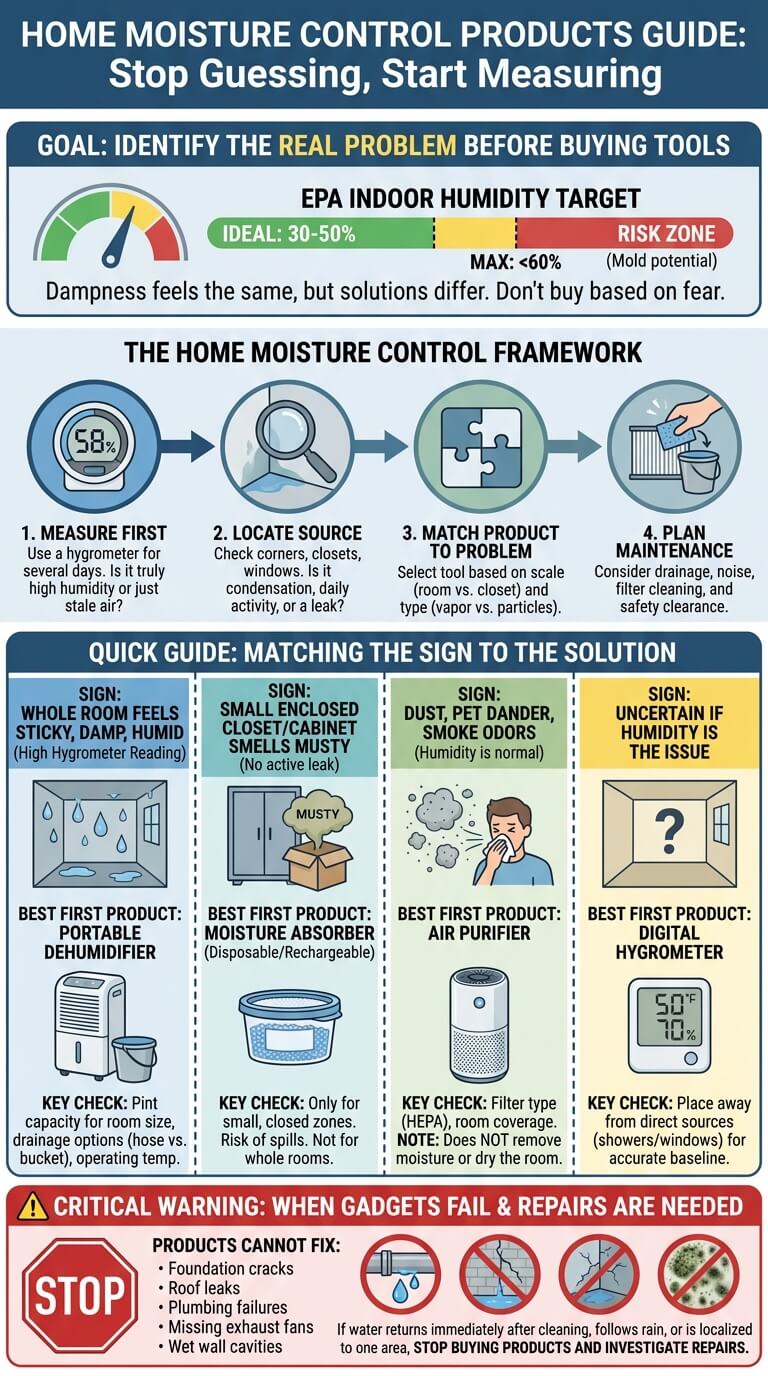
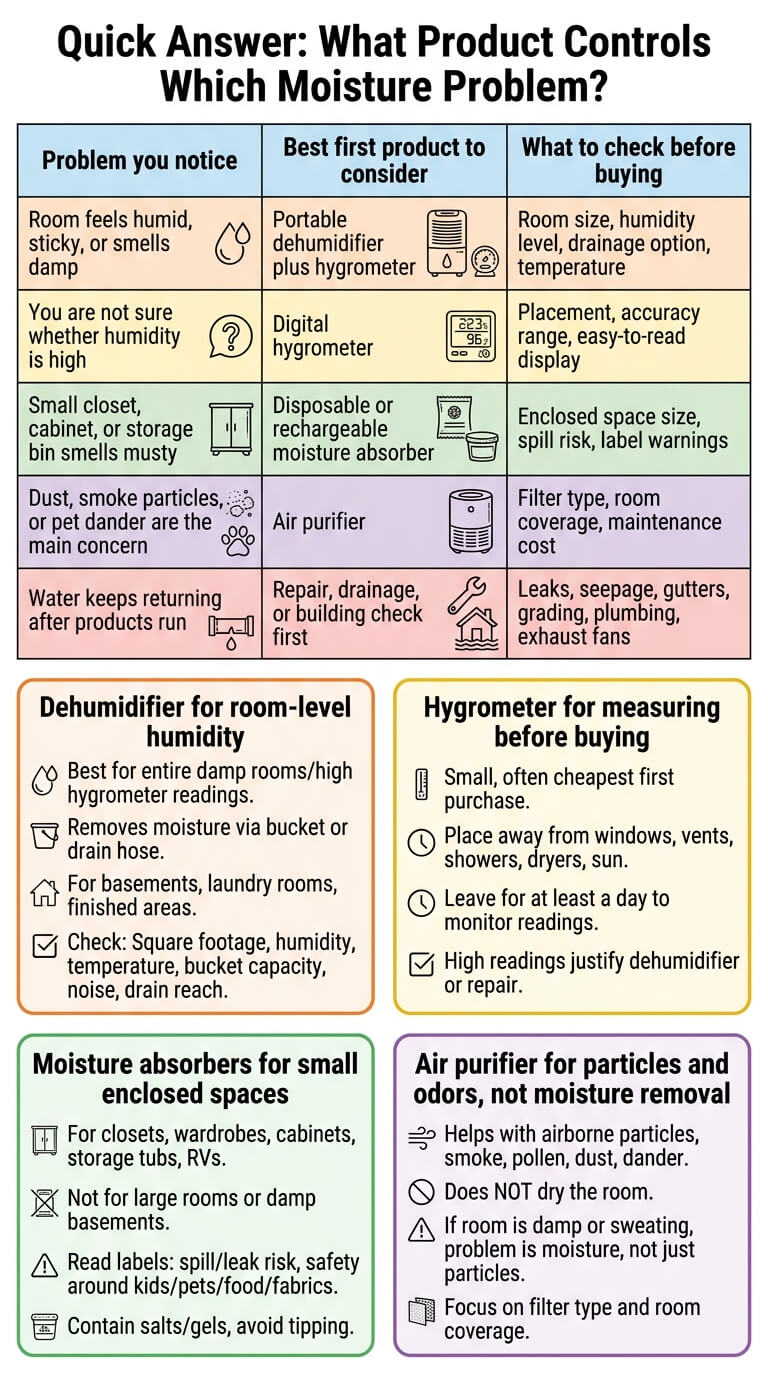
A product should match the scale of the moisture. A damp room, a shoebox-sized closet, a sweating window, and a dusty room with pet dander each point to a different first purchase.
Here is a simple starting point:
| Problem you notice | Best first product to consider | What to check before buying |
|---|---|---|
| Room feels humid, sticky, or smells damp | Portable dehumidifier plus hygrometer | Room size, humidity level, drainage option, temperature |
| You are not sure whether humidity is high | Digital hygrometer | Placement, accuracy range, easy-to-read display |
| Small closet, cabinet, or storage bin smells musty | Disposable or rechargeable moisture absorber | Enclosed space size, spill risk, label warnings |
| Dust, smoke particles, or pet dander are the main concern | Air purifier | Filter type, room coverage, maintenance cost |
| Water keeps returning after products run | Repair, drainage, or building check first | Leaks, seepage, gutters, grading, plumbing, exhaust fans |
Dehumidifier for room-level humidity
A dehumidifier is the main product to consider when an entire room feels damp or consistently reads high on a hygrometer. It removes moisture from the air and collects it in a bucket or sends it through a drain hose. This is the product category most people think of for basements, laundry rooms, finished lower levels, and humid rooms that stay closed for long periods.
If you are still guessing whether the room is actually humid, start with a simple hygrometer before spending money on a larger moisture control product.
Before buying one, check the square footage, the usual humidity reading, the room temperature, and whether you can empty a bucket often. A unit that looks powerful on a product page can still be annoying if the bucket is too small, the fan is too loud, or the drain hose cannot reach a safe drain.
Hygrometer for measuring before buying
A hygrometer is a small humidity meter and often the cheapest first purchase. Put it in the problem room for at least a day, away from windows, vents, showers, dryers, and direct sun. If morning and evening readings stay high after normal ventilation, a dehumidifier or repair check becomes easier to justify.
Once the problem is clearly room-level humidity, the next step is choosing a dehumidifier that fits the room, drainage setup, noise level, and maintenance routine.
Moisture absorbers for small enclosed spaces
Moisture absorbers work best in small, closed zones such as closets, wardrobes, cabinets, storage tubs, RV compartments, and seasonal clothing bins. They are not a substitute for a dehumidifier in a damp basement because they have limited capacity. Think of them as small-space helpers, not room machines.
For a small wardrobe, linen closet, or enclosed shelf, closet moisture absorbers may be more practical than running a full-size machine.
Read the label before using them around children, pets, food storage, delicate fabrics, or finished wood. Many absorber products contain salts or gels that can spill, leak, or leave residue if tipped over or overfilled.
Air purifier for particles and odors, not moisture removal
An air purifier can help with airborne particles, some odors, smoke residue, pollen, dust, or pet dander, depending on the filter and room size. It does not dry the room. If your windows sweat, walls feel damp, or a hygrometer reads high, an air purifier may make the air smell cleaner while the moisture problem continues.
If the main problem is dust, smoke, pet dander, or airborne particles rather than dampness, compare a dehumidifier vs air purifier before buying either device.
Buy an air purifier when the main problem is what is floating in the air. Buy a moisture-control product when the problem is water vapor, condensation, damp materials, or high relative humidity.
Why Indoor Moisture Control Matters
Persistent dampness can affect comfort, smells, paint, drywall, wood, stored clothing, cardboard boxes, carpet, and metal hardware. The goal is not to make a home bone dry. The goal is to keep rooms in a reasonable range and stop water from lingering where it can damage materials.
Comfort, smell, condensation, and material damage
High humidity often shows up first as discomfort. A room may feel sticky even when the thermostat looks normal. Bedding can feel clammy. Closets may smell stale. Windows may fog in the morning. In a basement, cardboard boxes can soften, tools can rust, and wood furniture may feel slightly swollen.
Those signs matter because they tell you where to look next. Window condensation suggests cold surfaces meeting humid indoor air. A musty closet suggests enclosed storage with poor air movement. Damp flooring near a wall suggests a water entry or drainage issue. The product you choose should respond to the sign you can actually observe.
What products can help and what they cannot fix
Products can reduce indoor humidity, measure conditions, support airflow, and protect small stored spaces. They cannot seal foundation cracks, repair a roof leak, replace a missing bathroom exhaust fan, correct a dryer vent problem, or dry a wall cavity that keeps getting wet. Stop and investigate if you see active dripping, wet drywall, fuzzy growth, bubbling paint, a soft floor, repeated puddles, or a strong odor that returns within hours after cleaning.
When dampness may signal a repair problem
A product is most useful when moisture is coming from normal humidity, seasonal dampness, laundry activity, shower steam, or a poorly ventilated closed room. It is less useful when water enters from outside or from a failed building component. If the damp area follows rain, appears along one wall, returns after every shower, or sits under a pipe, buying another gadget is usually not the first move.
HUD’s Healthy Homes guidance also emphasizes keeping homes dry and addressing water problems rather than only treating visible mold or odor. Their consumer guidance on cleaning up and preventing mold points homeowners and renters toward ventilation, fixing leaks, and drying wet areas quickly.
The Home Moisture Control Framework
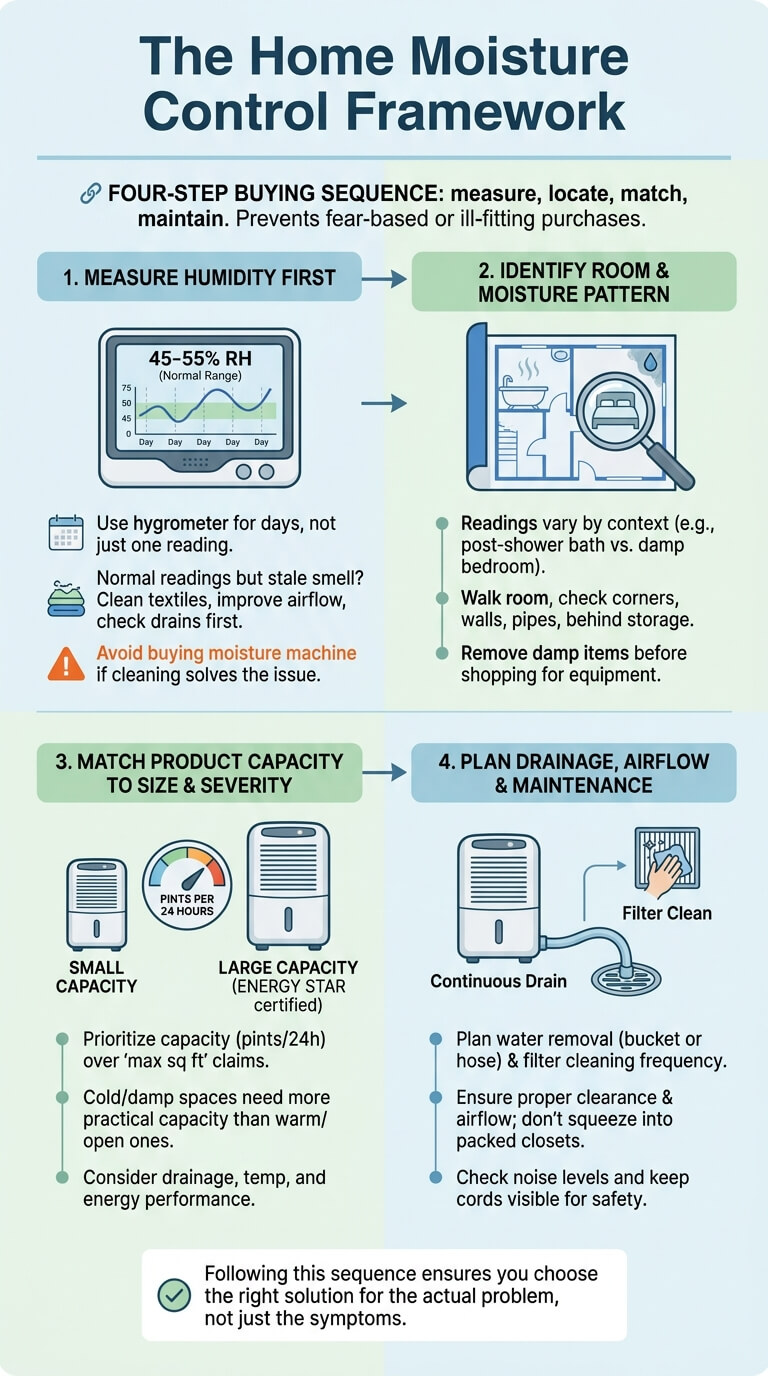
Use a four-step buying sequence: measure, locate, match, and maintain. This keeps you from buying based on fear, a single musty smell, or a product claim that does not fit the room.
Measure humidity first
Start with a hygrometer unless the problem is obvious water. Measure the room for several days if you can because one reading after a shower, storm, or laundry load may not represent the normal pattern. If readings are normal but the room smells stale, focus on cleaning textiles, improving airflow, checking drains, and removing damp stored items before buying a moisture machine.
Identify the room and moisture pattern
The same reading can mean different things in different rooms. A bathroom after a shower is different from a bedroom that stays damp all day. Walk the room slowly and check corners, exterior walls, under windows, around pipes, behind stored boxes, near HVAC registers, and around door thresholds. If the smell is strongest behind cardboard, remove damp storage before shopping for equipment.
Match product capacity to room size and severity
Capacity matters most for dehumidifiers. ENERGY STAR explains that dehumidifier capacity is usually measured in pints per 24 hours and should be chosen based on space size and dampness level. Their current guidance on dehumidifier features and capacity also notes drainage, operating temperature, placement, and energy performance as important buying factors.
Do not rely only on the largest square footage claim printed on a box. Product listings often assume ideal conditions, open layouts, and moderate moisture. A cold basement, closed laundry room, or very damp lower level can need more practical capacity than a bright upstairs bedroom of the same size.
Plan drainage, airflow, and maintenance
A moisture product is only useful if you can live with it. Ask where the water will go, who will empty it, how often the filter needs cleaning, and whether the noise will bother anyone. Do not squeeze a dehumidifier into a packed closet unless the manual allows that use and there is enough clearance. Keep drain hoses out of walkways, keep cords visible, and read the manual before setup.
Before you finalize a purchase, check the most common dehumidifier mistakes to avoid, especially sizing, placement, drainage, and maintenance mistakes.
A good unit can still perform poorly if airflow is blocked or drainage is awkward, so plan where to place a dehumidifier before you rely on it every day.
Product Category Breakdown
Portable dehumidifiers
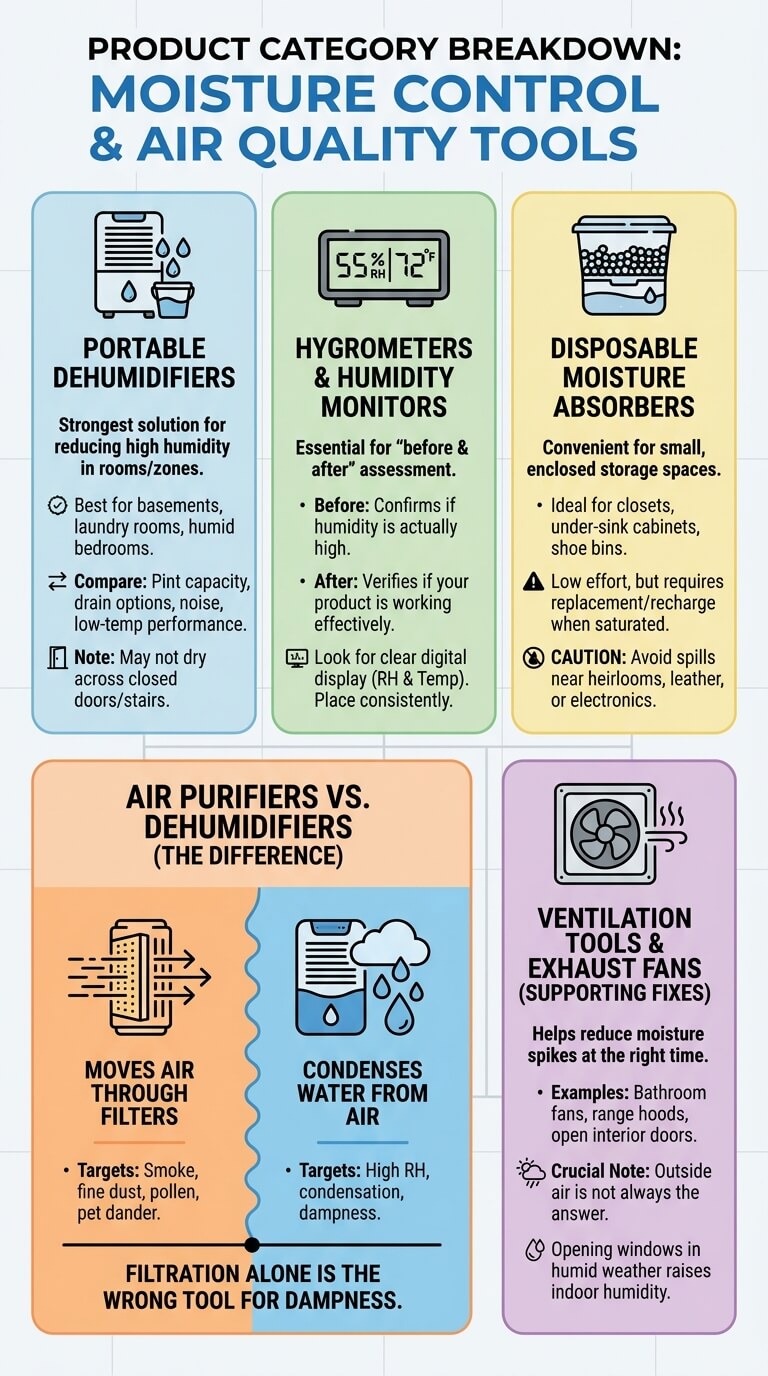
A portable dehumidifier is the strongest consumer product for reducing humidity in a room or zone. It is best for basements, humid bedrooms, laundry rooms, closed offices, and finished lower levels where readings stay high. Compare pint capacity, bucket size, drain options, noise, low-temperature performance, filter access, and controls. One machine may not dry separate rooms through closed doors or stairways.
Hygrometers and humidity monitors
A hygrometer is useful before and after buying other products. Before buying, it confirms whether humidity is high. After buying, it tells you whether the product is working. For most beginners, a clear digital display with relative humidity and temperature is enough. Place it consistently so readings are comparable from day to day.
Disposable moisture absorbers
Disposable absorbers are convenient for small storage spaces. They can help reduce dampness inside closets, under-sink cabinets, linen storage, shoe bins, and seasonal clothing containers. They are low effort, but they have limits. Once the material is saturated, the product has to be replaced or recharged, depending on the design.
Never use them where a spill could damage heirloom textiles, leather, electronics, pet supplies, food, or unfinished wood. Keep them upright and follow the label for disposal.
Air purifiers and why they are different
An air purifier moves air through filters. A dehumidifier condenses water from the air. That difference matters. If the problem is smoke particles, fine dust, pollen, or pet dander, filtration may help. If the problem is high relative humidity, condensation, or a damp room, filtration alone is the wrong tool.
Ventilation tools and exhaust fans as supporting fixes
Ventilation is often part of moisture control, especially in bathrooms, kitchens, laundry areas, and closed rooms. A bathroom fan, range hood, open interior door, or HVAC circulation setting can reduce moisture spikes when used at the right time. This does not mean outside air is always the answer. In humid weather, opening windows can raise indoor humidity.
Decision Tree: What Should You Buy First?
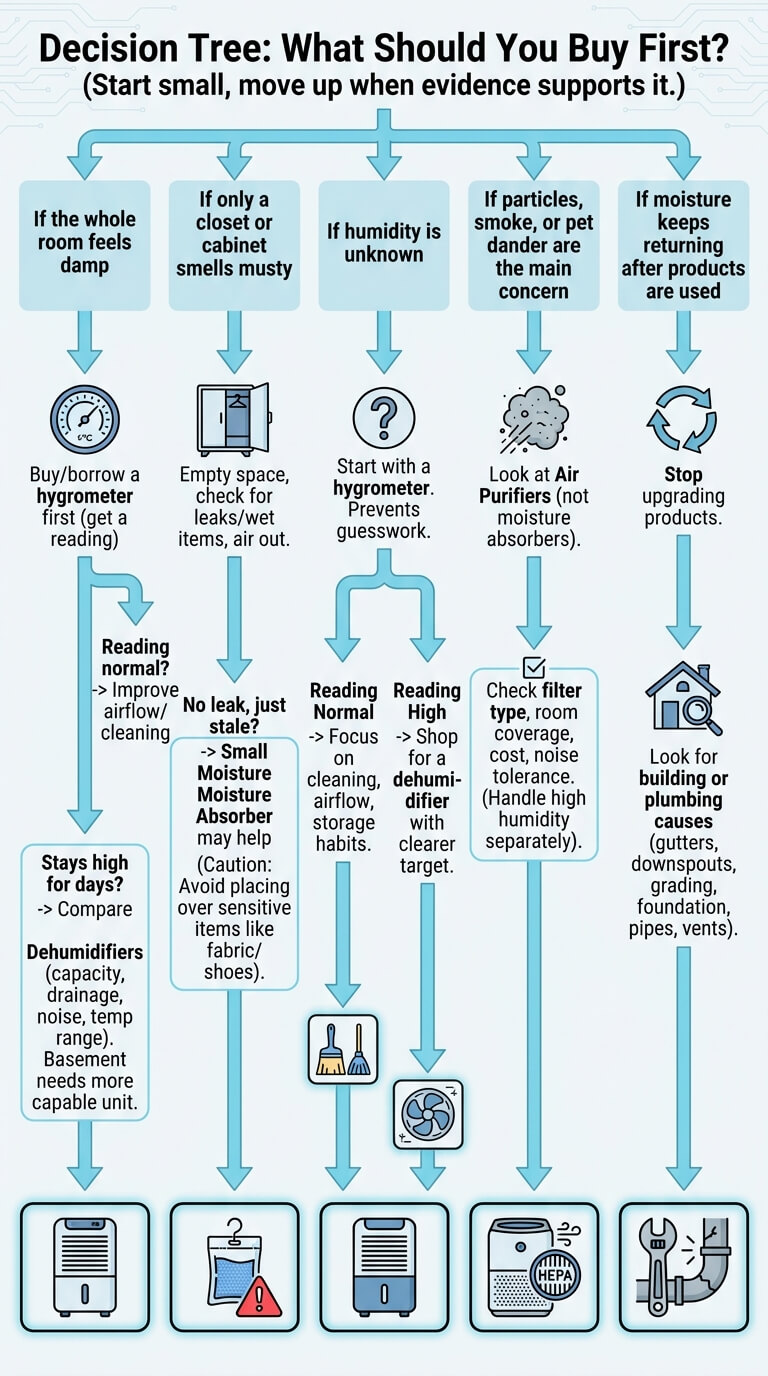
The best first purchase depends on what you can confirm today. Start small, then move up when the evidence supports it.
If the whole room feels damp
Buy or borrow a hygrometer first if you do not already have a reading. If the room stays high for several days, compare dehumidifiers by capacity, drainage, noise, and temperature range. A basement or lower level may need a more capable unit than an upstairs room because dampness can be steadier and airflow weaker.
If only a closet or cabinet smells musty
Empty the space, check for wet items, wipe hard surfaces, and let the area air out. If there is no leak and the space is simply closed and stale, a small moisture absorber may help. Avoid putting one directly over shoes, fabric, pet items, or anything that could be damaged by leaked liquid.
If humidity is unknown
Start with a hygrometer. This prevents guesswork. If the reading is normal, spend time on cleaning, airflow, and storage habits. If the reading is high, you can shop for a dehumidifier with a clearer target.
If particles, smoke, or pet dander are the main concern
Look at air purifiers, not moisture absorbers. Check the filter type, room coverage, replacement filter cost, and noise setting you will actually tolerate. If humidity is also high, handle moisture separately.
If moisture keeps returning after products are used
Stop upgrading products until you look for a building or plumbing cause. Check gutters, downspouts, exterior grading, foundation walls, roof areas, bathroom fans, dryer venting, sink cabinets, and pipes. A larger dehumidifier cannot fix water that keeps entering.
Room-by-Room Buying Notes
Rooms behave differently, so a product that works well in one space may feel useless in another. Match the product to the room’s moisture pattern and daily use.
Basement or crawl-adjacent rooms
Basements often need the most careful buying decision because they may combine ground moisture, cooler temperatures, storage clutter, and limited airflow. A dehumidifier is often the main product, but first check for seepage, wall stains, sump pump issues, and damp cardboard. Use a hygrometer in more than one spot if the space is large.
Bathroom-adjacent spaces
Hall closets, linen cabinets, and bedrooms near bathrooms can pick up shower moisture. The first fix may be using the bath fan longer, keeping towels from staying damp in closed hampers, and leaving closet doors open after showers. Small absorbers can help in enclosed storage, but they are not a substitute for an exhaust fan that actually works.
Laundry rooms
Laundry rooms can become humid from damp clothes, utility sinks, dryer vent leaks, and poor airflow. If humidity spikes only during laundry, improve habits first: do not air-dry large loads in a tiny closed room unless you are also ventilating or dehumidifying. If humidity stays high between loads, a dehumidifier may make sense.
Closets and wardrobes
Closets need space as much as products. Tightly packed clothes trap damp air and prevent fabrics from drying. Before buying absorbers, remove anything damp, clean the floor, avoid plastic bags around clothing, and create small air gaps. A rechargeable or disposable absorber can then support the space rather than fight a storage problem.
Bedrooms and living spaces
In occupied rooms, noise, heat, and appearance matter. A dehumidifier releases slightly warmer air, so it may not feel pleasant next to a bed or sofa. A hygrometer can help decide whether the room truly needs moisture removal or whether airflow, HVAC settings, bedding care, or window condensation habits should come first.
Safety, Product Limits, and Maintenance Basics
Moisture products involve water, electricity, chemicals, filters, and moving air. Safe setup is part of the buying decision.
Electrical safety and clearance
Use grounded outlets, keep cords visible, and follow the manual for clearance around air intake and exhaust. Do not run a dehumidifier with damaged cords, unstable placement, or blocked airflow. The CPSC has issued dehumidifier warnings and recalls involving overheating and fire risk, so it is wise to check older units against the agency’s dehumidifier recall information before using a secondhand or stored appliance.
Drainage and bucket handling
Bucket size affects daily use. If you cannot empty the bucket consistently, look for continuous drain options and confirm the hose path is safe. The hose should slope properly if gravity drainage is required, and it should not cross a walkway or sit near electrical connections.
Chemical absorber label limits
Moisture absorbers may be simple, but they still need label reading. Check where they can be used, how long they last, how to dispose of them, and what to do if liquid spills. Keep them away from curious children and pets unless the label clearly supports the location and you can secure the container.
Filter, coil, and reservoir care
A dehumidifier needs routine maintenance. Clean or replace filters as directed, keep grills clear, and wash buckets before residue builds up. If the reservoir smells sour, the room can smell worse even while the machine is running. Stop using the unit if you notice overheating, burning smells, repeated electrical trips, or water leaking near the cord.
Questions to Ask Before Choosing a Specific Product
Once you know the category, use these questions to narrow the purchase without turning the process into a brand hunt.
How to choose a dehumidifier
Ask whether the room is small, medium, or large; whether it is slightly damp or very damp; whether the temperature falls below normal living-room conditions; and whether you need a drain hose. Then compare noise, bucket design, filter access, warranty, controls, and energy certification.
How to size a dehumidifier
Sizing should consider square footage and dampness severity. Do not use a single room-size number without asking how wet the room feels, how often humidity rises, and whether moisture returns after rain or laundry. Save detailed pint calculations for the final product decision.
Where to place a dehumidifier
Placement should allow airflow, safe drainage, stable footing, and convenient maintenance. A central open spot often works better than a cramped corner. Keep doors and windows closed while the unit is trying to dry the area unless the manual or room situation calls for a different setup.
When a hygrometer is worth buying
A hygrometer is worth buying whenever the problem is unclear. It is especially helpful for basements, nurseries, bedrooms, closets with seasonal clothing, and rental units where you want a simple record of readings before deciding what to do next.
When closet moisture absorbers make sense
Use absorbers when the space is small, enclosed, and not actively wet. They are most useful after you remove damp items, improve spacing, and confirm there is no leak. They are least useful in open rooms, wet basements, or any place where water keeps appearing.
When an air purifier is the wrong tool
An air purifier is the wrong first tool when the main evidence is high humidity, condensation, damp surfaces, or musty storage caused by moisture. It may improve airborne particles, but it will not pull water out of walls, closets, or room air the way a dehumidifier does.
Mistakes that waste money
The most common waste is buying a product before measuring or inspecting. The second is buying a device that is too inconvenient to maintain. The third is ignoring a water problem because a product temporarily makes the room smell better.
Common Moisture Product Buying Mistakes
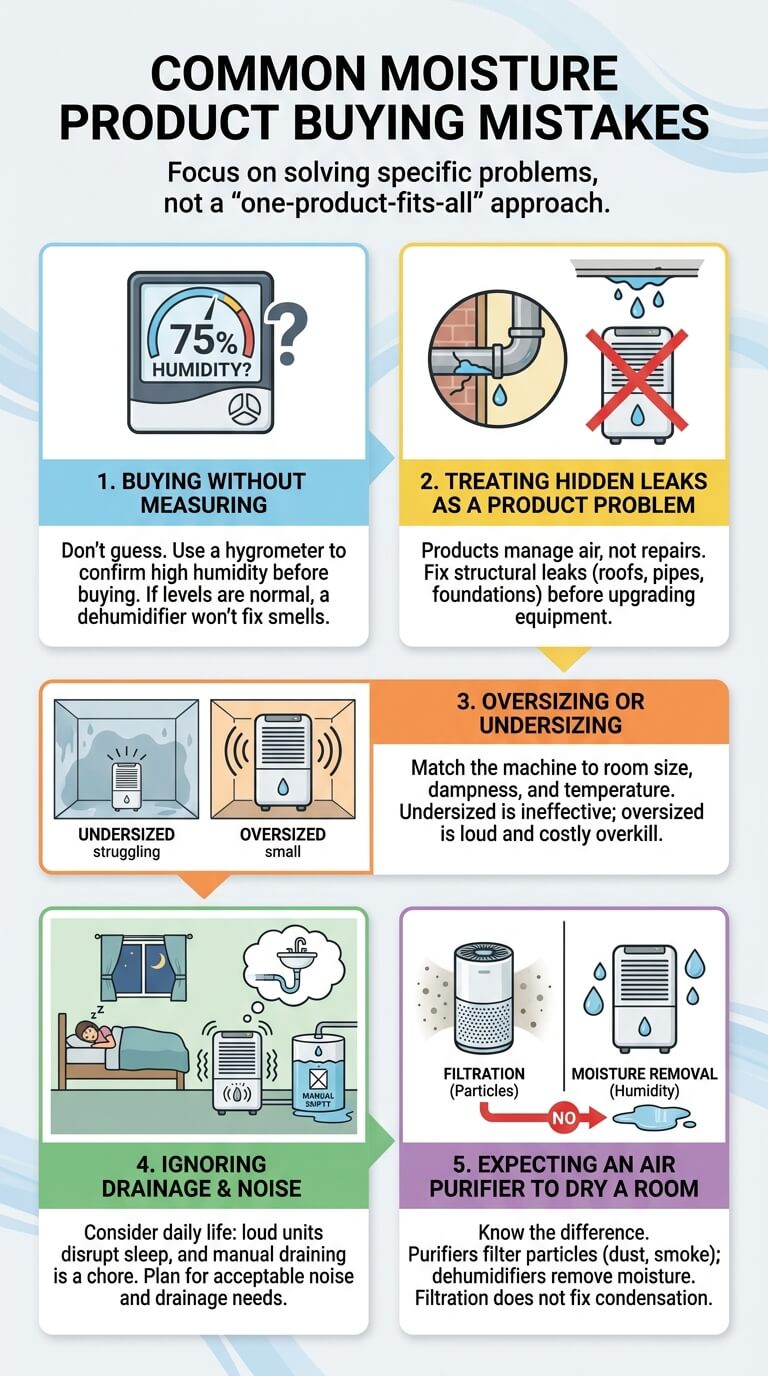
Most bad purchases come from trying to solve every damp-house problem with one product.
Buying without measuring
A hygrometer can prevent a lot of wasted money. If humidity is normal, a dehumidifier may not fix the smell. If humidity is high, the reading gives you a reason to compare capacity and drainage instead of guessing.
Treating hidden leaks as a product problem
Products manage air conditions. They do not repair roofs, pipes, foundations, windows, or missing ventilation. If moisture follows weather, plumbing use, or one specific wall, investigate before upgrading equipment.
Oversizing or undersizing
An undersized dehumidifier may run constantly and still leave the room damp. An oversized or poorly placed unit may be louder, warmer, and more expensive than needed for a mild problem. Match the machine to room size, dampness, temperature, and drainage needs.
Ignoring drainage and noise
The best product on paper can fail in real life if it is too loud for a bedroom or too annoying to empty. Before buying, imagine the daily routine: where it sits, where water goes, who cleans it, and whether anyone will turn it off because of noise.
Expecting an air purifier to dry a room
This mistake is common because both products improve how a room feels. An air purifier may reduce dust or smoke particles. A dehumidifier reduces moisture. If the room has condensation or high humidity, filtration is not the main fix.
FAQ
What is the first product to buy for a damp house?
For most unclear dampness problems, start with a hygrometer. It is inexpensive, easy to use, and helps you decide whether the room needs a dehumidifier, better ventilation, storage changes, or a repair check. If you already see active water, skip the shopping step and find where the water is coming from.
Can a moisture product prevent mold by itself?
No product can guarantee mold prevention by itself. Moisture products can help keep humidity lower and dry certain spaces, but leaks, wet materials, poor ventilation, and delayed cleanup still matter. If you see visible growth, water damage, or a large affected area, follow official guidance and consider professional help.
Do I need a dehumidifier in every room?
Usually not. Measure rooms separately before buying multiple units. One damp basement may need a dehumidifier, while upstairs rooms may only need normal airflow and cleaning. Closed doors, separate floors, and blocked air paths can limit how much one unit helps other rooms.
Are disposable moisture absorbers enough for a basement?
They are usually not enough for an open or damp basement. Disposable absorbers are better for closets, bins, and cabinets. A basement with high humidity usually needs measurement, moisture inspection, and possibly a dehumidifier with enough capacity for the space.
Should I buy a hygrometer before a dehumidifier?
Yes, unless the dampness is already obvious and you know the room needs moisture removal. A hygrometer helps confirm the problem, compare rooms, and check whether a dehumidifier is working after setup. It is one of the lowest-cost ways to avoid buying blindly.
Final Thoughts
The right moisture product is the one that fits the room, the reading, and the reason moisture is there. Measure first when the problem is unclear. Choose a dehumidifier for room-level humidity, a hygrometer for evidence, a moisture absorber for small enclosed storage, and an air purifier for particles rather than water vapor. Read labels and manuals before setup, and do not treat a product as a substitute for fixing leaks, drainage problems, failed ventilation, or wet building materials.

Ethan Carter is the Founder & Editor of HomeCleanSecrets. Based in the United States, he has 5 years of experience creating practical home cleaning, laundry care, stain removal, decluttering, and home organization content. His goal is to help everyday households clean smarter and build simple routines that are easier to maintain.
Read more about Ethan Carter on his author page: https://homecleansecrets.com/ethan-carter/